
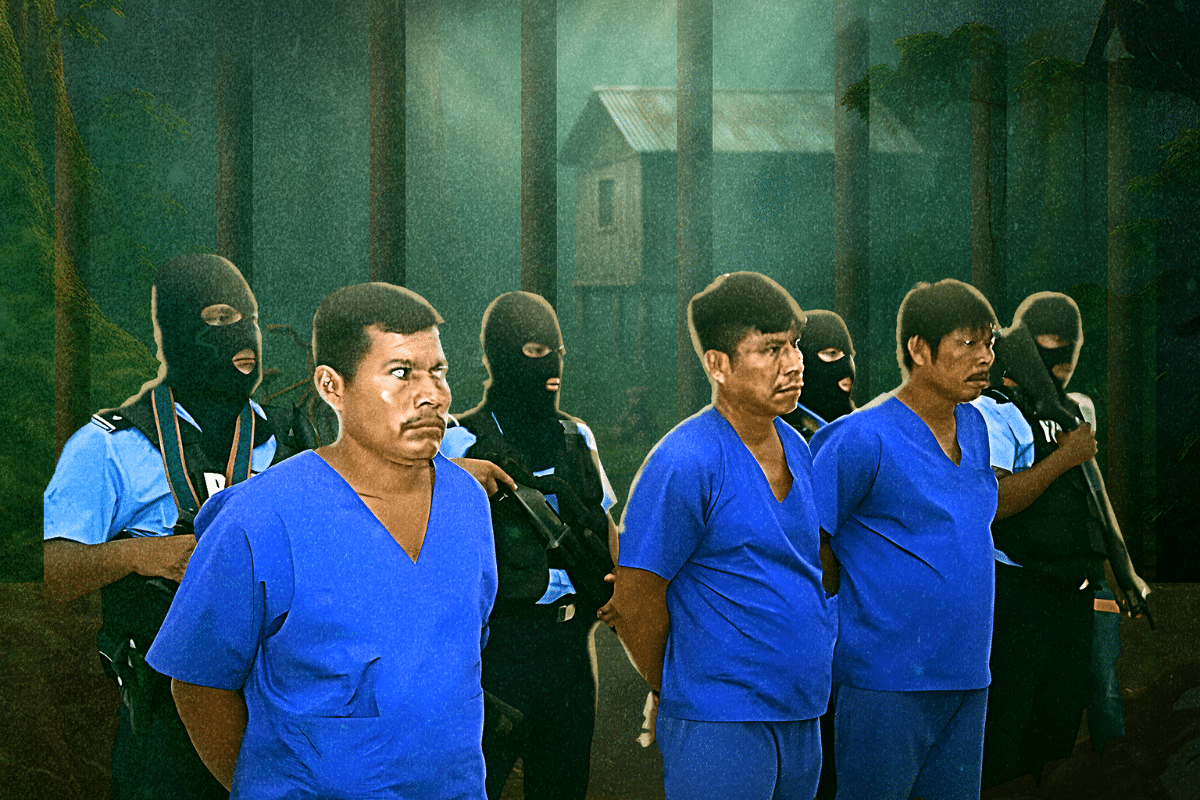
The most traumatic part for Heriberto wasn’t when the police tied him to a tree and struck him with the back of an AK-47. Nor when they smashed his head against the ground, or when his two sons were beaten with batons. No. The most terrifying moment of that August 2023 dawn, in the community of Musawas, took place by the river. Before the boats arrived to take them into custody, the officers forced them to kneel, grabbed them by the neck, and one by one plunged them into the icy water. Over and over, they held them under for long seconds until, on the verge of drowning, their bodies thrashed desperately for air. Heriberto thought they were going to kill him and his sons right there, ironically, in the waters of a river the Mayangna people consider a sacred source of life.
The simulated drowning, a form of torture, continued until the boats reached the shore, and the three Indigenous men were taken far from their forest, far from Bosawás… to a prison in Managua, 427 kilometers away. It was then that Heriberto realized they would not kill them, but he also understood why the police of Daniel Ortega and Rosario Murillo’s regime had arrested them: “This is what happens for defending the land,” said one of the arresting officers, a Mayangna himself, speaking in Mayangna.
A communal forest ranger, Heriberto felt utterly crushed by the extractive logic that for decades has looted his people’s natural resources and culture. That is why it was the river, and not a bucket of water in the cell where they would soon lock him away, that marked the moment. Together with his two sons, Heriberto is one of 12 Indigenous political prisoners the Ortega-Murillo regime keeps in conditions described by a report from the Legal Defense Unit (UDJ) and the Center for Legal Assistance to Indigenous Peoples (CALPI) as “part of an ethnocide and symbolic extermination” inside prison walls.
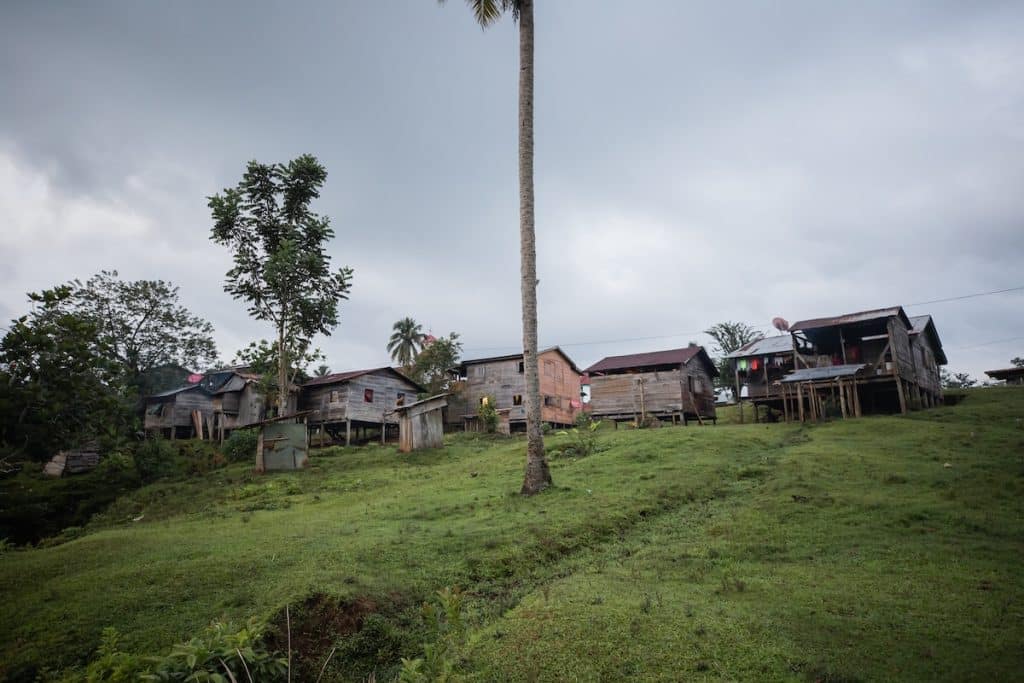
Of the 54 political prisoners currently counted in Nicaragua, a dozen are Mayangna and Miskito, among them forest rangers, community leaders, and one woman. Heriberto (a pseudonym used for safety reasons) had spent decades protecting Bosawás from “colonos,” as they call the land invaders who, over the past 15 years, have stepped up their plunder of this Biosphere Reserve, the largest in Central America and one of the continent’s most important green lungs. Backed by the regime’s approval and inaction, colonization has enabled the advance of cattle ranching, logging, and mining, devastating the forest. Mayangna and Miskito people who resist face settlers’ guns; more than 75 community members have been killed over the past decade.
Settler violence has displaced over three thousand Indigenous people, according to the most recent estimates from organizations defending native communities. Indigenous leaders have long denounced an “ethnocide” against their peoples and cultures. Now, for the first time, a UDJ and CALPI report points to the use of political imprisonment against Indigenous people as an extension of that extermination.
“Excessively violent arrest operations carried out by police elites, forced disappearances, racially motivated torture, trials without due process, and transfers to prisons hundreds of kilometers away from their territories have all had severe psychosocial, economic, and cultural impacts on victims, their families, and their communities,” summarizes the report, titled “From the Forest to the Cell: Criminalization of Indigenous Defenders by the Ortega-Murillo Regime.”
They Call Them “Witches” for Their Traditional Food and Medicine
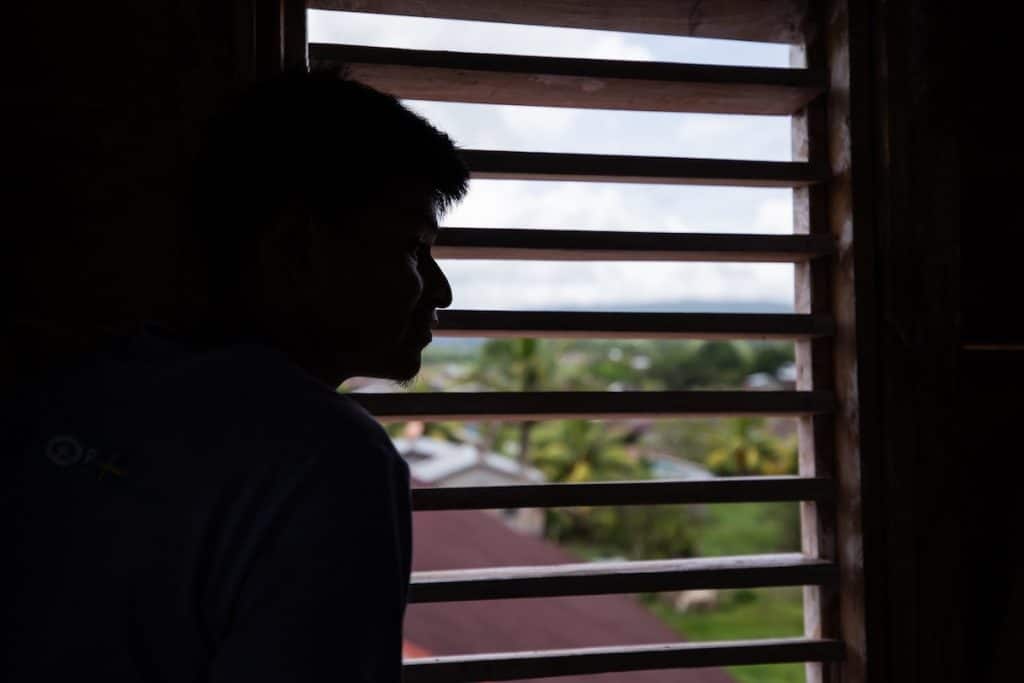
The report stresses that political imprisonment has a distinct and disproportionate impact on these Indigenous prisoners, from the torture by the sacred river inflicted on Heriberto, to electrocution, beatings, isolation, and prolonged shackling of hands and feet in detention centers. UDJ and CALPI also denounce the lack of basic supplies such as food, water, and adequate medical care.
Most have suffered short-term, or even indefinite, forced disappearances, during which various forms of torture, including sexual violence, were committed. One of the most notorious cases was the disappearance of Brooklyn Rivera, leader of the Indigenous party YATAMA and a former Sandinista ally, as well as that of Steadman Fagoth, a political operator for the presidential couple in the Caribbean who later “fell from grace.”
“Nicaraguan authorities have committed racist acts such as calling Mayangnas ‘witches,’ claiming that their traditional foods and medicines are ‘spells’ used to seek their release,” states the extensive report by the exiled organizations. “It has been widely observed that prison authorities do not provide or allow access to traditional medicine and food, nor do they facilitate recreational or religious activities aimed at preserving their culture in prison.”
The report cites a specific case of a young Indigenous man who asked his mother to bring him food in prison, green plantains, cacao, milk, and fish. “The mother explained that all these products hold cultural significance because they are the foods consumed in the community,” but prison guards denied her entry with the provisions.
Tried Without Interpreters and Far from Their Communities
The report warns of prison guards’ prohibition on Mayangna and Miskito prisoners speaking their native languages, a brutal measure, considering many speak little or no Spanish. The most serious consequence, it notes, is that “the State has not guaranteed adequate legal defense without discrimination,” as no interpreters were provided during their trials, violating their right to a fair defense.
“None of the Indigenous defendants were provided interpreters, in violation of constitutional guarantees, which affected their ability to mount an adequate defense. All were removed from their natural judges to be prosecuted and imprisoned more than 300 kilometers from their homes and territories. This not only affected their ability to defend themselves but also constituted, in itself, an additional punishment due to the suffering caused by being far from their families, communities, and culture,” denounce UDJ and CALPI.
As with other political prisoners, imprisonment impacts their families. The report highlights psychological, cultural, and economic consequences for households that, for historical reasons, are already extremely poor.
“Being held hundreds of kilometers away means families must travel up to 50 hours to visit them once a month, for less than an hour in prison. This also deepens the households’ economic vulnerability, as they spend at least $170 USD between travel and the monthly packages they bring,”
the two organizations stress.
Furthermore, since most detainees are men, political imprisonment has caused a sharp increase in women’s caregiving burdens within families. Conjugal visits have been banned, and some relatives have stopped visiting altogether after being warned they are under investigation and fear reprisals. Deaths of relatives linked to the suffering caused by imprisonment have also been documented.

UDJ and CALPI view the distinct impact of political imprisonment on Indigenous people as “cultural humiliation and structural racism, reviving colonial forms of repression” against historically marginalized communities.
“In short, the repression against Indigenous leaders and their communities is not an isolated incident, but rather part of a policy of internal colonialism shaped by a structural strategy of political and territorial control, in which punitive imprisonment is used as a tool to dismantle cultural resistance and community cohesion,” they argue.
For the organizations, this pattern poses a real risk of symbolic extermination by undermining the essential elements of Indigenous peoples’ cultural survival.
“From the perspective of international criminal law, these acts can be considered part of an ongoing process of extermination and cultural genocide on Nicaragua’s Caribbean Coast,” they conclude.An extermination that Heriberto felt deep in his bones that dawn when they simulated his drowning, alongside his sons, in the river that, since birth, had quenched his thirst, eased his hunger, and served as a sacred source of health, spiritual connection, and guidance from his ancestors and the guardian spirits of the forest he had defended, until he was imprisoned for political reasons, for resisting the settlers’ invasion.