
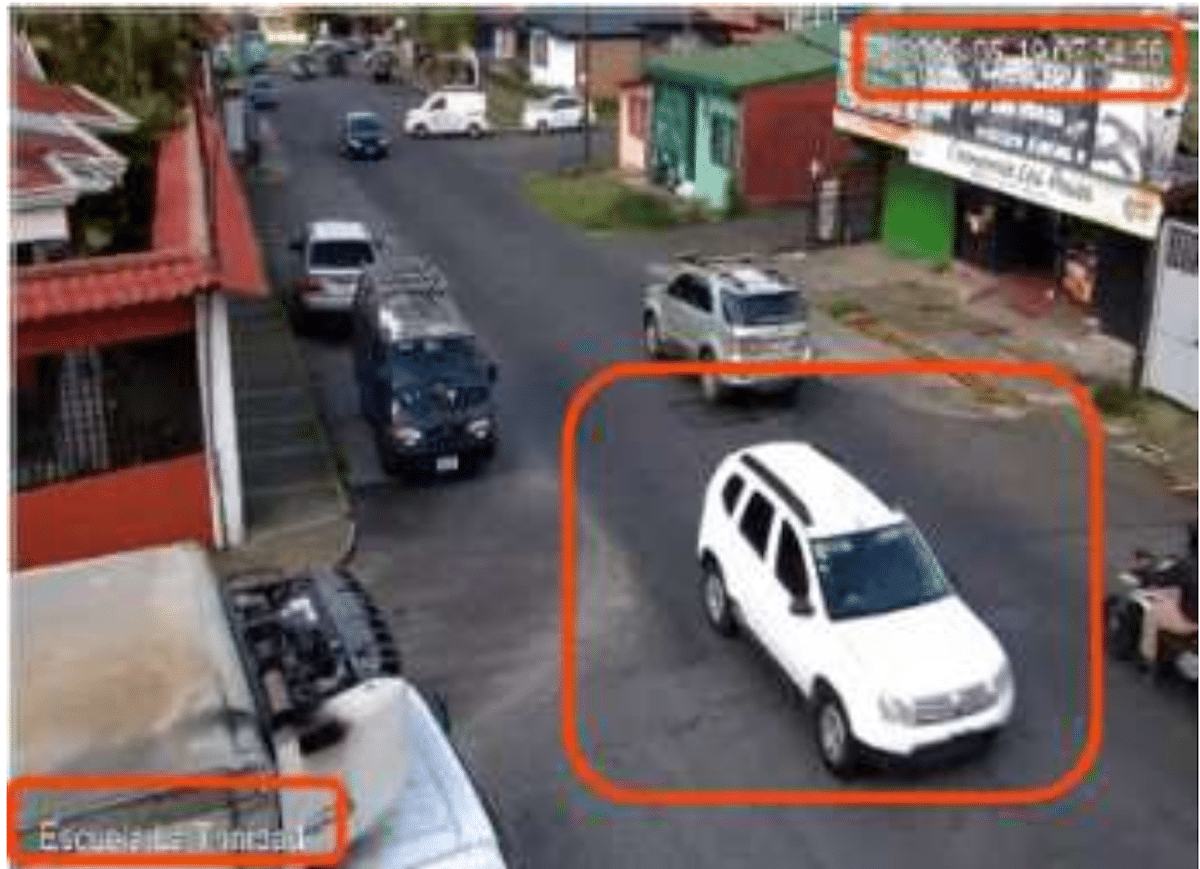
If the murder of retired Major Roberto Samcam in Costa Rica was one of the deadliest episodes of transnational violence attributed to Daniel Ortega and Rosario Murillo, it was not the only one. On Tuesday in Geneva, before the UN Human Rights Council, the Group of Human Rights Experts on Nicaragua (GHREN) presented an update to its report on crimes against humanity orchestrated by the presidential couple. This new update denounces “a broad and complex surveillance and intelligence network” used to monitor the activities of Nicaraguans, even “beyond the country’s borders.”
The experts warned that the network has made it possible to “harass, discredit, and threaten” Nicaraguans in exile, reaching the point of murders like that of Samcam and others, such as Rodolfo Rojas, who was taken from Costa Rica and killed in Honduras, or farmer Jaime Ortega Chavarría, murdered in Upala.
The report details “a strategy of surveillance and harassment against the exiled diaspora,” describing a transnational apparatus that turns countries of refuge into unsafe spaces for thousands of political exiles. The experts summed it up in a phrase: a “long-arm policy” meant to silence critical voices wherever they are.
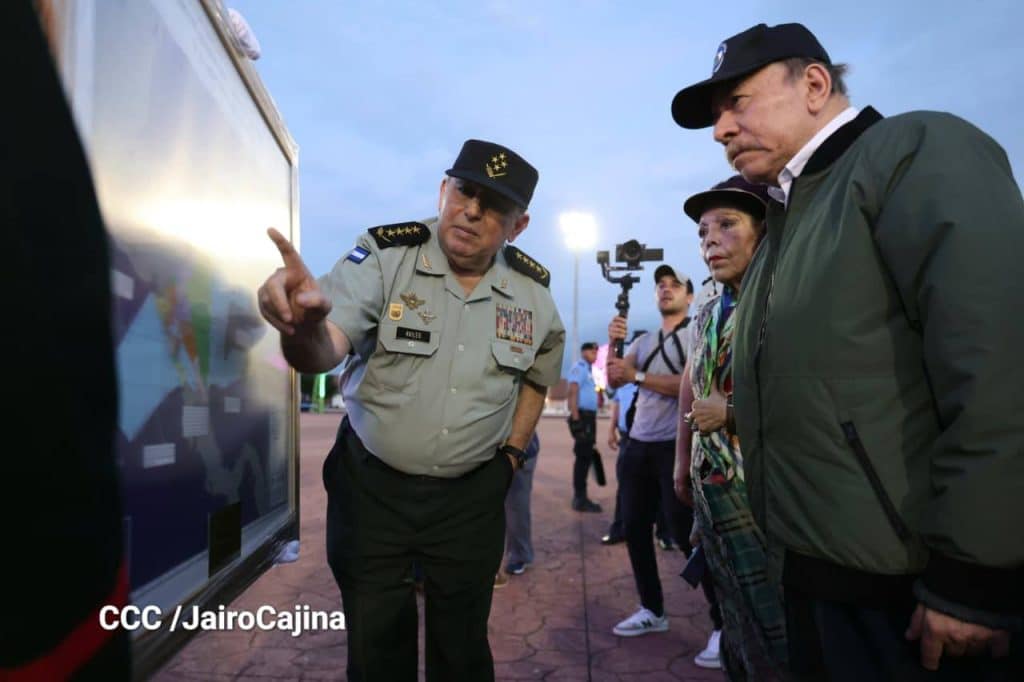
The document lays out an interconnected network, governed by intelligence and near-total control, composed of the Army, the Police, the Ministry of the Interior, TELCOR, and paramilitary groups, all under the direct orders of Ortega and Murillo. This structure not only watches opponents inside the country but also locates and monitors exiles in Costa Rica, the United States, Mexico, Spain, and Panama.
TELCOR, the state telecommunications agency, is accused of intercepting communications, tracking social media activity, and operating “troll farms” that digitally harass journalists, human rights defenders, and opponents worldwide.
The ultimate goal of this espionage machinery is to erase the political presence of the opposition abroad. To that end, the regime combines surveillance with punitive measures: denial of passports, elimination of birth certificates, confiscation of property, persecution of relatives in Nicaragua, and even physical assaults abroad. In the report’s words, it is a “scalable” strategy of transnational repression that erodes safe havens and multiplies fear among those who believed they had escaped persecution.
The Testimonies Behind the Report
The testimonies collected by the Group of Experts underscore the gravity of this network. Exiles in Costa Rica described being photographed and followed at public demonstrations, while others reported that their families in Nicaragua were visited by police or lost state jobs as retaliation. In Spain, opponents denounced consulates for refusing to renew passports or issue documents, leaving them in legal limbo and facing serious obstacles to working or residing legally.
“The Group of Experts has identified and documented the existence of a broad and complex surveillance and intelligence network (…) The State of Nicaragua uses this network to monitor the population’s activities physically and digitally, as well as to identify and locate opponents, track their communications, and decide who should be detained, expelled, barred from returning, or stripped of nationality,” the document states.
Nicaraguans interviewed by the experts said they had been “photographed, followed, harassed, approached by strangers, and threatened while abroad, particularly in Costa Rica and Honduras, but also in Belgium, Guatemala, Spain, and the United States.”
Other testimonies illustrate the breadth of the harassment. “On social media I’ve received threats telling me I’ll end up dead in a ditch in Spain, because that’s the fate of traitors,” one victim said. Another exile in Europe recounted: “[I received] a threat letter [without a stamp] just after speaking at a public event. It was in the mailbox of the organization [where I work, in Europe]. I filed a complaint. The police station didn’t really know how to handle it.”
“The Group has confirmed that this wide, methodical surveillance system, which makes substantial use of digital technologies, extends beyond Nicaragua’s borders, enabling the Government (…) to harass, discredit, and threaten Nicaraguans in exile,” the experts insist.
Civil Death and Poverty
For the UN experts, this network is not a series of isolated events but part of a systematic pattern of state repression. Surveillance of the exiled, they warned, is designed to dismantle communities abroad and silence international denunciations of human rights violations in Nicaragua, consolidating a model of transnational control that could amount to crimes against humanity.
The murder of Samcam and the surveillance pattern exposed by the UN show that Ortega and Murillo’s “long arm” knows no limits. Exile, which should mean refuge, has become a vulnerable space where repression reinvents and expands itself, warned Claudia Vargas, Samcam’s widow, during the report’s presentation in Geneva.
The experts concluded that the Ortega-Murillo regime has committed violations against Nicaraguans in exile and their families in order to maintain absolute control inside and outside the country. These practices include stripping nationality, blocking reentry to Nicaragua, and indirectly punishing relatives, leaving thousands in a state of “civil death” and, in many cases, forced into poverty. The experts argue that this pattern amounts to crimes against humanity through political persecution.
“Proxy Punishment”
When it comes to repression of relatives, the report dedicates a section to what it calls “proxy punishment,” a practice in which reprisals are directed at the families of opponents and exiles. According to the experts, this method has become more frequent since 2018, as an increasing number of dissidents have been forced into exile or expelled from the country.
These actions range from surveillance and harassment to arbitrary detentions, phone threats, confiscation of property, and even altering birth certificates to erase the surnames of opponents’ children. In one documented case, an opponent’s spouse, daughter, and son-in-law were all arrested on the same day, sentenced to prison, expelled from the country, and stripped of their nationality.
The GHREN stresses that this form of collective punishment not only seeks to silence those in exile but also to instill fear in those who remain in Nicaragua. The psychological impact, it adds, is devastating: it deliberately targets children, the elderly, and creates a climate of self-censorship that extends repression beyond borders.
Faced with this situation, the GHREN called on states to provide comprehensive protection to the Nicaraguan diaspora. It recommended ensuring fair asylum processes, facilitating fast-track naturalization, recognizing statelessness, and establishing resettlement programs with access to education, employment, and essential services. The group also urged the international community to closely monitor the situation and hold the Nicaraguan state accountable for using nationality deprivation as a tool of repression.