
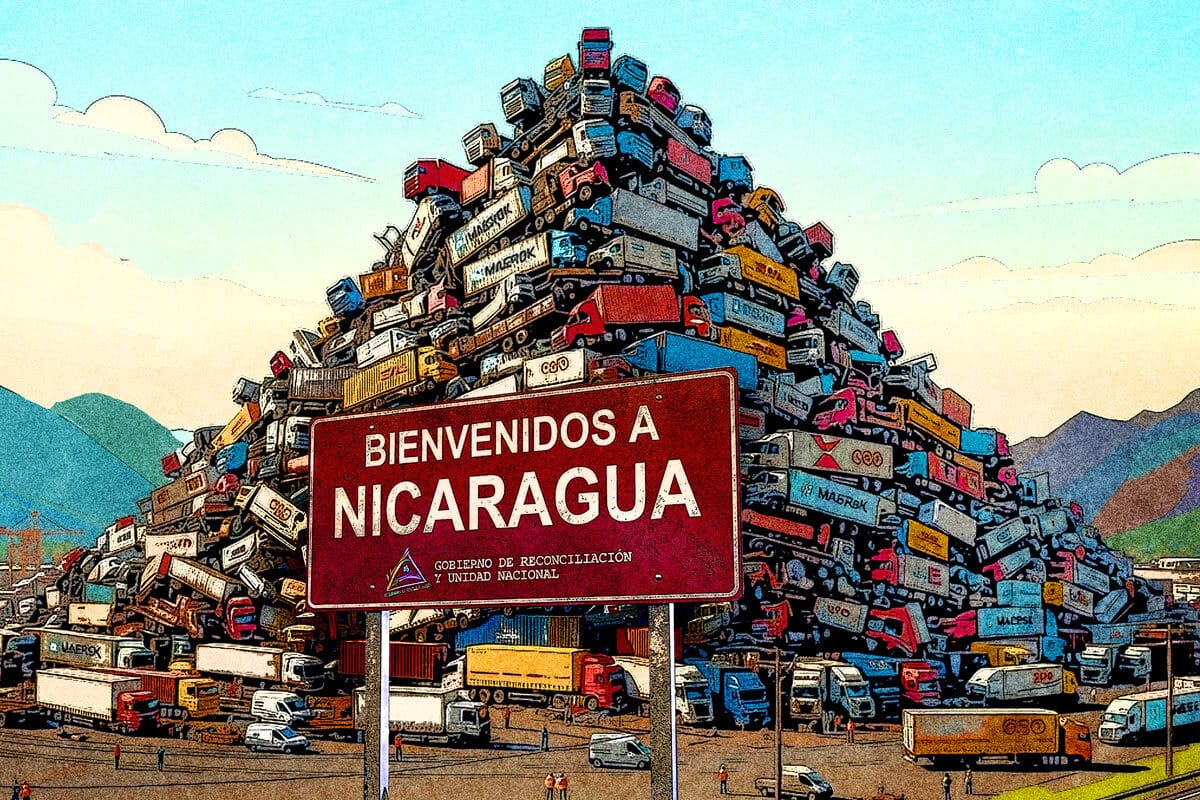
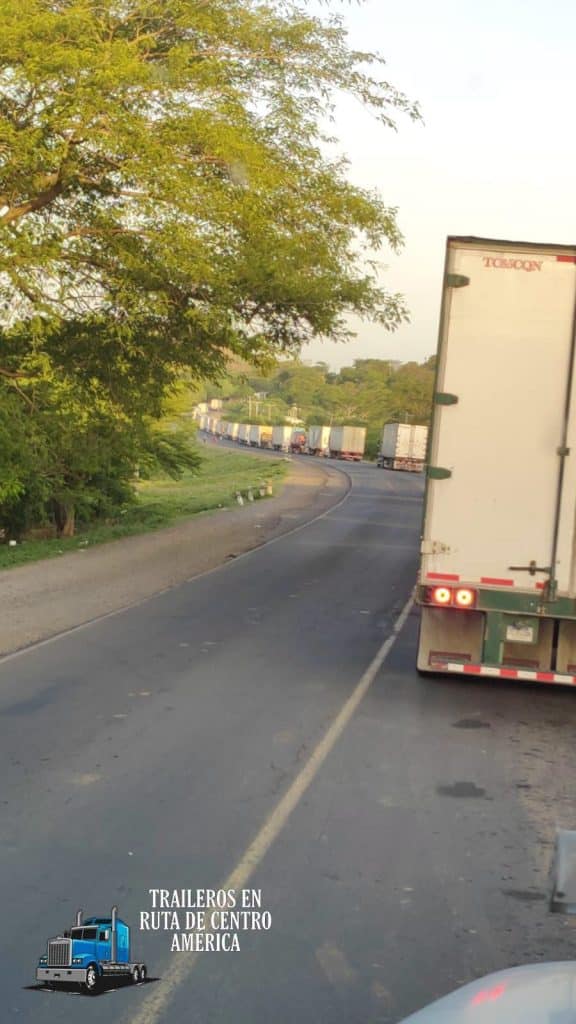
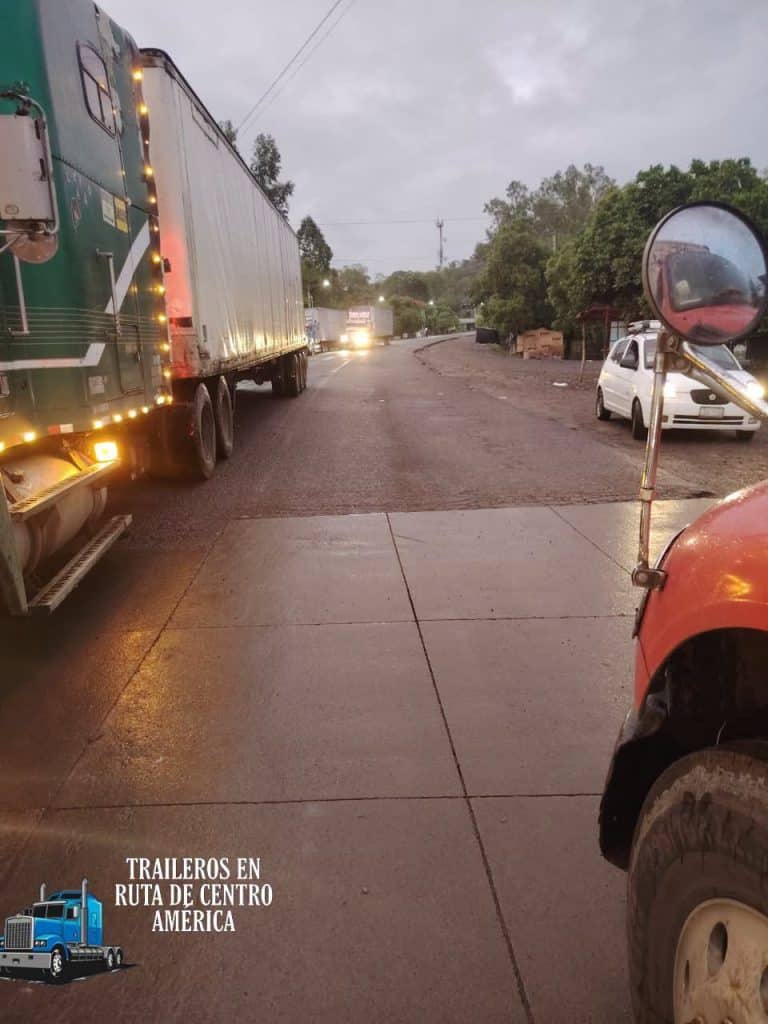
A zigzagging line of trucks stretched for more than 15 kilometers (~9 miles) in El Triunfo, on the border between Nicaragua and Costa Rica. It looked like the tail of a metal snake lying motionless in the open air. One Thursday in late June, Ramón, a Guatemalan truck driver, parked his truck. It was 2:00 p.m., but he had resigned himself to the fact that, with any luck, he would finish the customs procedures in Nicaragua the next day, if anything.
Ramón is 54 years old and has been a trucker for over 20 years. For many years, it took him four days to transport cargo from Guatemala to Costa Rica, he said. But for the past five months or so, the same route has taken him seven days. The reason for these delays is the same one cited by several truckers interviewed: Nicaraguan customs.
“Nicaraguan customs are a disaster,” Ramón said.
When Ramón is unable to process the Single Central American Transit Declaration (or DUCA-T, its acronym in Spanish)—the standardized electronic document used for the transport of goods by land in Central America—he knows the wait will stretch out to two or three days.
“The problem is that in Nicaragua, the system is never working. In Honduras, it’s always available, but Nicaragua always says, ‘the system isn’t working,’” said the truck driver.
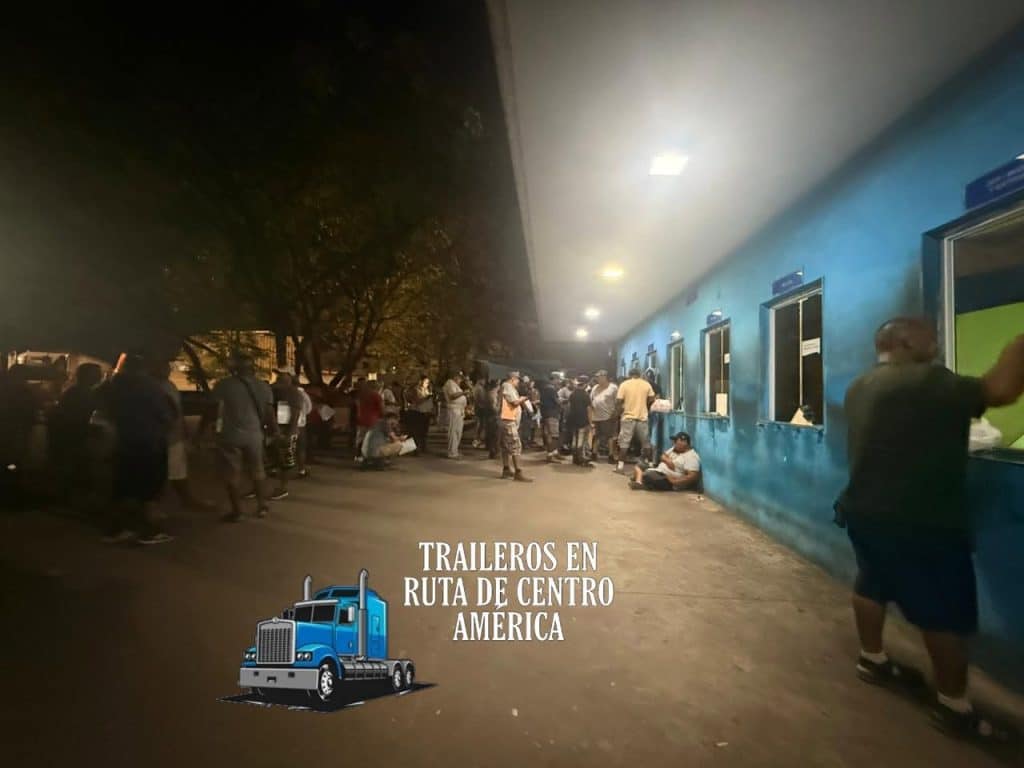
On social media, it’s common to see Central American truckers complaining about these delays. They often say that Nicaragua is where they’re required to go through the most paperwork at the counter, that all their trucks are forced to go through a weigh station unnecessarily, and that this causes delays and expenses (lodging, food, bribes) that they don’t incur in other countries.
Regional trade operations are the hardest hit by these customs delays. In 2025, land-based trade moving through the Central American region totaled $10,146.7 million, according to statistics from the Secretariat for Central American Economic Integration (or Sieca, its acronym in Spanish).
Delays Drive Up Product Prices
Arturo Rosabal, president of the Federation of Chambers of Commerce of the Central American Isthmus (or Fecamco, its acronym in Spanish) and the Costa Rican Chamber of Commerce (or CCCR, its initials in Spanish), told DIVERGENTES that when these inefficiencies persist, Central American exports can become more than 30% more expensive due to increased logistics, storage, and transportation costs.
“This reduces the competitiveness of our companies in both regional and international markets,” Rosabal said.
High-traffic border crossings such as El Guasaule (Honduras-Nicaragua) and Peñas Blancas (Costa Rica-Nicaragua) are locations where longer wait times and higher levels of transportation congestion are reported, according to merchants, transport operators, and specialists in customs administration and foreign trade who were consulted for this report.
The causes are varied. There are technical factors such as border capacity, the number of service points available, and operating hours. But factors associated with the state control model of Sandinista dictators Daniel Ortega and Rosario Murillo also play a role.
Experts consulted noted that there are more intensive weigh-in-motion checks and physical inspections, stricter tax and security checks, administrative processes involving multiple validations, and restrictions on the movement of heavy-duty vehicles.
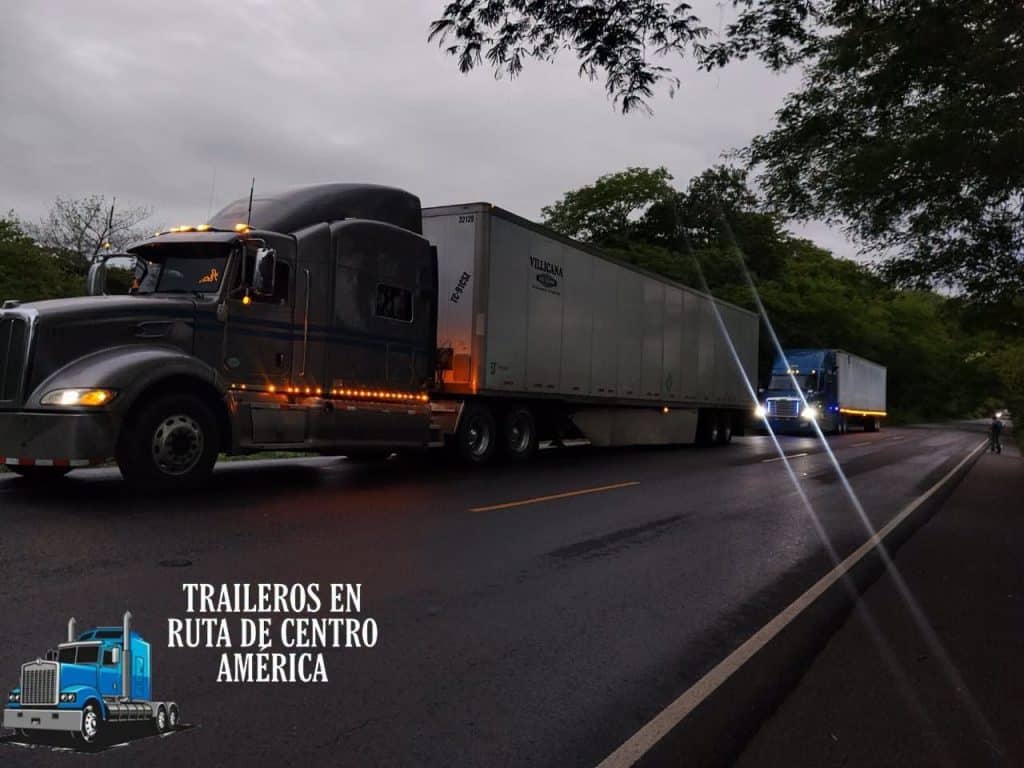
Carriers noted that another factor contributing to delays is Nicaragua’s ban on heavy vehicles traveling at speeds exceeding 50 km/h. Violation of this law can result in penalties and further prolong transit time through the Nicaraguan corridor.
Due to their location, Nicaraguan border crossings are key to regional trade. According to data from Sieca, Nicaragua reported the highest number of land transit declarations (177,560) in Central America in 2025. A total of 4,653 carriers and 15,125 vehicles were registered. At Peñas Blancas, for example, there were 53,802 land transit declarations.
Customs sources consulted by DIVERGENTES indicate that Nicaragua’s borders suffer from technological shortcomings, a shortage of specialized personnel, and more than 3,000 pending procedures. There are reports of a lack of transparency in administrative processes and additional costs that drivers are paying at the Honduran border crossing of El Guasaule.
All of this is taking place in a country that accounts for 21% of Central American trade and serves as a strategic corridor for the overland transport of goods.

Why Are There Delays in Nicaragua?
Traffic jams are not limited to a single border crossing in Nicaragua; rather, they extend to all customs offices of the General Customs Directorate (or DGA, its initials in Spanish) at the borders (El Guasaule, Las Manos, El Espino, and Peñas Blancas).
Nicaragua has made improvements to its infrastructure, and the government’s strict centralization allows for coordinated management of the agencies present at the borders (Ministry of Health, Commission on Toxic Substances, IPSA, Army, Police, and Immigration). However, in recent years, there has been a decline in the number of qualified technical personnel.
A source with expertise in customs and cargo logistics in Nicaragua, who spoke on condition of anonymity, said that the crisis at the border crossings stems from “severe operational disarray” caused by a lack of personnel.
In short: once a customs inspector or appraiser gains experience and specialized training at the DGA, they are easily poached by logistics companies and customs brokerage firms that offer higher salaries and better working conditions.
High staff turnover in customs is nothing new in Central America. Workers in this sector are often overworked and underpaid, according to regional customs sources. However, in Nicaragua, the situation is exacerbated by a clear lack of planning to address this exodus of administrative staff. And money does not seem to be an issue, as the DGA is one of the country’s most important institutions for tax collection. In 2024, it collected 27,154 million córdobas ($740.7 million).
Thousands of Pending Procedures
According to customs sources, the DGA has issues with its computer system and with the registration procedures for carriers, vehicles, and drivers. This is where the backlogs in customs clearance begin.
Nicaraguan carriers consulted on condition of anonymity said that the current system has recurring failures in data synchronization and replication, particularly with Sieca’s servers. DIVERGENTES sent inquiries to Sieca, but as of the publication of this article, it has not responded.
The process is more or less the same for all countries: carriers submit their documentation to their customs authorities. These authorities assign a unique code to each vehicle owner and each driver, who, in turn, must be associated with their respective cargo vehicle. The data is entered into the computer system and must be replicated on Sieca’s servers so that they can make trips throughout the region.
However, Nicaraguan carriers have had pending paperwork for a year. “We’ve gotten bogged down in bureaucratic red tape. Normally, these procedures take a week, but now some have been pending since July of last year and still haven’t been resolved,” said the Nicaraguan customs source.
According to carriers consulted, there are currently more than 3,000 pending applications at the DGA’s Legal Affairs Directorate. A similar number of applications from importers and exporters—coming in at a rate of 200 per day—are also piling up at this same office.
“Influence Peddling”
DIVERGENTES attempted to contact Marvin Altamirano, president of the Nicaraguan Transporters Association (or ATN, its initials in Spanish), to learn the association’s official position, but he did not respond to emails or WhatsApp messages. The DGA was also asked for its side of the story, but has not yet provided a response.
In Nicaragua, at the DGA’s Customer Service office, the only response transporters typically receive is: “The application is still under review.” Currently, Danys Ortiz, deputy director of Legal Affairs, is the sole official in charge of the departments handling this paperwork at Nicaraguan customs.
“There is too much centralization of responsibilities in a single person, and the volume of paperwork received daily prevents proper oversight, assignment, and processing, leading to backlogs and chaos in border administration,” said the source.
Customs sources claim there is a lack of transparency in the handling of certain procedures at the DGA. For example, since there is no auditable order for processing them, some receive preferential treatment and their paperwork is processed more quickly. “This discretion is not only unfair, but it also undermines the operational efficiency that the DGA should guarantee,” the source said.
Arturo Rosabal, president of Fecamco and the CCCR, said that there are border crossings that, depending on the time of day, cargo volume, or other operational circumstances, may experience higher levels of congestion.
“Some carriers have told us that, in certain high-traffic corridors such as El Guasaule (Honduras–Nicaragua) and Peñas Blancas (Costa Rica–Nicaragua), longer wait times can occur,” Rosabal explained when asked about the delays in Nicaragua.
Nicaragua, Among the Slowest Points Along the Corridor
For this report, Rodolfo Arce Portuguez, a specialist in customs administration and foreign trade, gathered technical insights from Central American customs and logistics experts who chose to remain anonymous. Based on the reported experience, the specialist stated: “Nicaragua continues to be one of the points where prolonged wait times are most frequently observed.”
Arce Portuguez noted that technological advances have been observed in some processes in this country and pointed out that, from the perspective of international land transport, “there are still significant opportunities to streamline border crossings.”
Ana Lucía González, a specialist in customs and foreign trade, said that Nicaragua has made less progress than the rest of the region. For González, one of the obstacles is that the country has not managed to digitize its processes.
“Many processes are still conducted in person. That’s a challenge for all countries, but in Nicaragua, the processes are more manual than elsewhere,” González noted.
Central American customs sources pointed out that processes in Nicaragua remain manual as a political control strategy: it allows authorities to monitor any activity they consider contrary to the interests of the Ortega-Murillo regime.
“The failure to digitize is a matter of political will; therefore, these delays at the border go beyond a mere trade and customs issue,” said a source who spoke on condition of anonymity.
32% of Costa Rica’s Exports Go to Nicaragua
Delays at the Nicaraguan borders are an open secret among Costa Rican truckers, according to another customs source consulted for this report. However, Costa Rican authorities are cautious because 78% of Central American land trade passes through Nicaragua.
On June 17, Costa Rican President Laura Fernández acknowledged that she is interested in maintaining a “fraternal relationship” with the Ortega-Murillo regime on issues of trade and migration. The president explained that she cannot “lash out” against Nicaragua because it is the neighboring country through which a large portion of Costa Rican trade flows. “I wouldn’t be that irresponsible,” she argued.
According to data from the Single Central American Declaration (or DUCA-F, its acronym in Spanish), Costa Rica exported $688.4 million worth of goods to Nicaragua in 2025, accounting for 32.2% of the country’s total exports to the entire region.
In fact, Nicaragua imported $2,130.3 million from all Central American countries that same year. This accounted for 21% of all regional trade, a figure that highlights Nicaragua’s importance in commercial transactions across Central America.
Progress and “Bottlenecks”
Starting in the 1960s, Central America embarked on a process of economic integration aimed at transforming the entire region into a free-trade area with a customs union. The countries—or stakeholders at the time—committed to achieving that goal by 1968. However, more than half a century later, as is now evident, that goal remains unfulfilled.
In recent years, of course, there has been significant progress. Rodolfo Arce Portuguez, a specialist in Customs Administration and Foreign Trade, explained that the region now has a single customs invoicing and declaration system (FYDUCA); agreements have been signed with the World Trade Organization (WTO); and mechanisms such as the Authorized Economic Operator have been established—a certification designed to reduce physical inspections and streamline logistics procedures.
“The major regional challenge remains achieving true interoperability among border authorities, so that information is transmitted only once and recognized by all countries,” added Arce Portuguez.
The region’s obstacles, however, remain evident. The expert noted that customs procedures lack harmonization; there are multiple checks by various agencies that request the same document up to twice, as well as limitations in physical and technological infrastructure. In a region that relies heavily on land transport for cross-border trade, IT systems are failing and bureaucracy reigns.
For this reason, in 2023, Sieca developed a strategy—with the endorsement of the countries—to gradually remove barriers to trade with a view toward 2030. The document is titled the Central American Strategy for Trade Facilitation and Competitiveness, with an emphasis on Coordinated Border Management (Ecfcc), and it outlines a series of actions that Central American countries must implement toward a single goal: reducing costs and processing times in regional trade.
Ana Lucía González is a partner and founder of Estratega, a Costa Rican consulting firm specializing in customs, logistics, trade, and geopolitics. González said that Sieca’s strategy “is clear, but it needs to be put into practice.”
Central American Cargo Moves Four Times Slower Than in North America
Delays are evident throughout the Central American corridor. Although there are 23 border crossings for land freight transport, documents from Sieca indicate that freight vehicles travel at 18.5 km/h. In North America, for example, freight travels at an average speed of between 72 and 88 km/h—that is, up to four times faster.
As for highways, the region has an extensive network (148,176 kilometers or 92,072 miles). However, not all of it is paved (56.54%), and this, of course, hinders the flow of trade. But infrastructure is not the only factor; the situation varies by country. According to data from Sieca’s “Current State of Economic Integration” report, while 68% of roads in Costa Rica are paved, only 19.5% of Nicaragua’s roads are paved.
And the obstacles continue, sometimes in “invisible” ways. For example, the time a truck spends waiting before it can cross a border (which happens in Nicaragua). Customs clearance times are typically measured, but not the kilometer-long lines that form before reaching customs. At Nicaraguan borders, this process can sometimes take hours or even days, during which time costs are incurred for lodging, storage, delays, fines, and bribes, among other expenses.
Ramón, the Guatemalan truck driver, said that in Honduras, the municipal government of El Triunfo—in the border area with Nicaragua—has set up a lot where truck drivers can park for as long as they need (two or three days) to cross into Nicaragua, for a fee of $5. They are given a receipt, which serves as a sort of safe-conduct pass so that Honduran customs officials do not fine them up to $1,200.
“After crossing the El Amatillo border (between Honduras and El Salvador), the authorities give you seven hours to cross into Nicaragua. It’s a three-and-a-half-hour trip, but with the delays at the Nicaraguan borders, it’s impossible to cross in that time, so we pay those $5 and avoid the fine,” said Ramón.
In light of this experience, expert Arce Portuguez suggests that the true indicator of logistics competitiveness should include the total time from the origin to the destination of the goods: the so-called “door-to-door” time.
Logistics Accounts for up to 40% of the Cost of Goods
Logistics is a precise process: a truck stuck at customs—due to a registration or validation error—disrupts the entire supply chain. And any delay at customs directly affects the prices of the products we consume. According to data from Sieca, logistics accounts for up to 40% of the cost structure of goods, while in other regions it typically ranges between 15% and 20%.
Ana Lucía González, a specialist in Customs and Foreign Trade, explained that these costs are initially borne by carriers but are then passed on to exporters or importers through fees or surcharges. Retailers, ultimately, determine the price paid by the end consumer. “This is something we’ve been dealing with for years,” said González.
Arturo Rosabal, president of Fecamco and the CCCR, explained that trucks stuck at the borders result in expenses for transportation, storage, fuel, and equipment use. Furthermore, this affects logistics planning and the ability to meet delivery deadlines.
“When these inefficiencies persist, Central American exports can become more than 30% more expensive,” Rosabal stated.
In Central America, the product most widely traded between countries was baked goods, pastries, and cookies ($510.3 million), followed by medicines ($338.8 million) and plastic packaging materials ($325.6 million), according to data from DUCA-F.
Bottlenecks at the borders cause these goods to spoil, especially perishables. Ana Lucía González said that it is also challenging to fulfill contracts with companies due to these unforeseen circumstances.
There are some best practices in the region that could be scaled up, the expert noted. In Costa Rica, millions have been invested to improve customs infrastructure, while Guatemala and Honduras have worked to integrate their customs systems to eliminate duplicate processes and keep trade flowing.
In Nicaragua, for the time being, when a carrier is not approved, the entire operation grinds to a halt. If there is no transit authorization, the truck cannot leave the yard. A single error can result in a 24-hour delay. There is a great deal of uncertainty and only one certainty: a truck that isn’t moving means lost revenue.