

The music was blaring at full volume in the nightclub. Amid the commotion, Haymara Vega was dancing to reggaeton with her friends. She was celebrating her birthday at Pipas, one of the capital’s most popular nightclubs. The speakers continued to boom past midnight—not because the club was closing, but because Haymara collapsed in the middle of the dance floor.
The 18-year-old fell to the ground unconscious and began convulsing. According to the nightclub staff, they attempted to administer first aid while waiting for emergency services to arrive. However, Haymara died. Her death initially raised many questions.
In the early hours of Monday morning, March 9, social media was flooded with information about Haymara’s death. Most comments speculated that the cause of her death had been a drug “overdose.”
Social Media Debate
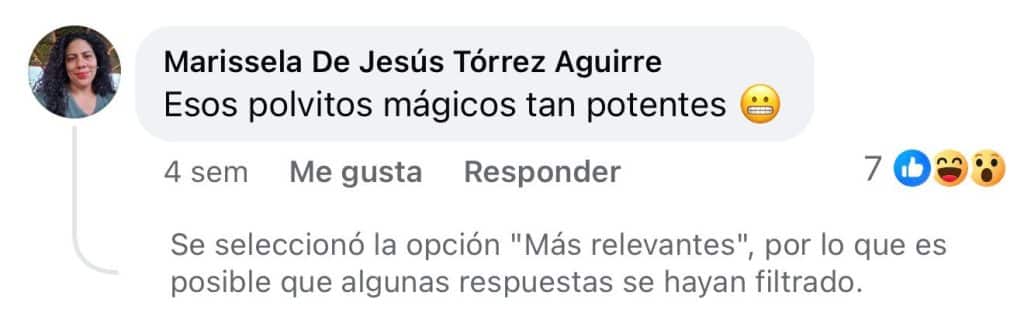

“Those magic powders are potent,” wrote user Marisela Torrez on Facebook. “Please excuse me, and with all due respect to her family, my daughter once fainted and had a seizure. It was an overdose. These days, you can’t trust anyone,” replied Ileana Corea in the same post, also on the same social media platform.
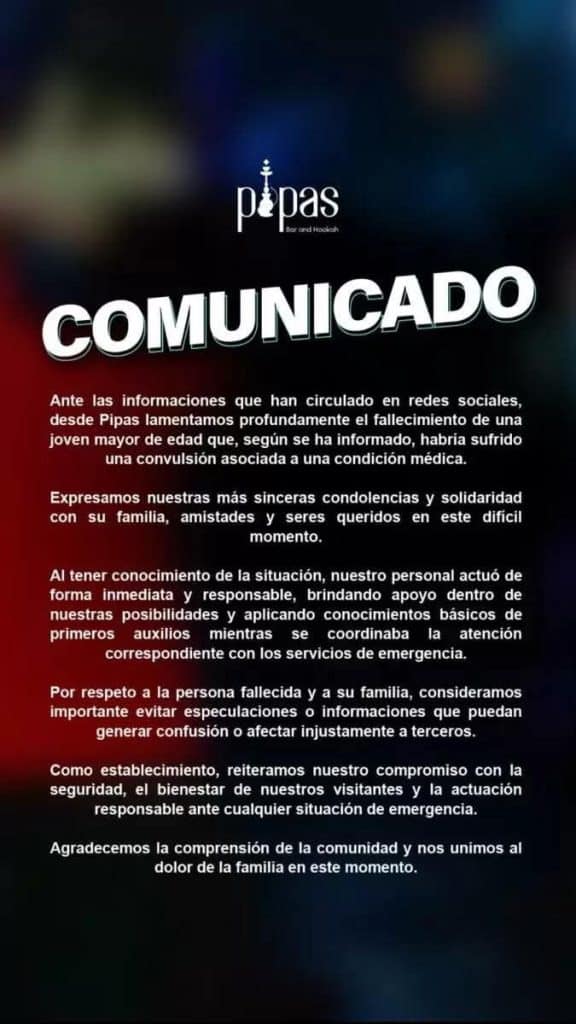
In response to these comments, Pipas nightclub issued a statement asking for “respect for the deceased and her family,” and noted that it was “important to avoid speculation or information that could cause confusion or unfairly affect third parties.
Later that day, the young woman’s family told the media that the cause of death was cardiac arrest, a condition that had also taken the life of the girl’s brother 14 years ago.
Although the news caused a huge stir on social media and sparked numerous comments from citizens warning about drug trafficking in Managua’s nightclubs, the case never gained traction—to the point that the Sandinista police didn’t even issue a statement on the matter. The issue was left unaddressed, even though years ago the same police force had broken up several gangs that were selling drugs in nightclubs.
“In recent months, drug sales in nightclubs have become the norm. The club owners know about it, as do the waitstaff and even the police. I don’t know what interests are at play here that prevent them from being dismantled, as has happened in other cases. The business exists, and no one is doing anything about it,” commented an employee at one of the nightclubs, speaking on condition of anonymity, when consulted by DIVERGENTES.
“Flour” and “Gummies”
Gabriel is 19 years old. For the past two years, he has been a regular at nightclubs in Managua’s Zona Rosa. The first time he was offered drugs was at his 18th birthday party. Confused, since he thought none of his friends had any drugs, he asked what the “deal” would be—if they were going to leave the club and do it somewhere else.
One of his friends’ answers left him stunned. “Right here—there’s a guy here who has it; we just pay him and that’s it,” they told him. The guy selling the “flour” (cocaine) was young, had a laid-back vibe, and was going from table to table with different groups. Gabriel’s friend approached the guy and asked him for some of the “product.” The guy gave him a small clear bag with white powder and received 500 córdobas in exchange.
“It all happened fast. My friend came back to the table and told me he had it. Then we went to the bathroom to ‘do it’ so no one would see… we waited a while because there were other guys inside doing the same thing, and then we went in. We closed the door and ‘did it,’ just like that, all at once, on a bank card,” recounted the 19-year-old.
When he came out of the bathroom, high on cocaine, Gabriel remembers wanting to drink more. His friends, who were already tipsy from the large amount of alcohol they’d consumed, also bought “white powder” and “bounced back.” As the night wore on, the guy who’d been moving from table to table, talking to the rest of the kids, and dancing happily left that club and headed to another one to continue his dealings.
“That’s how those who sell coke or ‘gummies’ (ecstasy) operate. If they don’t have a clientele, they make one at the club. They sell it right there, supposedly without anyone noticing, but bar owners and workers know everything. From Friday to Sunday you’ll see them all over this area, scattered about, and the kids buy it—they go to the bathroom if it’s coke or eat it right there at the table if it’s colored pills,” explained a nightclub worker who spoke with DIVERGENTES, also on condition of anonymity for security reasons due to the police state imposed in Nicaragua.
It Is Not a Priority for the Authorities
A source linked to the Ministry of the Interior, consulted by DIVERGENTES, confirmed that this type of illegal activity has persisted in Managua’s nightclubs because curbing it is not a priority. Except in cases that get out of control and cease to operate within a single niche.
“You can’t stop the fun in this country. The authorities know that if they raid a nightclub one day, they could put the dealers out of business, but that’s not a priority right now, plus it would damage the city’s nightlife image. As long as the dealers don’t cross the line, they’ll keep operating without a hitch,” the source said.
Crossing the line, according to the source consulted by DIVERGENTES, means intensifying the trafficking of substances and expanding it into areas other than nightclubs. Likewise, it means ensuring that these illicit activities do not evolve into drug trafficking cells within the city, as is the case in other Central American countries.
Rubén, another young man interviewed for this article on condition of anonymity, explains that dealers of these substances sometimes don’t even need to go to the nightclub; instead, they build their client base through social media. All you have to do is join Facebook or Telegram groups to get gummies, marijuana, or cocaine.
“It’s all about connections. A friend knows the dealer, gives you their contact info, and then you ask for a certain amount of coke or gummies; they deliver it to your house or a central location, and that’s it. The next day, you go wherever you want to share what you bought with your friends,” Rubén said.
Minor Police Operations
The employee at the Managua nightclub who spoke with DIVERGENTES on condition of anonymity expressed concern over the death of the 18-year-old woman, believing that more cases like this could occur if there is no oversight by the authorities at these entertainment venues.
“The family says it was a heart attack. Maybe that’s what happened, but we don’t know if alcohol or something else was a factor. I’ve seen young people on drugs start fights, lose control… and even though it’s a daily occurrence here in the area, the authorities do nothing to stop it. They only pull you over half a block away to fine you if you’re driving under the influence, but they don’t tackle the real problem,” he said.
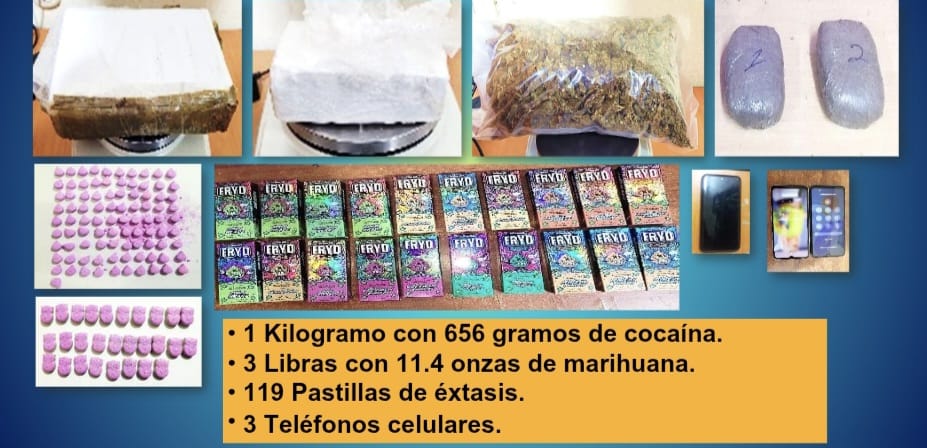
The police are no strangers to this type of crime. In fact, in February 2025, they dismantled a gang whose members were identified as Freddy Antonio Dávila Zalazar and Carlos Roberto Vargas Espinoza, who operated in Managua’s Third and Fifth districts. According to a report published on the website of the pro-government channel Viva Nicaragua Canal 13, the drugs were sold in several nightclubs in the capital, especially in the Zona Rosa.
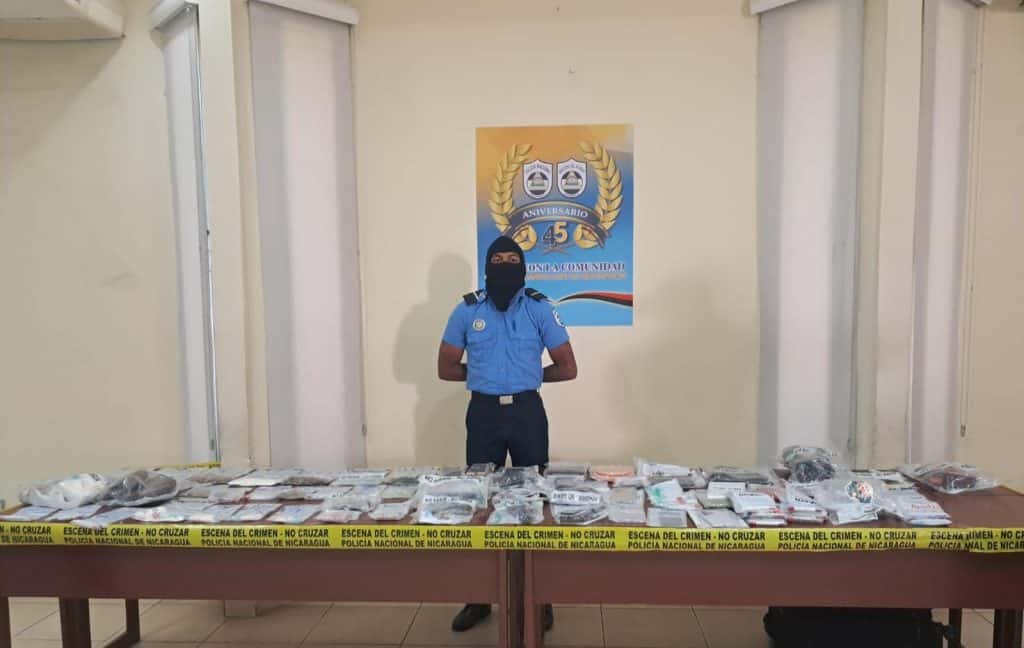
A month later, the police carried out another operation in which they arrested 23-year-old Eloísa Antonia Ramírez Gaitán, who admitted to being the owner of a storage facility for marijuana and ecstasy pills that operated out of her home in the Lomas del Valle residential neighborhood, in Managua’s Fifth District.
According to the Sandinista police, Ramírez Gaitán managed a network of contacts that included small-time dealers, who were responsible for delivering the drugs to key locations, such as nightclubs and bars in central areas of Managua. She used WhatsApp to coordinate drug deliveries until February 20, when one of her dealers was arrested with a considerable amount of ecstasy and marijuana.
“The detainee provided the necessary information that led authorities to Ramírez Gaitán’s home, where they seized 129 ecstasy pills, a considerable amount of marijuana, and several e-cigarettes,” Radio Ya reported on its website.
The source linked to the Ministry of the Interior, who spoke with DIVERGENTES on condition of anonymity to avoid reprisals from the Sandinista regime, pointed out that although the police “cracked down” on these dealers, this does not mean there is an ongoing crackdown against those engaged in these criminal activities, given that, according to the testimonies of those interviewed, drugs are sold regularly in Managua’s nightclubs.
“Come on a weekend, pretend to be new here, and if you ask around, you’ll find a dealer. Sometimes even the waiters themselves get involved in that. It’s a business that, for financial reasons, hasn’t been completely eradicated,” said an employee at one of the nightclubs, expressing concern over the authorities’ lack of interest in firmly addressing this scourge.