
Before embarking on the journey from Managua to Madrid, she was told she would have to pay double the actual cost of the plane ticket that would take her to Spain. Andrea, who was 28 years old in 2017, agreed. That January, she had been fired from the casino where she worked in the capital, and a friend put her in touch with a Nicaraguan woman living in Bilbao, in northern Spain, who supposedly would help her find a job caring for the elderly. A couple of months later, in April, she packed a few changes of clothes into an old suitcase bought at the Mercado Oriental and emigrated.
Here in Spain, the promise of a job vanished.
The woman who had told her what to say if the police detained her at the airport, who bought her plane tickets with layovers in Panama City, Panama, and who promised her a better life as soon as she set foot on Spanish soil, didn’t even try to pick her up at the Madrid airport.
She gave her instructions over the phone on how to get to Bilbao, where she was waiting for her. There, she put her up in a room she would share with another Nicaraguan woman, for which she had to pay about 300 euros a month starting that very day. It was April 23. Andrea still remembers the date.
“How am I supposed to pay if I don’t have a job?” she snapped.
That hadn’t been the agreement. During the two months they spoke before the trip, no one mentioned a debt of thousands of euros. She didn’t ask either. She assumed that the woman, skilled at convincing her, would help her with room and board while she found a job. The 1,300 euros that the Nicaraguan woman herself had sent her via Western Union—to present to immigration authorities as proof of financial solvency and to pretend she was entering Spain as a tourist—were taken from her as soon as she arrived. Shortly afterward, she learned she owed 5,000 euros: the inflated cost of the plane ticket, a month’s rent for the room, and other expenses she no longer remembers precisely. A month after arriving in Spain, she found work caring for a 60-year-old man. In less than a year, she had paid off the entire debt.
She never wanted to report what happened to her.
***
Andrea’s case was not the only one.
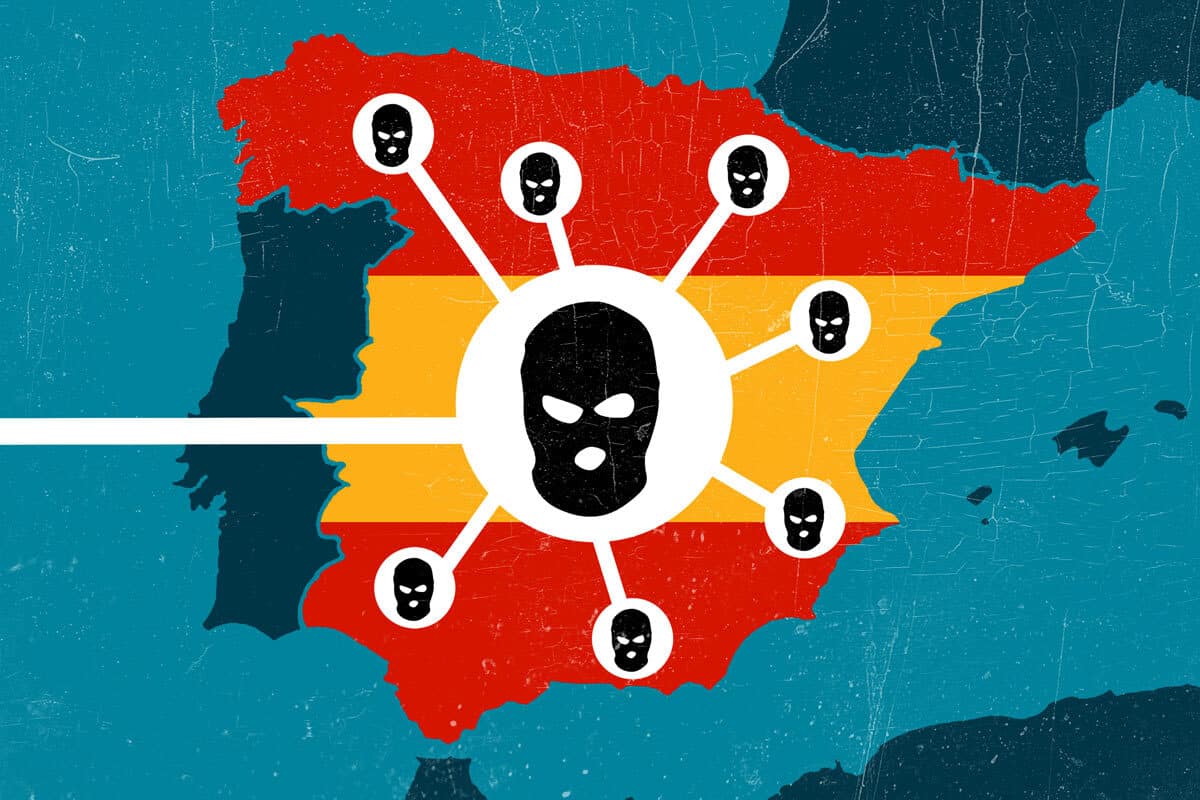
For years, a group of Nicaraguans living in the communities of La Rioja and Aragón, in northern Spain, built—according to the Spanish Public Prosecutor’s Office—a network dedicated to recruiting women in Nicaragua, facilitating their entry into Spain, and subjecting them to debts that could exceed 7,000 euros.
According to the indictment, to which DIVERGENTES has had access, this system operated through family contacts and trusted networks on both sides of the Atlantic, which arranged travel, initial accommodations, and entry into European territory under the guise of tourist visas. Once in Madrid, the women were sent to homes in various locations, where they were saddled with a debt tied to the costs of the trip and other associated expenses.
Although Andrea is not a subject of the Civil Guard’s investigation, her experience reflects the same pattern of debt and vulnerability described in the court records. The case has been open since 2019. The organization operated at least between 2016 and 2019 and is alleged to have moved thousands of euros through systematic collections from migrant women in precarious economic situations.
The Prosecutor’s Office maintains that the structure functioned as a family network divided between the cities of Chinandega in Nicaragua and La Rioja and Huesca in Spain. Seven Nicaraguans are charged with the crimes of illegal immigration, coercion, participation in a criminal organization, and money laundering.
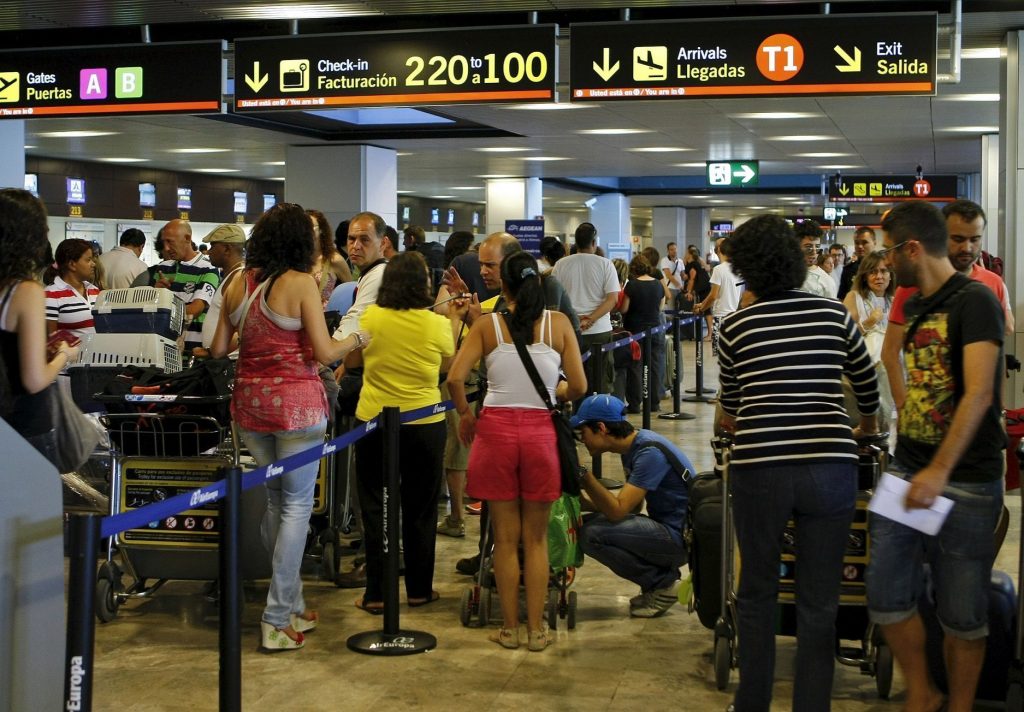
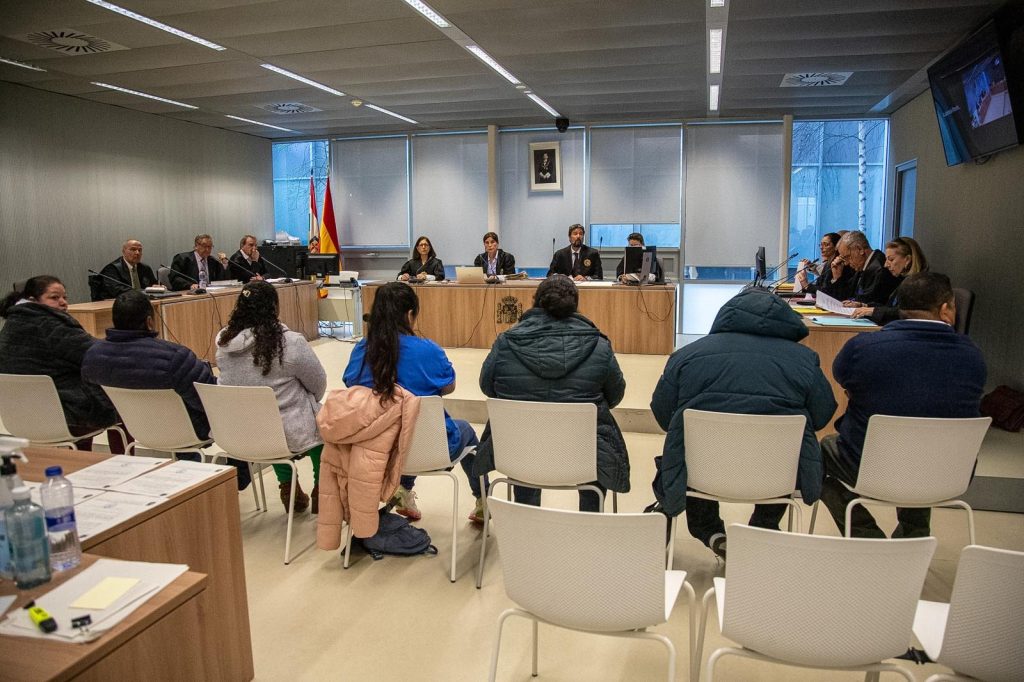
If found guilty, most of the defendants face sentences of between four and six years in prison. They remain free while the proceedings continue. On March 25, 2026, they appeared in court to attempt to reach a settlement with the victims and the Prosecutor’s Office, but the negotiations failed and the case was set for trial in February 2027. The arrest of one of the defendants at the Madrid airport in July 2019, after she arrived from Nicaragua accompanied by three women under her control, was one of the incidents that allowed the Civil Guard to reconstruct the operations of the alleged human trafficking network.
Some victims have been harassed over payments in the midst of the legal proceedings.
***
There are approximately 840,000 undocumented immigrants living in Spain, a significant proportion of whom are women who have fled violence or poverty in Latin America. For many Latin American women, the journey does not end at Madrid’s airport, but rather in an administrative maze: the Immigration Law forces them to wait years to regularize their status and drives them, with almost no alternatives, to the most precarious margins of the labor market. Along this path, wages rarely reach the legal minimum and, in many cases, barely reach half of it.
Domestic work and caregiving have become the primary destination for this workforce, which is rendered invisible by Spanish society.
Maryorit Guevara, president of the Movement of Migrant Women of Extremadura, rejects the idea that migrant women are “vulnerable” by nature.
“They aren’t vulnerable; they are being victimized,” she asserts. In her view, it is the immigration and labor system itself that pushes them into the underground economy and leaves them exposed to networks of exploitation.
“The need to escape poverty, gender-based violence, or even political persecution forces them to accept debt agreements,” argues the human rights defender. In many cases, she adds, the very networks of trust or friendship that offer help with migration can end up functioning as structures of exploitation based on precarious work and economic dependence.
According to data from Intermón Oxfam and the Red Tiempo de los Derechos, 69% of people employed in the domestic sector are foreign nationals, and of these, 32% work in the completely informal sector, without a contract or Social Security contributions. In the shadows.
The International Labour Organization (ILO), in its 2025 report, warns that gender and origin gaps not only persist but have widened: migrant women earn 25% less than their local counterparts, and in domestic service, they may work more than 60 hours a week. Civil society organizations denounce these conditions as contemporary forms of servitude.
Guevara denounces that Spanish companies also exploit undocumented migrant women.
***
The trafficking network earned at least 97,000 euros between 2017 and 2019.
One of the women was charged as much as 60 euros for basic medications, such as acetaminophen and period-cramp pills. The financial control imposed on the victims was not limited to the initial debt for the trip, but extended to every daily expense, no matter how small. This was reflected in a notebook hidden behind a dresser in one of the defendants’ rooms, which the Civil Guard found during the investigation. There, handwritten notes spanning years of activity—from 2009 to 2017—documented the payment system applied to various migrant women.
On one of those pages appeared the name of an alleged victim identified as “Raquel.” Under her entry, various amounts were detailed: 300 euros for the flight, 2,050 euros for an unspecified item, and another 2,500 euros for “interest.” Added to that sum were small expenses such as taxi fares, phone bills, a suitcase, or clothing. The total: 7,170 euros. According to the investigation, the notebook served as a parallel ledger for an exorbitant debt.
The Spanish Prosecutor’s Office maintains that this scheme—from the illegal smuggling of women into Spain to the creation and relentless collection of abusive debts—was repeated for years. Although dozens of women are believed to have gone through this circuit, only 26 decided to cooperate with the police.
The victims themselves were used to move the network’s profits through remittance transfers to Nicaragua. The money circulated in small, fragmented amounts, distributed among family members and third parties to avoid arousing suspicion. Between 2017 and July 2019, the investigation traced dozens of transfers made from Spain to Nicaragua, both by members of the organization and by indebted women who sent money using names linked to the network. The fragmented circulation of remittances indicates an attempt to conceal the origin of the money and the economic scale of a business built around the need to migrate. Part of those funds ended up being invested in properties in Chinandega.
The network’s actual profits could have been even higher.
***
The mother of one of the ringleaders acted as a liaison in Chinandega.
The business began to take shape when two of the defendants, who had been living in Spain since 2014 and 2015, noticed the growing demand for women to care for the elderly and the sick. From that point on, they set up a recruitment network in their home country. The process was repeated over and over: the defendants paid for the plane tickets and advanced each woman around 1,000 euros to facilitate her entry into Spain as a tourist. Once she had cleared immigration, that money became a debt that could reach between 5,500 and 6,000 euros.
In practice, that debt marked the beginning of a new life in Spain. Some women handed over their passports as collateral and became trapped in a relationship of economic dependence while working as caregivers or domestic workers. According to the investigation, the victims’ irregular immigration status was also used as a means of pressure. Phone recordings included in the case file reveal conversations in which the defendants advised the women to avoid public spaces so as not to be identified by the authorities.
Some victims performed demanding jobs.
***
Andrea was told she would earn 1,000 euros.
She had mapped out a life plan that began with leaving her 10-year-old son in the care of her mother in her native Nueva Guinea. With that salary, they told her, she could easily cover the plane ticket and initial expenses. “They told me: you won’t spend a thing; they’ll provide room and board,” she recalls of the promise made by the woman who arranged her trip and who later took advantage of her siruation. But the reality was quite different. Although she barely spent a few hours in the room, the charges kept piling up. They continued to bill her month after month for a supposed stay that never matched her actual use. It wasn’t until more than a year later that she began to see a slight financial improvement.
In this regard, advocate Maryorit Guevara maintains that the exploitation of women through the collection of exorbitant debts has been occurring in Spain for years. “Having someone pay for a woman’s plane ticket may seem like a generous offer, but it’s part of a scam when they’re told they’ll make a lot of money in Spain and it’s not true,” she states.
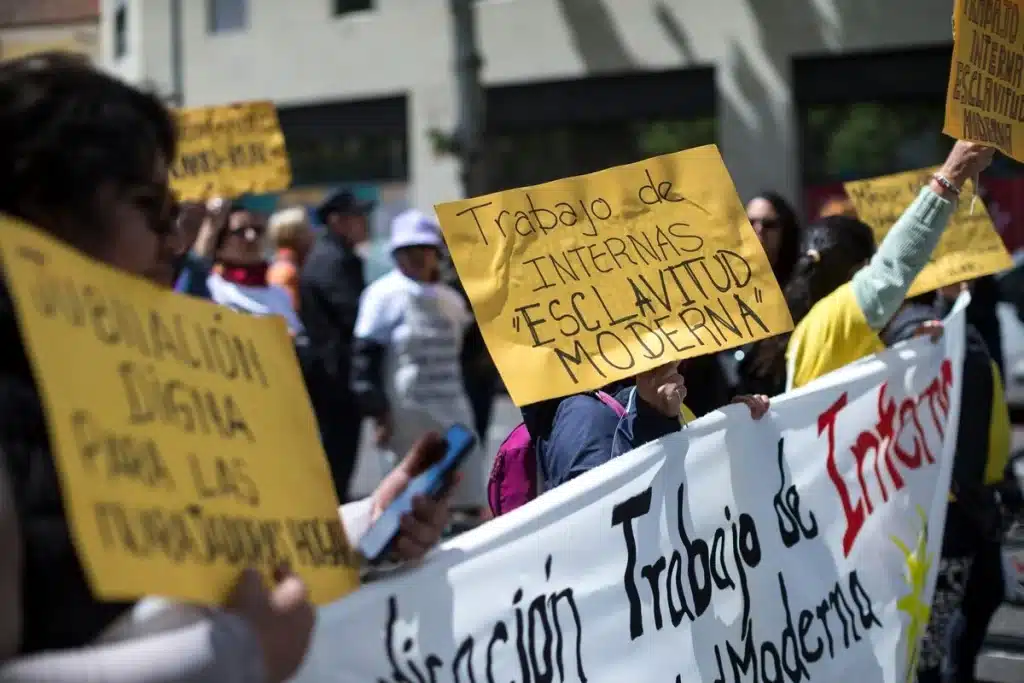
She explains that not all women even earn the minimum wage, and many end up making around six euros an hour, as is the case in the community where her organization supports dozens of migrant women. “Both the mafias and the system in Spain itself take advantage of women’s desperation,” she adds.
According to Guevara, the reason many women do not report these cases stems from a combination of fear, distrust of institutions, and direct threats. They fear being deported, not being believed, or facing retaliation from the very networks that recruited them.
“Or reprisals from these criminal groups themselves: they know the women’s families, they’re people they’ve grown up with, the neighbor who told them, ‘If you go to Spain, I’ll get you a job.’ Faced with all these fears, the last thing that occurs to them is to report it,” she explains. Her organization has also documented that, in some cases, women feel that when they go to police stations, their irregular administrative status ends up influencing the institutional response.
Silence is a form of survival.
***
There are many women like Andrea. One knows another, and that one knows another, and another, and another. Some, after years of living in an irregular status, have begun this year to start the process of obtaining legal residency in Spain, taking advantage of a special regularization process.