
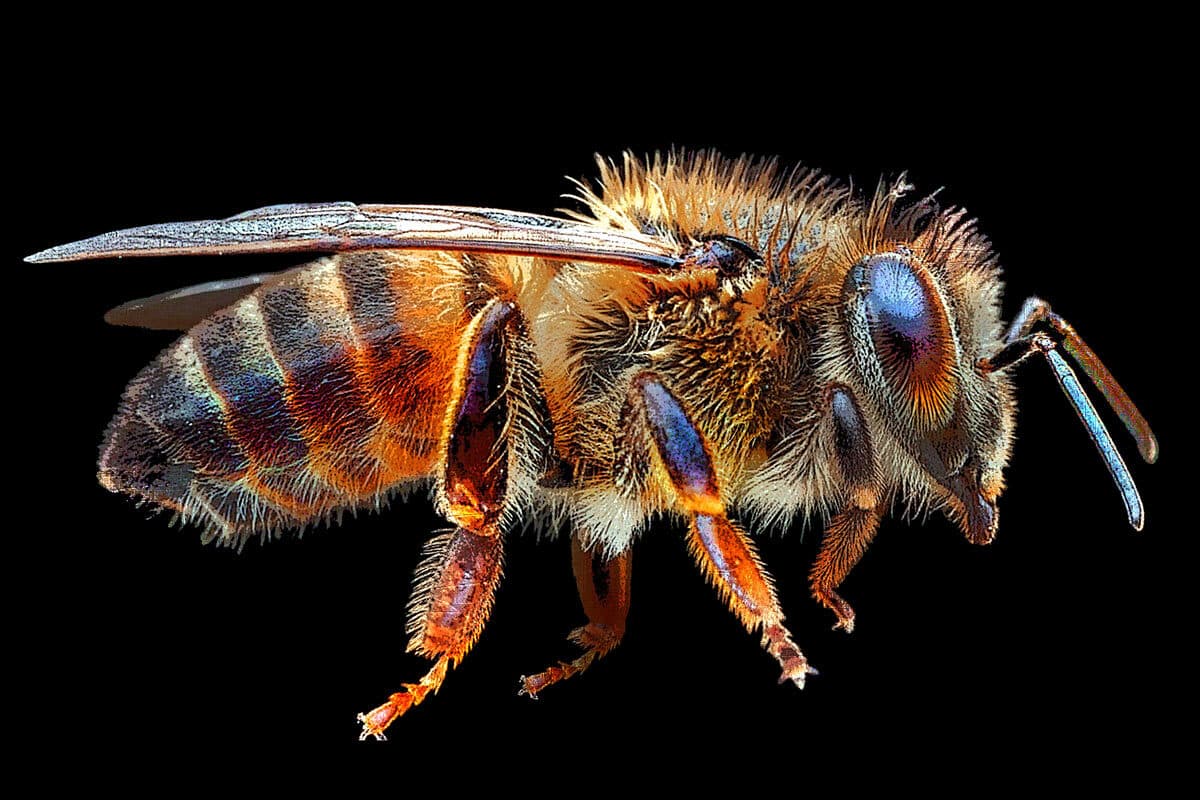
In Nicaragua, a country where Africanized bees have been present since the ’80s and can kill within minutes, there are no clear public health protocols in place to mitigate risks when health ministry teams carry out operations in the field. Nor are there any educational campaigns to guide the public in the face of a real and documented danger.
The recent death of three members of the same family in La Palma, Juigalpa—following an attack that residents attribute to a fumigation carried out by a Ministry of Health (or Minsa, its acronym in Spanish) team—exposes a danger that has been present for years and continues to occur without prevention.
While swarm control typically falls to fire departments, and the Ministry of the Environment and Natural Resources (or MARENA, its acronym in Spanish) has jurisdiction over wildlife and its management, the health system also intervenes through brigades, without any coordination or shared protocols to prevent risks.
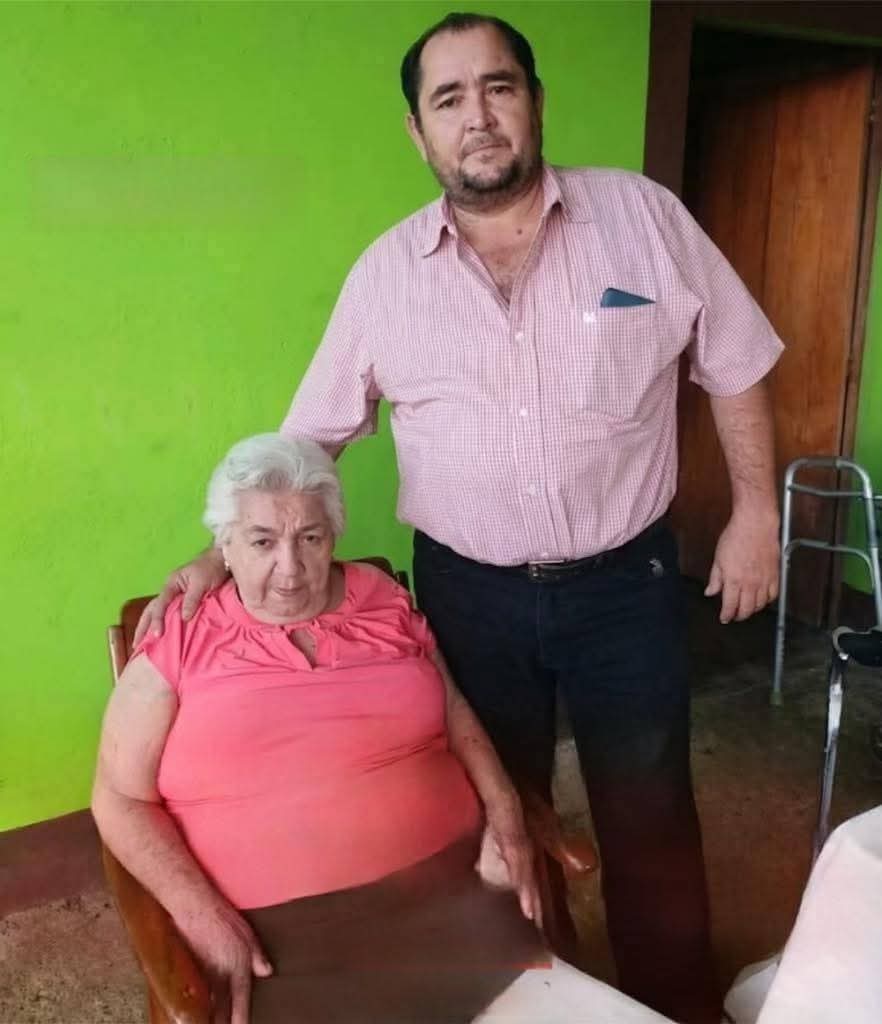
The attack that took place in La Palma, Juigalpa, on April 15, 2026, left at least seven people injured and three dead. Elías Rodríguez Duarte, 58, died on the day of the attack after trying to protect his mother. Antonia Duarte Castillo, 87, died ten days later. Jimmy Hair Rodríguez, 35, died on May 1 after being hospitalized.
Testimonies gathered by local media agree that the swarm became agitated during a fumigation carried out by a Ministry of Health (Minsa) team. Despite the seriousness of the incident, the Ministry has not yet issued a public report explaining what happened or the measures taken during and after the incident.
“If those jerks from the Ministry of Health stirred things up and didn’t warn my family—Cousin Elías Rodríguez Duarte, Mom Toñita, Jimmy…—we have to sue those guys from the Ministry of Health who just stirred up the swarm of bees and ran off… and left behind a lot of damage to my family. Let’s join our voices and sue them,” said a relative of the victims.
Lacking Protocols in the Recent Tragedy
For Dr. José Antonio Delgado Alvarado, who holds a master’s degree in public health, this tragedy is the result of a failure in risk management within the healthcare system. “Human error caused the hive to go into a frenzy. It is a direct, administrative error that is never investigated within the healthcare system,” he states.
The specialist maintains that the risk was foreseeable and should have been part of operational protocols in areas where the presence of Africanized bees has been known for decades.
“If it is already known that there are Africanized bees throughout the country and how they react, that information must be conveyed to the response teams. Here, there was a failure in the preparation and implementation of protocols,” he notes.
In his view, responsibility is not limited to the personnel who carried out the fumigation but extends to the chain of command responsible for establishing clear guidelines for field operations. “The director of SILAIS [System of Local Healthcare Clinics] is responsible for the protocols. If they exist, they were not followed. And if they do not exist, it is an institutional failure,” he argues.
High Mortality Rate Without Public Prevention
The public health expert explains that Africanized bees have characteristics that make them particularly dangerous. They attack in swarms, react to even the slightest provocation, and can chase a person for several hundred meters.
A swarm can mobilize between 300 and 1,000 bees in seconds. A victim can receive more than 500 stings in just a few minutes, causing systemic poisoning from the venom.
“Complications include muscle damage, kidney failure, heart problems, and respiratory distress. In allergic individuals, a single sting can cause anaphylactic shock,” said the expert.
The Ministry of Health’s National Health Map does not include a specific category for deaths from bee attacks. These cases are grouped under “other external causes.” This classification makes it impossible to know how many people die each year from this type of incident.
The few available records come from press reports—mostly published by pro-government media—which document at least 13 deaths from Africanized bee attacks between 2023 and 2026.
The Most Tragic Incidents

The deadliest incident documented in recent years occurred in 2023. A massive attack in the municipality of San Sebastián de Yalí, in Jinotega, left at least six people dead following a traffic accident that disturbed a swarm, while in Matagalpa another fatality was reported in a separate incident, bringing the total number of victims to seven in a short period. In total, dozens of people were affected by these attacks in the northern part of the country.
In 2024, incidents continued in the North Caribbean Coast Autonomous Region, particularly in areas such as Mulukukú, where at least two deaths and several injuries were reported following attacks on rural communities. Among the victims was a man who requires a wheelchair and was therefore unable to escape the swarm, emphasizing the high level of vulnerability to this type of attack.
The most recent episode was reported on Thursday, May 7 in Ocotal, Nueva Segovia, where a swarm of Africanized bees students and faculty in the Monseñor Madrigal School, which required everyone to evacuate the school premises. The Fire Department took control over the situation and provided first aid to the people who had been stung.
A legal expert consulted for this report, who asked to remain anonymous for security reasons, maintains that a case like the one that occurred in La Palma would have legal consequences in a context of institutional independence.
The legal expert explains that if it is proven that a mishandled intervention by the Ministry of Health’s sanitation brigade triggered a swarm in an area where the risk is known, there would be sufficient grounds to investigate potential liability for negligence in the performance of public duties.
“We are talking about an action by a public entity that resulted in the deaths of three people. In a normal country not ruled by a dictatorship, that would trigger oversight mechanisms, audits, and even criminal charges. The bees are not the problem; institutional irresponsibility is,” he points out.
The History of Africanized Bees in Nicaragua
Africanized bees are not a new phenomenon in Nicaragua. Research by the National Autonomous University of Nicaragua, published in 2017 in its institutional repository, documents their arrival in the country in 1984 as part of the species’ natural expansion from South America. Since then, they have fully adapted to the tropical environment.
The Food and Agriculture Organization of the United Nations (FAO) has described their impact in Nicaragua as a transformation of the beekeeping sector, while technical reports from Bluefields Indian and Caribbean University (BICU), released in 2020, confirm their presence throughout the country.
A technical report from that university, located on the Caribbean coast, shows that the bees thrive in various ecosystems across the country, from forested areas to urban zones. The study confirms that these are not isolated pockets but rather a nationwide presence. Even so, there is no clear strategy among the institutions responsible for managing them.
A Threat That Also Serves a Purpose
Africanized bees are not an alien species to the ecosystem, nor do they play a negative role in and of themselves. They are a variant of the honeybee (Apis mellifera), the same species that produces honey and plays a key role in pollinating crops and plants.
According to the Food and Agriculture Organization of the United Nations, bees are essential for food security, as a significant portion of crops depends on their pollination efforts. In tropical regions, moreover, Africanized bees have demonstrated a high capacity for adaptation and resilience.
The difference lies not in their function, but in their behavior. Unlike other bees, they react more quickly and aggressively to stimuli, attack in groups, and can pursue a person over long distances.
Without proper management or clear protocols, a species that is key to environmental balance can become a risk to the population.
Recommendations Not Taught in Nicaragua
Unlike Nicaragua, countries such as Costa Rica and Panama do provide the public with information on how to prevent and respond to attacks by Africanized bees. Fire departments and civil protection authorities in these countries have developed public guidelines and recommendations that advise people on what to do before, during, and after an attack.
Here are some of the basic measures that are shared in other countries:
How to identify and avoid a swarm
- Pay attention to loud, constant buzzing sounds from bees in trees, roofs, or structures
- Avoid areas where bees are seen flying in and out of the same spot
- Do not approach visible hives, even if they appear inactive
- Keep your distance from areas with vibrations or machinery, such as hedge trimmers or engines
- Alert the fire department and do not attempt to remove the swarm on your own
What to do if you spot a swarm nearby
- Move away slowly without making any sudden movements
- Avoid making noise, banging, or causing vibrations near the area
- Do not throw objects at them or try to scare them away
- Warn others in the area, especially children and older adults
- Contact emergency services for assistance
What to do during an attack
- Run immediately in a straight line as fast as possible
- Protect your face with clothing or your hands
- Seek shelter in an enclosed space, such as a house or vehicle
- Avoid jumping into water, as the bees may wait to continue attacking
- Do not wave your hands or try to scare them away
- Once safe, remove the stingers by scraping the skin
- Seek urgent medical attention if there are multiple stings or difficulty breathing
Meanwhile, in Nicaragua, people remain exposed to these attacks without clear guidance. In a scenario where a swarm can kill in minutes, not knowing what to do can mean the difference between life and death.