
Twenty years ago, Venezuela and China announced one of the most important development projects in South America: a high-speed train spanning roughly 468 km that would link the central plains with the east of the country, connecting towns from Tinaco (Cojedes state) to Anaco (Anzoátegui state). The project, presented with great pomp and slated to open around 2012, was supposed to feature tunnels, bridges, and the capacity to transport millions of passengers and tons of cargo each year. However, following a multimillion-dollar investment backed by a binational fund with Beijing and the involvement of Chinese companies, only a minimal fraction of the work has been built today. Much of the infrastructure remains abandoned, reduced to the ruins of an ambitious initiative that never materialized.
More than a decade later, the Tinaco-Anaco railway project stands as a prime example of the disconnect between grandiloquent announcements and the actual results of cooperation with Beijing in regimes lacking transparency. The Venezuelan experience serves as a parallel to gauge what is happening in Central America. Ever since Managua reestablished diplomatic relations with the People’s Republic of China in 2021, the regime of Daniel Ortega and Rosario Murillo has paraded a series of infrastructure projects and strategic agreements as the prelude to a new era of development.
One of the most emblematic projects announced following the reestablishment of relations with Beijing is the reconstruction, expansion, and modernization of the Punta Huete international airport, located 58 kilometers northeast of Managua. According to the regime, the project would be financed by China with an estimated investment of $430 million and completed in 2028. Its execution was awarded to the state-owned China CAMC Engineering Co., Ltd. (CAMCE), a firm with a presence in several infrastructure projects across Latin America.
However, sources consulted by DIVERGENTES within the Ministry of Transport and Infrastructure (MTI) point out that, beyond official announcements, there has been no significant progress at the site of the prospective Punta Huete international airport in San Francisco Libre. Recent photographs published by the Chinese Embassy in Managua itself in February 2026 show few signs of construction, despite the hundreds of millions committed to the project and the $107 million Nicaragua has already paid in advance.
“The order is to improve the current airport in Managua,” an MTI technician states on the condition of anonymity, referring to the lack of movement at Punta Huete. This situation highlights the gap between official promises and the scarce progress on the ground. It raises the question of whether this is genuinely a strategic project underway, like the failed Venezuelan train, or simply a prop in the development narrative the regime sells under the umbrella of China.
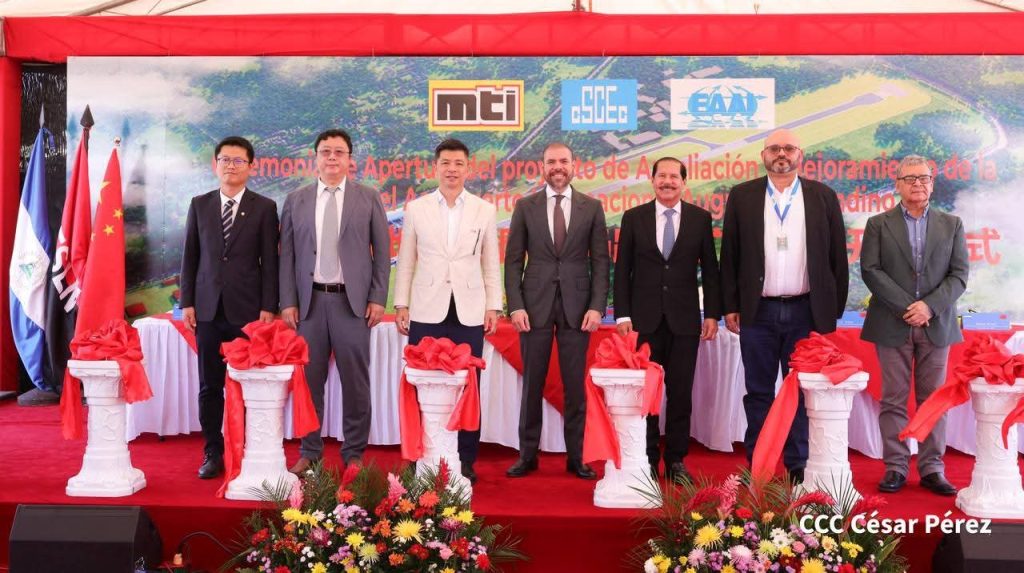
Heavier machinery movement has instead been concentrated at the Augusto C. Sandino International Airport in Managua. There, the regime, alongside the Chinese company China State Construction Engineering Corporation (CSCEC), is carrying out expansion and modernization work to upgrade the air terminal’s classification from category 4D to 4E. The work includes extending the main runway by 858 meters to reach a total length of 3,300 meters. The new dimensions will fall just 300 meters short of what was projected for Punta Huete, reinforcing the perception that the operational priority is actually the capital’s terminal on the North Highway, rather than the ambitious airport announced northeast of Managua.
A threat to United States security?
Evan Ellis, a research professor of Latin American studies at the Strategic Studies Institute of the U.S. Army War College, observes a pattern similar to that of other countries with weak institutions, such as Venezuela during the Hugo Chávez era (1999-2013): the announcement of massive infrastructure projects that politically bolster the government in front of its base, but rarely translate into tangible benefits for the population. “China’s money helps the regime survive, but does not necessarily bring prosperity to the people,” Ellis argues.
One of the primary objectives of the 2026 United States National Defense Strategy (NDS) is precisely to “deter China” in the hemisphere. The White House, through the State Department, has expressed concern over the rapprochement between Beijing and Managua.
Even so, Ellis considers that Nicaragua carries the same weight for China today as it did for the Soviet Union in the last century, owing to its bi-coastal position and proximity to the United States. Furthermore, he posits that the relationship between Beijing and Managua does indeed represent a security threat to the North American power.
“The geographical position and an authoritarian government create many opportunities for China. But not all things from China are going to bring prosperity to the Nicaraguan people,” he acknowledges.
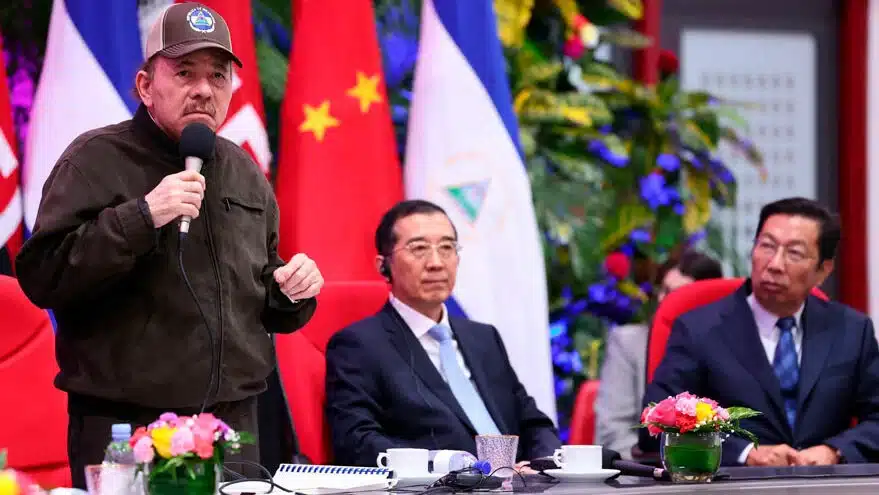
Between 2023 and 2025, the Government of Nicaragua signed at least 13 loans with institutions based in the People’s Republic of China to finance infrastructure projects and the acquisition of goods, mostly executed or supplied by Chinese companies. The financial terms of these agreements have drawn scrutiny, as the credits establish relatively short 15-year repayment periods and include interest rates ranging between 4% and 6%, alongside hefty management and structuring fees.
“What I see is that these projects help Ortega’s inner circle; they give the appearance of prosperity, but it isn’t real. China helps the regime survive, but not necessarily by providing prosperity, because that depends on governance and transparency,” Ellis continues.
Not all analysts interpret the relationship between Managua and Beijing as a decisive strategic expansion by the Asian giant. For Manuel Orozco, director of the Migration, Remittances, and Development program at the Inter-American Dialogue, the pivot responds more to a Nicaraguan initiative than a calculated Chinese geopolitical design.
“The Nicaraguan approach is to gradually reduce its dependence on the United States by following an ideological and pragmatic perspective of ‘diversifying’ dependence. However, this is unlikely to happen because China and Nicaragua are competitors, and what Nicaragua buys from China is not raw material for productivity, but consumer products,” Orozco assesses.
In his view, the turn toward Beijing does not entail a transformation of Nicaragua’s economy. “It does not necessarily strengthen political stability, but it facilitates economic clientelism with the elite surrounding Murillo,” he argues. In other words, rather than altering the country’s productive foundations, the relationship might simply be reinforcing internal power networks without changing external dependencies. “The reality is that Murillo neither has nor ideologically understands the Chinese system,” says Orozco.
Bowing to Beijing
Since the reestablishment of diplomatic relations in December 2021, Managua has systematically supported Beijing’s positions in multilateral forums, including the “One China” principle and critical stances against the United States and Europe regarding human rights. This rapprochement has been framed as part of a geopolitical reconfiguration toward a “multipolar” world.
Economically, however, the country’s structure of dependence has not changed substantially. The United States continues to be the main destination for Nicaraguan exports and the source of the vast majority of the remittances that sustain domestic consumption. China, in contrast, maintains a trade relationship predominantly geared toward the sale of consumer goods, which does not represent a significant shift in the national productive matrix.
In that sense, the pivot toward Beijing is reflected more heavily in the political arena than in the economic one. While official discourse emphasizes sovereignty and diversification, the country’s commercial and financial structure remains anchored to the U.S. market.
Analysts tracking Beijing’s presence in Latin America point out that China has entered a new phase of its regional strategy. This phase is characterized by a more targeted and diplomatic approach, moving beyond traditional loans and infrastructure. Instead of replicating a uniform model of massive investment, Chinese diplomacy has sought to forge more strategic bilateral relations, leaning on political and institutional networks that facilitate its economic and geopolitical interests in each country.
Margaret Myers, a senior advisor at the Inter-American Dialogue and professor at the Johns Hopkins School of Advanced International Studies, wrote an analysis arguing that “the days when Beijing flooded the region with loans and large-scale infrastructure projects may be over, or at least diminished, being replaced by a more deliberate engagement and a focus on specific sectors of Chinese interest, especially at the higher end of the value chain.”
The relationship with Nicaragua is part of a strategy in which China prioritizes political agreements and diplomatic presence, even when the actual economic dynamic is not necessarily accompanied by genuine development.
In a context of strategic competition with the United States, maintaining allies in Central America, a region historically considered a U.S. sphere of influence, carries symbolic and geopolitical significance, according to the experts consulted. Nicaragua’s bi-coastal location, its proximity to the Caribbean and the Pacific, and its willingness to sign cooperation agreements without major institutional conditions broaden the margin of Chinese presence in the hemisphere.
However, analysts point out that Beijing does not appear to be banking on a direct confrontation with Washington in Latin America. Rather than turning Nicaragua into a large-scale “economic enclave,” the relationship fits into a flexible strategy: securing diplomatic allies, expanding business presence, and keeping options open without assuming major political costs.
Contrary to the official narrative, which presents the relationship with Beijing as the dawn of a new era of prosperity, the facts reveal a more nuanced picture, where progress through mega-investments is a mirage. Infrastructure announcements, multimillion-dollar loans, and diplomatic alignment have merely reinforced the regime’s political maneuvering room on the international stage.
Much like that ambitious Tinaco-Anaco railway, unveiled with great fanfare only to be left practically unfinished after years of promises and multimillion-dollar disbursements, the relationship between Nicaragua and China highlights the stark distance between promise and reality in cooperation agreements with Beijing.
The Venezuelan project, which only managed to build a fraction of the planned 468 km between Tinaco and Anaco despite committing billions of dollars in binational financing, ended up becoming a symbol of an alliance that failed to meet its goals.
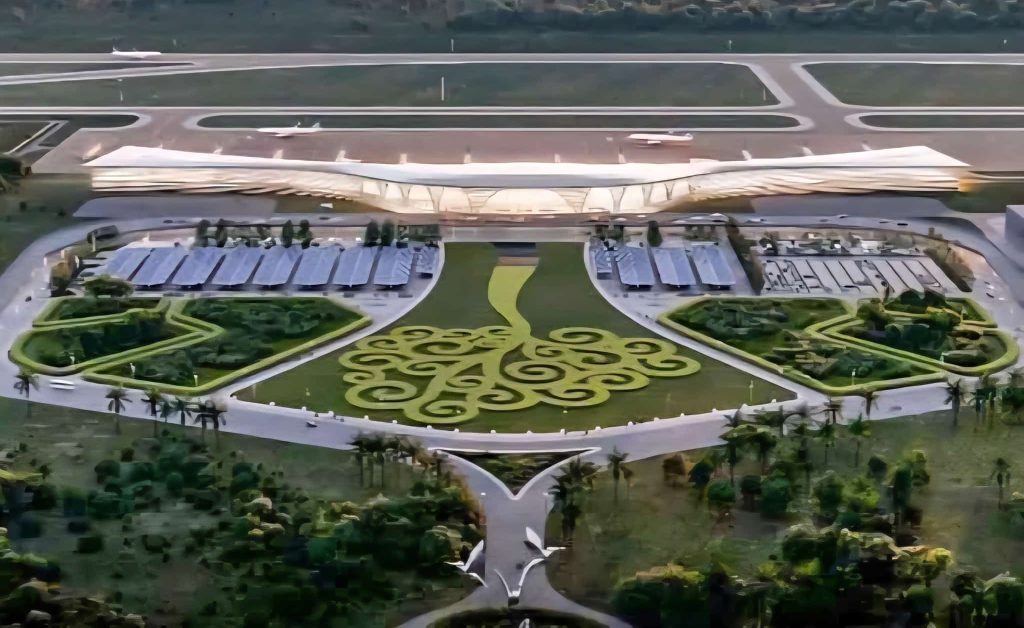
“Hugo Chávez did the same thing in Venezuela, and this tragedy is repeating itself in Nicaragua,” insists Ellis. In Nicaragua, announcements of Chinese-backed mega-infrastructure have served to feed a discourse of progress and diversification, but so far, tangible progress has been limited. If the train became the metaphor for broken promises in Venezuela, in Nicaragua, the lasting image might just be the airport that never took off. We will have to wait until 2028 to find out if it was all just a mockup.