
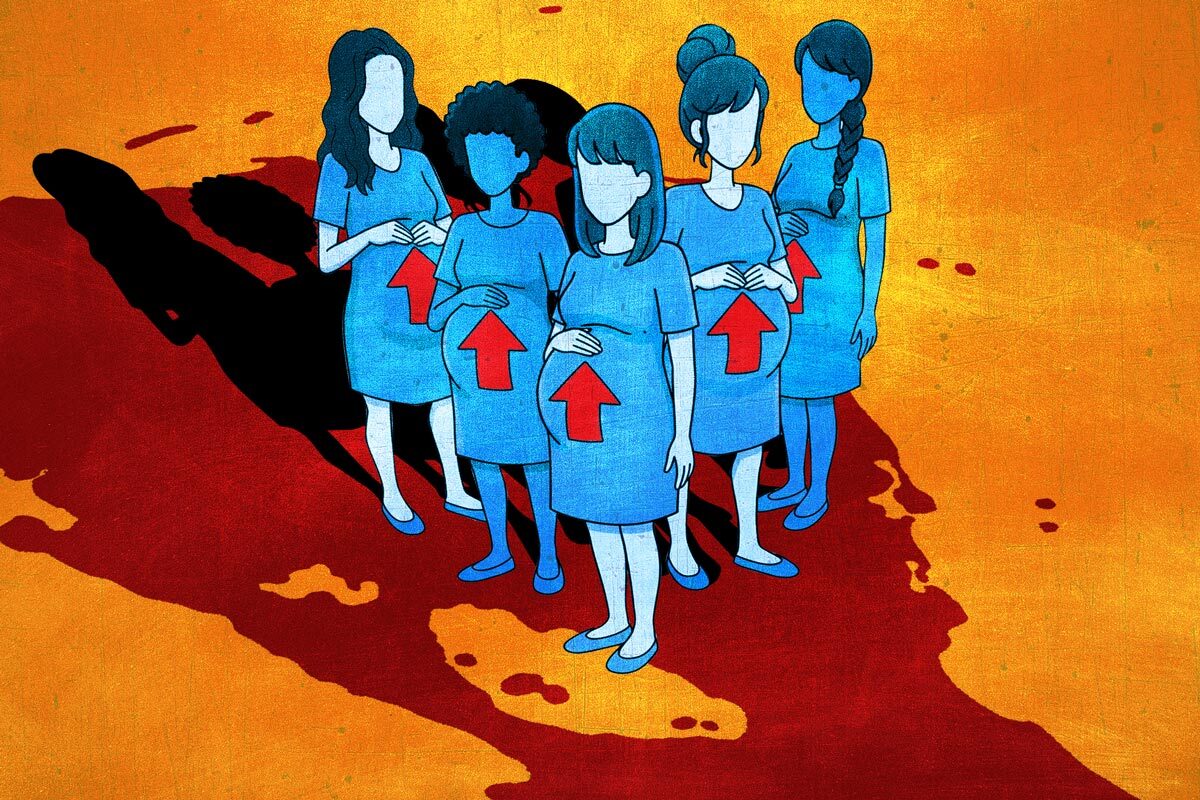
At age 16, Rosa María—name changed for safety—became pregnant by her mother’s husband in a rural community in Rivas. No one reported the sexual abuse committed by her stepfather, and her story ended up becoming one of the family’s biggest open secrets. While everyone remained silent, she was left to cope alone with a pregnancy that changed her life before she had even finished adolescence.
After giving birth, she moved to Managua to look for work. She left her son in the care of her mother, who ended up raising him. Over time, she rebuilt her life, started a family, and had two more children. But decades later, history repeated itself, although this time the man who impregnated her daughter was not part of the family circle.
At age 17, the young woman began a relationship with a man 27 years her senior and soon after became pregnant. No report was filed. The teenager was left alone to raise her child, repeating a cycle of early motherhood, violence, silence, and abandonment that experts consider deeply rooted in Nicaragua.
Stories like Rosa María’s continue to unfold daily in Nicaragua, the country with the highest rate of teenage pregnancy in Central America, where 93 out of every 1,000 adolescents between the ages of 15 and 19 become mothers, according to the most recent data from the World Bank.
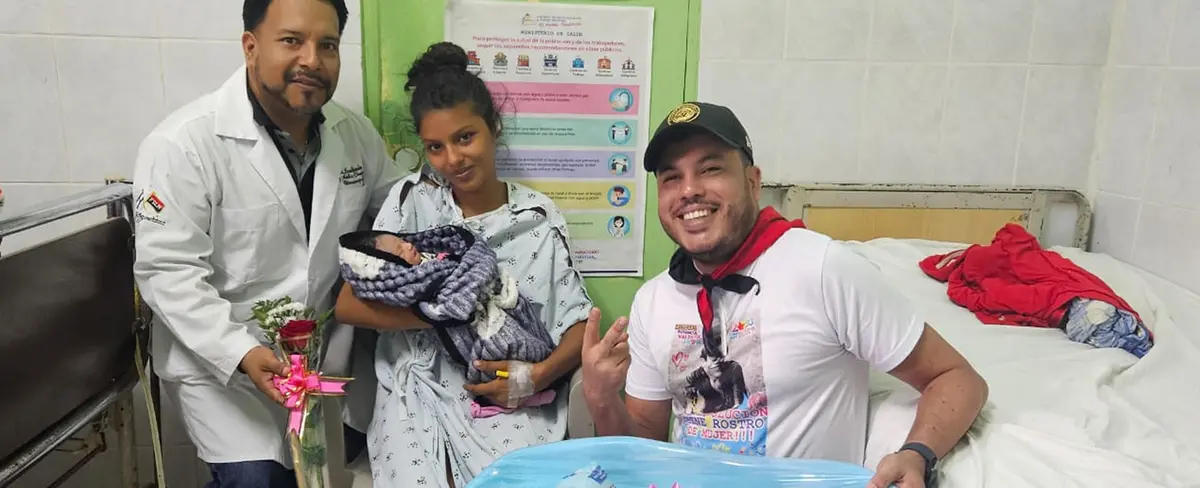
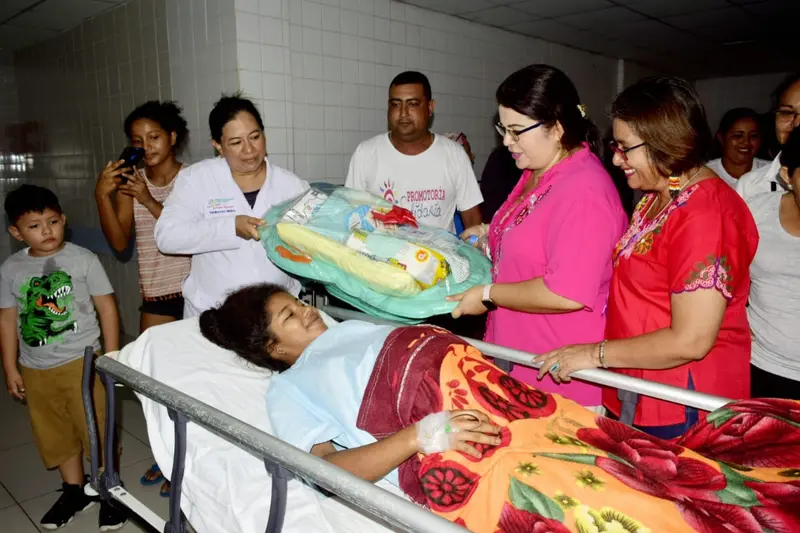
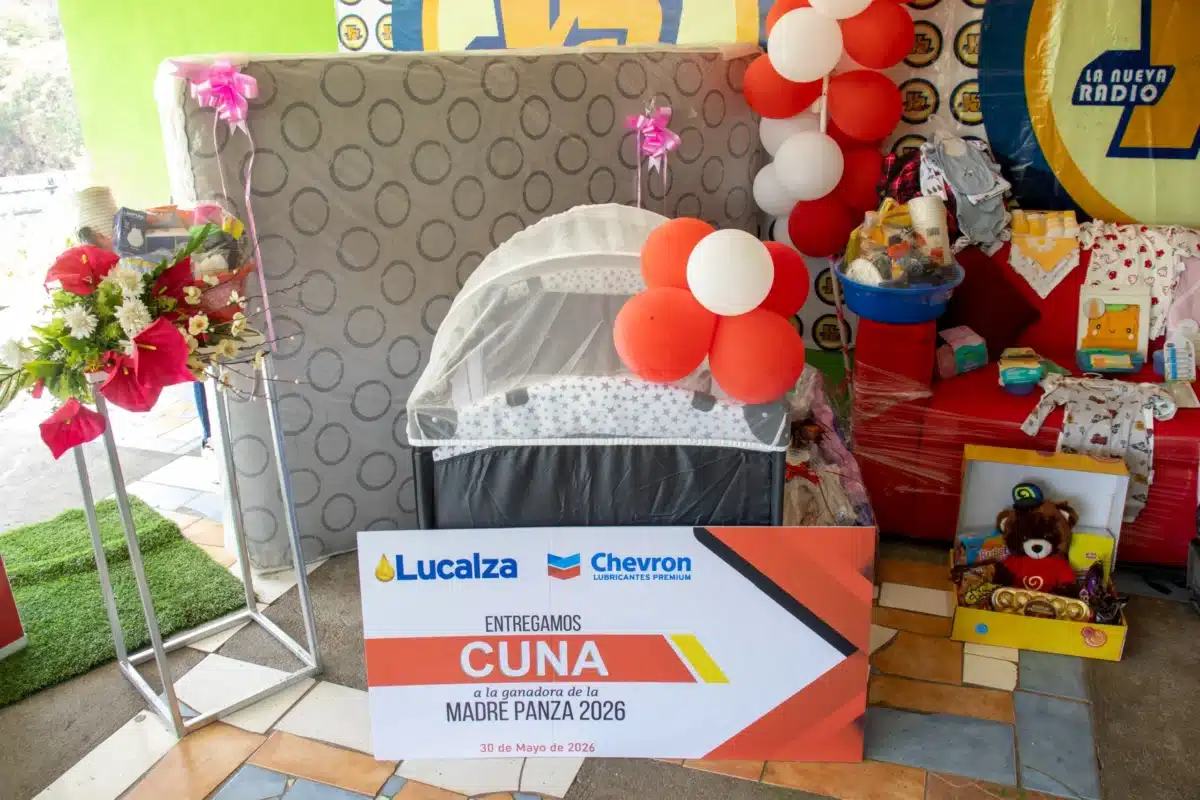
Meanwhile, the Sandinista regime, through its propaganda outlet Tu Nueva Radio Ya, is preparing for a new edition of “La Madre Panza,” a contest that rewards pregnant women and in which the only thing that matters in order to win is the size of their belly, not their age.
The event, promoted for the past 23 years as one of the most popular celebrations of Mother’s Day, which is observed every May 30 in Nicaragua, awards household appliances, cribs, and cash to the participants. Although pro-government publications typically omit the contestants’ ages, the photographs circulated throughout the pro-government media clearly show that a large number of the participants are teenage girls.
The most recent regional report, “Violence against Children and Adolescents in Latin America and the Caribbean,” prepared by the United Nations Children’s Fund (UNICEF) and the Pan American Health Organization (PAHO) and published in January 2026, warns that violence against girls and adolescents tends to worsen in contexts marked by poverty, exclusion, and weakened protection systems. The document also notes that such violence leaves lasting consequences on girls’ health, education, and emotional well-being.
“If a girl becomes pregnant and gives birth as a teenager, it is generally the result of rape,” warned Nicaraguan feminist activist Ana Quirós, who believes that the Sandinista regime and its pro-government media normalize these pregnancies, which are a consequence of the sexual violence suffered by girls and adolescents in this country.
Deterioration of Prevention Policies for Children and Adolescents
The most recent data from the World Bank, for 2024, ranks Nicaragua as the country with the highest adolescent fertility rate in Central America; Honduras ranks second with 81, followed by Guatemala with 68.
Panama and El Salvador report figures close to 50 teenage pregnancies, while Costa Rica has the lowest rate in the region, with approximately 25 births—less than a third of the figure reported in Nicaragua.
The regional gap highlights Nicaragua’s lag behind the rest of the Central American countries. While Costa Rica has managed to steadily reduce adolescent fertility over the past decade through policies on sex education, prevention, and access to reproductive health care, Nicaragua maintains indicators similar to those of the historically most underdeveloped countries in the region.
For José Antonio Delgado Alvarado, a gynecologist with a Master’s degree in Public Health, these figures—like those reported by the World Health Organization (WHO), which also ranks Nicaragua as one of the Central American countries with the highest adolescent birth rates—reflect the deterioration of prevention policies targeting children and adolescents.
“These national indicators show that public policies on preventing unwanted pregnancies, sexual abuse of minors, and access to contraceptives are deficient. Furthermore, they demonstrate that young people are not receiving adequate information about the risks of pregnancy and sexually transmitted infections. It is a failed and deficient national health policy,” he noted.
A History of Failure
Feminist activist María Teresa Blandón explained that since the 90s, Nicaragua has ranked among the Latin American countries with the highest rates of teenage pregnancy, historically competing with Guatemala, Honduras, and some Caribbean nations.
“What we’re talking about is that public policies to prevent pregnancy among girls and adolescents either don’t exist, are insufficient, or have failed,” Blandón stated.
The specialist believes that the figures reflect the state’s failure to fulfill its duty to protect girls and adolescents. She noted that early pregnancies significantly increase the risks of disease, obstetric complications, and maternal mortality, particularly in remote areas where health services are deficient or nonexistent.
“We don’t have to be doctors or scientists to understand that a girl’s body and an adolescent’s body are not fully developed and therefore are not prepared and lack the biological, psychological, and emotional conditions necessary to carry a pregnancy to term,” she explained.
Blandón added that the problem is exacerbated in contexts of poverty and malnutrition. “There are girls and adolescents who have died in childbirth,” she noted, referring to cases in rural communities and areas of the Caribbean Coast where adolescents must travel long distances to access medical care.
Pregnancies That Mask Violence
Blandón and Quirós agree that a significant proportion of teenage pregnancies in Nicaragua occur in contexts marked by sexual violence, coercion, and unequal power dynamics between adult men and adolescents.
International organizations such as the United Nations Children’s Fund (UNICEF) and the Pan American Health Organization (PAHO) warn that violence against girls and adolescents in Latin America tends to be exacerbated in contexts of poverty, exclusion, and weak child protection systems.
Blandón explained that early pregnancies often occur in contexts where adolescents face manipulation, threats, economic dependence, or relationships of subordination to older men. “There is a direct link between gender-based violence—including rape and sexual abuse—and pregnancy among girls and adolescents,” she stated.
The Nicaraguan sociologist in exile, Juan Carlos Gutiérrez, believes that the phenomenon also reflects historical patterns of macho domination rooted in the country’s social structure.
The Normalization of Early Relationships
In his view, many rural and semi-urban communities still have a culture that normalizes early relationships between adolescents and adult men, as well as early motherhood, as part of the transition to womanhood.
Gutiérrez noted that these dynamics are most visible in areas plagued by poverty, inequality, and a weak institutional presence, where adolescent girls face fewer protective mechanisms and higher levels of economic and social dependence.
The regional report by UNICEF and PAHO also warns that children and adolescents face greater risks of experiencing various forms of violence when living in conditions of poverty, exclusion, and limited institutional support.
The sociologist further noted that a significant portion of sexual violence against adolescents remains invisible or normalized within family and community dynamics themselves.
“In many rural and semi-urban communities, early pregnancy is still viewed as a culturally accepted transition to womanhood, even when laws penalize it. That does not justify it; it explains it and requires us to consider interventions with greater complexity,” he stated.
The Country That Undid Prevention
Both women’s rights advocates and Gutiérrez agree that the shutdown of feminist, community, and children’s organizations exacerbated the problem of teenage pregnancy in Nicaragua.
Between 2018 and 2024, the Ortega-Murillo regime shut down more than 5,000 civil society organizations, including groups working on sex education, violence prevention, reproductive health, and support for adolescents.
For Juan Carlos Gutiérrez, this policy created a “double institutional orphanhood” for girls and adolescents. “The state does not educate them, does not protect them, and the organizations that did so have been eliminated,” he stated.
Before being shut down, organizations such as CODENI, CISAS, and feminist collectives developed community programs in rural areas and vulnerable zones where the state education system had little presence or provided inadequate services.
The regional report Violence against Children and Adolescents in Latin America and the Caribbean, prepared by UNICEF and PAHO, highlights that various countries in the region have strengthened community programs, youth spaces, and family support as mechanisms for violence prevention and protection for adolescents.
Ana Quirós explained that much of the sex education in Nicaragua took place precisely through these types of community spaces. “Sex education in Nicaragua was carried out mainly through community spaces and, above all, by nongovernmental organizations,” she noted.
According to the activist, these programs promoted youth leadership, sexual violence prevention, and comprehensive sex education for adolescents. With the closure of these organizations, spaces for recreation, dialogue, and guidance for adolescents also disappeared. “Information about sexual violence, gender-based violence, and sex education has dried up,” Quirós stated.
The activist believes that the void left by the organizations was filled by misinformation and a lack of professional guidance. “This leaves young people at the mercy of TikTok or the internet to find information without much discernment,” she warned.
Gutiérrez agrees that the consequences are difficult to measure due to government opacity, but maintains that the elimination of comprehensive sex education programs and victim support services has left thousands of adolescents unprotected.
“Hotlines for victims of sexual violence, shelters, spaces for young women to build autonomy, and so on… all of that has disappeared,” she lamented.
Authoritarianism, Propaganda, and Control Over Bodies
The experts consulted and sociologist Juan Carlos Gutiérrez believe that teenage pregnancy in Nicaragua cannot be understood solely as a problem linked to poverty or a lack of education, but also as a consequence of political decisions made by the Ortega-Murillo regime in recent years.
“The weakening of public policies aimed at preventing teenage pregnancy in Nicaragua is neither accidental nor solely the result of institutional instability. It also stems from a conservative political and ideological orientation driven by the state, where the sexual and reproductive rights of women and adolescents have been subordinated to religious discourses, moral control, and social discipline,” stated Juan Carlos Gutiérrez.
The sociologist believes that the regime eliminated or weakened state and community structures that previously addressed gender-based violence, sex education, and support for adolescents.
“Far from being institutional ignorance, it is a political choice. The state decided to dismantle spaces for prevention, education, and care related to the rights of women and adolescents,” he argued.
The Regime’s Repressive Measures Exacerbate the Crisis
Gutiérrez noted that in recent years, the regime has pushed through regressive measures such as criminalizing therapeutic abortion, weakening the Women’s Police Stations, and enacting reforms to Law 779 that facilitated mediation between victims and perpetrators.
“All of this constitutes a systematic process of leaving women, girls, and adolescents unprotected. We are not talking about institutions that ceased to function due to incompetence, but rather structures that were deliberately dismantled by this dictatorship,” he stated.
Quirós believes that the state education system has completely abandoned comprehensive sex education and prioritized political propaganda over preventive information for adolescents.
The regional report Violence against Children and Adolescents in Latin America and the Caribbean, prepared by UNICEF and PAHO, warns that schools, community programs, and youth support spaces are essential for preventing violence and reducing risky behaviors among adolescents when there are sustained public policies on education and protection.
The activist noted that state institutions and pro-government youth organizations “have done absolutely nothing to educate children and adolescents about their sexuality.”
Lack of Political Will to Promote Sex Education
Blandón also believes there is a strong conservative influence within the government and among religious sectors that have historically blocked sex education and prevention policies.
“There is no sex education. Three sex education manuals were attempted between the 90s and 2016. None of them worked because there is no political will on the part of the government,” she stated.
For Gutiérrez, authoritarianism has direct effects on the reproduction of gender inequalities and social exclusion, which ultimately impact poor girls and adolescents in particular.
“Authoritarianism does not merely repress politically. It also creates structural conditions that perpetuate gender inequalities, economic dependence, and control over women’s bodies. Teenage pregnancy is one of the most visible symptoms of this model of exclusion,” he argued.
Early Motherhood and Intergenerational Poverty
The consequences of teenage pregnancy extend far beyond early motherhood. Experts warn that thousands of teenagers drop out of school, take on precarious jobs, or become trapped in relationships of economic dependence.
Quirós explained that many teenage girls are forced to abandon their studies to care for their children at a time when they should still be receiving care from their own families. “They have to put their lives on hold, stop studying, and often start working,” she said.
UNICEF and PAHO warn that violence and exclusion during childhood and adolescence permanently affect girls’ and adolescents’ learning, mental health, and development opportunities. The regional report notes that these experiences often perpetuate cycles of poverty and vulnerability that even extend to the next generation.
The activist added that many adolescents end up taking on responsibilities for child-rearing and economic survival before reaching adulthood. “They themselves should be the ones being cared for,” she noted.
Blandón agrees that teenage pregnancy perpetuates cycles of poverty and exclusion. As she explained, many young women end up becoming financially dependent on adult men or taking on precarious jobs to support their children.
The UNICEF and PAHO study also warns that adolescents exposed to violence, exclusion, and a lack of opportunities face a higher risk of dropping out of school and becoming trapped in cycles of economic dependence and social precariousness.
Gutiérrez argues that Nicaragua is also experiencing a profound decline in prospects for young people, marked by economic crisis, mass migration, and the weakening of the education system.
“When there is no alternative life plan (quality education, decent work, job opportunities, economic autonomy), pregnancy can paradoxically function as a ‘way out,’” she explained. In a country marked by poverty, sexual violence, and forced migration, experts warn that thousands of adolescents are growing up today with fewer opportunities for guidance, prevention, and support than a decade ago. Stories like Rosa María’s show how teenage pregnancy does not end with the birth of a child, but can become a cycle that spans entire generations of women marked by silence, abandonment, and a lack of protection.