

That smell that doesn’t belong to them
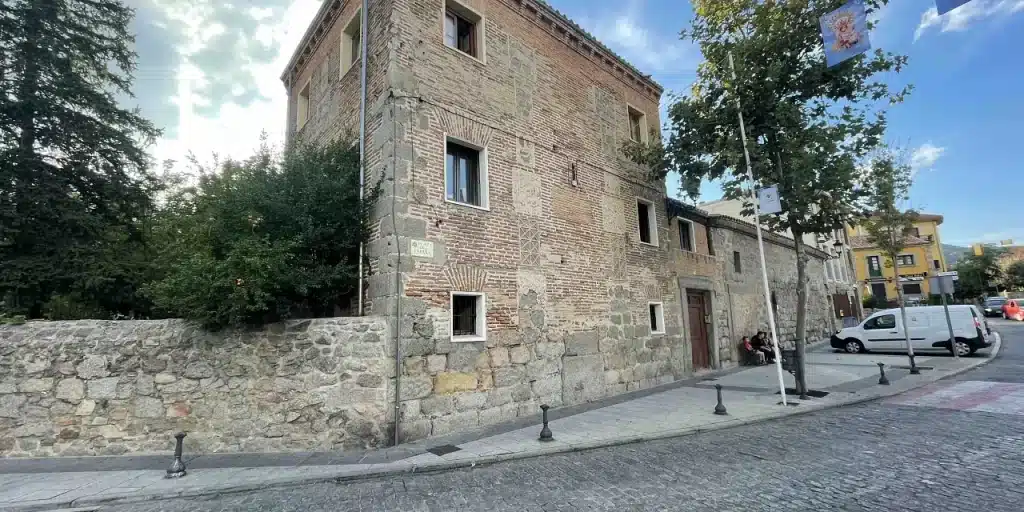
Very early every morning, when the Moroccan cooks turn on the burners, the aroma of ras el hanout—that complex blend of spices smelling of cumin, anise, and cinnamon—seeps through the centuries-old stones of the Monasterio de Prestado. One floor up, the dense scent settles into the refugees’ dormitories. That is when the Nicaraguans feel, with a piercing clarity unmatched at any other point in the day, that they are far, very far, from their homeland. That smell, which doesn’t belong to them, marks the start of each day here in the Madrid mountains, in El Escorial. But it also confirms a comforting certainty: they are not going hungry, they have a roof over their heads, and they have the backing of the Spanish Commission for Refugee Aid (CEAR).
“The seasonings they use have such a strong smell that it permeates the clothes we hang in the hallways to dry. But far from it being a bad thing, it’s just that, as Nicas, we aren’t used to those spices. And well, that’s part of adapting here; understanding that we are on the other side of the world, very far from our country,” my mother tells me. She is a refugee who, just five months ago, started her day with other aromas—more her own—in Costa Rica: the smell of burnt onions for the gallopinto beans. “The emotional aspect is difficult, but we feel protected here because the program gives us everything we need. Spain has been very generous to us.”
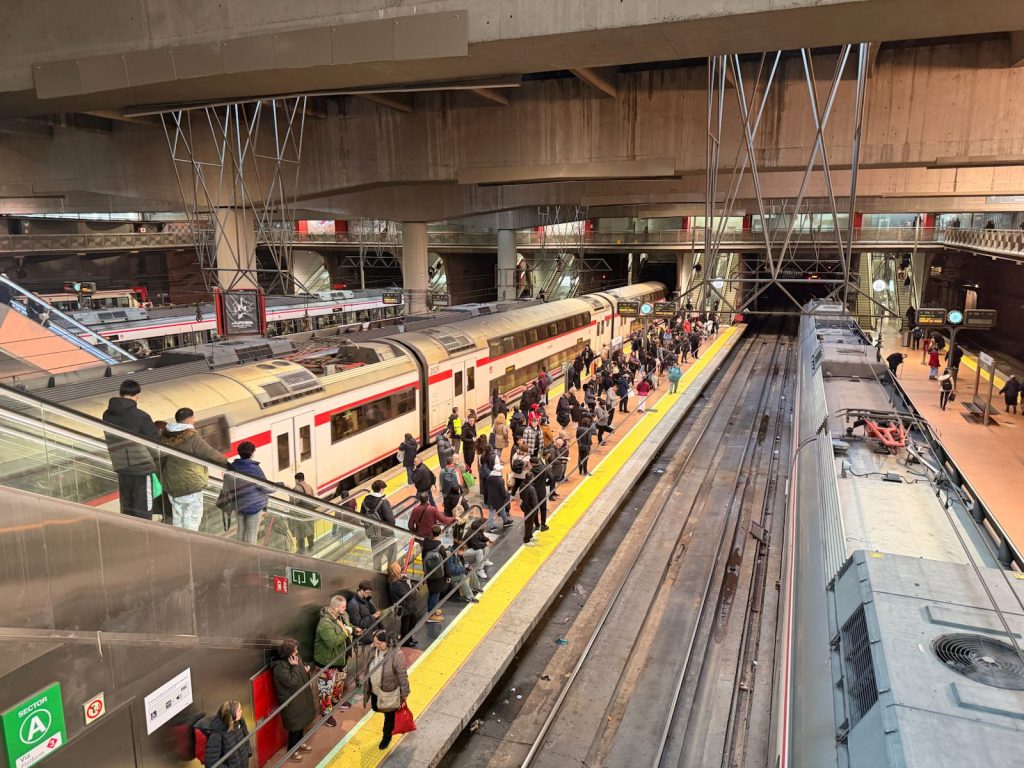
I have nothing to refute regarding what she says about the generosity of Spain, a country that—before she arrived in Madrid with my father—granted me nationality after the regime of Daniel Ortega and Rosario Murillo stripped me of mine. That solidarity is real, and I see it here in El Escorial, outside the shelter where they live alongside about fifty other refugees, mostly Venezuelans and, to a lesser extent, Nepalese. El Escorial is about 45 minutes from Madrid, a small town of overwhelming quiet. Its lethargy, lying at the foot of that massive Herrerian stone structure that is the Royal Monastery of San Lorenzo de El Escorial, is barely interrupted when the Renfe commuter train makes its final stop. Travelers exit the station unhurriedly—without the rush seen at Puerta de Atocha-Almudena Grandes—only to stumble upon restaurants that often close their kitchens in the afternoons for the Spanish siesta.
It is the first half of December 2025, and it is already too cold in the Sierra de Guadarrama. Three or four degrees Celsius (37-39°F) is a temperature neither my mother nor most of the Nica and Venezuelan refugees had—almost certainly—ever felt in their lives. In a way, everything is new for her and my dad: the food, the climate, a shelter… living between the stone and brick walls of the Monasterio de Prestado. This building was provisionally occupied by the Hieronymite order in 1562, after King Philip II ordered them to build that colossal convent dedicated to Saint Lawrence in El Escorial, where most Spanish monarchs rest. So, the shelter has history. It was the lodgings of the so-called “Prudent King” while the monastery and its palace were being built. It was also an orphanage and a school, but above all, throughout its recent history, it has been a place of refuge managed by the Spanish Commission for Refugee Aid.
Five centuries later, those same walls once again house those arriving from afar. They are no longer monks or kings, but families fleeing, like mine, the dictatorship of Daniel Ortega and Rosario Murillo. When the refugees gather in the spacious courtyard of the Monasterio de Prestado, which still retains its stately bearing, the Nicaraguans feel somewhat distinct among their peers: before arriving here, they had already gone through a first exile in Costa Rica… a country whose function as a refuge has been steadily eroding, not only due to the exorbitant cost of living and precarious employment, but also due to insecurity.
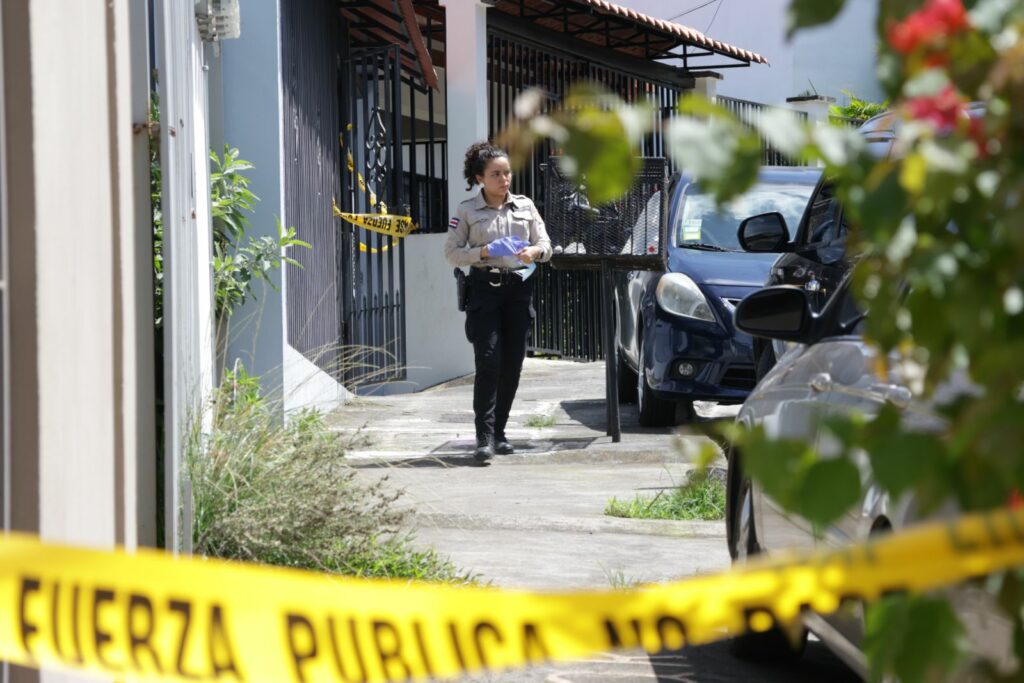
“The long arm of repression” of Ortega and Murillo, as described by the UN Group of Experts, easily crosses Costa Rica’s northern border and has forced many Nicaraguans to exile themselves even from their refuge. It is a disastrous spiral that subjects them to the repeated ordeal of losing everything to start over, each time further away from Nicaragua, now on the other side of the Atlantic. A forced displacement with few precedents. A forced metamorphosis: from exile to resettlement, from exiles to resettled exiles.
The assassination of retired Major Roberto Samcam in June 2025 was the most potent warning of extraterritorial repression in Costa Rica. However, there was precedent: other murders of dissidents originally from Jinotepe. The two assassination attempts against Joao Maldonado and his wife, as well as the harassment, surveillance, and death threats against other dissidents. All of this unfolded amid the disdain of President Rodrigo Chaves’s government—heavily criticized by the exiled community—in a context where the land of pura vida faces a crisis of violence related to drug trafficking and organized crime unparalleled in its democratic history.
My parents did not want to leave Costa Rica, but a violent episode ultimately convinced them to apply for “the program,” as my mom calls it.
On June 1, 2024, my dad was the victim of an assassination attempt in Tamarindo, a beach town in Guanacaste where he lived and supplemented his monthly income as an Uber driver. Early one morning, as usual, he went to pick up some passengers when a man stood in the middle of the street and opened fire on him. My father’s car crashed on the side of the road and, fortunately, when the attacker aimed at him, my dad managed to kick the gun away and escape. He suffered only a minor wound to his left arm from a grazing bullet. The attacker stole nothing. The case was reported to the Judicial Investigation Agency (OIJ) and an investigation was opened, but the absence of a robbery fueled suspicions that the motive was something else. But they didn’t want to stick around to find out—not in Tamarindo, nor in Costa Rica.
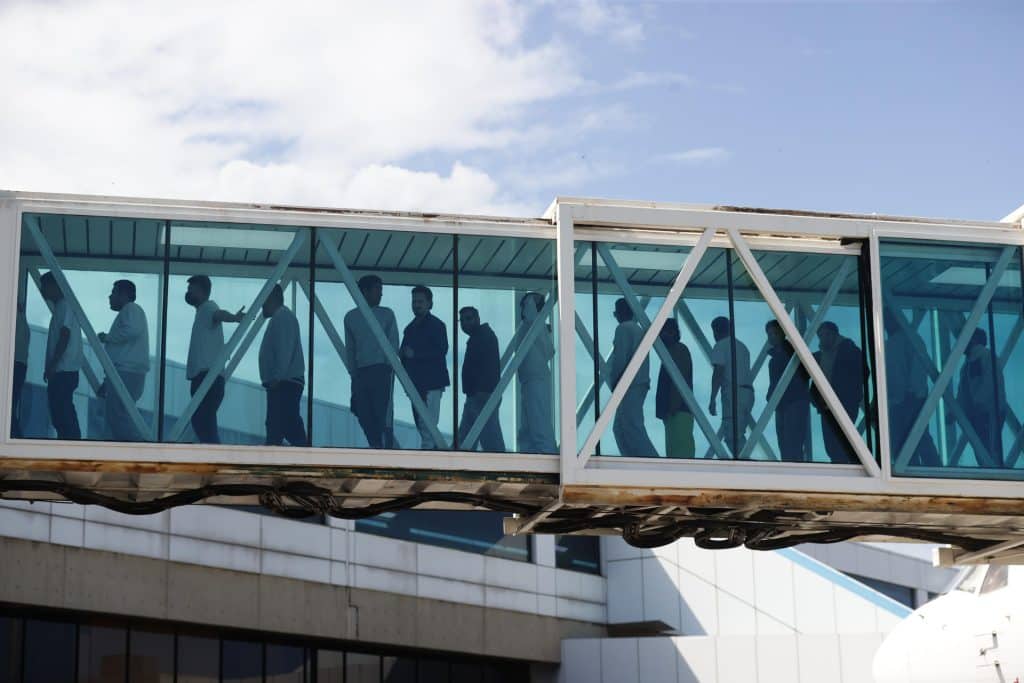
On November 5, 2025, on a charter flight organized by “the program,” they flew from San José to Madrid alongside 243 Nicaraguan refugees in one of the largest operations carried out to Spain. The “program” my mom talks about is the Safe Mobility initiative, coordinated by the UN Refugee Agency (UNHCR) and the International Organization for Migration (IOM), designed to offer legal resettlement pathways or humanitarian visas to refugees and migrants (Venezuelans, Ecuadorians, and Nicas) in coordination with willing host countries.
In tandem with the erosion of Costa Rica as a place of exile, the Safe Mobility program solidified as the most reliable alternative for a second exile, primarily because of the opportunities it offered for migratory regularization, financial support, and social and labor integration in the host country. It wasn’t just about leaving; it was about arriving with a defined status and institutional backing that somehow reduced the uncertainty. Since 2022, UNHCR informed DIVERGENTES that 5,472 people have been resettled under this framework.
“The vast majority of these people arrived in the United States, and a total of 892 traveled to Spain,” stated the communications office of UNHCR Costa Rica. “In total, 6,381 people of all nationalities have been resettled from Costa Rica since 2022. Almost 86% are Nicaraguans.” The fact that the United States, under the Joe Biden administration, opened the door to this program excited the exiles even more, especially since that country has always been viewed as a land “of opportunities.”
While the program only resettled two people in 2022 when it took effect, it reached its peak intensity in 2024, coinciding with Costa Rica’s insecurity crisis and the extraterritorial repression. “A total of 4,604 people were resettled in 2024. Of them, 3,845 were Nicaraguans. Once again, the majority went to the United States, followed by Spain, Canada, and Australia,” UNHCR noted, without specifying exact destinations for security reasons.
This was highly visible to those of us living in exile in Costa Rica, particularly that year, because every so often we would be invited to, or hear about, sudden farewells. Even if someone had enrolled in the program, for security reasons, the travel date is usually announced with only a few weeks’ notice, following more than eight months or even over a year of case analysis. In that brief window, the chosen ones had to dismantle everything in Costa Rica, sell whatever they could, and catch the resettlement flight. In short: leave everything behind all over again.
At this point, I would like to excuse so much self-referentiality on my part as a reporter, but it is unavoidable… Suddenly, exile became lonelier than it was. A large portion of the people who joined the Safe Mobility program were not just my family, but colleagues, friends, sources, human rights defenders, musicians, artists, and activists—people with some or a lot of visibility in the opposition to the Ortega-Murillo co-presidential regime, with whom I interact almost daily. One of them was Juan Carlos Arce, a lawyer with the human rights collective Nicaragua Nunca Más (Nicaragua Never Again). He has been living resettled in a shelter in Barcelona for over eight months.
“Being resettled,” Juan Carlos emphasizes, “means starting a life project all over again.” I think about the vastly different magnitudes a “life project” holds for each person. The human rights defender knows this from his own experience and from accompanying victims: “It means reinventing yourself again; it means wrestling with worries and questions like: ‘Where am I going to live? What am I going to work as?’ and the inevitable: ‘Was it the right decision to leave Costa Rica?’. It is grieving a second time for what we left behind, but this time a double grief; it is suffering for what we left in Nicaragua, but also in Costa Rica, which became our home—in my case, for six years.”
Juan Carlos says resettlement is “building again, once more.” A redundancy that seems harmless, but weighs heavily despite “the program.” Too heavily. Among those who left were people facing death threats or severely limited prospects in Costa Rica. So it was easy to understand them when, on the horizon, what appeared to them was, for example, US residency after entering as refugees.
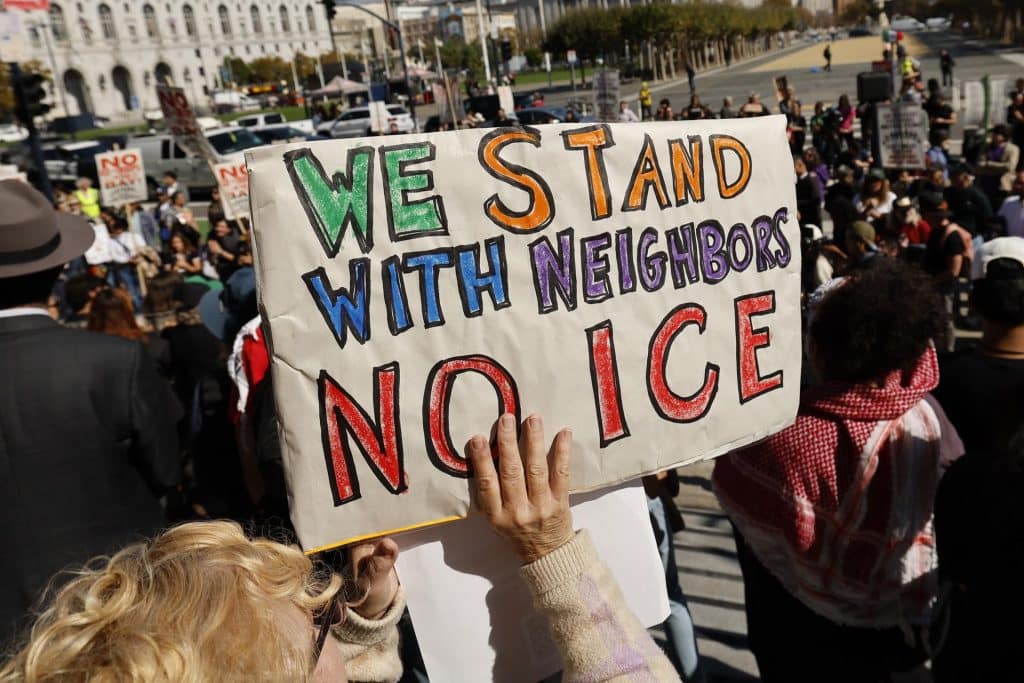
They started leaving, but the crushing blow soon came from Washington. The guarantee of the United States as a place of opportunity and future had a very quick expiration date. President Donald Trump returned to power with an anti-immigrant crusade so aggressive that, in January 2025, he suspended the Safe Mobility program. Not only were hundreds of exiles left stranded halfway to the US, but those who were already there, believing themselves somehow safe, soon discovered that they were, once again, plunged into that perverse fate that seems to haunt Nica exiles: limbo and uncertainty, neutralized and hidden away now, despite having been recognized as refugees by US authorities.
A refugee is like a coin toss
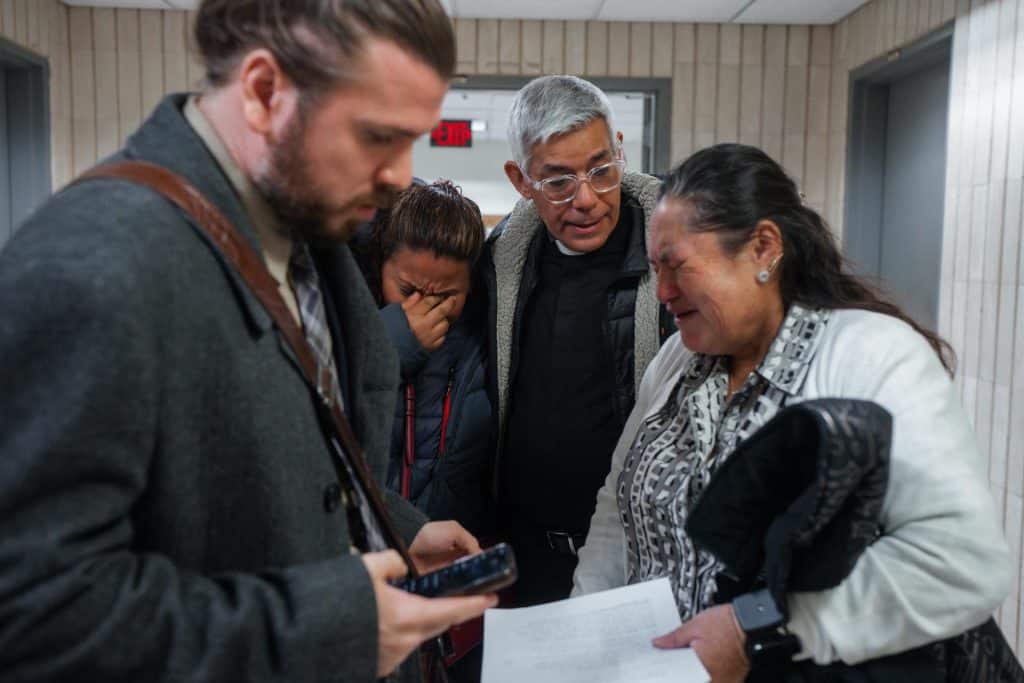
Fear. When one faces that sensation firsthand and manages to overcome it—after standing up to police, paramilitaries, and a repressive state apparatus that forces one to live under tension and constantly on the run—you think you’ve left it behind forever. But to experience it again where you least expect it feels like more than a setback; it is an impotence comparable to a stubborn disease, impossible to completely eradicate. In a way, this is what a fellow journalist I spoke to for this report is feeling. Despite his audacity in denouncing a dictatorship committing crimes against humanity like the Ortega-Murillos, his immigration status under President Donald Trump’s government pushes him toward something he repudiates: self-censorship.
More than a year ago, he arrived in the United States through the Safe Mobility program. For the first few months, he felt relief: he obtained a work permit, and his residency process was set in motion. Soon, the journalist believed, he would regain the ability to travel, since the Sandinista regime had canceled his Nicaraguan passport. Soon, he also believed, he would leave behind any hesitation to exercise his freedom of expression in the United States. But a series of administrative immigration orders by President Trump blew those certainties to pieces, and his life once again began revolving around a piercing question mark.
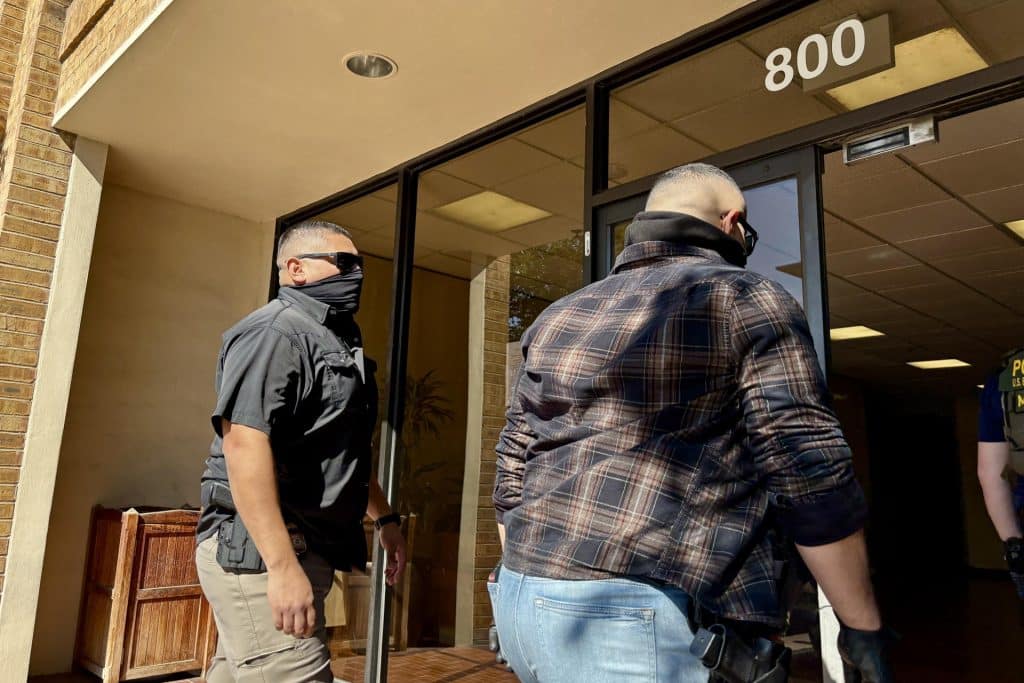
Fear of going out on the streets of the southern US city where he lives. Fear of taking a domestic flight to attend a journalism conference in Austin. Fear of being arrested by Immigration and Customs Enforcement (ICE) agents at the supermarket. Fear, fear, and more fear, accompanied by the stagnation of his immigration process. He has been waiting over six months for an answer regarding his residency. He asks about it by phone, because showing up in person at a federal agency could result in arrest, and possible deportation to the country where a regime accused of crimes against humanity lies in wait.
Every decision regarding refugees and asylum seekers by US Citizenship and Immigration Services (USCIS) and the White House that he learned about was a hammer blow to his stability. After suspending the Safe Mobility program, the Trump administration began to dismantle, piece by piece, the protection architecture that had allowed the resettlement of thousands like my colleague. First came the executive order that froze new refugee admissions and placed ongoing processes under review. Then came the halt on asylum decisions in multiple immigration offices, leaving applicants who had already been interviewed or had advanced files trapped in an administrative limbo. And few things in life are as convoluted as bureaucratic black holes.
Later, the suspension and tightening of the issuance and renewal of work permits for asylum seekers worsened the outlook. Timelines that were already long became entirely unpredictable. Cases expecting a resolution in months began projecting into years. That is to say, the door isn’t officially closed, but it isn’t open either. And in that gray zone, to paraphrase Gramsci, is where the monsters appear. Arbitrariness becomes the norm, especially when asylum cases are denied with no explanation other than a sovereign decision, even when international conventions exist to protect the persecuted. Yadira Córdoba, mother of one of the young men murdered in the April protests, was recently deported to Mexico after being detained in August 2025.
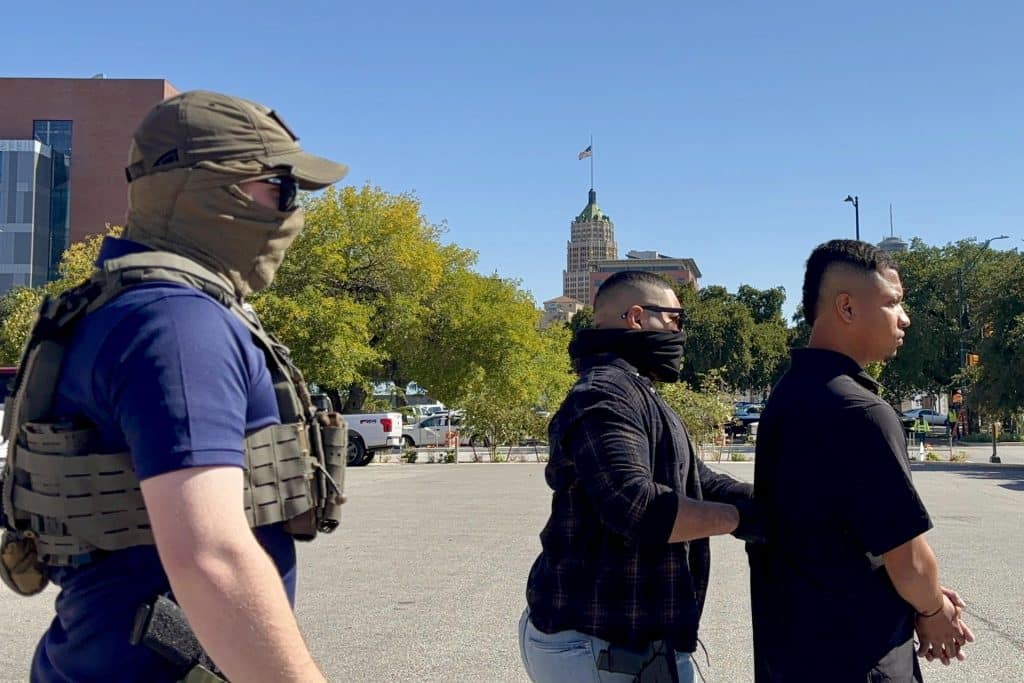
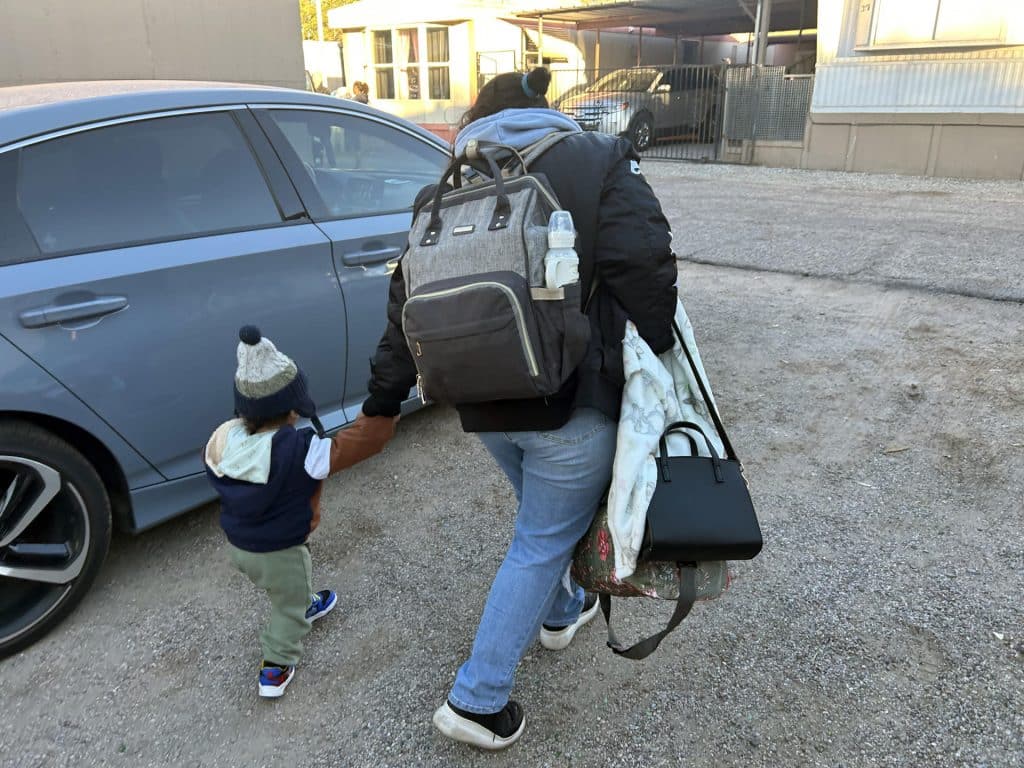
And those who have managed to escape deportation become ICE dodgers, forced to add yet another ball to the daily juggling act of migrant life. By restricting work permits and subjecting them to stricter reviews, the Republican administration left thousands in immediate precarity: without a work permit, there is no contract; without a contract, there is no lease; without a lease, there is no stability. A stability that today my colleague feels is more fragile than ever in the United States. Even those who had already been recognized as refugees began facing new status verifications and expanded detention powers by immigration authorities, especially if they had not yet adjusted their status to permanent residency.
For the thousands of Nicaraguans resettled in the United States, like my colleague, the legal framework supervised by international agencies under which they had arrived crumbled. And the most recent blow came on February 20, 2026, when the Trump administration formalized a proposed regulation that practically dismantles labor market access for asylum seekers. The measure eliminates the mechanism in place since the 1990s that allowed an applicant to process a work permit if their case wasn’t resolved within 180 days, replacing it with an almost impossible condition.
In other words, the US immigration agency will only accept new employment authorization requests when it manages to process all pending cases within an average of six months. As of the publication of this report, there is a backlog of over 1.4 million applications. USCIS itself admitted that, at the current pace, it would take between 14 and 173 years to meet that standard. Being an asylum seeker or refugee in the United States is a coin toss.
When asked about the immigration status of people who were resettled in the United States—and any other country—UNHCR is categorical: “Once people arrive in their resettlement country, the national authorities are responsible for their protection. For information regarding their regularization processes, they must contact the authorities of the resettlement country.” The International Organization for Migration (IOM) also distances itself from the processes, stating: “IOM cannot answer questions or resolve inconveniences.”
“The most worrying thing, and what fills you with uncertainty, is that not even the lawyers in charge of the resettlement processes can give you an answer that at least gives you peace of mind. Because everything is happening so fast, and these are measures that have never been applied before,” shares my colleague, the one I mention so much because he is my friend.
“The refugee stench”
Africans, Arabs, Filipinos, Turks, Haitians… “so many people” were at the Toronto Airport the day the Mendieta family landed in Canada, arriving from San José as a resettled Nica family. Suddenly, they were frightened by the multitude arriving from so many dissimilar countries in conflict or under dictatorships, just like them. “Also, lots of children, lots of people from different cultures,” they recall, like someone remembering a movie that marked them as a child. But soon their attention turned to the immigration officer who received them and who, with a speed that left them stunned, handed them a document certifying them as Canadian residents. Yes, there are still countries in the world without walls for migration, for refugees.
Like my parents in Spain, the Mendietas received personalized attention from institutions working with the host governments. The stint in shelters is inevitable, and while they stay there, the resettled individuals have their basic needs covered. But not only that: they receive clothing suitable for extreme climates like Canada’s, hygiene supplies, cash allowances for essential expenses, transit cards, and assistance to get a phone line and open bank accounts. While each country has its own protocols, they are all usually very similar.
Families are assigned a social worker who guides them during the first months of adaptation, and they are offered certification or professionalization courses depending on their profession or trade. They are placed into job pools. From the start, there is also social psychological support and social security coverage. But none of that guarantees a job outright.
From Barcelona, human rights defender Juan Carlos Arce points out another of the less visible challenges of resettlement: “One problem is the homologation of university degrees, which can be a complex process, tied to labor insertion for highly qualified people, since the reception programs are designed for insertion into the service sector,” he notes. “Personally, I don’t see these processes aiming to utilize the capacities already built by the resettled individuals. Resettled people are partly seen as ‘labor’ for sectors that need workers, without valuing the individuals’ skills and potential.”
The next step in the program is for the refugees to find a roof over their heads on their own—an apartment, or a piso as they call it in Spain. In Canada’s case, state support lasts for one year; in Spain, it extends up to 18 months, always under a series of administrative regulations related to an income cap while they remain under state guardianship.
Each case progresses independently. There is no single rule for a refugee or a family unit. In the Mendietas’ case, they got the “green light” to move into an apartment barely a month after arriving in Canada. This step illustrates how resettlement takes on its own nuances in each country. In Canada, they require property insurance, three months’ rent in advance, and prior rental references, which in this case are vouched for by the resettlement program. “Our organization backs you before the landlord so they see they are dealing with someone serious,” relates the head of the Mendieta family.
In Spain, where most resettled Nicas are, the paperwork to find housing is almost the same. However, there are other factors my parents didn’t expect while searching for a piso. The first, my mother told me in December when I visited them, is “the refugee stench.” And it is something she repeats to me every time we speak, with a kind of desperation to once again experience something they had in Nicaragua and Costa Rica, but which the Ortega-Murillo repression stripped from them: a space of their own.
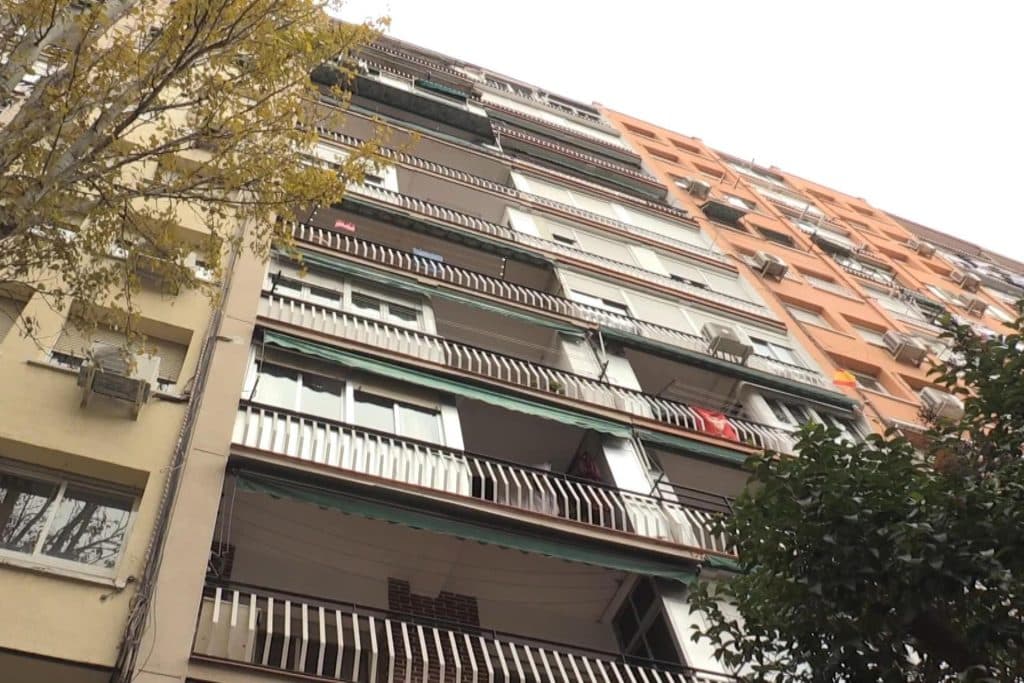
“Even though there is a state backing program, landlords discard us the moment they see our residency card says we are refugees. It’s like we refugees have a stench that they can’t stand in Spain. So it has become very difficult to find an apartment to move on to the next stage of the program,” she insists.
The other issue is that the context doesn’t help either. In cities like Madrid, overwhelming demand for apartments exhausts the available supply. Many property owners have opted for tourist rentals, and there is a heavy fear—amplified in recent years—of squatting (okupación) and lengthy judicial eviction processes in the event of non-payment, in a country where laws strongly protect the tenant. Added to this are specific demands beyond the usual three-month deposit: an employment contract or pay stub (nómina) as an almost indispensable requirement and, in some cases, a bank guarantee.
In my parents’ case, they haven’t found employment yet—not for lack of trying, but because they are in an adaptation process guided by the Spanish Commission for Refugee Aid (CEAR), which includes courses and accompaniment before entering the workforce. Thus, the very system tutoring them paradoxically places them at a disadvantage in a market demanding requirements that are hard to possess when freshly arrived in a new exile.
“Being part of a state policy undoubtedly gives you certain advantages in the process,” Juan Carlos analyzes in Barcelona. “However, to forge a path, the resettled person must fight against a cultural, economic, and social environment that isn’t always friendly, and which is deeply marked by discrimination and various problems like access to housing—a situation that worsens depending on the region. For example, in Barcelona right now, accessing apartments is practically impossible; the imposed requirements are very hard for resettled people to meet.”
In Spain, besides the security deposit for an apartment, resettled individuals are often asked for up to three initial payments: essentially a deposit, plus the first and last month’s rent upfront. That drastically reduces options, since the average aid the program in Spain gives to each family unit is around 1,200 euros, of which 600 are meant to cover the deposit and the first month. A room in a shared apartment is usually the most affordable option, but in the El Escorial shelter, for example, there are couples with minor children and pregnant women who need more space. My parents, who are also accompanied by another relative—whose exact relationship I prefer not to detail for privacy reasons—will have to share an apartment with another Nica family to afford the rent.
In Barcelona, the human rights defender lives a similar situation, still without an apartment of his own. “On a political level, it’s important to recognize efforts like those made by countries such as Spain, Canada, Australia, and, at one point, the United States, which through resettlement dignify and humanize migratory processes. However, we cannot stop questioning that the origin of this is the violation of human rights by a State, in this case, Nicaragua. As the Somali poet Warsan Shire says, ‘no one leaves home unless home is the mouth of a shark.’ Resettlement means building a home all over again.”
A shark’s mouth that bites harder when they try to build a home again, to find an apartment in Spain, where living in the capital or a big city is ruled out from the start for many resettled refugees. They are forced to look toward commuter towns or villages in rural Spain, where rents are more affordable but employment is scarce and support networks are almost nonexistent. The equation remains cruel: lower rent in exchange for fewer opportunities.
Thus, the second exile forces them to start over in territories where there are no guarantees of stability either, at least in Spain. This new stage brings complexities that are different, but no lesser, than what they lived in their first exile in Costa Rica or what they faced upon arriving in Madrid on the charter flights arranged by Pedro Sánchez’s socialist government.
DIVERGENTES learned that some Nicaraguans who arrived on the same flight as my family have decided to return to Costa Rica after failing to adapt. This is something the International Organization for Migration (IOM-Spain) is already recording. In a mid-February Instagram post, the agency made the following offer: “If your project in Spain has not been what you expected and you want to start a new stage in your country of origin, IOM in Spain can help you return to your country of origin in a dignified manner.”
For now, my family is not thinking about returning, as thanks to a Nicaraguan contact, they managed to verbally secure an apartment this past January. They are currently finalizing the paperwork. They have gained some relief, but when I visited them in December—due to a work trip coincidence, just weeks after they arrived in Madrid—my parents, but especially my mom, were in that trance resettled people feel when struck by the shock of the new. “I feel blessed for the opportunity in Spain, but at the same time a bit regretful, because there are difficult things,” she blurted out before we said goodbye on Christmas Eve, her first Christmas as a resettled refugee alongside my dad, three years after that first Christmas as exiles in Costa Rica.
The night of the farewell was more tears than hugs at the Sol station, right in the epicenter of Madrid, overflowing with tourists who didn’t even notice the goodbye of a refugee family that now added another word to their status: resettled. However, we promised each other to endure, to keep reinventing ourselves, and to find more suns to keep going… especially our own, in our country, in our town, the sun of Nandaime. And that is where all of us refugees are. That freezing early morning, back in the Madrid mountains at the Monasterio de Prestado, my parents told me they pushed the two small beds together and held each other. There is no better way to resist. The next day, early, that smell that doesn’t belong to them returned, but due to the circumstances, it is already a part of them.
The Future of Safe Mobility
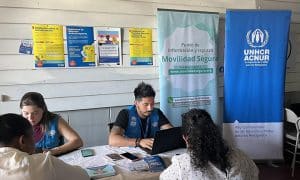
When asked by DIVERGENTES about the current status of the Safe Mobility program, especially following the suspension of resettlement to the United States and the pushback from parts of the international community, the UN Refugee Agency (UNHCR) affirmed that the mechanism remains active, albeit under new conditions.
“Following the suspension of the resettlement program with the United States, UNHCR continues identifying vulnerable individuals and referring them for resettlement consideration and complementary pathways to different countries. Specifically, this year the UNHCR operation in Costa Rica has a specific quota for Spain,” they assured. “Despite the impact of cuts to humanitarian assistance in 2025, UNHCR Costa Rica, with the support of the UNHCR Regional Bureau in Panama, has already managed to fulfill the quota agreed upon with Spain on time and properly.”
Regarding the program’s main challenges, the agency notes that sustainability depends as much on the political will of the receiving states as on the operational capacity to sustain a long and demanding process.
“The need for resettlement persists in Costa Rica, especially for Nicaraguans. Maintaining the program also represents a challenge. Resettlement is a complex process that requires the work of many people and hours to identify, process, and accompany cases. Currently, UNHCR has a limited team of only four people to handle the entire program,” they explained.
Another challenge relates to what happens during the process itself. “The second identified challenge relates to the difficulties that arise throughout the process, where a considerable portion of cases fails to advance to the final stages. This means that, to reach the quota committed to Spain, it is necessary to interview and process a significantly larger number, which results in a slower execution of the program for beneficiaries and an increase in operational costs for donors.”
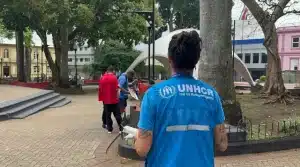
“The decision to be part of a resettlement program and leave the country of asylum is a personal decision that entails a long process; for this reason, follow-up by UNHCR staff throughout each stage of the process is key: many people need guidance, advice, and accompaniment to face a new life change. In many cases, people decide not to finish the stages of the process even when they are already approved to travel,” the communications office outlines.
Despite these challenges, they emphasized that Spain’s commitment remains in effect. “Despite the concern over these challenges, Spain’s commitment remains for 2026, and we are working together to reinforce information and individual counseling so that the program becomes more efficient every year.”
As for the future of the program, UNHCR directly links it to the willingness of countries to keep resettlement slots open. “The continuity of the resettlement program in Costa Rica depends directly on the availability of slots that resettlement countries can offer. Resettlement is a fundamental tool of international cooperation, allowing us to provide protection and a lasting solution to refugees who have not found an effective opportunity for protection and integration in their first country of asylum.”