

The Ortega-Murillo regime announced on September 10 the exemption of the Value Added Tax (VAT) for sales by small businesses, restaurants, and hotels during the national holidays. Although presented as a “great achievement” of the “good Government,” it is merely a temporary relief measure, in force from September 13 to 22, coinciding with the ten-day vacation granted to state workers.
Economists consulted by DIVERGENTES point out that, rather than a substantive fiscal policy, the measure responds to the propaganda the regime boasts of. While they acknowledge a short-term benefit for consumers and the tourism sector, they warn that in a context of fiscal surplus, broader reforms should be implemented, such as reducing the taxes that suffocate the population, whose purchasing power continues to erode.
“Public finances are showing positive numbers and the regime sells this exemption as a gesture of good governance. Instead of promoting sustainable investment, increasing production, or boosting employment in the medium and long term, they should focus on the excessive tax collection,” said an economist linked to the banking sector who requested anonymity.
According to this economist, the surplus so heavily promoted by the regime does not come from solid economic growth, but from excessive revenue collection. It is based on reforms that raise taxes on consumers and productive sectors, and on a tax apparatus sustained by excessive charges, fines, and discretionary sanctions, something that has raised concern among Nicaraguans.
“They’ve got the people drowning, charging more taxes than they actually need. Instead, VAT should be lowered to ten, or even five percent if possible, but clearly, that won’t happen,” he says, adding that the regime has been “breathing easier” since the 2020 tax reforms, implemented through Law No. 987, which modified Law No. 822, the Tax Coordination Law.
These reforms introduced substantial changes to the tax system with the stated objective of “securing state revenues and maintaining fiscal and macroeconomic stability.” The measure has worked in the regime’s favor and is frequently highlighted in co-president Rosario Murillo’s speeches.
The Regime’s Record Revenues Rest on Confiscatory Measures
Among the most significant measures in the 2020 tax reform are monthly advance payments of the Income Tax (IR), which force companies, depending on their size and gross income, to pay between 1% and 3% monthly toward their annual minimum income tax.
The reform also raised the withholding rate on wages, directly impacting salaried workers, and eliminated the cap on contributions to the Nicaraguan Social Security Institute (INSS), meaning contributions are now paid on the full salary without limit. “For all these reasons and more, revenue collection skyrocketed and the state now has historically high income,” explains the specialist from the banking sector.
However, he warned that the scheme of advance payments on gross income, which rose from 1% to 3% depending on company size: 1% for small, 2% for medium, and 3% for large firms, is particularly harmful.
He clarifies that even banks or companies reporting losses after the pandemic still had to pay steep taxes on their income. According to him, this makes the measure confiscatory, as it forces companies to pay taxes even without profits, creating an excessive burden that distorts investment and stifles economic dynamism.
“What worries me most are the withholdings on gross income, which I consider the most distortive in Nicaragua. This is an advance tax charged even if the company posts losses, while the normal logic of income tax is that it should only apply to net profits. The latest reforms increased these withholdings for small, medium, and large firms, creating extreme tax pressure even during loss-making periods,” he says.
The reform also included changes in the capital gains tax on the transfer of registered assets such as real estate, with rates now ranging from 1% to 7%, depending on the property’s value.
According to the economist, all these measures explain how the regime has achieved a historic surplus: “It raised state revenues not through real economic growth, but by means of a more aggressive tax system that shifts the burden onto companies, consumers, and workers.”
Another major change that has hit Nicaraguans was the reduction of VAT exemptions, broadening the taxable base and increasing the burden on consumers. Churches and religious foundations were also affected, as their tax exemptions were repealed and they are now subject to the general fiscal regime.
Surplus at the Expense of People’s Wallets
Although the Central Bank highlighted these results in its 2024 Annual Report as proof of “austerity” and “fiscal discipline,” economists argue that the surplus does not reflect a healthy economy, but an increasingly aggressive collection scheme.
Data on revenue in the Non-Financial Public Sector (NFPS) show that “collections continued increasing, mainly due to higher tax revenues for the Central Government.” Between 2022 and 2024, revenues grew in absolute terms, from 179.7 billion córdobas to 226.9 billion last year, but their share of GDP barely changed (from 32% to 31.5%).
By contrast, the NFPS surplus after donations doubled in 2024, reaching 2.5% of GDP, driven by withholdings on gross income, fines, and the elimination of exemptions.
In 2022, the surplus represented 4.07 billion córdobas (0.7% of GDP), in 2023 it rose to 17.05 billion (2.6%), and in 2024 it held steady at 17.98 billion (2.5%). These figures show that the state spends less than it collects and boasts fiscal stability, but that surplus does not come from greater economic activity. Instead, it stems from the regime’s “financial discipline,” which is sustained by arbitrary collections targeting companies and consumers, as well as reduced public spending, clearly visible in the national budget, warned a tax economist interviewed by DIVERGENTES under condition of anonymity.
Is Cutting VAT Viable?

While lowering VAT might seem reckless or fiscally irresponsible for social spending, the regime is highly unlikely to do it. However, according to the tax economist, if implemented, it would be viable and beneficial both for taxpayers and for the country.
“It could reduce inflation because people would have more purchasing power to buy products. It would not only encourage domestic consumption but, compared with other regional rates, could also stimulate international purchasing… It would incentivize production and investment,” he explains.
The specialist stresses that the measure would especially relieve small and medium-sized businesses, which make up the majority in Nicaragua. As an example, he points to Honduras, which maintains the same VAT rate (15%), yet goods are cheaper there due to a different fiscal framework. In Nicaragua, VAT is compounded by the Selective Consumption Tax (ISC), which makes certain goods even more expensive and inaccessible for low-income households.
Far from being an irresponsible proposal, cutting VAT could serve as a mechanism to energize the economy and benefit all sectors. By easing the tax burden on consumption, households would have greater purchasing power, stimulating domestic demand and, in turn, driving national production. This would create a multiplier effect: more sales, more jobs, and greater formalization of businesses currently surviving on the edge. Rather than losing revenue, the state could actually see its collections rise thanks to increased economic activity and a broader tax base, striking a balance between fiscal sustainability and citizen relief.
The tax economist added that “exempting or reducing VAT would not only benefit the population and businesses but also the state, since businesses would grow and hire more employees. But when fiscal pressure mounts, the first thing they do is cut staff and reduce purchases. Many businesses aren’t very profitable; they just barely survive.”
DGI and Municipalities “Out for Blood” and Public Sector Paralysis
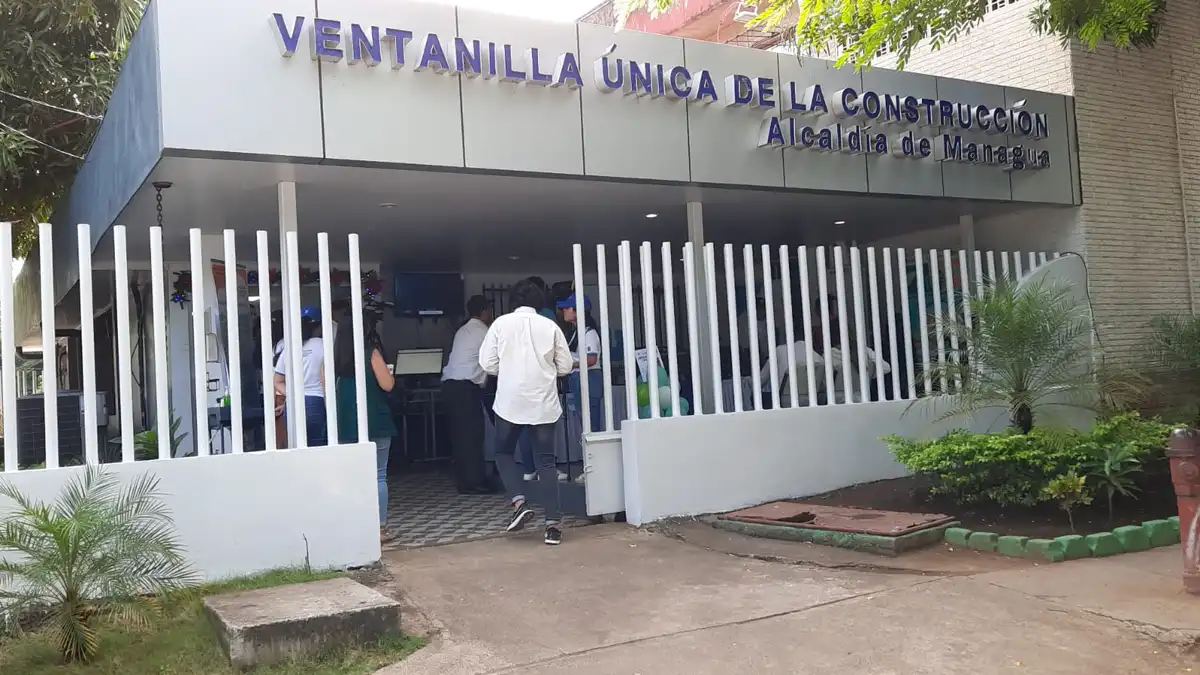
Beyond the fiscal reforms implemented by the Ortega-Murillo regime, the banking-sector economist noted that tax enforcement is out of control. “It’s not that oversight itself is bad, but they’re trying to squeeze out as much as they can, arbitrarily, from a state you can’t even appeal to,” he explains.
He cites the General Directorate of Revenue (DGI) and the Managua Mayor’s Office as examples: “They’re out for blood when it comes to tax reassessments (extra tax payments, fines, or penalties), charging for absurd things, and worse, things not even in the law. Businesses have no choice but to negotiate and pay the amounts demanded, along with the arbitrary measures they invent.”
Even with this symbolic VAT exemption, which ultimately shows how the regime keeps “squeezing” Nicaraguans, granting state employees ten days off also carries a cost for the public. During that period, the public sector grinds to a halt: employees stop processing paperwork and citizen services are delayed in a system that already tends to prioritize propaganda shows over efficiency.
The ‘Trick’ Behind VAT Exemptions That May Backfire on Businesses

While temporary tax incentives, like those applied during the National VAT Exemption Fair in celebration of the 203rd anniversary of Independence and the 168th anniversary of the Battle of San Jacinto, in effect from September 13 to 22, are marketed as relief for Nicaraguans, they conceal a hidden risk for business owners.
According to the tax economist, during these periods companies do not charge VAT on their sales, but they still pay it on their purchases. The “trick” comes at the time of the monthly tax return: if a portion of sales was exempt, that same percentage of VAT paid on purchases cannot be claimed as a tax credit. However, many businesses declare all the VAT paid on their purchases, which opens the door for DGI reassessments. When the authority detects the discrepancy, it not only corrects the filing but also charges the outstanding balance, plus fines and interest that can triple the debt.
“Temporary VAT exemptions can turn into a double-edged sword: if companies fail to adjust their filings, the DGI comes down hard with penalties,” the specialist warns.