
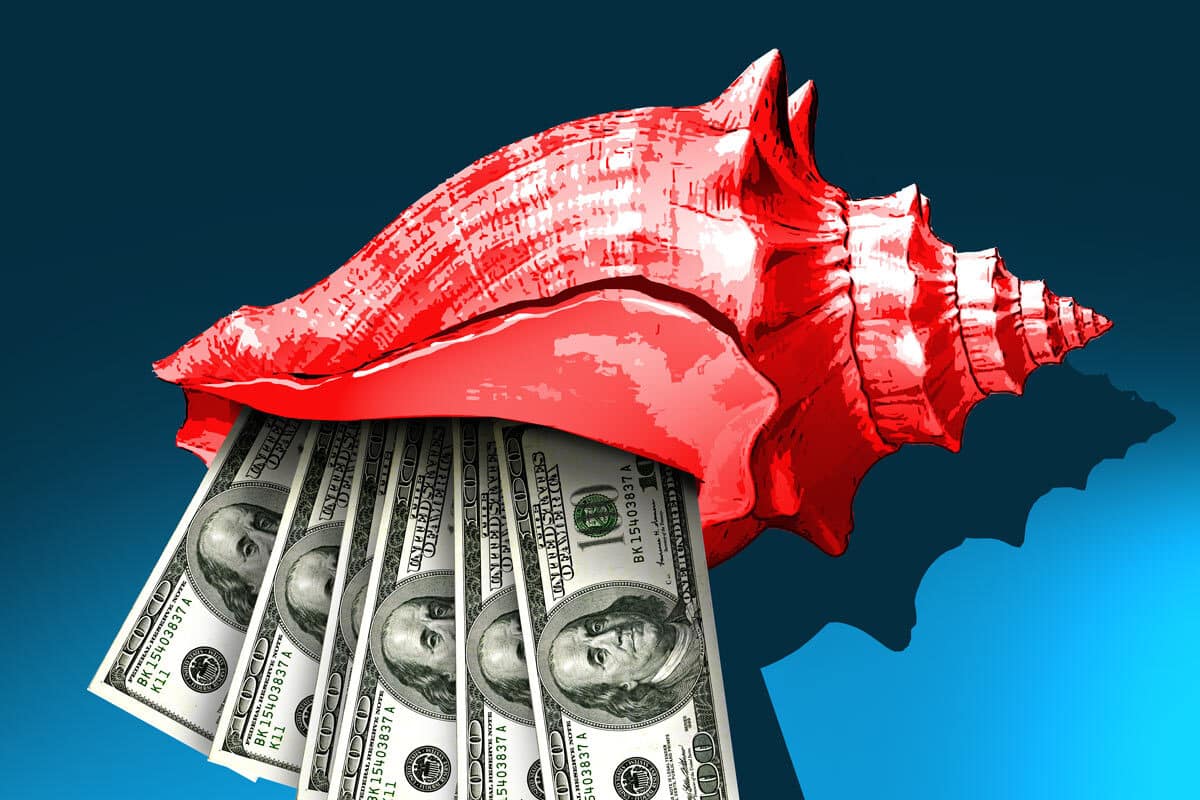
Daniel Ortega and Rosario Murillo’s regime, through the Ministry of the Environment and Natural Resources (or Marena, its acronym in Spanish), reported in June 2026 that between April and May, 77 wildlife export permits were authorized, generating revenue for the country of $3,661,603.7.
In its statement, the agency justified this revenue as coming from “sustainable use and conservation,” and grouped “wildlife bred in authorized breeding facilities” into the same category as the granadillo and the commercialization of the queen conch (Strombus gigas). The latter does not reproduce in controlled ponds, as it is a wild marine species subject to regulation.
While Marena applauds this supposed conservation, the National Production, Consumption, and Trade Plans of the Central Bank of Nicaragua (or BCN, its initials in Spanish) and official reports from the Nicaraguan Institute of Fisheries and Aquaculture (or Inpesca, its acronym in Spanish) show that exports of the queen conch exceeded the quota Nicaragua reported to the Convention on International Trade in Endangered Species of Wild Fauna and Flora (CITES). In 2023, the volume exported already exceeded the most recent published quota, that of 2022.
According to the government’s plans, Nicaragua exported approximately 1.71 million pounds of queen conch (about 771,106 kilograms) in 2023 and 1.9 million pounds in 2024 (861,824 kilograms), for $8.4 million and $10.1 million, respectively. Both volumes exceed the latest meat quota that Nicaragua reported to CITES, which was 703,080 kilograms in 2022.
Inpesca, for its part, reported that revenues rose from 234 million córdobas in 2023 to 304 million córdobas in 2024. This nearly 30% increase in revenue, according to the institution, consolidates this protected species “as one of the most important fishery resources for the national economy.”
At the official exchange rate, however, Inpesca’s figures amount to approximately 6.4 and 8.3 million dollars—about two million less per year than what was reported by the BCN.
That same year, Inpesca set the quota at 1.5 million pounds of 100% clean fillets—about 680,389 kilograms—in a report on fillet sampling. The BCN’s most recent plans do not specify which form of conch they are accounting for, but the 2021–2022 plan recorded exports as fillets, the same unit in which the quota is set.
Nicaragua Stopped Using Security Stamps
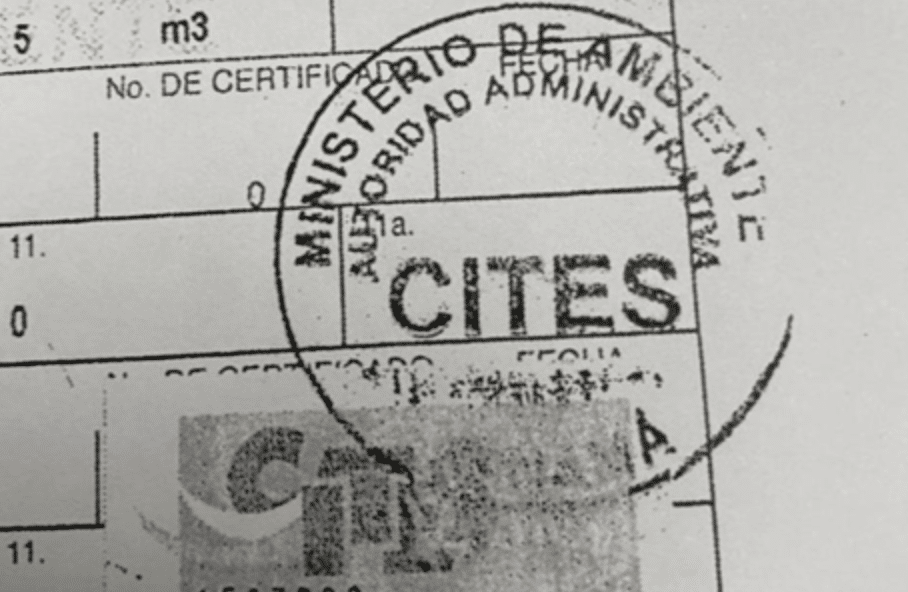
Added to this is a change in regulation. On May 13, 2025, the CITES Secretariat informed member countries, at Nicaragua’s request, that the Nicaraguan administrative authority would stop affixing security stamps to its export permits “until further notice.” These stamps are one of the mechanisms that make it difficult to forge permits. The notification does not explain the reason for the decision.
DIVERGENTES analyzed the CITES database on the trade in CITES-listed species from 2020 to 2024 and compared what Nicaragua reported as exported, what the purchasing countries reported as imported, and the export quotas that the country reported to the Convention.
Furthermore, Nicaragua stopped reporting its trade to CITES. Indeed, the Convention’s database shows no exports of queen conch in 2023 or 2024, even though the U.S., Mexico, and countries in the Middle East did record imports from Nicaragua during those years.
According to the regional report on Central America presented to the CITES Standing Committee in February 2025, Nicaragua had not submitted its 2023 annual report, which was due by October 31, 2024.
Nicaragua’s Figures Do Not Match the Records of Purchasing Countries
In 2021, Nicaragua reported exporting 692,773 kilograms of queen conch meat, 12,373 kilograms more than the quota of 680,400 kilograms it had reported to CITES. However, the importing countries reported receiving a higher amount: 752,437 kilograms of this species, bringing the excess to more than 72,000 kilograms.
In 2022, the difference between the two sources was reversed. Nicaragua reported exports of 762,636 kilograms against a quota of 703,080, an excess of 59,556 kilograms. Importers recorded 711,142 kilograms, although 11,340 kilograms of that amount originated in Honduras; the Nicaraguan queen conch meat they reported receiving—approximately 699,800 kilograms—remained within the quota.
Importing countries continued to record shipments of the product a year later. In 2023, they reported imports of 560,964 kilograms of Nicaraguan queen conch meat, and in 2024, 744,649 kilograms—a 32.7% increase over the previous year. This latter figure alone already exceeds the latest quota that Nicaragua reported to CITES by more than 41,000 kilograms.
Even so, what buyers report is less than what the BCN attributes to domestic exports. Between 2023 and 2024, importers recorded 1.31 million kilograms of queen conch meat of Nicaraguan origin; the BCN’s figures total about 1.63 million. This means that the difference—more than 300,000 kilograms—is greater in 2023, the first year Nicaragua stopped reporting to the Convention.
The U.S. Is the Leading Destination for Queen Conch Meat
The queen conch has been listed in CITES Appendix II since 1992. This means that every export requires a permit from the country of origin, which may only be issued if the harvest does not harm the species and if the product was obtained legally.
The importing country requires this permit upon arrival. Subsequently, each country reports its operations separately in annual reports that feed into the Convention’s trade database. Therefore, even if the exporter stops reporting, its sales continue to appear in the importers’ records. In Nicaragua, the administrative authority for CITES is Marena.
In 2022, the last year Nicaragua reported its exports to CITES, purchasing countries declared 699,802 kilograms of queen conch meat. The U.S. received 699,122 kilograms, or 99.9%; the remaining 680 kilograms went to Mexico. That year, the U.S. also recorded 11,340 kilograms of Honduran queen conch that arrived from Nicaragua, which fell within the quota.
The U.S. continued to purchase the mollusk after Nicaragua stopped reporting. In 2023, it was the only country to report imports of Nicaraguan queen conch meat, totaling 560,964 kilograms. By 2024, it had recorded 742,381 kilograms, 99.7% of the total; Mexico reported the remaining 2,268 kilograms. That year, another 10,341 kilograms of queen conch originating in Honduras arrived from Nicaragua.
The increase in 2024 coincided with a change in the species’ protection status in the U.S. In February of that year, the National Marine Fisheries Service , also known as NOAA Fisheries, designated the queen conch as a threatened species under the Endangered Species Act, effective March 15, 2024. The measure did not impose new restrictions on imports, despite the provisions enacted.
Shells and Pearls: A Trade Lacking Traceability and Clear Accounting
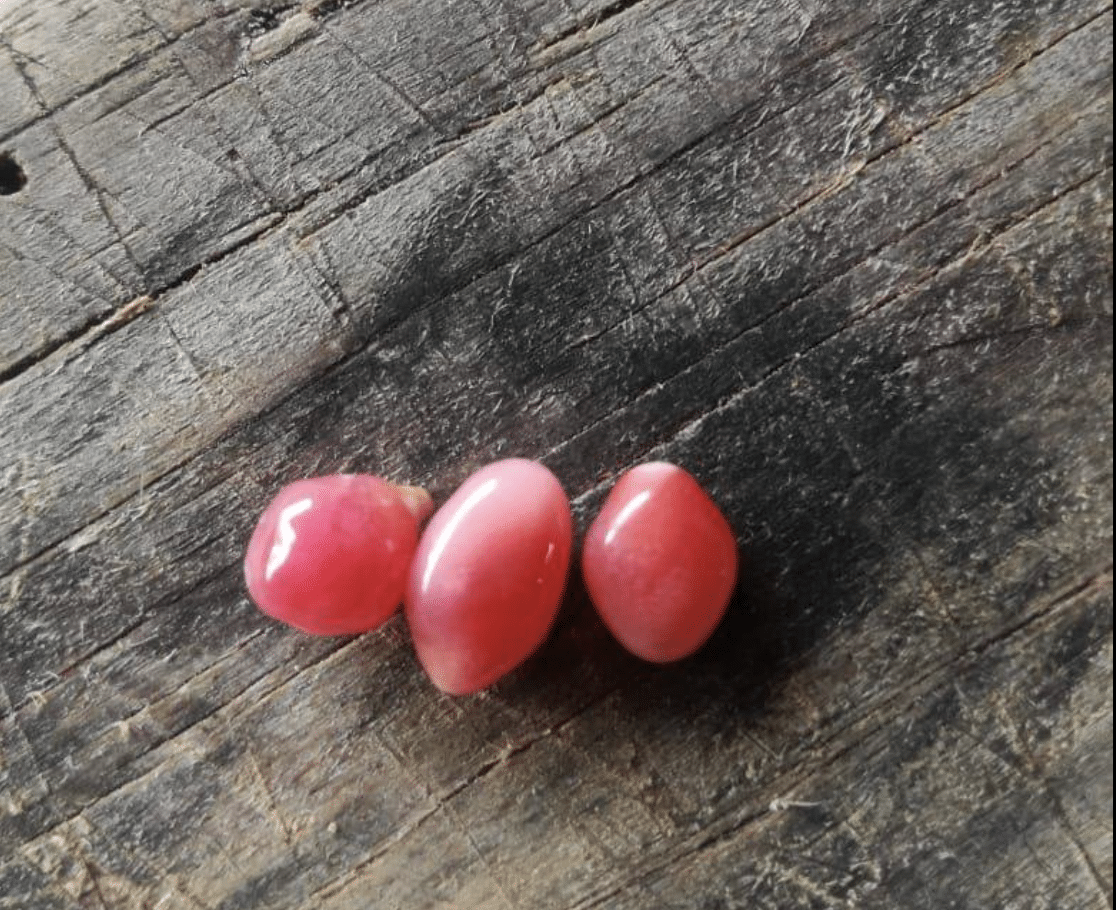
Beyond the commercialization of queen conch meat exported by Nicaragua, there is also a parallel market for byproducts. Between 2020 and 2022, Nicaragua reported annual quotas to CITES of 4.5 million shells, 4.5 million opercula—the queen conch’s “nail”—and 301,649 kilograms of trimmings. In 2022, it added a quota of 100 pearls.
A source in the export sector confirmed to DIVERGENTES that the Asian market—particularly China and the Middle East—is the main buyer of these mollusk pearls, a high-value product determined by its size and color. Despite this steady trade flow, the revenue generated by these pearls and shells remains unaccounted for in the Central Bank’s macroeconomic reports.
In 2021, Nicaragua reported exports of 260 pearls—245 to the Bahamas and 15 to Hong Kong—without having reported a quota for that product. In 2022, it exported another 77 to the Bahamas, within the quota of 100 established that year.
Since 2023, as is the case with meat, Nicaragua has not reported these exports, but its buyers have. In 2023, the United Arab Emirates reported imports of 5,013 kilograms of shells and 545 kilograms of shell byproduct from Nicaragua, and Saudi Arabia reported 2,100 kilograms of shells.
In 2024, the UAE recorded 4,537 kilograms of shells and 7,460 kilograms of byproducts—nearly 14 times more than the previous year. Since these countries report in kilograms and Nicaragua’s quota is set in units, it is impossible to know whether these purchases complied with the limit.
Nor is it possible to know how much revenue these byproducts generate. The BCN’s plans and Inpesca’s reports do not break down revenue from shells, opercula, and pearls.
Although information from importing countries allows for the identification of transactions not reflected in the Nicaraguan export records available in that database, this discrepancy alone does not allow us to establish its causes or determine whether there were any violations.
Added to this is a financial limitation: the public data consulted from the BCN and Inpesca do not allow for a breakdown of national revenue derived from the sale of shells, opercula, and pearls. Therefore, although CITES records make it possible to identify part of the commercial transactions, the available information is insufficient to reconstruct the complete traceability of these operations or to establish their economic contribution to the country.
None of this appears in Marena’s report. In its June statement, the agency presented wildlife exports as an example of “sustainable use and conservation.” The records tell a different story: Nicaragua has not published export quotas for the queen conch since 2022, did not submit its 2023 trade report to CITES, and removed the security stamps from its permits in 2025.
Meanwhile, harvesting continues. According to Inpesca, the mollusk catch reached 26.7 million pounds in 2024, exceeding the average of the previous five years, and the U.S.—the country that designated it a threatened species that same year—remains its main buyer.
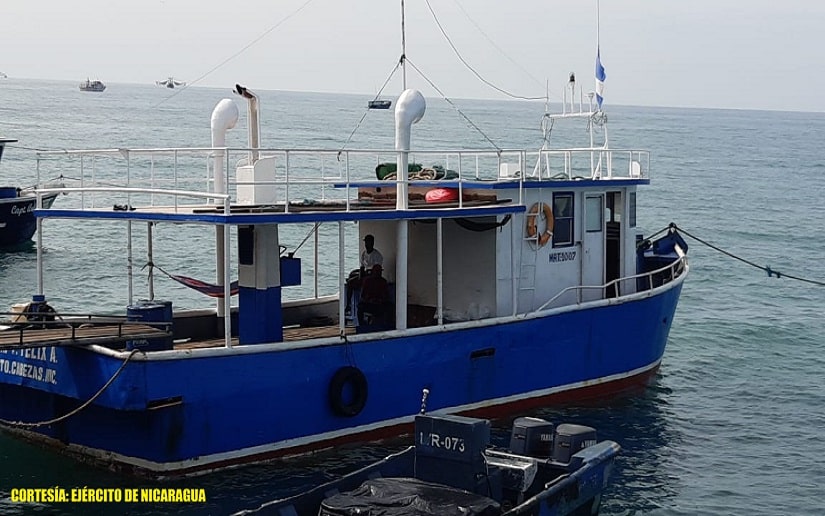
A source in the export sector told this publication that the government’s leniency toward the overexploitation of this resource has political roots. The source points out that the harvesting and export of the queen conch function as an economic fiefdom controlled by Lumberto Campbell, coordinator of the Secretariat for Caribbean Coast Affairs, through major processing companies such as Central American Fisheries S.A. (CAF), Compañía Pesquera Charly, S.A. (Copescharly, S.A.), and Promarnic.
“No commercial operation moves forward without his approval,” he says, “although this sector is institutionally managed through Edward Jackson,” the head of Inpesca.
Divers Exposed to Life-Threatening Risks Due to Unsafe Working Conditions
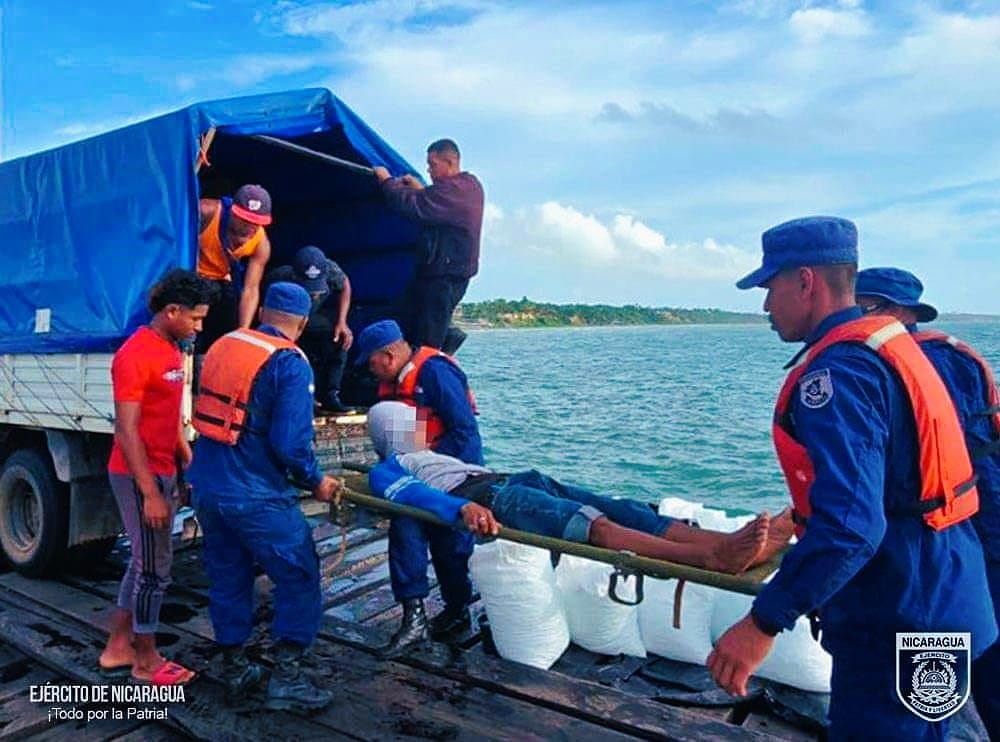
The record export figures celebrated by the government are built on subhuman working conditions. Divers and crew members on boats and pangas work under extremely precarious conditions, using industrial-grade air compressors, instead of breathing apparatus designed for human use, to cut costs, thereby exposing themselves to serious risks of decompression sickness and toxicity. Furthermore, the industry relies on physical and psychological coercion.
Testimonies from the sector reveal that, allegedly, operations on the high seas are often systematically interrupted to supply divers with drugs, fostering a dependency that ensures fishermen continue to dive despite the deplorable conditions and the paltry wages they receive.
A report by the Strombus gigas (Queen Conch) Monitoring Program in the Caribbean Sea off Nicaragua for the period from May to June 2005 highlighted at that time the humanitarian crisis that continues today.
Operations continue without guaranteeing “maritime safety, hygiene, and health on board,” states the report from the Center for Fisheries and Aquaculture Research (or CIPA, its acronym in Spanish). As noted by a source consulted by DIVERGENTES who is familiar with this issue, the lack of equipment directly endangers the lives of those working underwater. Added to this is a long-standing complaint in the fishing sector: the existence of an occupational health crisis affecting disabled divers, who are victims of decompression sickness. This is compounded by the lack of social security, which prevents these disabled workers from receiving the benefits to which they are legally entitled.
The situation for fishermen is exacerbated by grueling workdays and overcrowding on the boats, as well as the “deplorable” payment model that encourages self-exploitation. The CIPA report states that divers are “wage earners, paid based on their catch,” that is, under this piecework model, they only earn money if they bring up the catch; therefore, they are forced to descend to the seafloor as many times as they can, ignoring the biological limits of human decompression, in order to secure a minimum income—a situation that reinforces what was mentioned by the DIVERGENTES source, as they are forced to resort to stimulants or drugs to endure the pace of work.
Another report presented by Sergio Martínez, titled “The Current State of Giant Caribbean Conch (Strombus gigas) Fishing in Central America” and published on the Central American Integration System (or SICA, its acronym in Spanish) website, explains that the harvesting of the queen conch is carried out by lobster fishermen using scuba diving equipment—that is, they use air compressors and hoses. He explained that the process involves a mother ship arriving at the fishing area, after which the divers must descend in small canoes or boats.
The SICA report explains that this mollusk is found at great depths ranging from 10 to 100 feet. In 2005, they state that divers were operating at a depth of 65 feet, with maximum dives reaching 96 feet and minimum dives at 24 feet. The areas with the greatest abundance and best catches were found at depths of 60 to 70 feet.
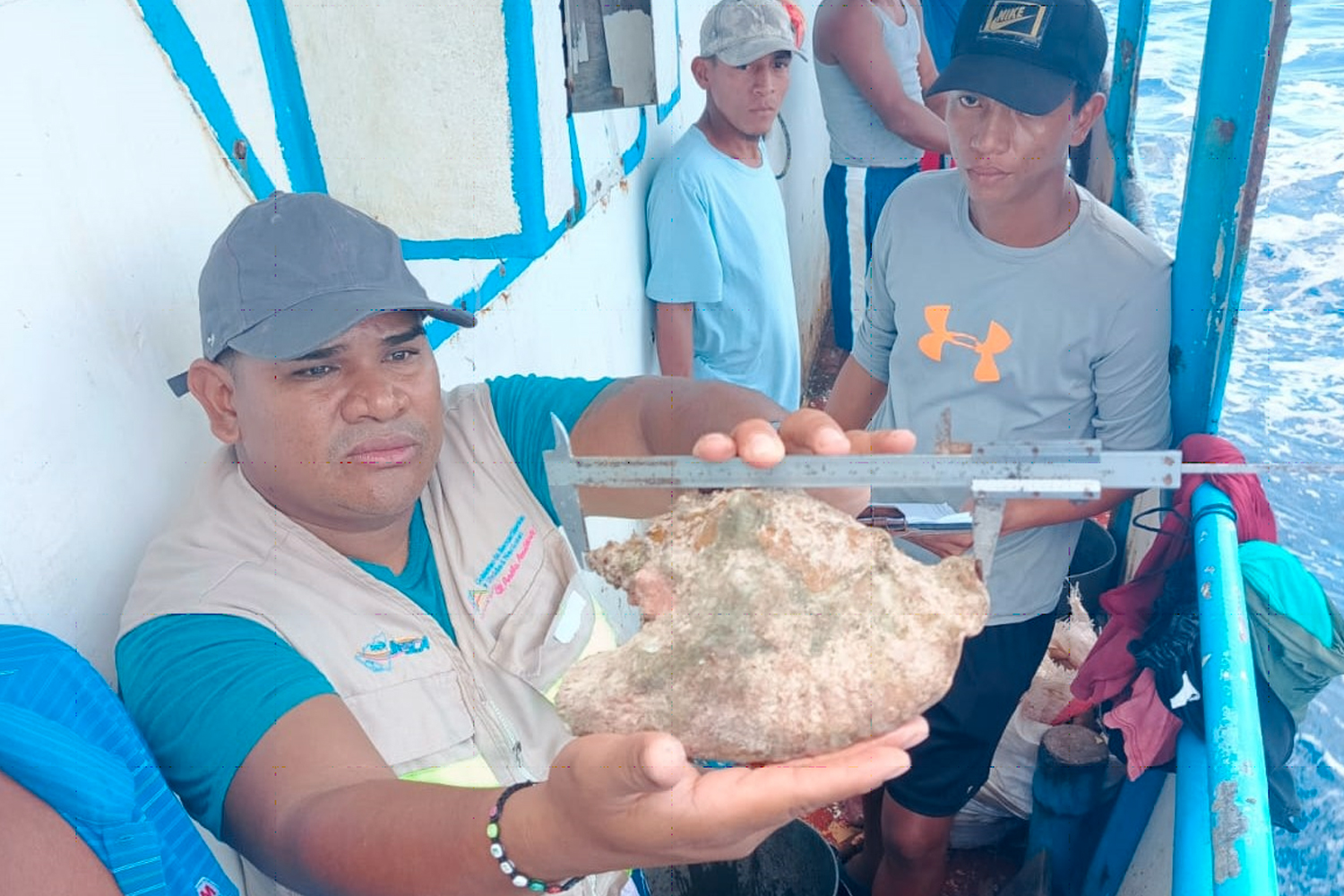
It is worth noting that, according to the reports shared and the source consulted by this publication, the queen conch rarely reaches shore intact. Generally, the meat is extracted from its shell on the seafloor.
The CIPA regional report emphasizes that this systematic practice of butchering the animal and discarding the shell at sea renders it pointless for states to establish biological regulations regarding shell size or lip thickness, since only the meat arrives at processing plants and ports.