
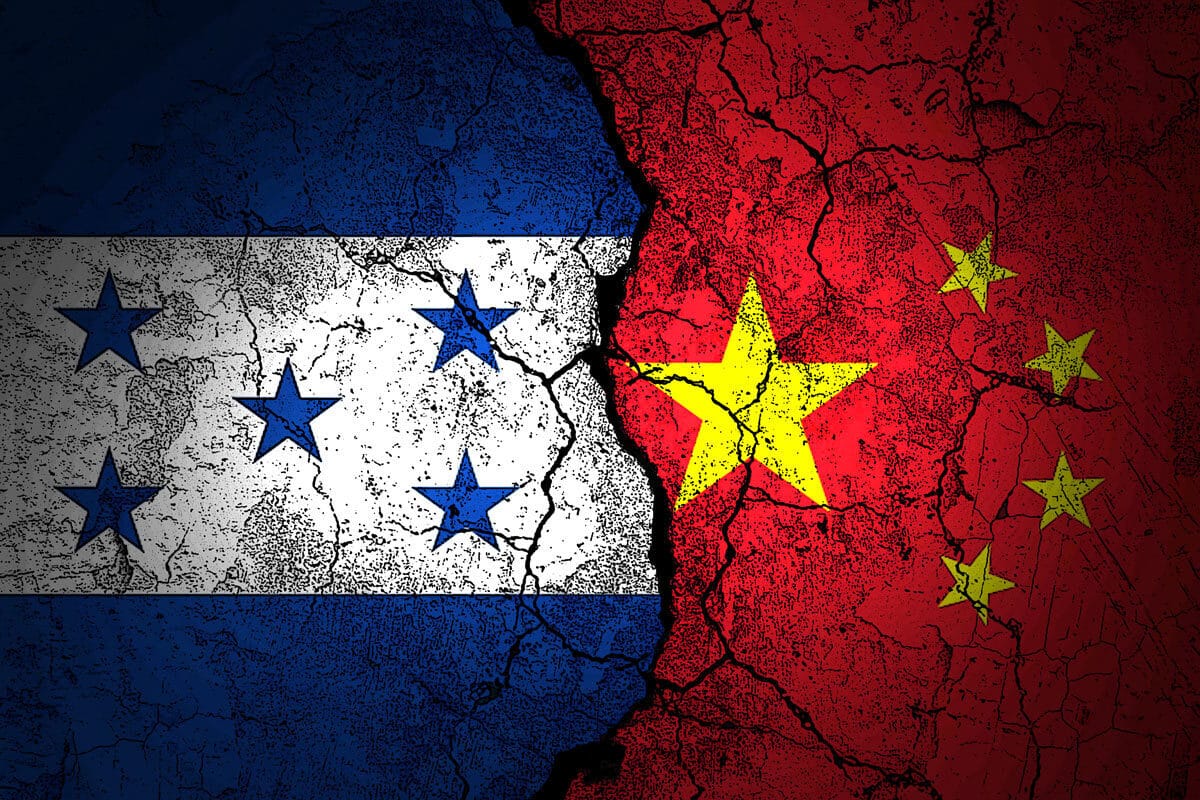
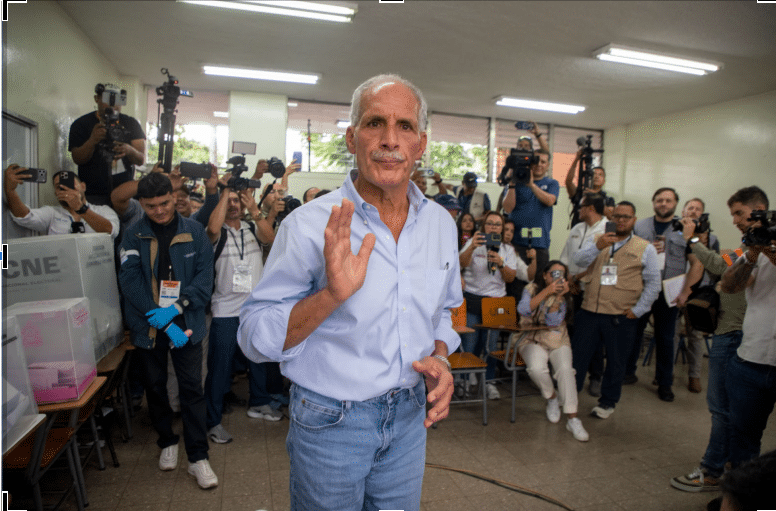
During his election campaign, now President, Nasry Asfura, of the Partido Nacional party, promised to restore relations with Taiwan, placing it within his “triangle of friendly nations”, alongside Israel and the United States. This came after former President Xiomara Castro, from left-leaning party Partido Libre abruptly severed trade and diplomatic ties with Taiwan in 2023 and moved to strengthen ties with China, which promised to invest in infrastructure, education, and manufacturing. These promises were eventually half-fulfilled with million-dollar donations but without establishing a clear path for collaboration between both countries through a Free Trade Agreement (FTA) that failed to materialize.
After Asfura’s remarks in July 2025, a few months before the elections, the Chinese Embassy responded by rejecting the possibility of Honduras restoring business and diplomatic relations with Taiwan, describing his statement as “a serious violation of the One-China principle”.
After the general elections at the end of November 2025—a highly questioned process due to the interference of the U.S. president—the Chinese Embassy in Honduras posted a statement recognizing the election process and “respecting the people’s sovereign decision and reiterating their bilateral support to Asfura’s Government”, despite previous questioning.
Parsifal D’Sola, director of the Andrés Bello Foundation in the Chinese-Latin American Research Center, claims that China’s position played an important role in the Honduran election process, which is not commonly seen in other countries of this region.
D’Sola points out: “it is, in fact, one of the few countries where relations with China have become a main topic in presidential campaigns, which doesn’t happen anywhere else. For Honduras, China is not a player on the other side of the world, China is a domestic issue that affects Hondurans’ lives, so this is a substantial change that will remain during the upcoming years”.
The relationship between China and Honduras was initially marked by donations that did not go unnoticed. One of the first such donations was carried out in March 2024, a year after the two countries established diplomatic and trade relations. China donated $280 million (6.8 billion Lempiras), non-refundable, for the restoration of school infrastructure and the provision of equipment for educational institutions nationwide.
Successively, in December 2024, China donated, “as humanitarian aid”, 2.48 billion Lempiras destined to the construction of housing in Valle de Sula and Valle de Quimistán, in northern Honduras. Additionally, China donated 1332 tons of wheat flour as food assistance to 56 municipalities nationwide.
Although the donations were made for a specific purpose, no clear guidelines were established regarding the timeframe within which those funds were to be disbursed, nor did officials provide further details regarding the proposals that Honduras would be making to China as part of the mutual collaboration between the two countries.
Alongside the attempted FTA between China and Honduras, both countries also signed over 20 Memoranda of Agreement that gave way to a mutual collaboration in academic matters, communications, and geopolitical positioning in the case of the “La Franja y La Ruta” agreement, one of China’s most prominent agreements in Latin America, which promises Chinese investment in technology, connectivity, and development for the signatory countries.
“Personally, I am of the opinion that the more transparent, the better”, stated Salvador Moncada, former Honduran ambassador to China, about the secrecy surrounding the agreements between the two countries, and added that “well-informed people are people who can make better decisions with more propriety”.
An intensive exchange
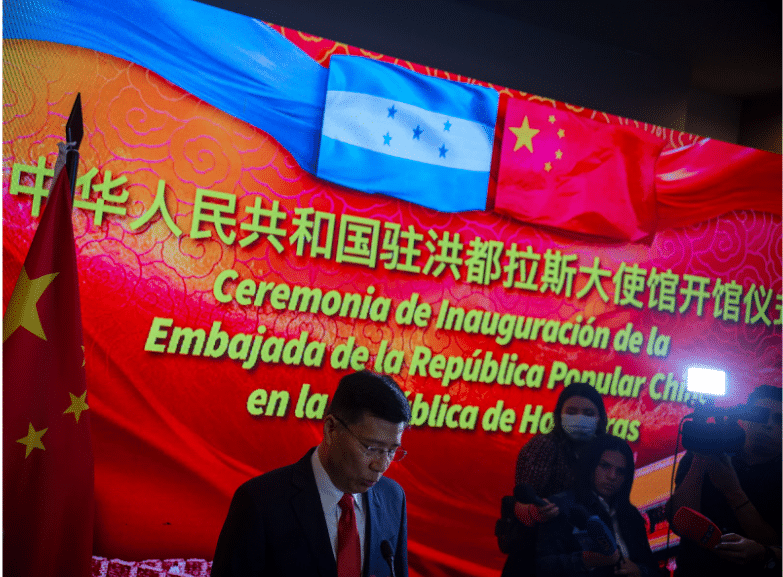
Moreover, Honduras and China signed agreements to establish sister cities in both countries to promote cultural, educational, healthcare, trade and tourism exchanges between San Pedro Sula and Changsha, signed in 2024 and whose progress is currently unknown. Another agreement, between Santa Bárbara and Shengzhou, signed in 2025, proposed a $500 million investment in this Honduran administrative department through projects developed by Chinese companies and managed by the Partido Libre congressman, German Altamirano.
Altamirano said to Contracorriente that, even though this memorandum was signed in 2025, many of the aspects included have not materialized due to a lack of action by officials from the previous government.
The congressman stated: “what [the Foreign Ministry] failed to do was endorse the memorandum as such, since it covers trade, cultural and educational exchange. When I started working on this, they asked me for a socioeconomic analysis, and when I took it to Vicellor Gerardo Torres, they put me through to the person in charge of China-related issues. They were amazed at how I had managed to achieve what they had never been able to achieve with China, and the government even congratulated me. However, I kept an eye on it but there was no way to get them to help me with it, they told me they were looking into it”.
The congressman explained that, until now, only one Chinese-owned company has been established in Arada, a municipality in Santa Bárbara, called Kratos Tech, which is a subsidiary of a Chinese company but is legally constituted in Honduras. Even though this company is not tied to the sister cities memorandum, it already holds an operating permit from the mayor’s office in Arada, and it is applying for another permit from the Honduran Institute of Geology and Mines (or Inhgeomin, its acronym in Spanish) to operate on a river in that municipality for the purpose of extracting gravel, a construction material.
According to media reports at the end of last year, this is an individual agreement to build a housing project in Arada. However, there is no information about Kratos Tech’s Chinese holding company and the congressman claims not to remember its name.
Altamirano stated: “it’s an agreement between Arada and a Chinese company, but for the project to move forward and be built, authorization from Inhgeomin is required, but the Municipality of Arada holds the concession, it’s a public agreement”.
The Santa Bárbara congressman considers it possible to continue the sister cities agreement between China and Honduras, despite the fact that a political party different from his own is now in office. Confidently, the congressman states that Afura will not break relations with China.
The congressman emphasized that “the last thing I heard is that President Asfura already requested for the Chinese ambassador to provide an update on all existing agreements and treaties between the two countries, using the following phrase: “we need to know the past in order to build the future”, so I assume that this is in order to strengthen relations, I think President Asfura won’t break relations with China in the end”.
Asymmetric trade
Data which the Honduran Council of Private Enterprise (or Cohep, its acronym in Spanish) provided to Contracorriente indicates that bilateral trade between Honduras and China is currently significantly higher in volume, but that Honduras has a trade deficit.
Over the past five years, imports from China to Honduras have doubled, rising from $1.317 billion (L 34,926,840) in 2020, to $2.784 billion (L 73,846,000) as of November 2025. However, this contrasts with exports from Honduras to China, which have also doubled but show lower figures: $24 million (L 636 million) in exports in 2020 and $48 million (L 1.272 million) as of November 2025.
As for Taiwan, data from the Central Bank of Honduras (or BCH, its initials in Spanish) reflects a trade volume lower than China’s but with a more balanced relationship even after the break in relations with Honduras. In 2023, imports made up $115 million (L 3.049 billion) and exports made up $95 million (L 2.519 billion), and in 2025 imports decreased to $93 million (L 2.466 billion) and exports to $31 million (L 822 million).
For Cohep, asymmetrical trade between Honduras and China has been the result of a lack of establishing a Free Trade Agreement (FTA) between the two countries. This private institution also identifies the lack of clear guidelines as the main disadvantage in doing business with China when compared to Taiwan, where there were tariff preferences, legal certainty, preferential access to agricultural and industrial products, technical cooperation, and scholarship and training programs for Hondurans.
In July 2023, Honduras and China started negotiating to establish a Free Trade Agreement (FTA), but these stalled in September 2024 due a number of outstanding issues: trade in goods, product-specific rules of origin, the annexes on trade in services and investment, and the chapter on cooperation regarding standards for Honduran export products and their conformity assessment by both nations. These negotiations cost the State of Honduras L 15 million from the National Treasury in 2023, according to a report by the Court of Audit (or TSC, its initials in Spanish).
In this round of negotiations—the last one registered between both countries—they also agreed to implement an Early Harvest Agreement (or ACT, its initials in Spanish) for an immediate export of farmed shrimp with preferential access to the Chinese market, while the FTA remained on stand by, notwithstanding, this hasn’t matched the amount of shrimp exported to Taiwan before establishing relations with China.
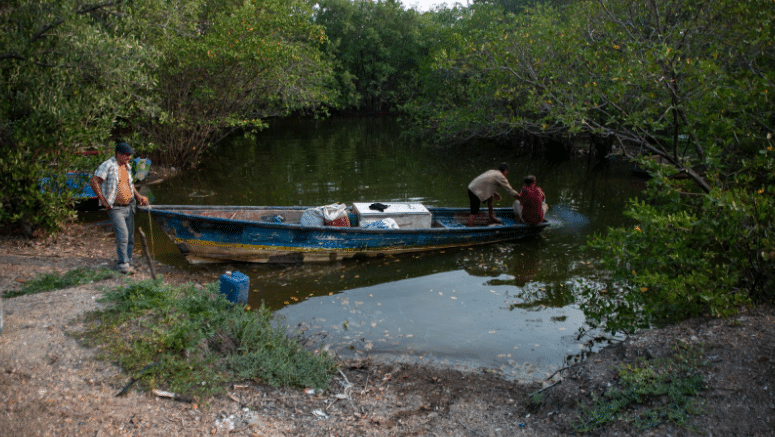
According to data from the National Association of Aquaculture Producers (or ANDAH, its acronym in Spanish), Honduras exported 2,809 tons of shrimp to Taiwan in 2025, despite breaking ties with this country since 2023. In China’s case, 341 tons were exported last year.
Regarding the Early Harvest Agreement, former Honduran ambassador to China, Sir Salvador Moncada, noted that signatures were obtained for a letter of intent to purchase 13,200 tons of Honduran shrimp for a period from 2026 to 2030, and that, in the coffee sector, a letter of intent was also signed for the purchase of approximately 25,000 metric tons of Honduran coffee by China.
Moncada states that negotiations with China on establishing the FTA have been slow due to Honduras’ “protectionism” regarding its products and the preferential treatment it expects from China.
Moncada asserted that “Honduras’ protectionism has been very good because we have achieved things that other countries in this region haven’t, for example, in the last few moments of the last round of discussion [of the Free Trade Agreement] China agreed to export Honduran coffee, practically without tariffs, which is something that no other regional country has achieved, so what’s next is important, we had to do it slowly to do it well and make sure we had the utmost possible advantage for the country”.
Although part of the Honduran business sector has expressed dissatisfaction with the lack of progress in establishing the Free Trade Agreement between Honduras and China, the secrecy surrounding the memoranda signed with China and the progress of the FTA has also highlighted the opacity that has characterized the negotiations between the two nations.
This secrecy was requested by the then Secretary of Economic Development, Fredis Cerrato, who said that, due to the nature of the treaty negotiations, it would be best to keep the process secret and for the details to be revealed once the FTA is signed.
Contracorriente and DIVERGENTES asked the former Secretary of Economic Development, Fredis Cerrato for updates on the FTA negotiations and other signed agreements, however, no response was received by the time of publication.
A summit will decide Honduras’ stance towards China
U.S. President Donald Trump has invited Latin American presidents to attend a summit on March 7 aimed at “curbing China’s regional expansion.” Invited to the event were Javier Milei, president of Argentina; Rodrigo Paz of Bolivia; Nayib Bukele of El Salvador; Daniel Noboa of Ecuador; and Nasry Asfura, president of Honduras. Santiago Peña, president of Paraguay—one of the few countries in the region that has not yet established diplomatic or trade relations with China—will also attend.
Trump emphasized that the summit, which will take place in Miami, Florida, aims at strengthening alliances between these countries and the U.S., and protecting the main marketing channels in Latin America. Subsequently, Trump will visit China at the end of March to meet with Xi Jinping after achieving a margin of “strategic stability”, according to what Secretary of State, Marco Rubio, told the media.
D’Sola states that, although this event isn’t an indication that these countries will break diplomatic and business relations with China, it may “worry” China regarding the U.S.’ continued hindrances to its progress in this region.
In this regard, lawyer and internationalist, Graco Perez, thinks that this event will allow the U.S. to set limits for Latin American countries in relation to China, including Honduras, and that because of this the Asfura administration has not yet taken a position.
Perez believes that “it seems that the government still hasn’t made a decision and is waiting for clearer signs from the U.S. government, from this perspective I think that in the next meeting, because there will be a previous one on March 6 with Secretary of State Marco Rubio, and then on March 7 in the summit with President Trump and other presidents from the continent, I would think that Asfura’s government will decide there what it will do about [China]”.
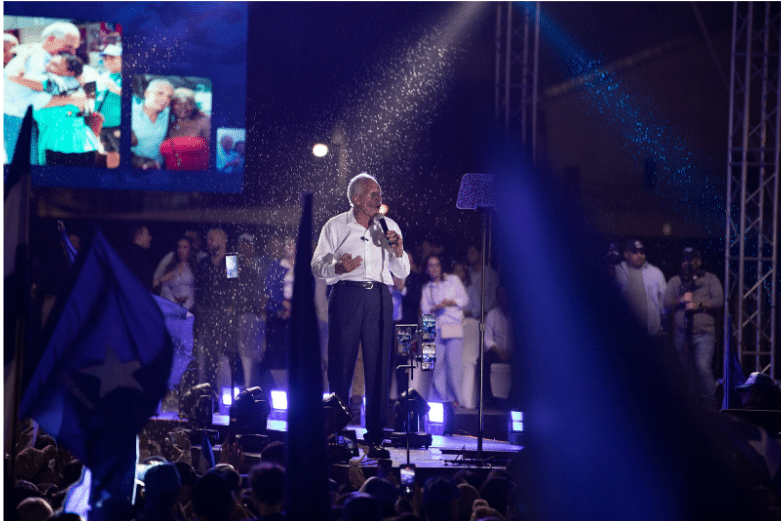
Additionally, Perez points out that, despite Asfura’s promise to restore relations with Taiwan, lobbying efforts by the Chinese diplomatic corps in Honduras could also be affecting the fulfillment of that campaign pledge. He notes that, while this lobbying may be subtle due to China’s approach to politics, it has been evident in the Chinese Embassy’s meetings with business leaders this year.
“I would assume that if they are meeting with Cohep [the Honduran Council of Private Enterprise] and making it public, it means that there are also Honduran business leaders who are interested in maintaining this relationship with China and there will also be business leaders—who have expressed this—who believe it would be better to restore relations with Taiwan, so there are economic interests at play which may exert some influence on the current government, not in terms of national interest, but rather at the level of corporate interests, because if the decision were of national interest the Honduran government would have already restored relations with Taiwan, it’s a matter of political will”, Perez believes.
Furthermore, this week, the Ministry of Foreign Affairs and International Cooperation posted on their social media about a meeting between the current Foreign Minister, Mireya Aguero, and the Chinese Ambassador, Yu Bo.
A request was made for an interview with Ambassador Yu Bo through staff at the Chinese Embassy in Honduras and by visiting the embassy’s premises; however, we received no response by the time of publication.
Even so, analyst Greco Perez does not rule out that Asfura could take a similar path to that of Argentinian President, Javier Milei, one of Latin America’s leaders closest to Donald Trump, but who still maintains strong ties to China in the energy sector, infrastructure, and lithium extraction. The aforementioned is a key indicative of the type of business that China has tried to set up—unsuccessfully so far—in Honduras.
Perez states: “that is part of what will be determined at this summit: how close [the relationship with China] can become and in which sectors, because there are sectors that are critical for the United States, such as infrastructure, energy, and rare earth metals”.
Nevertheless, Chinese influence on telecommunications and connectivity has been somewhat opaque. In the case of the Honduran Telecommunications Company, (or Hondutel, its acronym in Spanish), agreements with Chinese company Huawei were established in secrecy with clauses that prevented the Honduran State from revealing any details, which was also duplicated in the memorandum of agreement between the National Port Authority (or ENP, its initials in Spanish) and the China Harbour Engineering Company LTD (CHEC), which has been accused of fraudulent practices, irregularities, and bribes globally.
Furthermore, in the energy sector, China has also made its presence felt through Sinohydro, a company criticized by Lenca communities for its involvement in the Agua Zarca hydroelectric project in 2013; the previous government awarded it a contract worth over $115 million to build a power transmission line between the departments of Yoro and Colón.
Parsifal D’Sola, for his part, agrees that the best scenario for the president of Honduras would be to follow Milei’s lead in terms of ideological alignment with the United States and economic relations with China; however, when it comes to security, the situation is different due to the United States’ greater influence in the region.
D’Sola compares this to the military operation to capture Nicolás Maduro in Venezuela at the beginning of this year. For him, this is a clear example of how, regardless of the extent of China’s cooperation, business or investment in a Latin American country, it does not match the United States’ coordinated capacity to influence the region, and of how, in such cases, China prefers to remain silent and avoids criticizing U.S. operations.
For Sir Salvador Moncada, Honduran scientist and former Honduran ambassador to China, Honduras’ current government must strike a pragmatic balance between the U.S. and China and identify financial opportunities that foster projects for the country’s development, regardless of where they come from.
“Honduras has only one battle to fight and it is a serious one that’s always present: the battle against poverty and inequality, we don’t have another one, we’re not part of any geopolitical battle nor should we be. Therefore, we should find the best conditions to fund our fight against poverty and our fight against inequality”, states Moncada, who resigned from his post as ambassador earlier this year.
But despite pressure from the United States, this has not been the only factor which has shaped the trajectory of diplomatic and trade relations between Honduras and China. Unequal trade in Honduran products, lack of transparency in agreements with China, and failure to establish a clear roadmap for cooperation between the two countries have been the main factors resulting from this three-year relationship.