
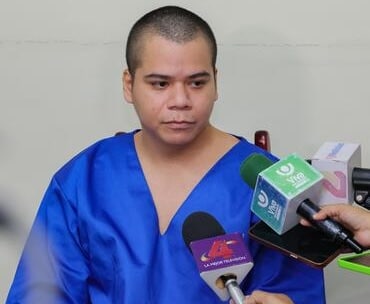
More than a general statement against the co-presidential regime, the U.S. State Department’s Bureau of Western Hemisphere Affairs launched a direct blow at Rosario Murillo, the all-powerful figure of Sandinismo: “Is Murillo so insecure that she cannot provide evidence he is alive?” the bureau asked, referring to the disappearance of 30-year-old doctor Yerri Estrada Ruíz, abducted on August 13, 2025.
Once again, international pressure, especially from Washington, forced the regime to display a political prisoner, despite the defiant rhetoric of the ruling couple, later expressed in a protest letter against the U.S. embassy in Managua.
The alarms over Estrada Ruíz’s whereabouts and physical condition were raised by his mother, Rosa Ruíz, who launched a campaign in the media and before human rights organizations. Her pleas first echoed in Costa Rica, where her son was born, but the Ortega-Murillo dictatorship ignored those timid calls. It was not until September 10 that the United States demanded answers about the young doctor, directly challenging Murillo.
The co-presidential couple tried to quell the international pressure by releasing, through their propaganda outlets, a series of photos of Estrada Ruíz’s alleged conjugal visit. The images, dated September 3 but published nine days later, showed the political prisoner after nearly three weeks of enforced disappearance. The regime labeled him a “coup-planner”, a tag it uses to criminalize opponents, but never explained the reasons for his arrest or his judicial status, although its statements suggest he may have already been secretly convicted.
For human rights lawyer Salvador Lulio Marenco, the dictatorship did not show Estrada Ruíz out of goodwill, but under international pressure. “The regime does nothing out of good will. Showing him was purely due to international pressure,” he told DIVERGENTES.
The jurist recalled that if it had been a genuine gesture, authorities would have allowed regular visits, presented judicial files, and also shown the other 32 people reported missing. Instead, he says, what stands out is a sign of “political weakness in the face of international pressure” and Washington’s accusations.
“International pressure has to remain constant, as it has been from the United States, and it should be even stronger from Costa Rica,” he warned. Even though Estrada was shown in photographs, Marenco insists it does not erase the illegality of his detention or the possibility of torture carried out with impunity, “crimes that must be urgently investigated.”
The Maradiaga Precedent
A similar case occurred with opposition political scientist Félix Maradiaga, who was held in isolation during his imprisonment and not shown publicly until reports about his deteriorating physical condition emerged, especially a sketch promoted by the Se Humano campaign. He was finally presented to the media after his wife, Berta Valle, released a portrait showing that he had lost significant weight. At the time, Amnesty International said Maradiaga’s appearance was more a reaction to public and media pressure than a genuine act of transparency by the regime, and criticized it as an attempt to deflect international attention from allegations of torture, isolation, and cruel treatment reported by his relatives.
In the same vein, the forced presentation of Estrada Ruíz occurred at a moment of maximum pressure, particularly after the deaths of two political prisoners in the span of a week: Mauricio Alonso Petri and Carlos Cárdenas, who both died in state custody under circumstances the regime has never clarified. These deaths triggered alarms because they revealed the extreme conditions of detention: denial of medical care, constant torture, and lack of food.
Human rights organizations directly blamed the Ortega-Murillo dictatorship for these deaths, and the United States immediately condemned them, calling them the murders of political prisoners.
The international community warned this represented an unprecedented escalation since 2018, when detainees were returned to their families lifeless. According to lawyers and relatives, that climate of outrage explains why the regime was forced to show Estrada Ruíz alive, after three weeks of enforced disappearance.
The Defiant Response
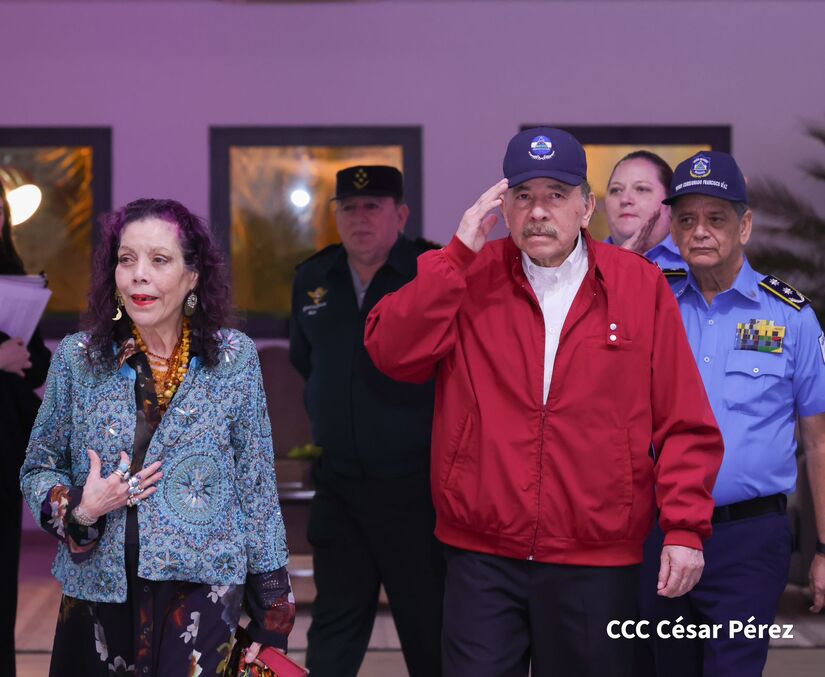
After the U.S. directly referenced Murillo, the co-presidential regime wasted no time in responding with an angry note addressed to the U.S. embassy in Managua. The Sandinista Foreign Ministry described Washington’s statement as a “disrespectful, slanderous, and defamatory note, full of falsehoods.” According to the diplomatic letter, the denunciation of Estrada Ruíz’s disappearance “cannot be compared to the proper Diplomacy of relations between States” and instead amounted to an insult that “nothing can legitimize.”
The regime doubled down on calling the doctor a “coup-planner,” claiming he had been “charged and convicted for terrorist activities.” It insisted he had been presented to the media “enjoying not only perfect health, but all his rights as a person in prison, including family visits.” The Sandinista Foreign Ministry accused the U.S. embassy of spreading “lies and slander with improper interests,” warned that such publications “expose those who spread them,” and concluded that the language used was “more typical of irresponsible activist groups unfamiliar with the management of Truth.”
Lawyer Marenco argues that the doctor’s case transcends any claims of national sovereignty. He stresses that enforced disappearance and the conditions in which Estrada was shown amount to crimes against humanity, charges that cannot be dismissed as an internal matter. “When you commit crimes against humanity, it’s no longer an internal issue,” he insisted.
The harassment against Estrada Ruíz had been ongoing: agents regularly showed up at his home in León to monitor him, and two days after his arrest, an officer even appeared at the house, unaware he had already been taken. The doctor is one of 33 political prisoners reported as forcibly disappeared as of late August 2025, according to the Mechanism for the Recognition of Political Prisoners.