
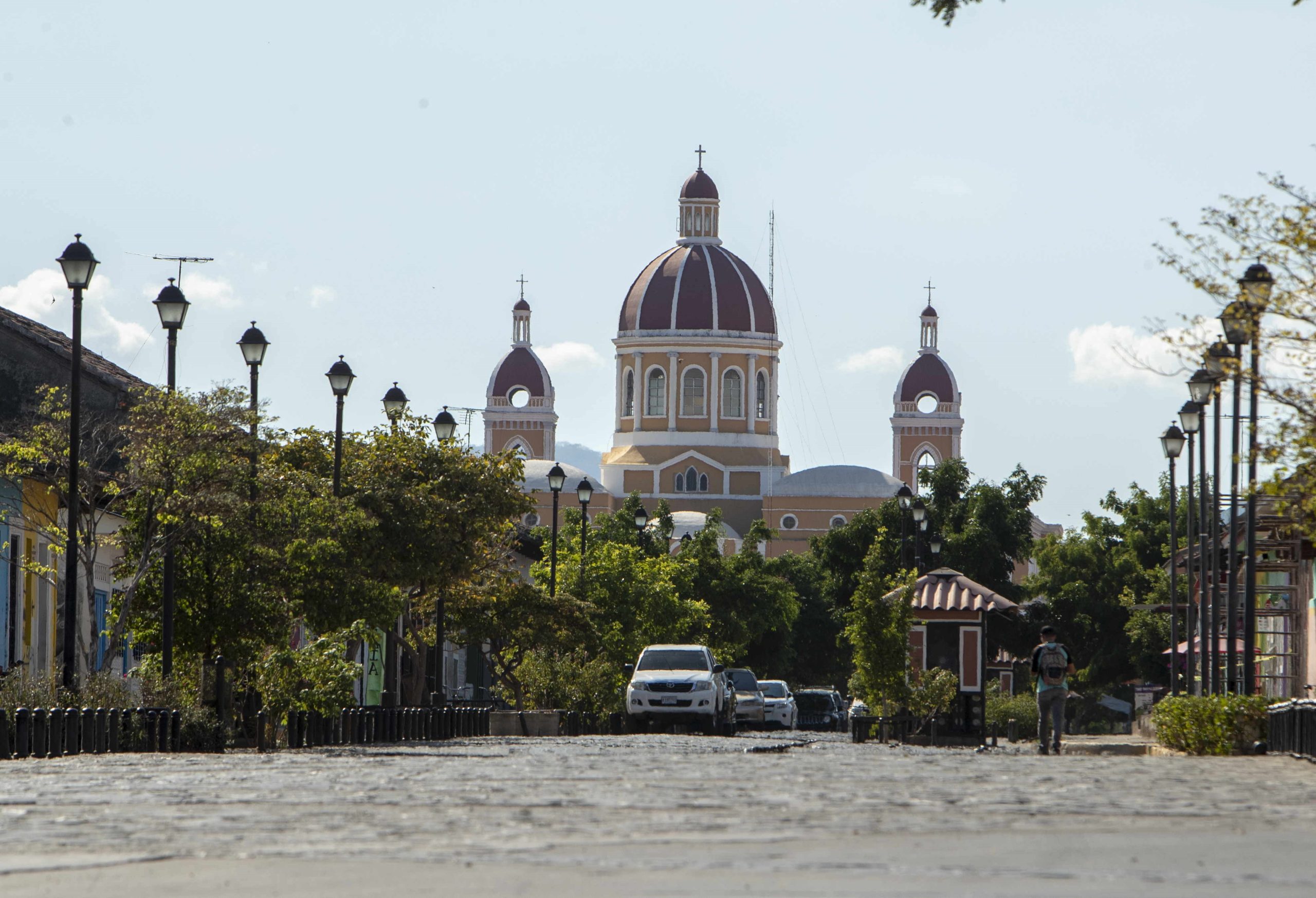
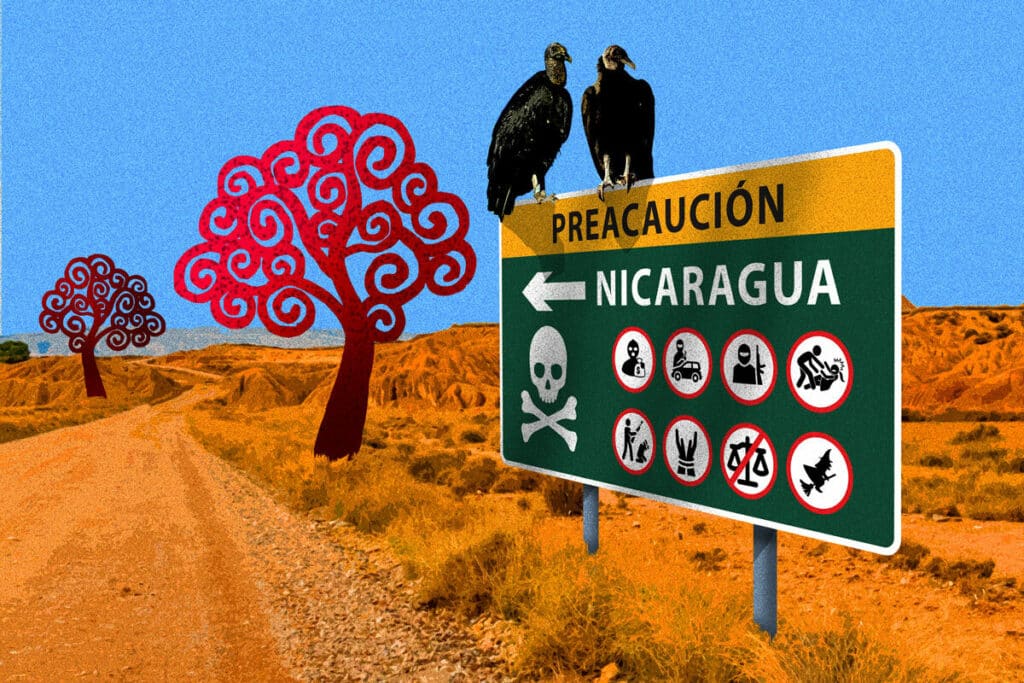
Tourism in Nicaragua has taken another hit. The U.S. State Department has placed the country in “Level D,” its highest travel warning, advising citizens not to visit due to the risk of arbitrary and wrongful detentions. This designation places Nicaragua on the same red list as Afghanistan, Iran, North Korea, Russia, and Venezuela.
The seriousness of the warning cannot be overstated: U.S. tourists have historically been Nicaragua’s main source of foreign visitors. Yet their numbers have been plummeting for years. According to official figures from the Nicaraguan Tourism Institute (INTUR), 440,000 Americans visited in 2017. By 2021, that figure had collapsed to just 80,000, reflecting the political crisis, the de facto police state, and widespread civil liberties violations since the 2018 massacre of protesters, which have tarnished Nicaragua’s image as a safe destination.
Faced with this reality, tourism entrepreneurs themselves acknowledge the blow. One private tour operator, who requested anonymity for fear of reprisals, said: “American tourists have always been our main clients, and we had already been seeing their arrivals decline for years. With this announcement, many of the few who still considered coming will likely cancel their plans.”
The same operator warned that the effects will directly hit tourism businesses: “Foreign tourism is what sustains the industry: hotels, restaurants, tour operators. Without it, relying only on local tourism, it’s impossible to maintain stability. This means lower revenues and, in many cases, staff cuts,” the source lamented.
In its advisory, the State Department warned that Nicaraguan authorities and armed civilians identified as “volunteer police” (Sandinista paramilitaries) may surveil, interrogate, expel, or detain U.S. citizens for activities not considered crimes in their own country. It also reminded that the regime has subjected U.S. citizens to prolonged, politically motivated trials, further cementing the perception of a hostile environment for visitors.
A Warning That Sinks Nicaragua’s Tourism Even Further
Divergentes | Taken from El 19 Digital.
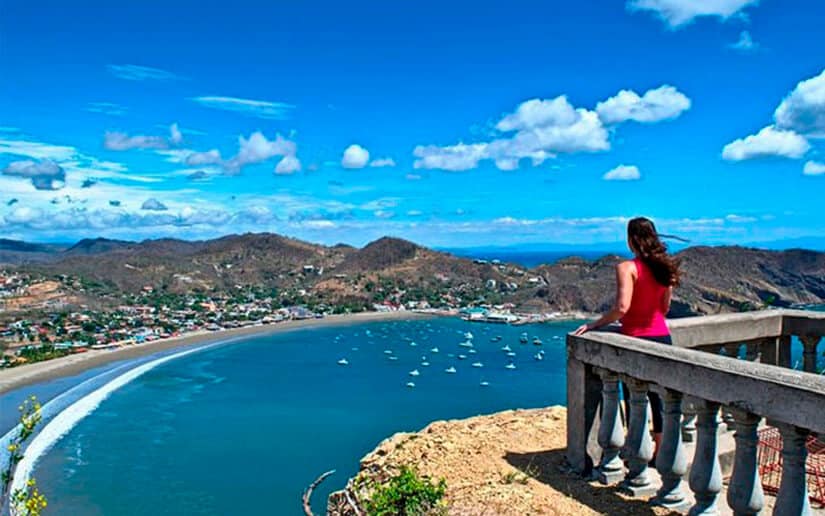
A Nicaraguan tourism entrepreneur, who requested anonymity to avoid reprisals from the Sandinista regime of Daniel Ortega and Rosario Murillo, lamented that the U.S. State Department’s latest advisory will further damage Nicaragua’s image, especially in the North American tourism market, the most important for the country not only in terms of visitor numbers but also because of their higher average spending.
“This new warning aimed at Americans will deepen even further the tourism crisis the country has faced since 2018 and the post-pandemic period, considering that, as an individual market, Americans were Nicaragua’s main source of visitors. U.S. citizens take their government’s travel advisories very seriously. And, of course, the decline in tourism also negatively impacts the local communities that depend on it. On the other hand, this kind of advisory also hurts investment opportunities, since no investor is going to risk putting money into a country where there are no proper legal security conditions for investment,” he warned.
He recalled that during the 1990s, after the first Sandinista dictatorship, it took enormous public and private efforts to repair the country’s image, which had been severely damaged by years of war and confiscations.
“There was extensive international work by tourism entrepreneurs and INTUR to change that perception. Today, we have regressed to those years once again, because the country’s image has been seriously damaged by the actions of a government that has massacred its own people and stands accused of crimes against humanity. Now, adding to that, the U.S. government’s decision to warn its citizens not to travel to Nicaragua because it is unsafe only pours salt in the wound, especially given how important the North American tourism market is,” he stressed.
A Sector in Decline
According to Nicaragua’s 2024 Central Bank Annual Report, the arrival of non-resident tourists fell by 9.7% compared to 2023, totaling 1.085 million visitors.
The average stay also dropped from 10.6 days in 2023 to 9.9 days in 2024. While average daily spending rose slightly, from $43.70 to $45.70, this modest increase did not offset the overall decline in arrivals or the shorter stays.
The hardest-hit markets have been the most important ones. In 2017, Nicaragua welcomed 118,000 European visitors; in 2021, only 16,000 came. The flow of Central American visitors, historically dominant, also collapsed, dropping from 1.1 million in 2017 to just 104,000 in 2021, the last year INTUR published detailed figures.
While neighboring countries are experiencing a post-pandemic tourism boom, Nicaragua is moving in the opposite direction. In 2024, Costa Rica and Panama each surpassed $5.4 billion in tourism revenue, and El Salvador reached $3 billion. Nicaragua, by contrast, generated only $510.9 million, a 30.9% decline from the previous year, according to the Central Bank.
The downturn becomes starker when compared with 2017, Nicaragua’s peak year for tourism: 1.7 million visitors and $840.5 million in revenue. Seven years later, the country attracts just over one million tourists, and revenues are down 39% from that historic high.
An expert source on tourism, interviewed under condition of anonymity for security reasons, noted that the U.S. warning only deepens an already entrenched problem: “Tourism in Nicaragua had been declining for years, struggling to recover European and North American markets. This U.S. alert only worsens an issue rooted since 2018. The country depends heavily on American visitors, and losing them means shutting down any real chance of recovery.”
The same source warned that the consequences extend beyond visitor numbers: “When Washington labels a tourist destination as high-risk, it not only cuts off tourist arrivals but also foreign investment opportunities in the sector. Nobody risks capital in a country with that level of warning.”
Propaganda vs. Reality
Finally, the source challenged the Ortega-Murillo regime’s narrative, which continues to portray tourism as a growing sector: “The official discourse that Nicaragua is a safe destination has no basis in the data. Tourism revenues are shrinking, and small operators are the ones suffering the most, since they lack the capacity to withstand multiple low seasons.”
Despite official statistics and international warnings, the Ortega-Murillo government insists on promoting the idea that tourism is “growing” and that Nicaragua is a “safe destination.” Yet the U.S. travel alert reinforces the opposite image: a country isolated, surveilled, and risky for foreign travelers.
For tourism operators, the impact of this measure may be irreversible. Once a country is placed in the highest risk category for the U.S. market, regaining visitor confidence can take years, or mean losing that crucial market altogether, with direct effects on revenue, employment, and investment.