
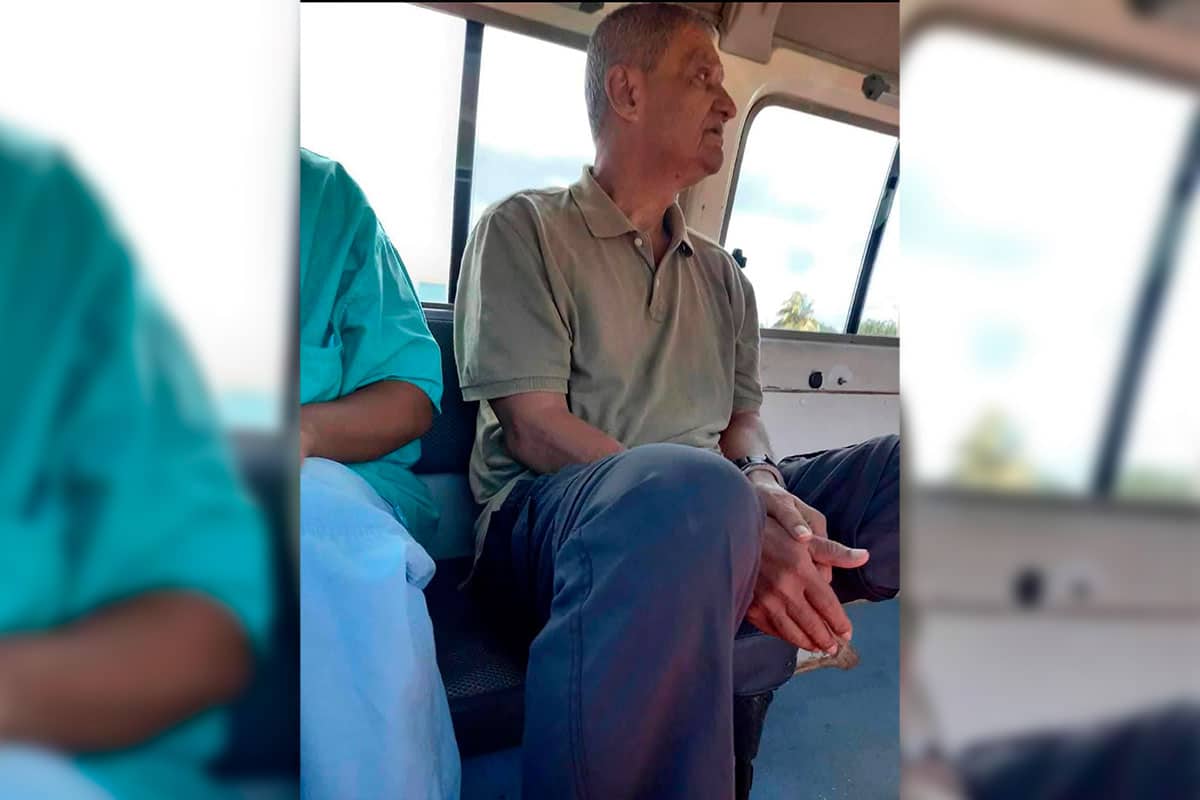
Before becoming the Taupla, the supreme leader of the indigenous peoples of the Nicaraguan Caribbean, Brooklyn Rivera had already survived prison, exile, and an ambush that nearly claimed his life. It was 1981 when the first Sandinista regime dissolved Misurasata, an indigenous organization of which he was a leader. He was arrested along with other Miskitos and forced into exile in Costa Rica. Five years later, on January 21, 1986, Sandinista forces attacked the community of Layasiksa, where he was staying. Three indigenous guerrilla members were killed, five were wounded, and there were civilian casualties… Rivera escaped and found refuge on the island of San Andrés, in Colombian territory.
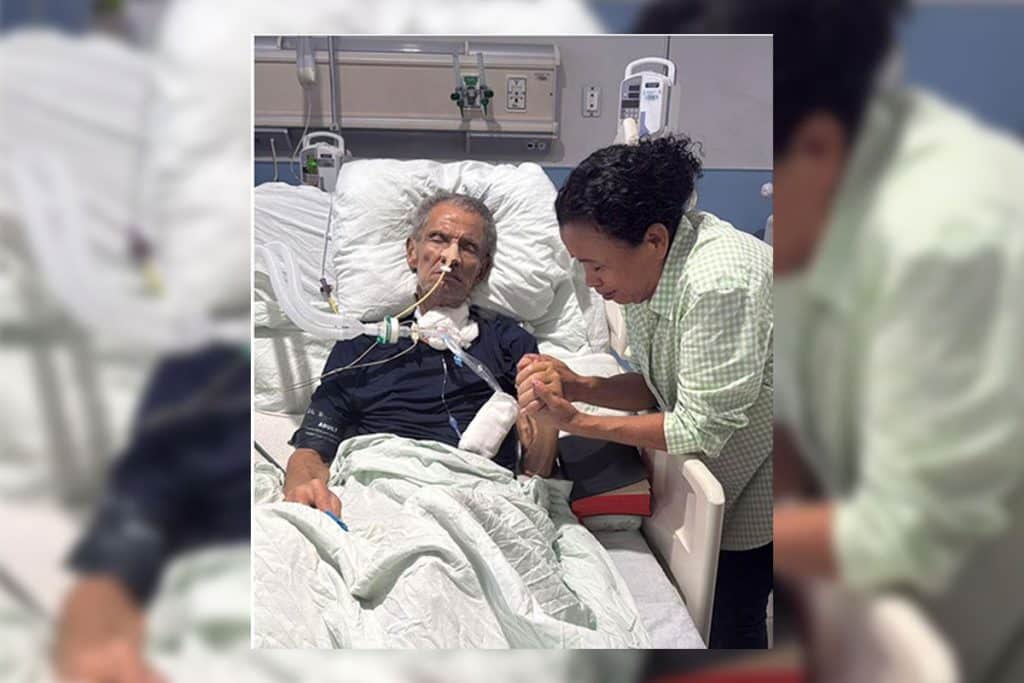
He survived. He negotiated a peace agreement with the Sandinistas. He returned. And, four decades later, Daniel Ortega and Rosario Murillo’s dictatorship kidnapped him and kept him missing for nearly three years, until they showed him again on May 27, 2026, already in his death throes, hooked up to a ventilator in a Managua hospital, with his throat pierced by a tracheotomy, only to finally die on the night of Saturday, May 30.
The regime confirmed his death in a brief statement, claiming that his death was allegedly due to a bacteria linked to COVID-19, cynically omitting the time they kept him disappeared and their refusal to release him, despite pleas from his family, to whom they now offer “hugs and prayers.”
Taupla Brooklyn, as he was known in the Caribbean jungles, always had a tense relationship with Sandinismo. At first, he agreed with the revolution’s proposals for social justice, but he soon broke with that controversial political project. The reason was fundamental: the Sandinistas’ view of indigenous peoples was the same historical perspective as always—deep-seated racism and the conviction that the territories occupied by indigenous peoples are spoils of war.
From exile in the early 1980s, Rivera reorganized the indigenous resistance. In 1987, he led the unification of the various factions of the Miskito armed resistance and founded Yatama, the Organization of the Peoples of Mother Earth. The very movement that had fought the Sandinistas became the vehicle for negotiating with them.
Rivera was the first to sit down and talk with the revolutionaries, who were accused of committing atrocities against the indigenous people, such as the series of military operations known as “Red Christmas.” The result was the Sapoá Agreement, which recognized limited autonomy for the Caribbean Coast regions and was enshrined in the 1987 Constitution. It wasn’t everything Rivera and the indigenous people wanted, but it was a step forward. His people saw him return not as a defeated man but as the man who had secured a historic recognition. Since then, they have called him Taupla.
The same Taupla who, after 971 days of forced disappearance, was presented by the co-presidential regime as a political prisoner in extremely grave condition at the age of 73: confined to a hospital bed, on mechanical ventilation, suffering from multiple organ failure, and emaciated—a far cry from the indigenous leader who, before being arrested on September 29, 2023, in Bilwi, had spent days evading the police who were searching for him.
Missing Since 2023
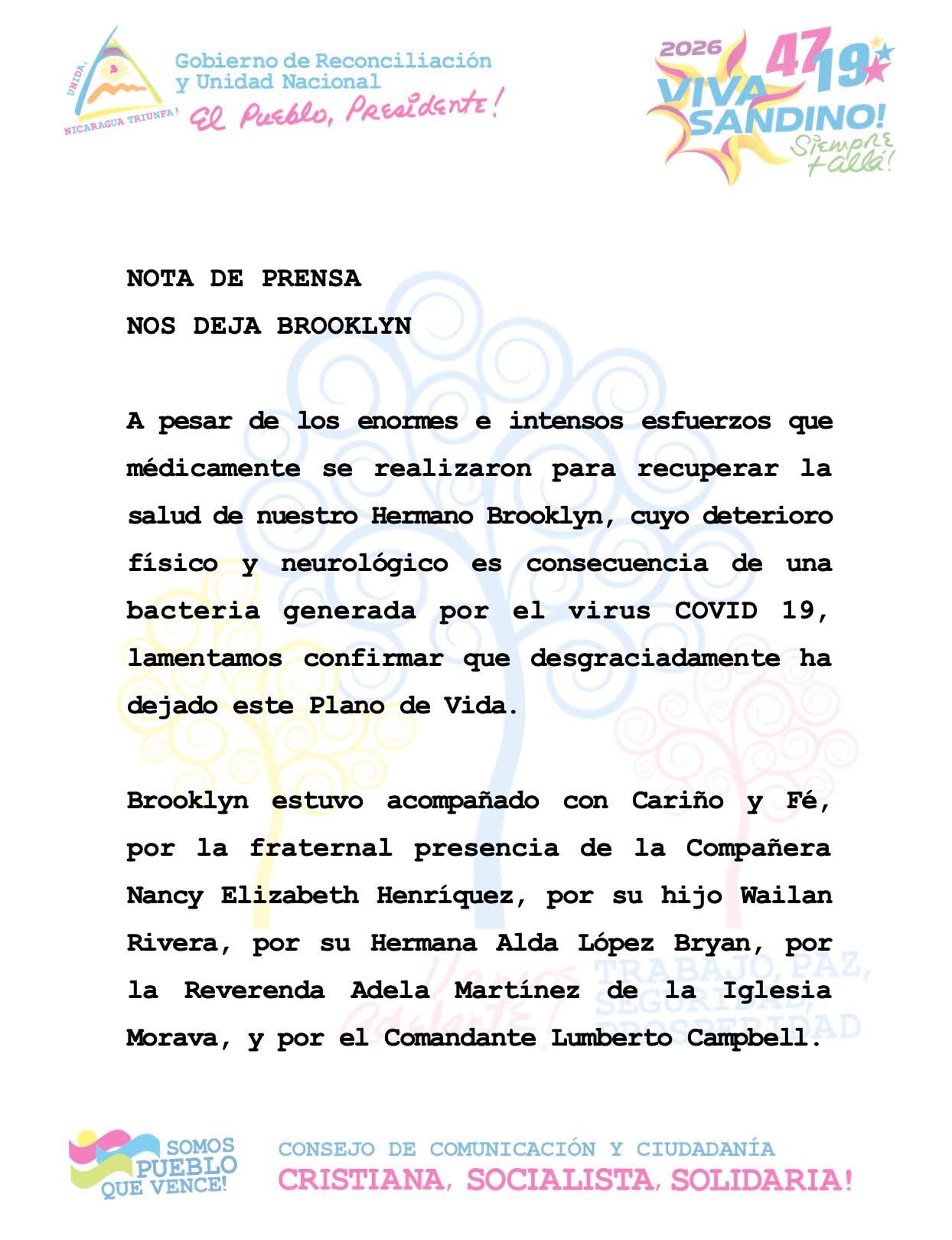
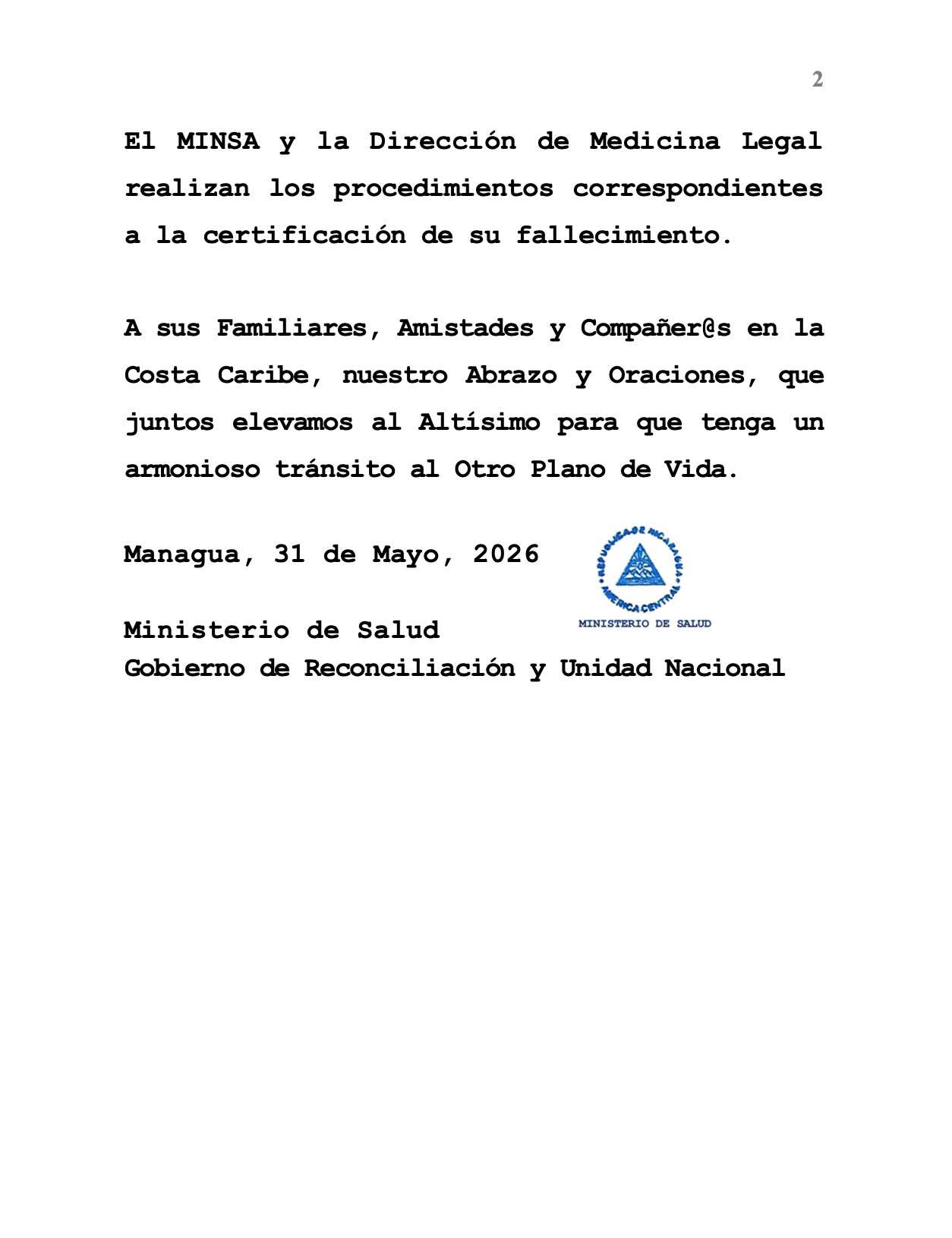
Following his arrest, his family never knew where he was being held. Despite the outcry over his condition, the regime never provided any information about Rivera. During the first few months of 2026, Sandinista sources spread the rumor that Rivera had been transferred to a hospital in very poor health. This sparked a stronger international campaign to learn his whereabouts and condition, which included provisional measures by the Inter-American Court of Human Rights (IACHR) and the “dismay” of the United Nations Group of Human Experts on Nicaragua (GHREN), which in May demanded proof of life for the political prisoner.
In the statement, the Ortega-Murillo regime attempts to attribute Rivera’s serious condition to pre-existing illnesses, a claim flatly rejected by one of his daughters, Tininiska. “The day they took my father away, he left his home in optimal health, walking and taking care of himself. Therefore, the regime cannot now claim that pre-existing conditions are responsible for the physical deterioration of a man who has been in state custody for nearly three years,” Tininiska Rivera stated in a press release.
On the other hand, Tininiska also refuted the regime’s claims regarding family visits. The official statement asserts that her brother, Wailandin Rivera Solórzano, visited their father every two weeks during the three years he was missing. From her exile in Spain, she categorically denies this: “Since his abduction and forced disappearance, no family members have been allowed to visit him. Our family has lived all this time in uncertainty, anguish, and official silence, with no independent access to or verifiable information about his actual condition.”
In recent months, the co-presidential regime has been presenting some political prisoners it had kept in enforced disappearance, in an attempt to deflect criticism from the Donald Trump Administration. Rivera did not appear in any of those rounds. Following the appearance of Angélica Chavarría, the former partner of General Humberto Ortega Saavedra, the Taupla’s family and human rights organizations redoubled their demand for proof of life. The regime responded differently: instead of showing him on camera reading a message dictated by the authorities, as they did with other prisoners, it issued a statement and a series of photographs that, far from reassuring, confirmed the worst—what his family and loved ones had suspected.
From Li Dakwra to Parliament
Brooklyn Rivera Bryan was born on September 24, 1952, in Li Dakwra, a small community on the Caribbean Coast. He grew up in Sandy Bay Tara and Wawa, under the care of his mother, Pulcita Bryan Budier, and his grandmother, surrounded by Miskito culture and traditions. At the age of 16, he moved to Managua, where he attended high school at the Colegio Experimental México and later earned a bachelor’s degree in mathematics from the National Autonomous University of Nicaragua. He returned to the Caribbean convinced that his people deserved something the Nicaraguan state had never given them: recognition—a goal that even his long career has not fully achieved, as indigenous peoples continue to suffer from the invasion of settlers and the advance of mining (now by the Chinese) under the protection of the Ortega-Murillo regime.
With the electoral victory of Violeta Barrios in 1990, the new government appointed Rivera as minister-director of the Atlantic Coast Development Institute, created to address the region’s urgent needs following the end of the armed conflict. Miguel González, PhD, from York University and a specialist in indigenous self-governance and territorial autonomous regimes in Latin America, notes that, at the same time, Yatama became involved in the political life of the autonomous regions.
“Since 1990, it has regularly participated in municipal and regional elections, becoming the main regional political organization on the Caribbean Coast,” says González. “In 2005, Yatama won a favorable ruling from the Inter-American Court of Human Rights against the State of Nicaragua for violations of its rights to political participation, following its exclusion from the 2000 municipal elections. However, to this day, the ruling has not been fully complied with by the State of Nicaragua.”
In 2007, through an electoral alliance with the Sandinista Front, Taupla Brooklyn was elected to the National Assembly. From his position as a representative, González says, he promoted the rights of Indigenous Peoples, particularly land titling initiatives to protect ancestral lands.
The alliance with the Sandinista Front faced many difficulties in achieving fundamental change regarding respect for the rights of the Caribbean Coast communities. The ruling party, “more interested in a strategy of political control over the coastal regions, committed irregularities in the electoral processes and failed to fulfill a series of commitments agreed upon with Yatama to protect indigenous autonomy rights.”
“In 2014, the alliance came to an end, and a year later, in 2015, the FSLN illegally stripped Brooklyn Rivera of his status as a parliament member. In 2016, Brooklyn Rivera was re-elected by his people as an independent deputy for the Northern Caribbean Region, from where he continued his struggle to defend the rights of Indigenous Peoples,” states González. “Rivera’s leadership has transcended the realm of politics to encompass cultural preservation and community development initiatives. He has played a decisive role in efforts to revitalize the Miskitu language and culture, ensuring that future generations maintain a strong connection to their historical heritage.”
The Complaint That Led to His Disappearance
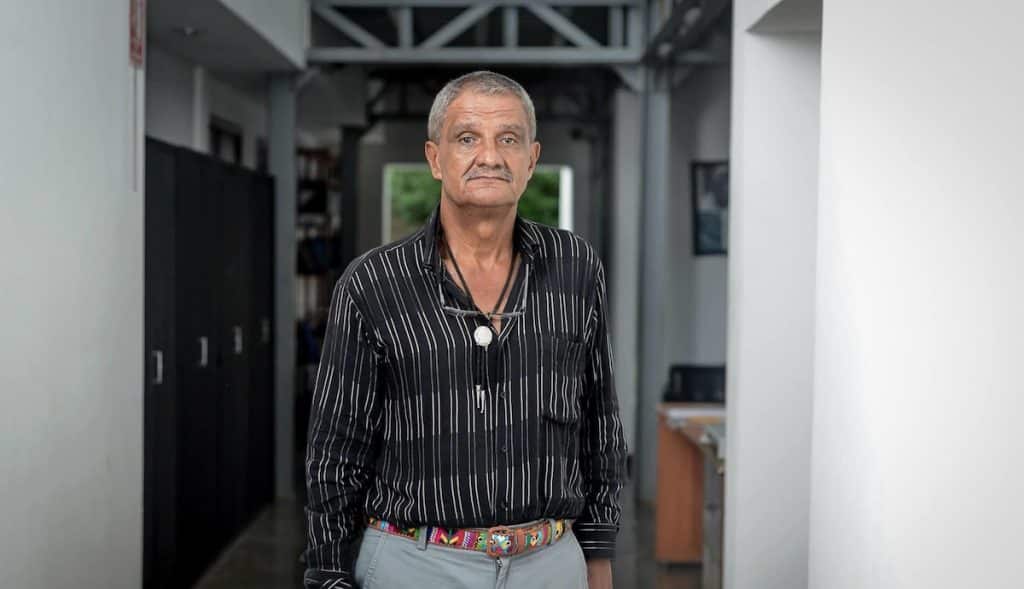
The last time Brooklyn Rivera spoke in public was in April 2023, before the United Nations Permanent Forum on Indigenous Issues. He denounced the invasion of settlers on the ancestral lands of the Muskitia and the Nicaraguan government’s inaction in response to the communities’ complaints.
The co-presidents heard the complaint and responded as they always do. First, they canceled Yatama. Then they prevented Rivera from returning to Nicaragua. And on September 29, 2023, police forces arrived at his home in Bilwi and took him away. Since then, Taupla Brooklyn disappeared.
He was seen for the first time on May 27, bedridden in a hospital, practically on his deathbed. His daughter Tininiska spoke on his behalf. She demanded her father’s immediate and unconditional release. Independent and verifiable proof of life. Access for family members, lawyers, and independent doctors. And, as an urgent humanitarian act, his transfer to a country where he could receive medical care free from state control. “My father’s life is at risk,” wrote Tininiska, “and the world cannot continue to remain silent while the dictatorship ends his life.” Her pleas went unheard. Rivera ultimately died far from his Caribbean Coast, betrayed by his former political allies, who cynically called him “brother” even as the end was inevitable.