
The slender figure of 35-year-old blonde Natalie Harp has gained notoriety in recent weeks beyond the halls of the White House, where she has established herself as one of President Donald Trump’s most devoted aides—to such an extent that she is called the Republican’s “human printer” because she is always by his side, attentive and ready to assist, but above all, ready to print the documents, articles, and publications that the tycoon insists on reviewing on paper and in specific formats. Their bond is such that Harp was among the very small inner circle that accompanied Trump during a secretive plane change on July 8, at the conclusion of the NATO summit in Ankara, after the Secret Service detected a possible Iranian threat against the president. That episode catapulted her into the public spotlight due to her extraordinary access to the president, but it also revealed a family detail that stands in stark contrast to the Oval Office: her older brother lives in Nicaragua, identifies as an anti-imperialist, and claims to have found “peace” under Daniel Ortega and Rosario Murillo’s dictatorship.
While Maggie Haberman and Jonathan Swan, authors of the book Regime Change about the first year of the tycoon’s second term, describe Natalie as “the most devoted” of Trump’s entire team of aides—and the president himself has gone so far as to say that she loves him as much as his wife and children do—her older brother leads a life of “peace” in Nicaragua.
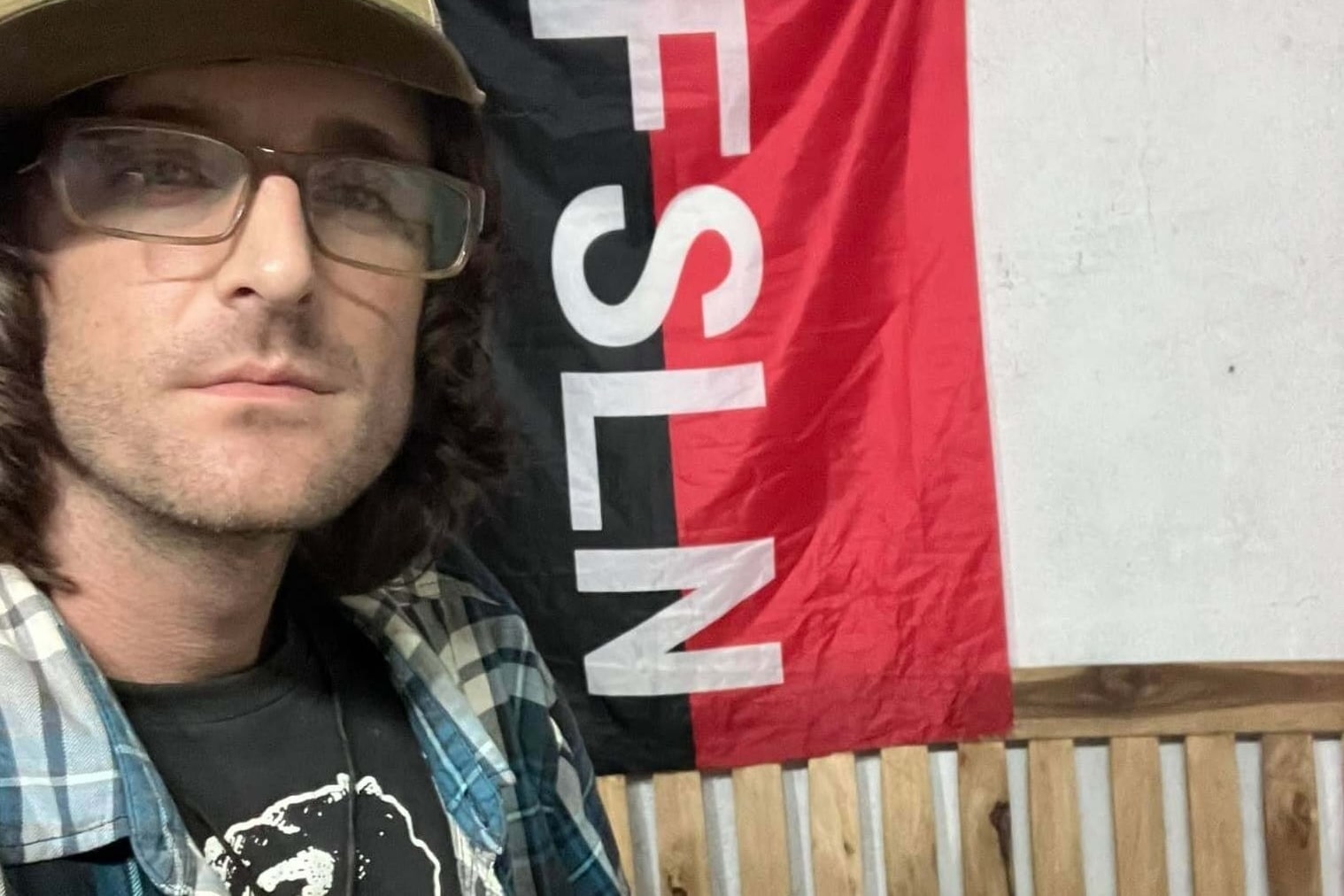
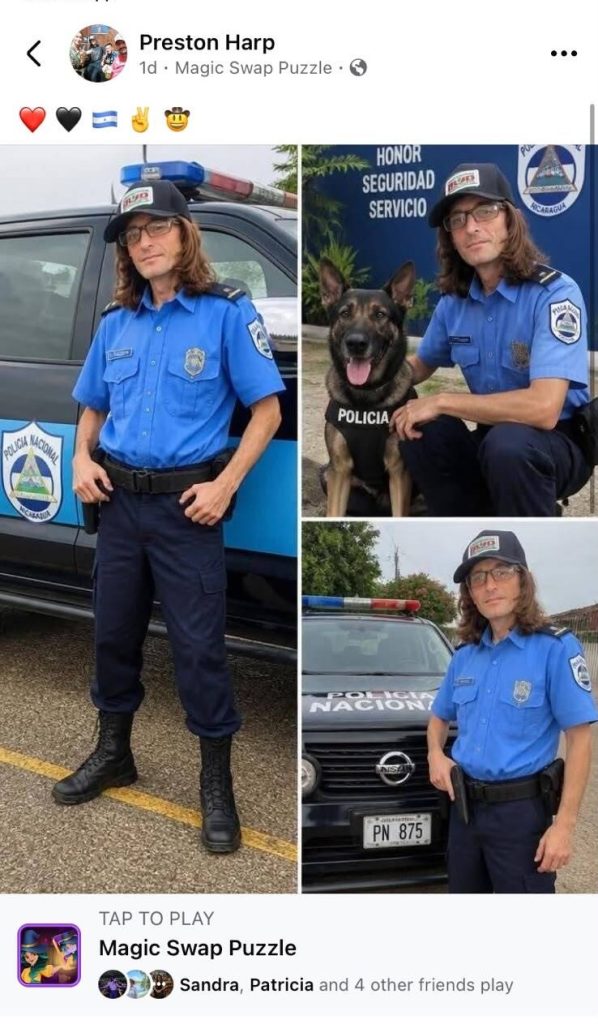
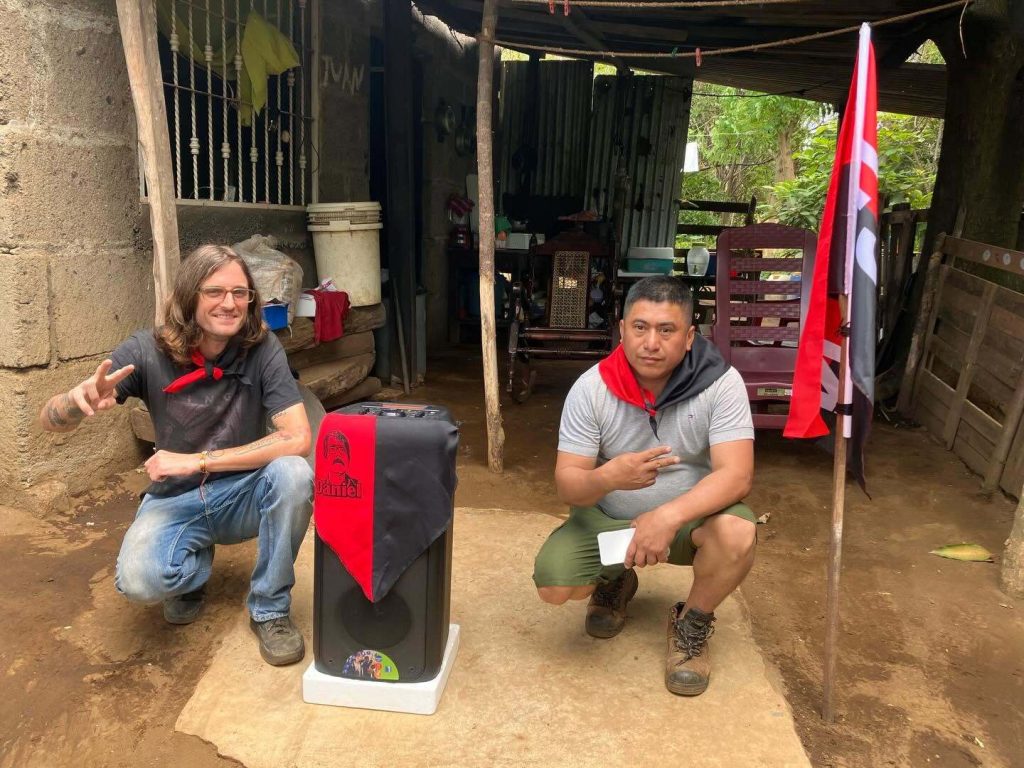
That “peace” is most evident on the streets of Masatepe, where 38-year-old Preston Harp enjoys himself in bars, identifies as a Sandinista, poses for photos at events organized by the co-presidential dictatorship, uses artificial intelligence to pose in a National Police uniform, and has even recently admitted that he’s on the “hunt” for a new girlfriend after breaking up with his Nicaraguan girlfriend.
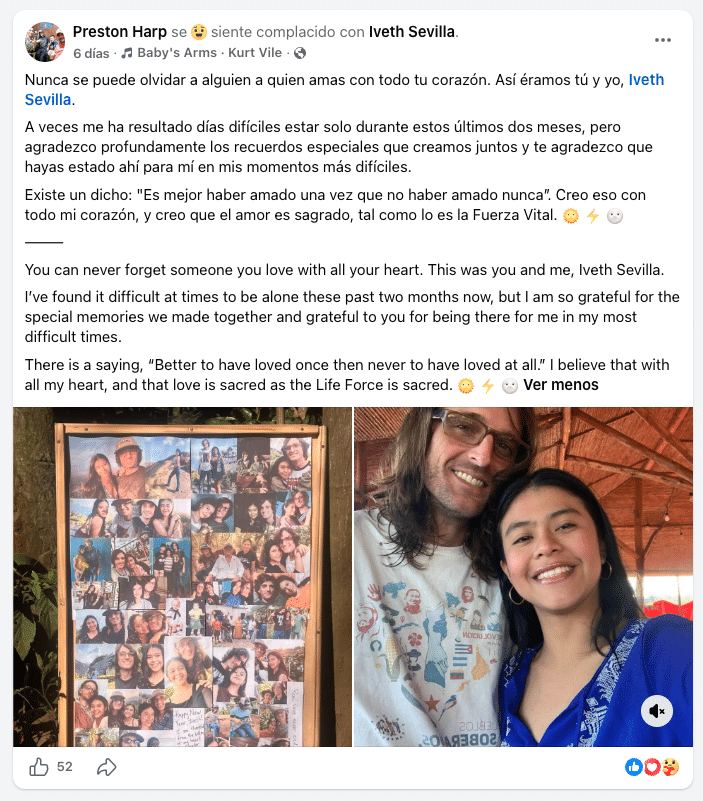
Preston embodies almost to a T the cliché of the American expatriate who declares himself “anti-imperialist”: long, hippie-style hair and an open sympathy for governments that claim to be revolutionary, such as that of Ortega and Murillo. In his case, that affinity has led him to identify with Sandinismo and to publicly celebrate a dictatorship that is in constant conflict with the administration of President Donald Trump.
After his sister made headlines for her secret trip with Trump—while Secretary of State Marco Rubio and Treasury Secretary Scott Bessent remained on Air Force One, which was used as a decoy from Ankara—Preston spoke with CNN reporter Erin Burnett about Natalie. He described her as someone who had been fascinated by the White House and U.S. presidents since she was a teenager—to whom she even wrote letters—and maintained that, after working her way into Trump’s inner circle, she finally “fulfilled her dream.”
Natalie entered Trump’s inner circle in 2019, when she shared that she had overcome bone cancer thanks, she said, to the “Right to Try” policy championed by the Republican, which facilitated access to experimental treatments. From there, she went from attending rallies and the 2020 Republican National Convention to working directly for Trump and becoming one of his most trusted aides. According to the book by New York Times journalists, that loyalty took on almost obsessive overtones: the assistant would leave him personal letters with messages such as “you are all that matters to me” and “I want to bring you joy,” while Trump boasted that she loved him as much as his own family.
That symbiosis even spilled over into the political arena when Democratic Senator Jon Ossoff used her proximity to publicly question the president’s priorities, sparking a furious reaction from the White House. In the end, perhaps it is obsession that best connects the radically opposite lives of the Harps, as Natalie made Trump the center of her professional and political life, while Preston, in Nicaragua, has embraced Sandinismo and the Ortega-Murillo dictatorship with similar fervor.
Family Breakup, Siblings on Opposite Sides of the World
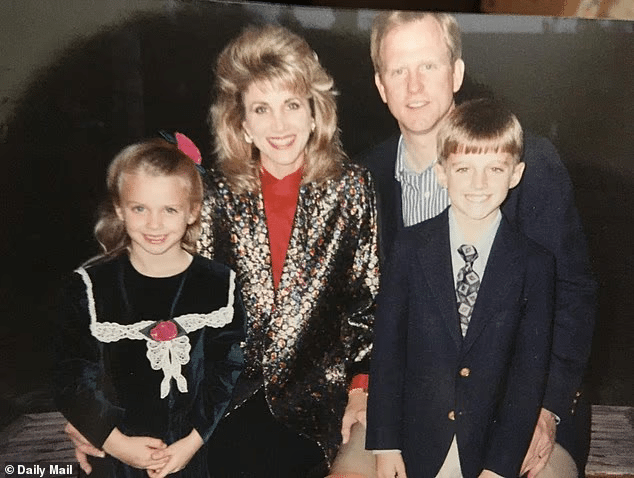
Natalie and Preston Harp grew up together in California, homeschooled by their parents in a very conservative Christian environment. Preston remembers his mother, Jill, as deeply religious and strict, while he developed a more rebellious streak from a young age, taking an interest in rock music, skateboarding, and authors like Carl Sagan and Jack Kerouac.
Natalie, on the other hand, was the obedient daughter who followed her mother’s rules to the letter. Preston maintains that this upbringing had a profound impact on his sister and that much of her admiration for Trump stems from the values of “American exceptionalism that they both learned at home,” particularly from their mother. Over time, he grew increasingly distant from his mother and Natalie, though he maintained a close relationship with his father, Robert.
The family rift deepened in July 2020, when Robert Harp died by suicide in the midst of the pandemic. Preston said that his mother and sister wanted to tell other relatives that he had died in his sleep, but he decided to reveal what had happened, which ultimately fractured the relationship between the siblings, according to a Daily Mail article.
While Natalie and her mother moved shortly afterward to an apartment in West Palm Beach, just three miles from the Mar-a-Lago estate, and became increasingly involved in the Trump inner circle, Preston took a different path: he worked as a musician and a supermarket employee and traveled to Nicaragua for the first time in 2022, an experience he described as the first time he felt “at peace” since his father’s passing.
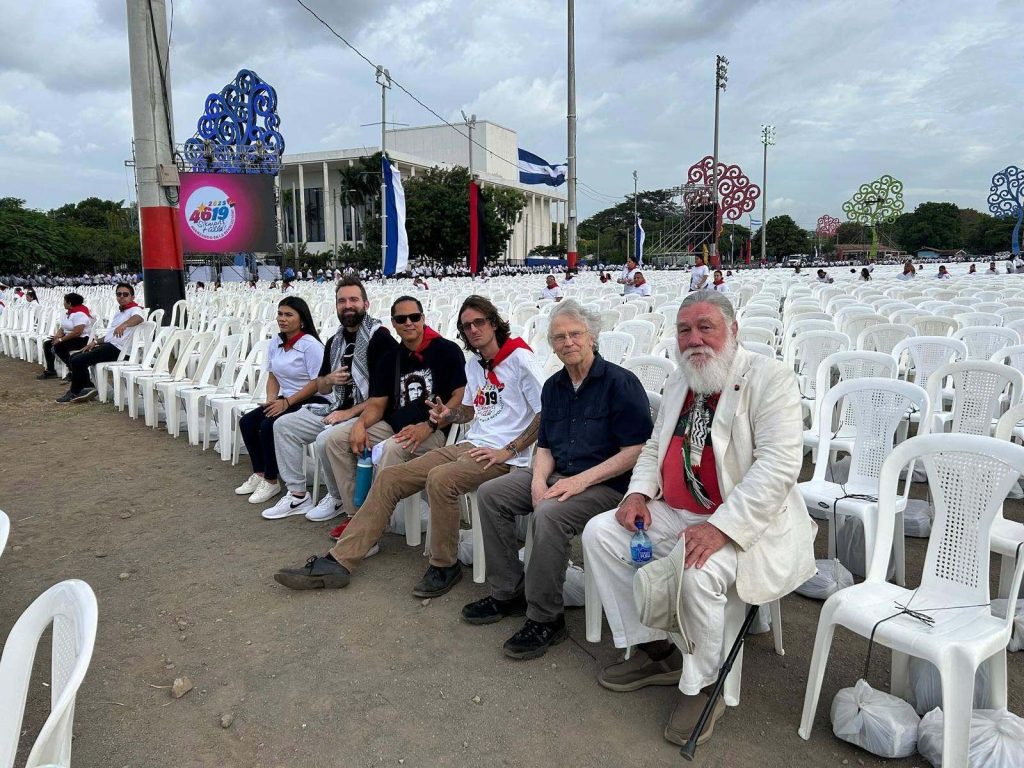
A year later, Preston settled in Nicaragua, where he eventually became involved with anti-imperialist circles and, in particular, with the American S. Brian Willson, the 85-year-old activist who lost both legs in 1987 after being struck by a U.S. Navy ammunition train while protesting the shipment of weapons to the Nicaraguan Contras, and whom the Ronald Reagan administration went so far as to label a “domestic terrorist.” Decades later, co-president Rosario Murillo hails him in Managua as a “living hero” who inspires “love, courage, and peace.” Preston now works alongside Willson as a sort of editor and assistant, reviewing his memoirs and other anti-imperialist writings.
Aside from his “work” with Willson, Preston declares himself a staunch Sandinista on Facebook. In a post shared this week, he argued that the Sandinista Front is in power because it was “elected by the people,” rejected the notion that Nicaragua is a dictatorship, and portrayed pro-government marches as “an expression of gratitude from workers and public employees toward the Sandinista Revolution.”
“Who is in control? The people,” he wrote before concluding with the slogans “Long live the Sandinista Front!” and “A free homeland or death!” His defense of the regime comes just one month after Daniel Ortega, during the official ceremony on July 19, announced precisely the end of the electoral process in Nicaragua: “There will be no more elections here,” Ortega declared.
Preston has also spoken about a personal crisis he went through years before settling in Nicaragua. As he told the Daily Mail, in 2015 he went through a difficult period after suffering a car accident and received psychiatric treatment. People close to Natalie told the newspaper that she “remains concerned about her brother’s mental health, but Preston denies that he currently has any such issues and insists that that episode is behind him.”
In the interview with CNN, Preston said he was not interested in building any bridges with his family. He stated that he has no relationship with Natalie or his mother and that he has no intention of returning to the United States. “It’s hard to believe that’s my sister and my mom,” he also told the Daily Mail, referring to her close relationship with President Trump. “I can’t connect with that vibe, so I’m just going to let it be,” he added. While Natalie remains by the U.S. president’s side in the heart of the White House, her brother has chosen to make his life in Ortega and Murillo’s Nicaragua, convinced that he has found the “peace” he was seeking there.