
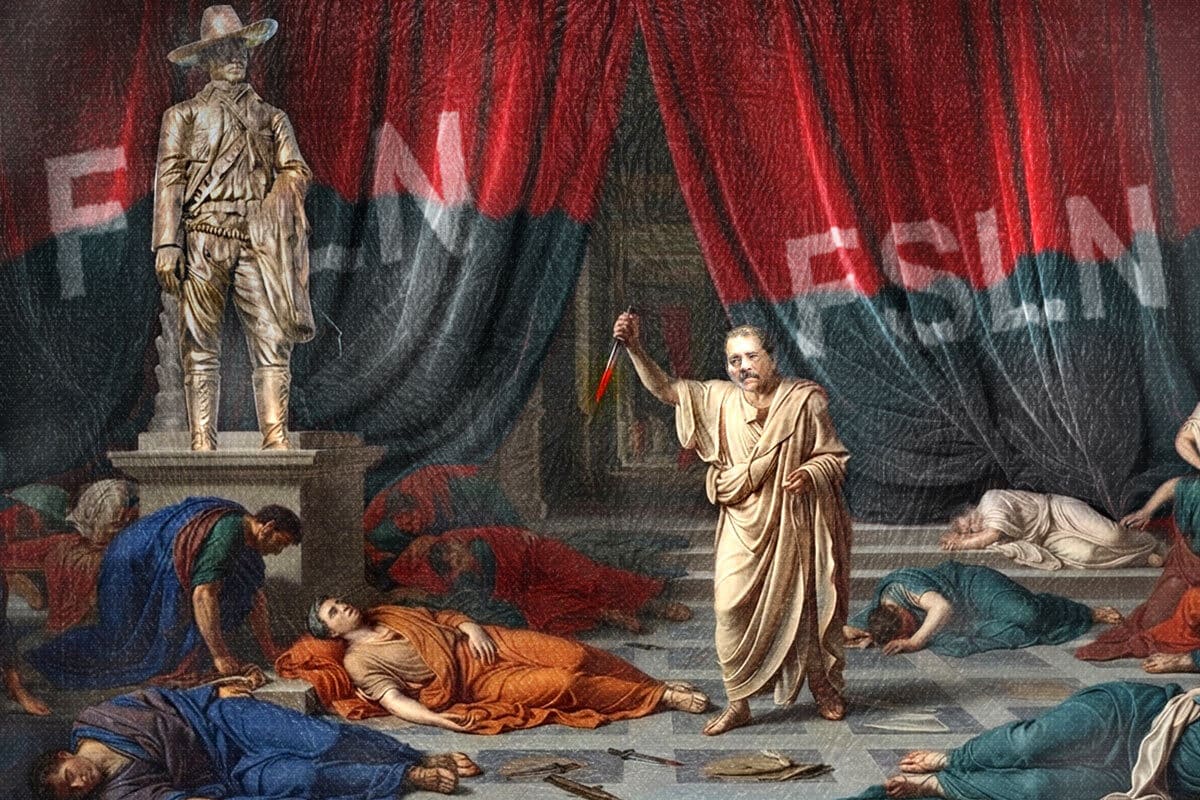
A couple of years after Carlos Guadamuz’s murder, in the midst of the 2006 election campaign, a former Sandinista leader asked Daniel Ortega, in private, which of all his friends he trusted the most. The question carried a provocative undertone for the then-presidential candidate of the Sandinista Front: one of Guadamuz’s sons had publicly identified him as “the prime suspect” in his father’s murder—the very same man who for years had proclaimed on the radio that the Sandinista leader was his best friend, “a friendship bound by blood.”
Ortega responded immediately, without flinching, as if he knew someone would ask him that someday. “I trust absolutely no one,” he told the former Sandinista leader. “That is a principle of my life,” he concluded.
This account, shared with DIVERGENTES, portrays a man who was “introverted, with few friends.” A powerful politician who, according to those who knew him, had “very few friends” throughout his long career, and who lost them at every stage of his life. Carlos Guadamuz was shot to death; Herty Lewites died without an autopsy in the midst of an election campaign, when his rise threatened to snatch victory from Ortega in the first round, under circumstances that were never clarified. Others, more recently, were imprisoned, such as Bayardo Arce and Francisco “Chico” López. And still others ended up in exile, such as former judge Rafael Solís, or Lenin Cerna, who was ostracized within Nicaragua. And even though he can count his friends on one hand, there are still some names missing—people who weren’t so lucky.
Two Friends From Prison
Ortega made his closest friends—the few he ever had—in prison. He was first imprisoned with Carlos Guadamuz in 1960, as a teenager, while they were carrying out acts of resistance against the Somoza dictatorship. He shared a cell with Jacinto Suárez for seven years, from 1967 to 1974, while the Somoza regime kept them behind bars for conspiring to overthrow the family-run regime. Of that small group, Suárez was perhaps the only one who died without ever falling out with him: he remained loyal to the end, rose to become Secretary of Foreign Affairs for the Sandinista Front, and defended the co-presidential system—to the point of justifying human rights violations during the crackdown on civil protests in 2018.
However, when Suárez died on April 2, 2020, Ortega did not attend his funeral. The National Assembly, controlled by the Sandinistas, organized a posthumous tribute lasting barely 25 minutes; Ortega was expected to appear, but he did not show up. “He was a close friend of Ortega’s, and that friendship didn’t help him when it came time to at least attend his wake or funeral,” sums up Dora María Téllez. A lifetime of unwavering loyalty wasn’t enough to elicit even the formality of a farewell from the Sandinista leader.
The rift with Guadamuz arose through the very channel that often opens cracks in Ortega’s Sandinist movement: the ambition for office. In 1996, as the owner of Radio Ya—the country’s most widely listened-to radio station—Guadamuz decided he was due something in return for so many years of blind political service and demanded the mayoralty of Managua. In his view, he wasn’t asking for too much. But Ortega was unwilling to cede that position to him and maneuvered to block his path. The rift spiraled out of control, with Emmet Lang being put forward by the Sandinista leader to thwart his mayoral bid.
In 1999, Guadamuz lost control of the radio station through a lawsuit that many attributed to Ortega’s influence, and he was ultimately expelled from the Sandinista Front. From a media ally, he became a bitter public enemy. From the Nicaraguan News Channel (or CDNN, its initials in Spanish), Guadamuz devoted his final years to attacking the man who had been his childhood friend, with the same virulence with which he had once defended him. On February 10, 2004, Sandinista operative William Hurtado García was waiting for him in the parking lot of the radio station’s offices. He approached him and shot him three times at point-blank range. One of his sons identified Ortega as the “prime suspect”; the Nicaraguan justice system never determined who masterminded the killing.
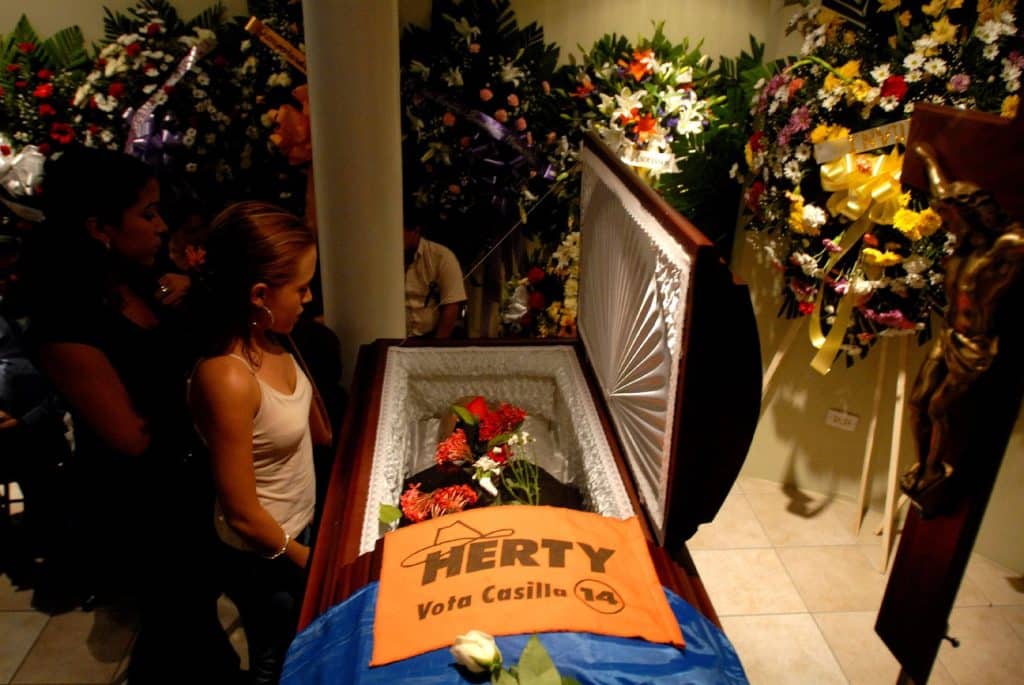
With Herty Lewites, Ortega went even further in his displays of affection: he hugged him in public and called him “brother.” But when the popular Herty stood in his way to the presidency, the “brother” died under controversial circumstances. Saúl, Herty’s brother, reported to the District Attorney’s Office that he did not die of a heart attack, as had been claimed, but may have been “murdered.” He claimed that the body arrived at the hospital with bloodstained clothes and that Herty had been given a broth before collapsing, which fueled suspicions of poisoning. The widow refused to allow an autopsy. And the case remained one of the country’s great political mysteries.
Manuel Alí Rivas Vallecillo, sentenced to 27 years in Somoza’s prisons and released alongside Ortega after the raid on Chema Castillo’s home in 1974, was part of that founding prison cell. As recently as 2019, he was still praising the leadership of “Comandante Daniel” in the pro-government press. Today he lives quietly in León, fearing the purges carried out by Co-President Murillo.
Joaquín Cuadra was another of his close friends. As militants of the same “third-way” tendency and comrades in the struggle against Somoza, their relationship strengthened in the 1980s and 1990s, when Cuadra rose to the pinnacle of military power as head of the Nicaraguan Army. That closeness, too, did not withstand the shift in power. Today, Cuadra lives quietly on the sidelines, far from a regime he prefers not to discuss to avoid reprisals.
The Purged Friends
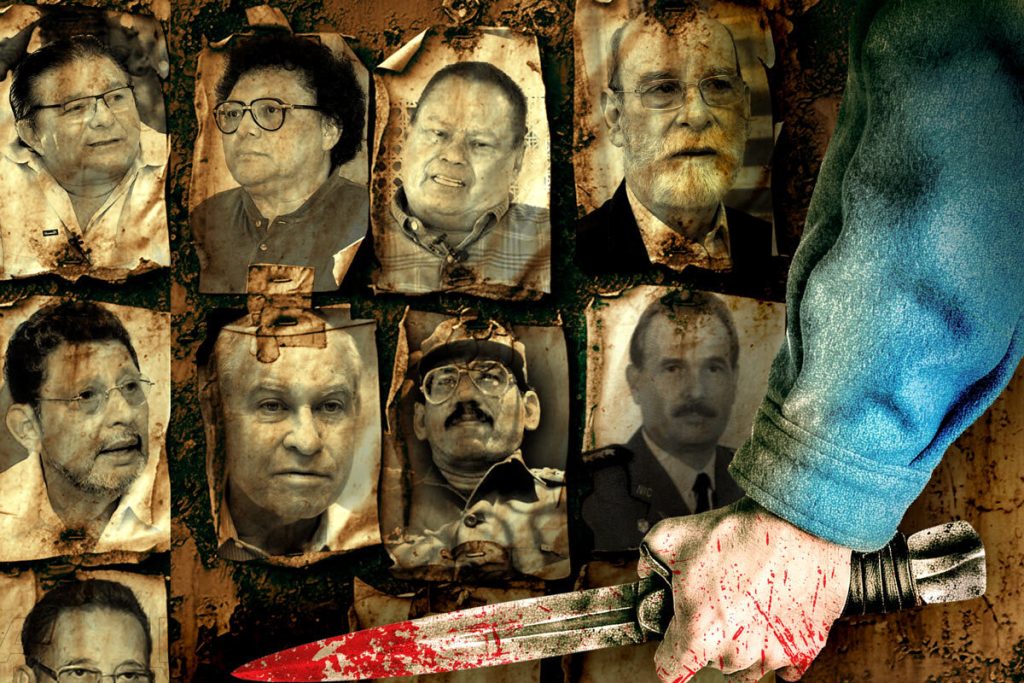
With the Sandinista Front under his absolute control and back in power since 2007, Ortega surrounded himself with a new cohort. They were more political allies and operatives than friends, according to Sandinista sources consulted for this report. None of them, either, fared any better.
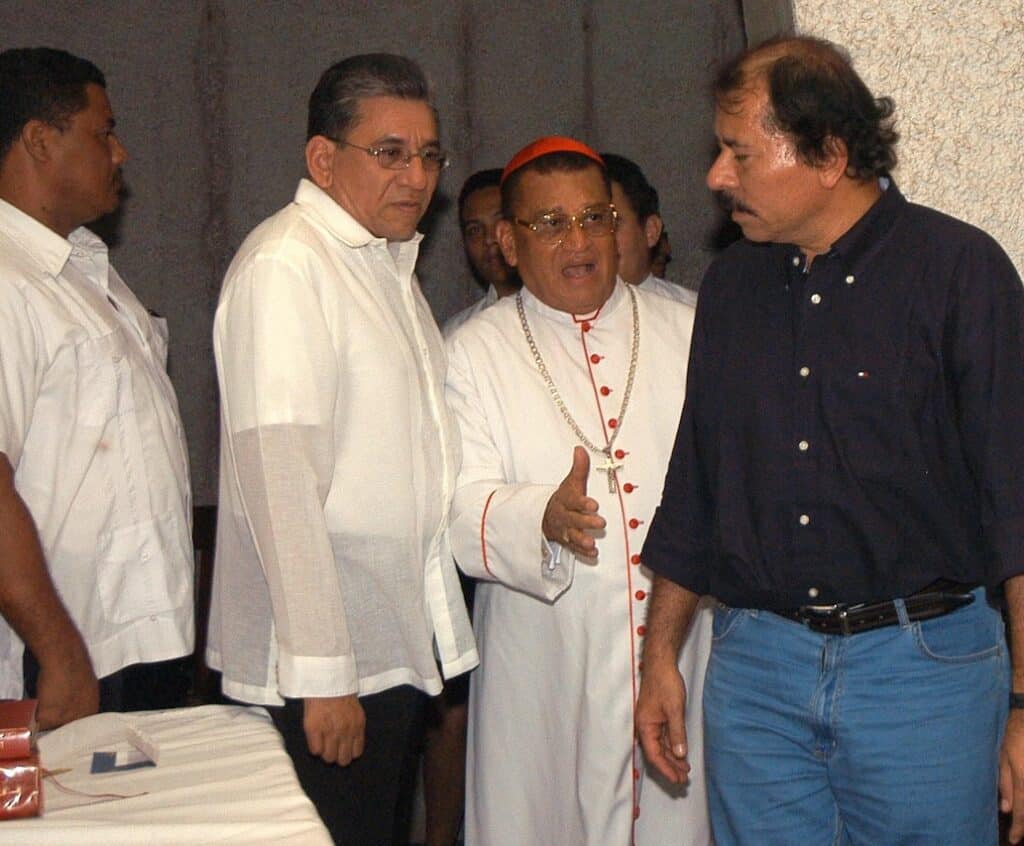
One of the most high-profile cases after 2018 was that of Rafael “Payo” Solís, the best man at Ortega and Murillo’s wedding when the couple renewed their vows in the Catholic Church in 2005, in a private ceremony officiated by the late Cardinal Miguel Obando y Bravo. It was no ordinary role as best man. Solís was the Sandinistas’ political operator within the judiciary, the man who in 2009 signed the ruling that paved the way for Ortega’s reelection. Forty-three years of party membership had made him a key figure in the inner circle. That circle fractured on January 10, 2019.
In a public letter of resignation and denunciation, Solís abandoned the Court, the Frente, and his godchildren—the presidential couple—whom he accused of leading “a dictatorship with the characteristics of an absolute monarchy ruled by two kings.” It was the most high-profile defection the Ortega regime had suffered in nearly three decades. Since then, the godfather has been living in exile in Costa Rica.
For years, Lenín Cerna was the most feared man in Nicaragua. As head of State Security in the 80s and guardian of the regime’s secrets, he was part of Ortega’s innermost circle. But even his proximity to Ortega did not shield him. Co-President Murillo—who, according to sources consulted, never liked him—gradually sidelined him until he was left with no real power. Today, Cerna survives in ostracism, confined to his home, stripped of the influence he once held—just one of many who were sidelined so that Murillo could install her own inner circle of operatives. “Rosario hasn’t thrown him in jail because Daniel, in some way, still protects him,” asserts a source close to the co-presidency.
Bayardo Arce was caught up in the purge when he was already the last of the loyal commanders, but he was subjected to ostracism imposed by Murillo, with a ceremonial position as presidential advisor. Commander of the National Directorate in the 80s and one of the nine who governed Nicaragua after the revolution, Arce was the last of that historic leadership circle to remain by Ortega’s side, serving as his economic advisor since 2007. On the night of July 30, 2025, dozens of police officers from the Special Operations Directorate raided his home in Villa Fontana and transferred him to the National Penitentiary System.
In January 2026, the regime’s courts convicted him of money laundering and defrauding the state, in a case that inflated the figures to the billions of dollars. The Mechanism for the Recognition of Political Prisoners declared him a political prisoner; the IACHR granted him precautionary measures, and his family reported that he has been subjected to torture and solitary confinement.
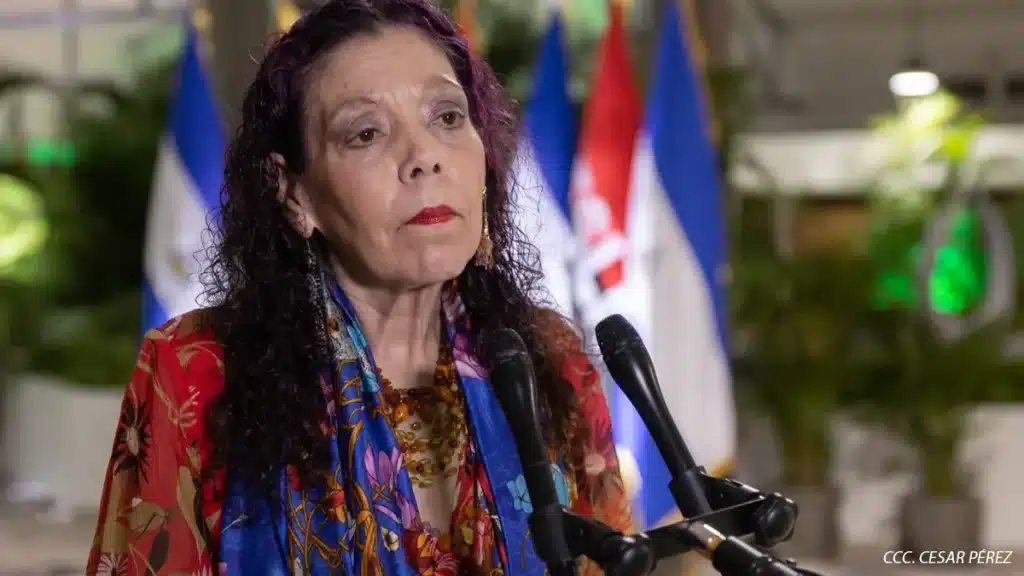
Next was Francisco “Chico” López, the FSLN’s financial operator and one of the men who for years managed the Sandinista apparatus’s funds from Venezuelan aid; he followed the same path. He was arrested in May 2026, in yet another escalation of the same purge that has been picking off, one by one, Ortega’s trusted aides.
And then there is the case that sums up all the others, because it involves the man who closely guarded Ortega. For more than two decades, Marcos Alberto Acuña Avilés was the head of the presidential security detail, the officer who accompanied Ortega on every outing—a figure so close that he functioned almost as a liaison between the president and his friends, such as Bayardo Arce. He carried messages back and forth, bypassing the co-president’s oversight. His loyalty, said a former official, was total—toward him, not toward her. That was his problem. On July 24, 2024, following an argument with Murillo, Acuña was dismissed by order of the co-president, dishonorably discharged, and handed over to the justice system for “disobedience.” He currently remains imprisoned as a political prisoner.
The sources consulted agree that Rosario Murillo is behind nearly all of these oustings. Former guerrilla commander Dora María Téllez asserts that for the co-president, “it has been absolutely necessary to purge all those people in Ortega’s inner circle—his circle of favored officials and friends—and keep him completely isolated.”
With Ortega stripped—whether of his own volition or not—of his friends, Murillo replaced them with her own inner circle, loyal only to her, without any cracks. “What she’s doing is creating her own inner circle,” explains Téllez. “That’s why you now see Wendy Morales, the attorney general turned into a power broker with excessive authority: under her control are the Attorney General’s Office, the mayor’s offices, the regional governments of the Caribbean, the judicial system, the universities, and even the tax and customs administrations—the DGI and the DGA—ranking above the Minister of Finance himself. Alongside her is Ovidio Reyes at the helm of the economic apparatus. Neither of them is anyone’s friend. They are enforcers, interchangeable cogs in a machine that no longer depends on personal loyalties but on a single will,” adds the former political prisoner.
More Than a Friend, a Brother
Ortega abandoned the friends he called brothers, and he made no exception for his actual brother. Humberto Ortega, the younger brother, was a co-author of the insurrectionary strategy that overthrew Somoza and the founder of the Sandinista People’s Army, which he led from 1979 to 1995. Between the two, there was never a “normal family relationship, nor any display of brotherly affection,” but there was mutual dependence when it came to power. In other words, they considered themselves complementary, and that partnership sustained Sandinismo for decades. And yet, not even blood ties saved General Humberto Ortega, who was eternally at odds with his sister-in-law, Rosario Murillo.
On May 19, 2024, in an interview with journalist Fabián Medina for Infobae, Humberto said what Co-President Murillo could not bear to hear: that Ortega had no heirs. “Without Daniel, there is no one,” he declared. Neither Rosario Murillo nor any of the children. With a single stroke, he dismissed the plan for dynastic continuity that his sister-in-law, above all, is pushing. “Children who haven’t built up the experience of a political struggle,” he concluded, referring to his nephew Laureano.
The reaction was immediate. That same afternoon, a police contingent surrounded his home. On May 28, in a nationwide broadcast, Daniel Ortega called his own brother a “traitor.” Humberto was placed under house arrest, held incommunicado, with his home occupied by special forces. He managed to declare himself a political prisoner of his brother’s regime. His wife, Angélica Chavarría, was arrested on the same day the siege began; she remains in prison to this day.
Humberto Ortega died in the early morning hours of September 30, 2024, at the age of 77, of cardiac arrest at the Military Hospital, while still in custody. He was not the first to die this way: General Hugo Torres, a comrade from that heroic campaign, had died earlier after collapsing in El Chipote prison. Daniel’s brother—the one who fought alongside him and built an army for him—ended up just like his friends: cast aside, branded a traitor, and dead without the Nicaraguan Army lifting a finger for him. “Ortega, who had so few friends, was also unable to hold on to the only brother he had left. It’s a harsh paradox that lays bare his humanity,” concludes one of the Sandinista sources.