
I. Two Colombians and a Senegalese Man
Every morning, after breakfast, the Colombians and the Senegalese man usually sit in the vast lobby of an old hotel in San José, mostly to think, to reflect on their new reality, connected via video call with their families. Jonathan Ochoa and Santiago constantly head out of the hotel to explore the Costa Rican capital, where it rains almost on schedule every afternoon, like a tropical whim. Both are from Bogotá and say that the Senegalese man—who wears headphones so large they seem to bite into both sides of his face—has rarely left the hotel since he arrived after being deported from the United States. In many ways, Costa Rica feels like another world to this African man: no one speaks Wolof or French, and he doesn’t understand the customs or routines of this Central American nation, which, since 2025, has been receiving deportees from the Donald Trump administration as a “third country.”
Ochoa and Santiago have completely opposite personalities. The former is 38 years old, a natural talker, a nurse by profession, and isn’t afraid to have the story of his deportation published. The latter is 43 years old, shy, speaks softly, is an aeronautical engineer, and requests anonymity to tell his story. He traveled with his wife, and both still carry the fear of that journey with them. Santiago’s fear is evident in the tears he cannot hold back when he recalls that for about 20 days, he and his wife were held captive by human smugglers (coyotes) in Ciudad Juárez, on the border between Mexico and the United States. It is as if he still fears that those who detained and mistreated them might find them here in San José as well.
“My dream isn’t the American Dream. In my country, I had everything,” Santiago tells DIVERGENTES for this report, which is part of The Deportation Project, an international investigation coordinated by Forbidden Stories. In Colombia, he ran a consulting firm specializing in telecommunications projects and network infrastructure. Things weren’t going badly for him. In late April 2026, in the community where he lived, he began speaking out about what, according to his account, was happening to several rural properties: some of his neighbors, who owned those plots, had disappeared, and the land was being divided up and sold for development. Santiago says he went to the authorities, but a few hours later, some men came to his house and threatened to kill him.
They gave him three days to leave his home. Fearing they might come after him in other parts of Colombia as well, he decided to leave with his wife. They bought a plane ticket to Cancún, one of the routes used by Colombians seeking to reach the United States. They then traveled on to Ciudad Juárez, where a taxi driver offered to help them cross the border but ended up handing them over to a human trafficking ring. Santiago and his wife, who suffers from a heart condition, were held captive there for about twenty days.
After the coyotes emptied their bank accounts and stole almost everything they had, Santiago and his wife took advantage of a raid by Mexican authorities to escape from the house where they were being held. They walked for about six hours along a sewage canal, hiding from everything around them because they no longer knew who the “good guys” or the “bad guys” were. “I didn’t care about anything anymore,” Santiago recalls when talking about those days, when his wife ran out of the medication she needed to keep her heart under control. Around four in the morning, she fainted in his arms, and Santiago asked a U.S. border patrol unit for help.
Once in the United States, his desperation took on a new form. Santiago says he asked to see a judge because he feared he would be sent back to Colombia. One early morning, while another detainee was celebrating in the showers that he would be returning to his country, Santiago broke down. “That day I fought with God,” he says. And he remembers asking Him: “God, what have I done to You? I haven’t been bad; I’m a good guy. I believe in You, Lord. Why are You doing this to me?” Shortly afterward, he says, they were shackled by their hands and feet and deported to a country they’d only heard mentioned in tourist guides: Costa Rica.
Landing in San José was a huge relief for Santiago. From the very beginning, the International Organization for Migration (IOM) and the Costa Rican government treated them “very differently” from how they had been treated in the United States, where he and his wife spent eight days detained at a center in El Paso and were separated for the first three. When they got off the deportation plane, their handcuffs were removed, they were given a document that read “Welcome to Costa Rica,” and they were taken to the hotel, where Santiago was reunited with something he hadn’t seen since leaving Colombia: a made bed.
At the hotel, he met Jonathan Ochoa, the nurse, who had also fled Colombia, driven by the same evil that society there has been grappling with for decades and which, despite efforts to contain it, still persists covertly in rural areas: violence.
Ochoa worked as a government nurse at a rural health center. After a firefight, he treated a paramilitary commander who had been shot. Shortly afterward, members of the National Liberation Army (or ELN, its initials in Spanish) arrived to confront him for having treated the man. “Anyone who comes to this health center will be treated,” he replied. They gave him twelve hours to leave the country, and in 2022 he fled with his wife to the United States.
He lived in the U.S. for nearly three years. He worked as a tow truck driver and had a work permit, a Social Security number, and a driver’s license. None of that helped. He was detained on November 20, 2025, by ICE officers—that is, the U.S. Immigration and Customs Enforcement. On December 9, he received a deportation order and remained in detention until March 6, 2026, when he was sent to Colombia. His wife, who was pregnant and had their three children in Alabama, suffered an emotional breakdown, according to Ochoa. That is why he decided to try to return to the United States illegally. He left Colombia on May 15, traveled through Mexico, and on June 4 was detained again while attempting to cross the border. This time, he spent 12 days in detention before being deported to Costa Rica.
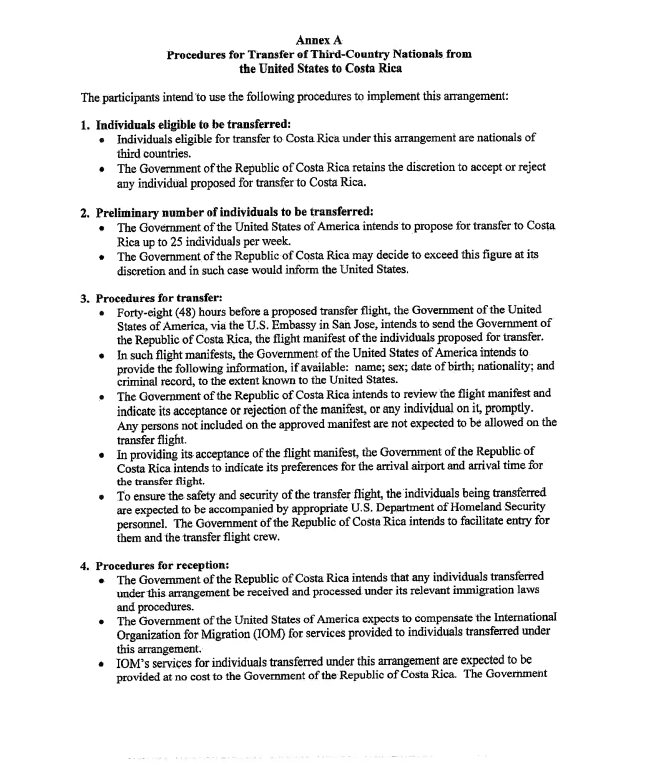
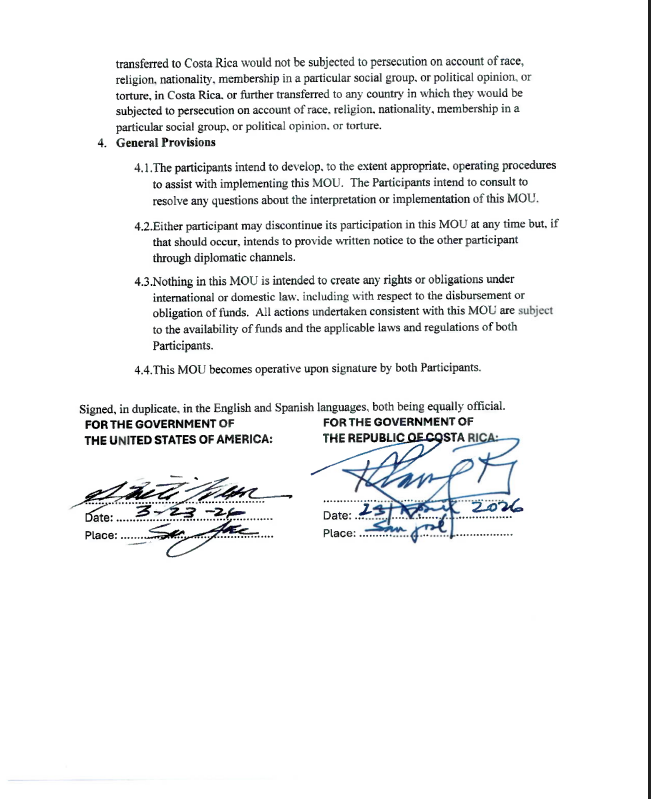
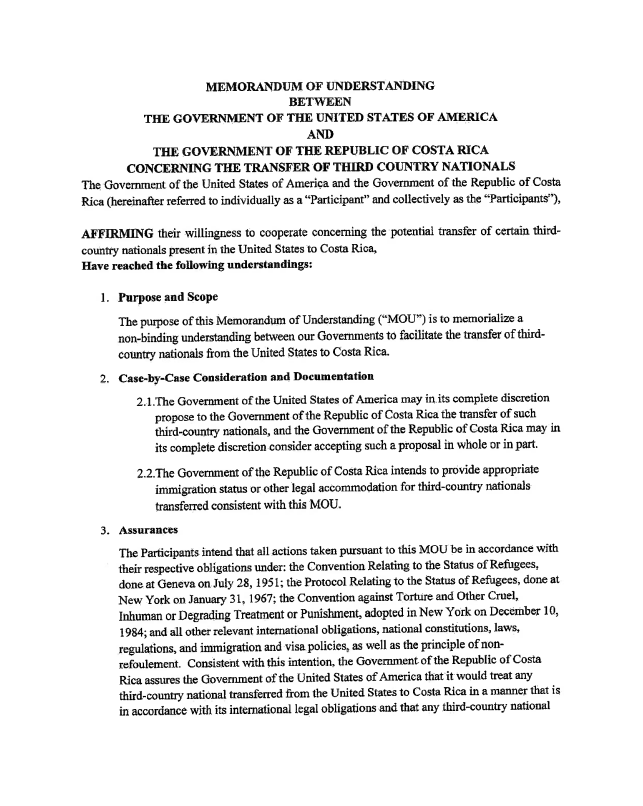

Both Santiago and Ochoa arrived in Costa Rica after San José signed a “third-country” agreement with Washington on March 23, 2026, as part of the restrictive immigration policy promoted by President Donald Trump. Under this mechanism, the United States may propose the transfer of up to 25 deported third-country nationals each week, although Costa Rica retains the authority to accept or reject each case.
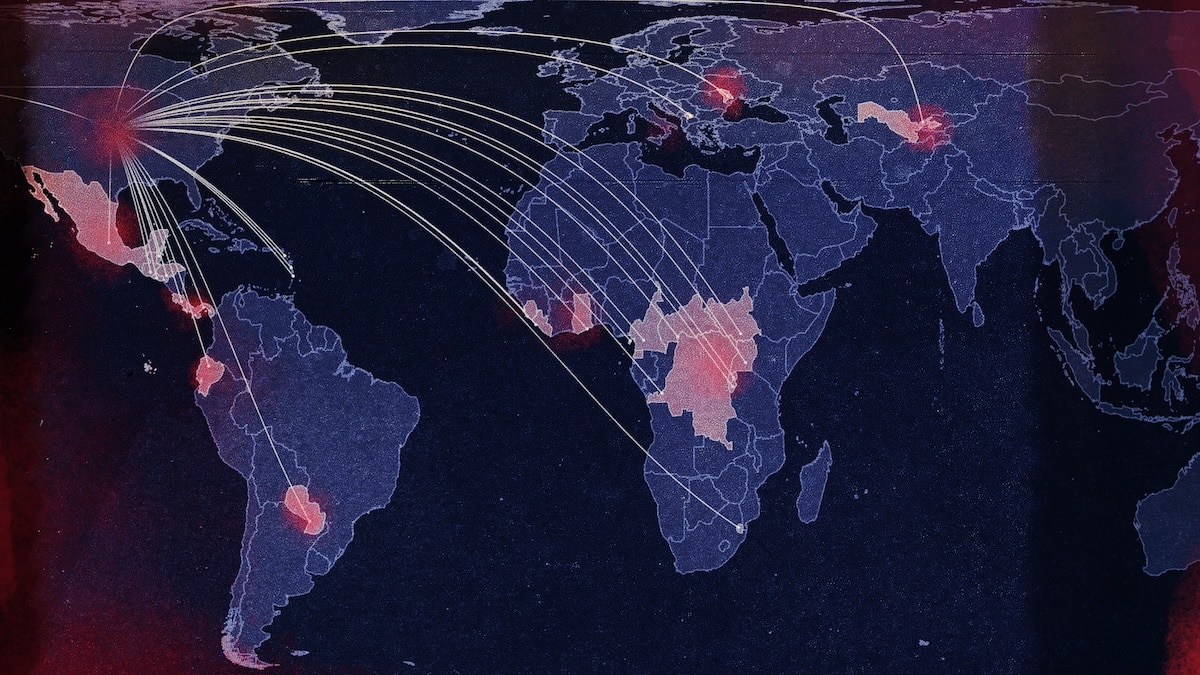
Between April 11 and September 3, 2026, Costa Rica received 20 flights from the United States carrying 424 deported individuals from third countries, according to figures from the General Directorate of Migration and Foreigners. The flights have arrived almost weekly, though with varying numbers—ranging from 12 to the maximum of 25 people stipulated in the agreement. China tops the list with 84 deported individuals, followed by Mexico with 68, Colombia with 52, and Brazil with 44.
Of the 424 deportees, 187—44%—remained in Costa Rica as of September 3. Another 35 were in the process of returning, and 202 had already left the country. Among those remaining were 58 Chinese, 33 Mexicans, 13 Vietnamese, 10 Brazilians, and 9 Colombians. Also still in the country were the three Senegalese sent under the agreement and the sole Nicaraguan deported by the United States to Costa Rica.
Santiago and Ochoa are part of a group that, instead of returning to the place they fled from, began trying to rebuild their lives in a country about which the only thing they knew for certain was the saying “pura vida.” Unlike the Senegalese man, who is absorbed in his headphones every morning in the hotel lobby, San José feels less like another world to them. Santiago found work as a waiter at a Colombian restaurant in the capital, and Ochoa, when we interviewed him in July 2026, said he was looking for a job as a nurse or a tractor-trailer driver.
Both have immigration status that allows them to stay and work in Costa Rica while they plan how to reunite with their families. Ochoa wants to bring his wife and children from Alabama; Santiago wants to bring his daughter, who stayed behind in Colombia. In a way, the Colombians feel sorry for the Senegalese man, who hardly speaks to anyone, and among themselves they draw their own conclusions about how difficult it must be for him to return to Senegal and be in a country he barely understands.
For now, Santiago says, they feel “lucky” to have a roof over their heads and food while they try to start over. The IOM maintains a daily presence at the hotels and coordinates assistance for the deportees. When Santiago says “lucky,” he knows what he’s talking about, because he’s already heard stories about those who arrived before them—before the agreement with Washington was in place—and were sent much farther away, to Paso Canoas, near the border with Panama, to a CATEM shelter.
II. A Russian Man With His Family in Monteverde
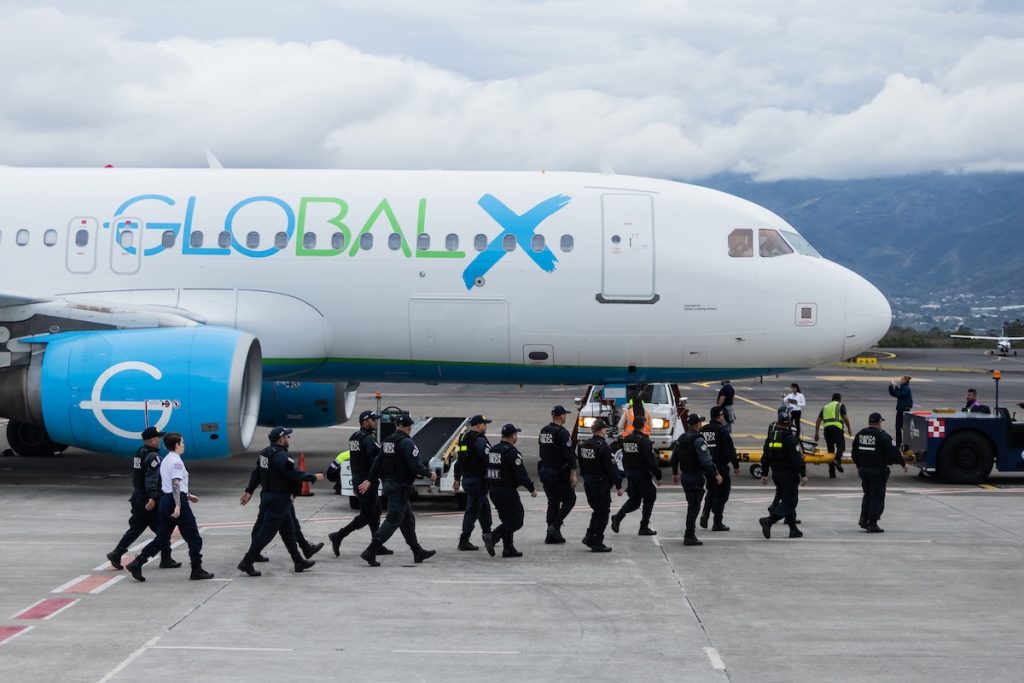
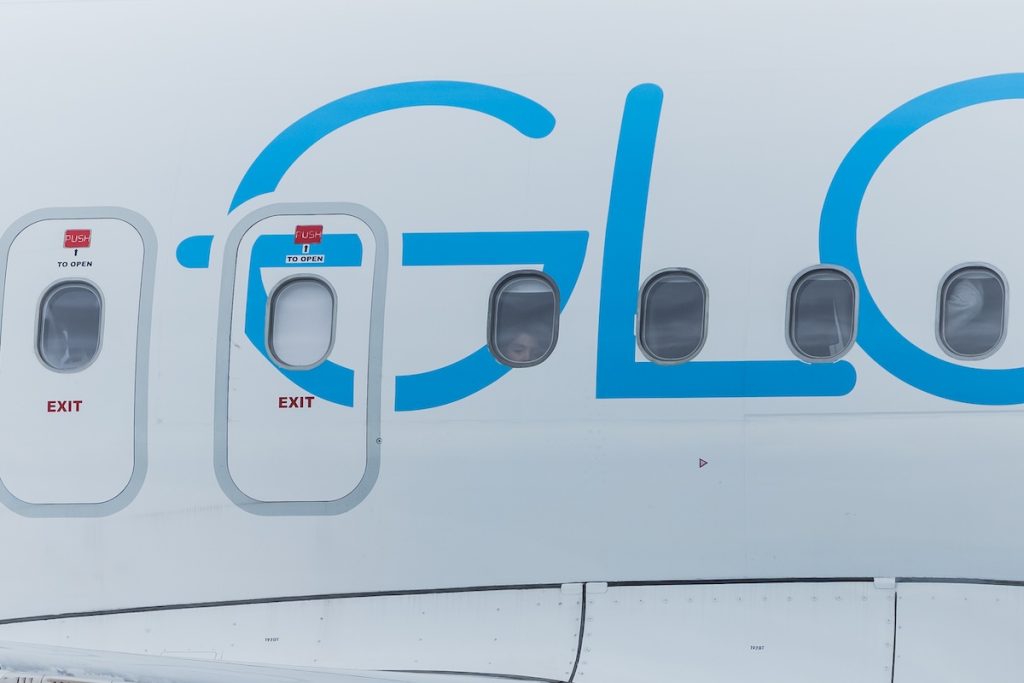
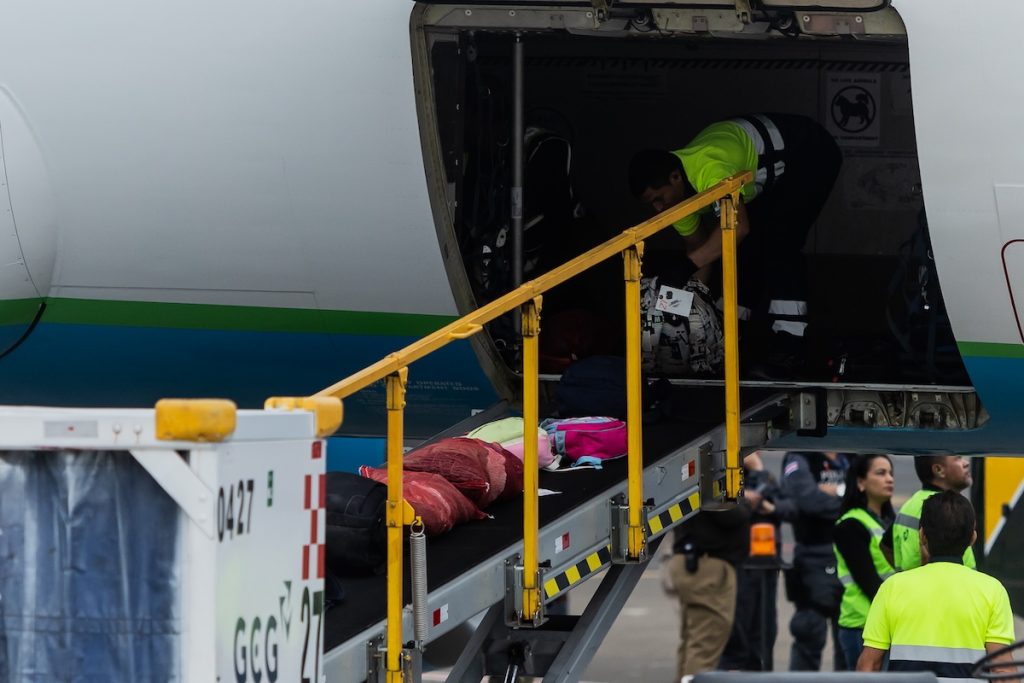
A few minutes before 5:00 p.m. on February 20, 2025, a Global X plane landed at Juan Santamaría International Airport. The deportation flight, arriving from San Diego, was carrying 135 deported individuals from Asia, the Middle East, Africa, Russia, and Georgia. The plane’s door and the buses were positioned so that journalists’ cameras could not capture the migrants as they disembarked. But on the other side, at the cargo hold door, the luggage—if those bundles could even be called that—revealed the travelers’ circumstances. What was abundant were pastel-colored children’s backpacks—many printed with dinosaurs, baby elephants, and Disney princesses—and plastic bags containing meager belongings.
That first flight was part of an immigration cooperation initiative that the government of former President Rodrigo Chaves had begun to forge with the Donald Trump Administration just a few weeks after the Republican’s return to the White House. Secretary of State Marco Rubio had visited San José in early February 2025, as part of a regional tour focused on migration, security, and Washington’s relationship with Central America. Days later, Costa Rica agreed to accept up to 200 people deported from third countries, with costs covered by the United States, while their eventual return to their countries of origin was being organized.
Chaves publicly defended the decision with the phrase “love is repaid with love.” He presented Costa Rica as a “bridge country” for Trump’s deportations and justified the cooperation as part of the close relationship with Washington. All of this occurred before the deportation agreement signed by both countries in March 2026, which formalized the mechanism and changed the way Costa Rica received deportees.
Six days after that first flight, German Smirnov, his wife, and their seven-year-old son, Timur, arrived on another plane as deportees. Like the other migrants sent to Costa Rica during that first phase of 2025, they were taken to the Temporary Care Center for Migrants (or CATEM, its acronym in Spanish) in Paso Canoas, near the border with Panama. German recalls a bus ride of about ten hours. Upon arriving in that humid, hot jungle area, one sight suddenly made them realize they had entered a different world: a completely naked child was running around the buses. Smirnov came from a cold place, dressed in two pairs of pants, a T-shirt, and a sweatshirt.
German is a fit man. In addition to having been involved in electoral processes in Russia—where he claims he tried to report irregularities—he works as a personal trainer. Considered an opponent by the authorities of Vladimir Putin’s autocracy, in 2022 he decided to leave St. Petersburg so as not to end up, in his own words, “in prison or sent to war” against Ukraine. Following in the footsteps of another dissident, he traveled to Mexico and requested an appointment through CBP One, the program then used to present oneself at a U.S. port of entry. He had secured one for February 2, 2025, but the Trump administration canceled the program and all pending appointments on January 20.
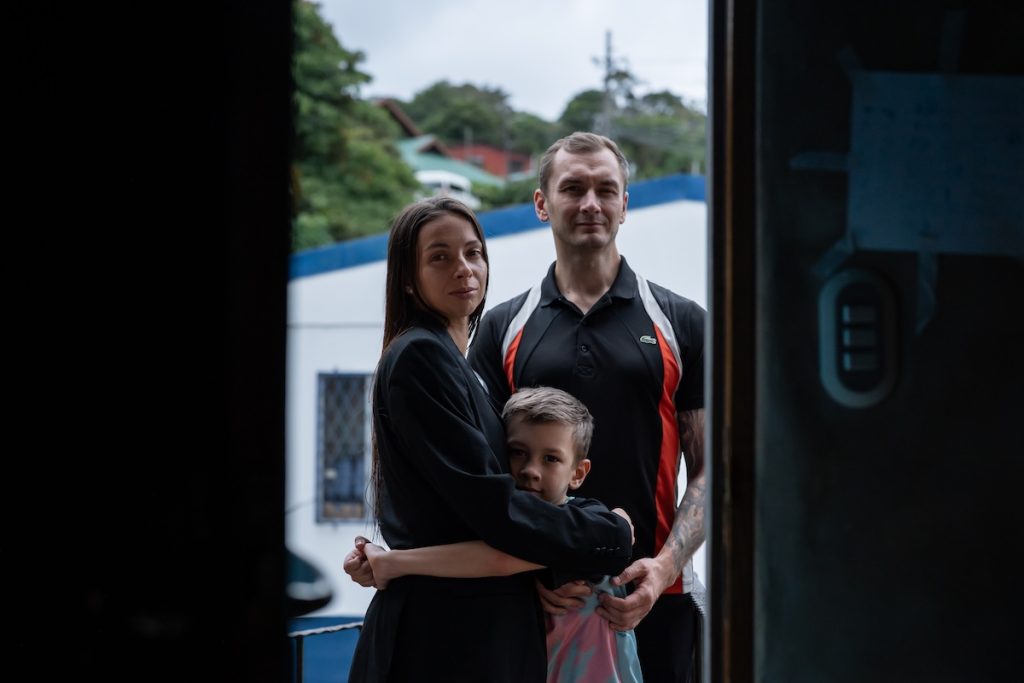
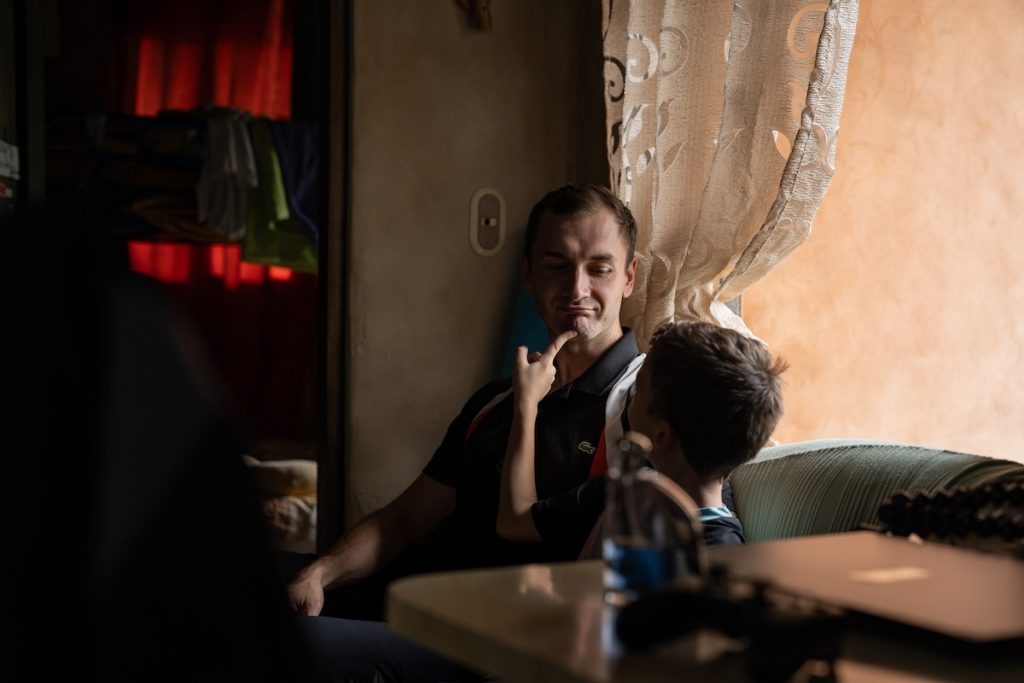
Without that option, German decided to cross the border with his family and turn himself in to U.S. authorities, convinced that he could apply for political asylum. According to his account, he spent nearly a month in detention, never appeared before a judge, and ended up handcuffed on a plane bound for Costa Rica.
At the CATEM, German says that he and the other deportees “felt like prisoners.” He says that upon arrival, their passports and other documents were taken from them and that for a time they were not allowed to leave the shelter freely. “We were like prisoners,” he sums up. According to his account, that situation began to change after public complaints and legal actions against the Costa Rican government, following which their documents were returned to them.
CATEM operated out of a former Faber-Castell factory, which had been closed years earlier and donated by the German company to the Costa Rican government in 2018 on the condition that it be used as a shelter and humanitarian assistance center for migrants. The deportees sent by the United States in 2025 were housed there. Months later, the company itself would question that use and state that it had never been informed that the property would end up functioning, in the words of its representatives, as a “prison.”
In June 2025, the Constitutional Chamber ordered that the immigration status of those still at CATEM be determined and that they be released; subsequently, the National Mechanism for the Prevention of Torture described that situation as a “de facto deprivation of liberty.” German remained at CATEM for about six months. His final release came after interviews and reports about the situation of the deportees began to circulate and a Quaker community in Monteverde learned of the case.
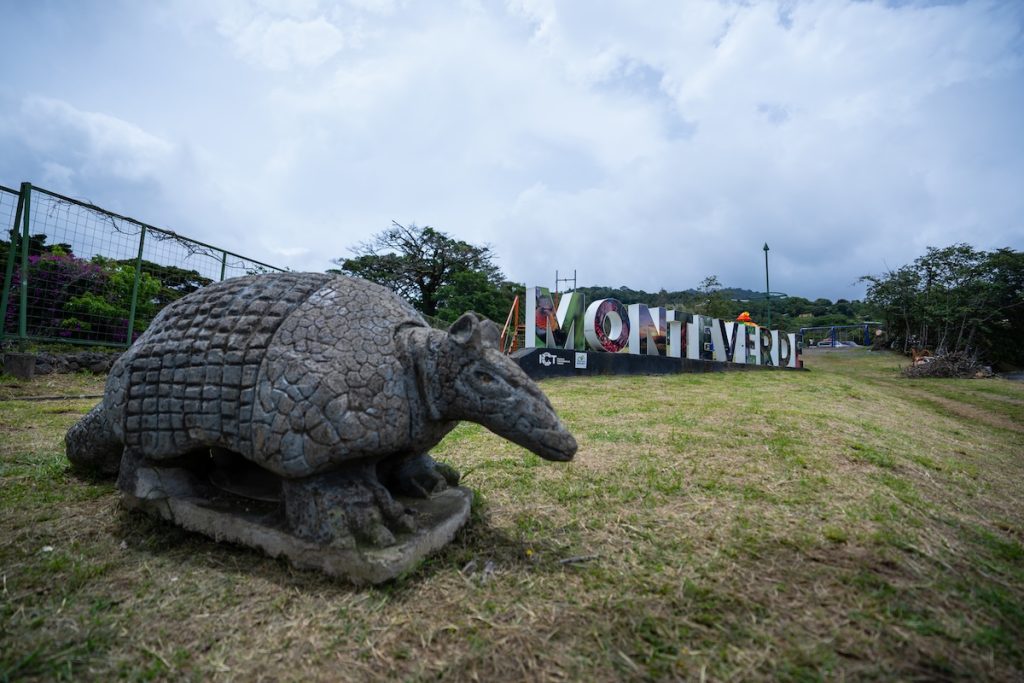
The Quakers are a religious movement that originated in England in the 17th century and seeks to live out Christianity in a direct and simple way. In the case of those living in Monteverde, they are retired American expats who, in a sense, founded this town—considered one of Costa Rica’s most popular tourist destinations—thanks to its lush rainforest, where travelers come to cross suspension bridges among the treetops, see waterfalls, and observe tropical wildlife.
German explains that the Quakers offered to take in several families with children, and he moved there with his wife and Timur. Initially, six families were welcomed by the community, which helps them with rent, food, healthcare, and Spanish lessons as they try to rebuild their lives. Three of those families eventually attempted to return to the United States and were detained again in Texas.
German didn’t want to subject his family to another risky migration attempt to the United States, so he began working as a personal trainer and taking on other informal jobs, but he still suffers from those anxiety attacks, especially when he recalls the entire ordeal of deportation. He takes my hand and presses it to his chest so I can feel his heart racing. To manage these episodes, he says he takes escitalopram, a medication he started taking after the attacks became more severe during his final months at the CATEM.
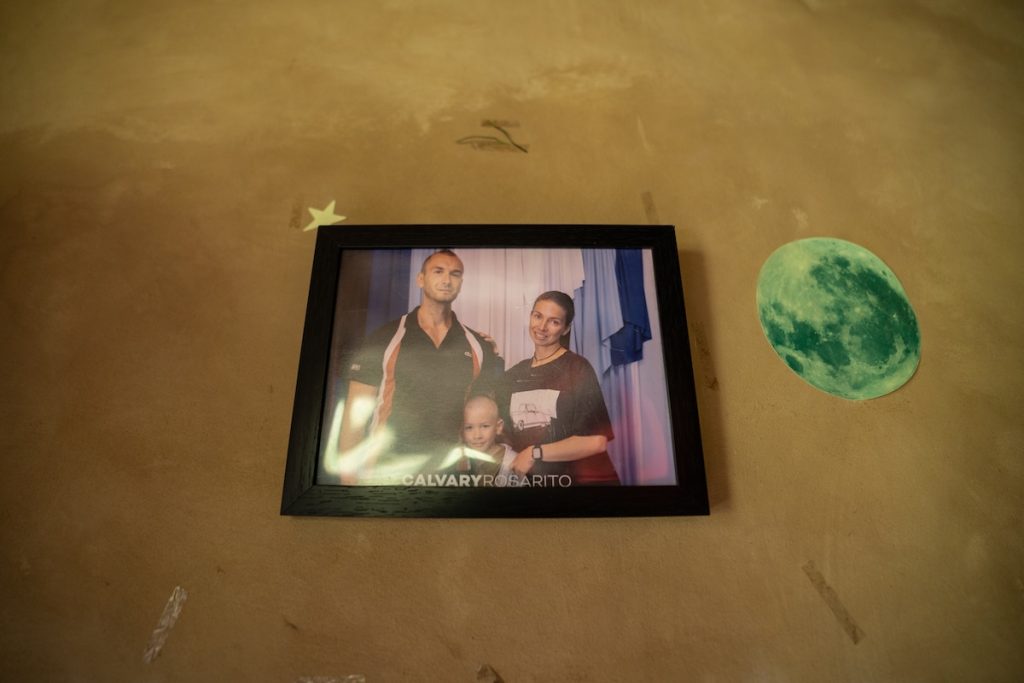
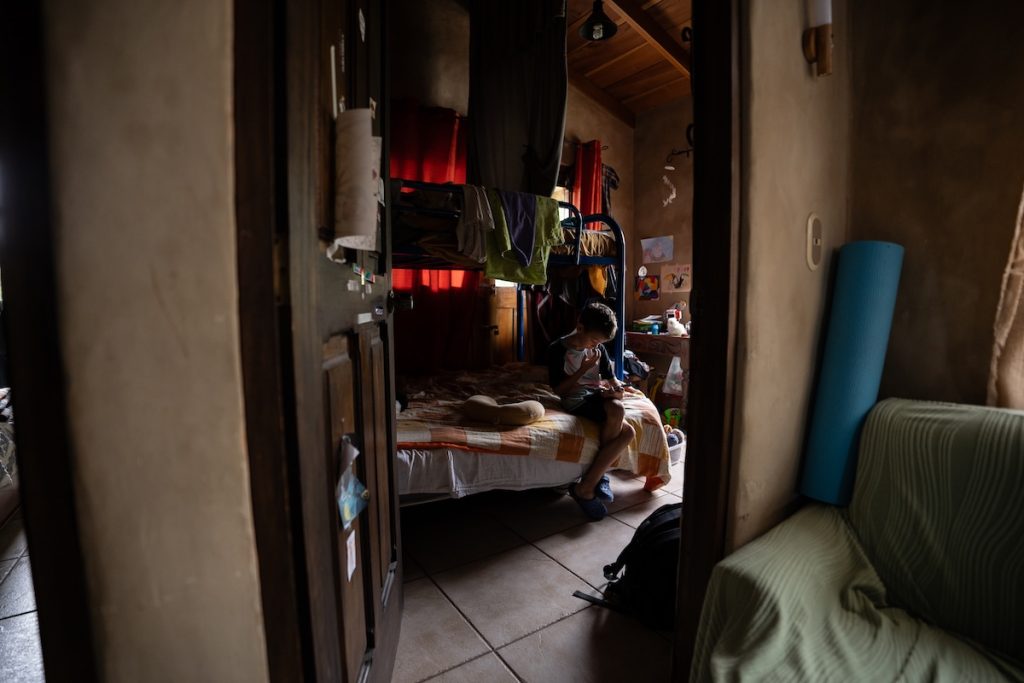
What stresses German the most is his family’s financial situation and Timur, who has already started taking Spanish classes. The Russian gets around on an old motorcycle he bought to give his private lessons and hopes to move soon from the small apartment where they live, whose walls are almost entirely covered with the boy’s drawings, some with messages written in Cyrillic. His wife, Anastasiya, also found a job at a café in Monteverde.
Although the family has decided to settle in Costa Rica, they still face immigration uncertainty. They hope the government will extend the humanitarian status granted to those who arrived on flights prior to the third-country agreement. German sums up that feeling with the word “instability.”
“The systems in Russia and the United States work the same way. They receive orders and do everything according to those orders,” German laments.
III. More Flights, Nicaragua, and What Agreement?
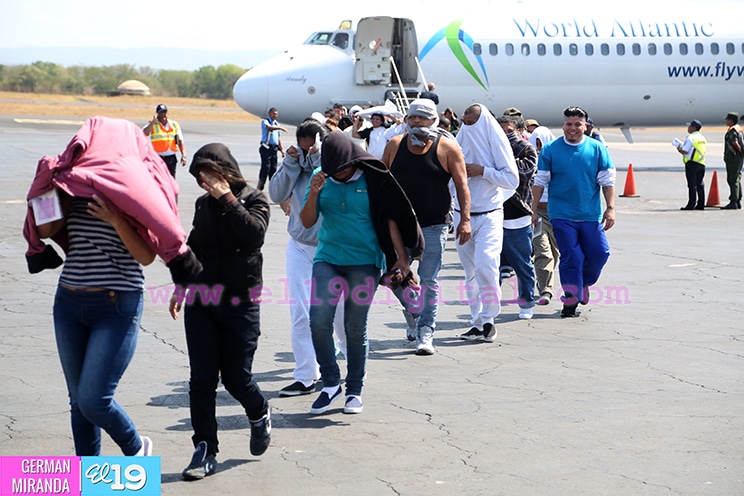
More than 3,100 Nicaraguans were deported from the United States during the first 15 weeks of 2026, aboard 26 flights bound for Managua. This figure is five times higher than that recorded during the same period in 2025. Human Rights First, which monitors ICE flights, recorded 93 flights carrying more than 10,700 deported Nicaraguans during the first 15 months of Donald Trump’s second term.
The increase began shortly after Trump’s return to the White House. Managua began receiving its deported nationals more frequently and quietly—a form of cooperation that sources consulted by DIVERGENTES at the time interpreted as part of the Ortega-Murillo regime’s cautious approach to avoid further political pressure from Washington.
This collaboration has continued, even though Nicaragua does not have a “third-country” agreement with the United States, as sources familiar with the immigration relationship confirmed to DIVERGENTES.
That has not prevented Washington from also sending foreigners to Nicaragua. Between January 2025 and June 2026, 116 people of 16 nationalities were deported to the country, according to records from the Deportation Data Project, an academic initiative that collects and analyzes internal U.S. government data on the enforcement of immigration laws. Among them were Hondurans, Cubans, Ecuadorians, Guatemalans, Colombians, Peruvians, Salvadorans, Venezuelans, and Nigerians.
Sandinista dictator Daniel Ortega has publicly criticized the deportations. In June 2025, he spoke of the “mistreatment” of migrants in the United States and assured that Nicaraguans had “open doors” in Nicaragua. He also explained that, upon landing, immigration officials would screen them, provide them with food, and then the Ministry of the Interior would transport them to their communities. DIVERGENTES learned, however, that some deportees were subsequently subjected to surveillance and visits by Sandinista authorities.
Aside from the flights that Managua has continued to receive, three Nicaraguans were sent in August 2026 to the Central African Republic, a country with which they had no connection whatsoever. Two of them reported that they were forcibly put on the plane in the United States, handcuffed and shackled, and that they only learned of their destination during the flight. In Bangui, they were held in a shelter under surveillance, unable to move about on their own and fearing they would be kidnapped. Another 894 Nicaraguans were sent to Mexico between January 2025 and June 2026; there were also deportations to Honduras and Ecuador.
The possibility of being sent to a third country also looms over Nicaraguans persecuted by the co-presidential regime. Journalist Luis Galeano, stripped of his citizenship by Ortega-Murillo and with an asylum application pending since 2019, was detained by ICE in September while working as an Uber driver and now faces deportation proceedings. Press organizations and members of Congress have called for consideration of the risk he would face if returned to Nicaragua. A few days later, ICE also detained Denis Palacios, one of the 222 political prisoners exiled in 2023, even though he had a valid work permit and an asylum application pending.