
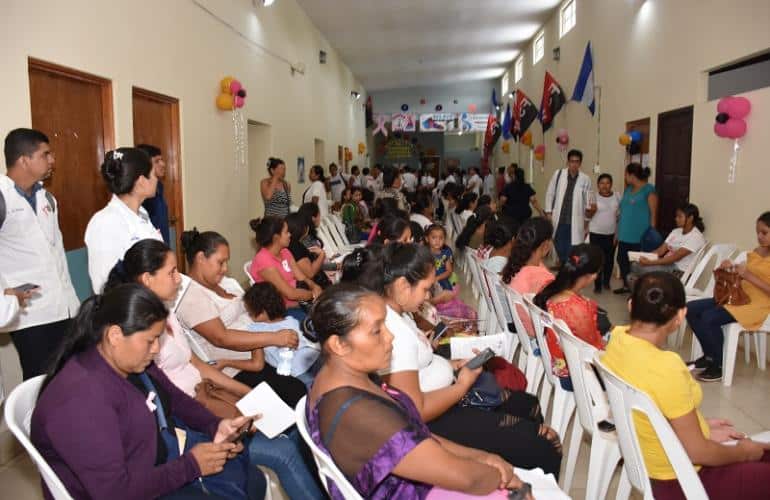
Nicaragua has the lowest availability of healthcare personnel per capita in Central America. Data compiled by the World Health Organization (WHO) in its most recent 2025 report places the country at nine doctors per 10,000 inhabitants. In contrast, Costa Rica has nearly 27 in the same category, Honduras 19, while Guatemala, Panama, and El Salvador each have approximately 16, and Belize has around 13.
With a population of over 6.8 million, according to official data from the Ministry of Health (or Minsa, its acronym in Spanish) based on figures from the Nicaraguan Institute for Development (or INIDE, its acronym in Spanish), the country has just over 6,000 doctors nationwide, according to WHO estimates.
Dr. José Antonio Delgado Alvarado, who holds a Master’s degree in Public Health, notes that this gap directly affects the system’s capacity to provide care. The lower availability of personnel reduces access to consultations, specialties, and surgical procedures compared to the rest of the region.
“The most important resource for patient care is healthcare personnel. It is not the hospital walls or the equipment. If a country’s primary resource—its healthcare personnel—is scarce or falls below the suggested minimum, then the quality of healthcare is clearly compromised,” Delgado told DIVERGENTES.
The Ministry of Health’s (Minsa) 2025 National Health Map, available on its website—with restricted access outside Nicaragua—confirms the same density and also reports eight nurses, eight nursing assistants, and nine technicians per 10,000 inhabitants. Although the sum of these categories increases the total number of healthcare personnel, the WHO sets a minimum of 23 health professionals—including doctors, nurses, and midwives—as a benchmark to ensure basic coverage.
“That number suggested by the WHO is the minimum, considering that there are countries that exceed that goal. In other words, there are countries that have 30 or 40 doctors per 10,000 inhabitants, mainly in European countries,” he pointed out.
Patients Face Delays in Diagnosis and Care
Limitations in the availability of healthcare personnel are reflected in the public healthcare system’s care processes, according to testimonies from Nicaraguan patients in the country, collected by DIVERGENTES on condition of anonymity for security reasons, due to the police state imposed by Nicaragua’s Sandinista regime.
Roberto, a 54-year-old man with diabetes treated at Lenin Fonseca Hospital, began seeking care in January 2025 for complications associated with polyneuropathy, which was not diagnosed until September of that same year. For months, his follow-up care was limited to scheduled appointments, with intervals of up to three months, without a thorough clinical evaluation or treatment tailored to his condition.
The patient visited the outpatient clinic at this public hospital on multiple occasions without receiving a clear explanation of the cause of his symptoms or an appropriate treatment plan. It was until September of that same year, after seeing a private doctor, that he received a more accurate diagnosis and treatment appropriate for his condition.
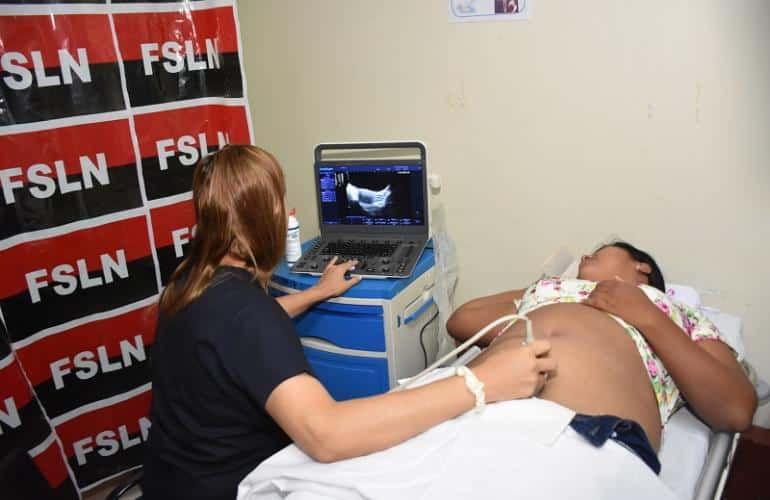
“I spent months going to the hospital, and they only gave me long wait-time appointments without telling me exactly what was wrong. It wasn’t until I went to a private doctor that I received the correct treatment from the start. At El Lenín (Fonseca), they told me that the burning and cramping symptoms I had were due to diabetes and were normal,” he recounts.
Another case is that of Claudia, a 48-year-old woman who sought gynecological follow-up after an abnormal result on a Pap smear. She went for two appointments at Fernando Vélez Paiz Hospital, but both were canceled due to a lack of doctors. Later, her medical record could not be located, forcing her to repeat the tests and reschedule new appointments.
The process took about 14 months before she received a follow-up regarding the abnormality that had been detected. “They canceled my appointment twice because there was no doctor available, and then they told me they could not find my medical record. I had to repeat the tests and wait again to be seen,” she says.
Staff Departures and Reduced System Capacity
These experiences occur against a backdrop marked by a reduction in medical staff within the public system. Dr. Delgado notes that the availability of doctors in Nicaragua has been affected by the departure of professionals in recent years, a situation linked to the sociopolitical crisis that began in 2018.
Since then, the health sector has seen layoffs and resignations that have reduced the number of available professionals. “The shortage is so severe that not even in Managua can the need demonstrated by the WHO’s figures be met,” Dr. Delgado noted.
The expert adds that this trend continued in subsequent years, including 2020, amid the COVID-19 pandemic, when staff resignations were reported as a result of reprisals stemming from the Sandinista regime’s control over health information.
“There is a shortage of doctors, compounded by forced resignations due to coercion and the layoffs that have taken place since 2008, which increased massively in 2018, then in 2020 and 2021, and to this day doctors continue to be laid off,” adds the doctor consulted.
Hospital Capacity and Number of Beds Also in Short Supply
In addition to limitations in staff availability, there are constraints in the system’s infrastructure capacity. The WHO uses the availability of hospital beds as a key indicator to measure the capacity of health systems to admit patients, respond to emergencies, and maintain the schedule of surgeries in the public system.
In Nicaragua, the Ministry of Health reports 10 hospital beds per 10,000 inhabitants, equivalent to one bed per 1,000 people. This figure falls below the regional average for Latin America, which is around two beds per 1,000 people, according to the Pan American Health Organization (PAHO).
Delgado points out that this ratio reflects the actual capacity of the Nicaraguan public health system’s infrastructure and adds that “when analyzing the number of beds in relation to the population, capacity is limited compared to the number of people who need care.”
As he explains, this gap implies that the expansion of hospitals—as touted by the Sandinista regime in its propaganda outlets—does not necessarily translate into greater care capacity if the number of available beds does not grow at the same rate as the population.
To illustrate the scale of this situation, the specialist cited the example of the Óscar Danilo Rosales Argüello Teaching Hospital (or HEODRA, its acronym in Spanish) in León, one of the country’s leading referral centers. This medical center has approximately 461 beds for a population exceeding 800,000 people in León and Chinandega—a ratio that remains below one bed per 1,000 inhabitants and which, according to the analysis, limits the system’s capacity to respond to the demand for hospitalization.
“That works out to less than one bed per thousand inhabitants,” he notes. Delgado adds that this ratio reveals the true scope of the infrastructure. “Large hospitals are being built, but with too few beds for the population they are meant to serve. It’s as if you, with a large family, were to build a house with 10 rooms but only three beds,” he states, referring to the gap between investment in facilities and the system’s actual capacity to meet demand.
Health Fairs as a Strategy to Expand Coverage Across the Country
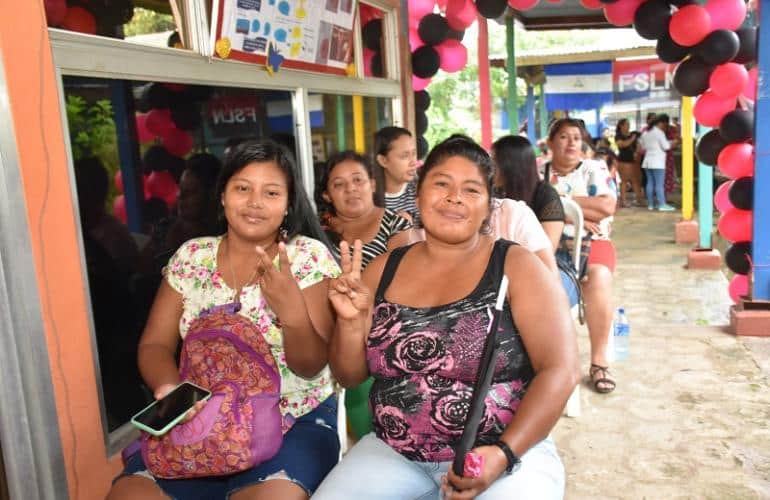
Alongside indicators of physician and bed availability, the Ministry of Health’s (Minsa) 2025 National Health Map highlights the organization of “health fairs” as part of the community care model. These events bring together consultations, medical procedures, and medication distribution in specific municipalities during weekends or designated periods.
However, Dr. José Antonio Delgado Alvarado’s analysis links these activities to the availability of staff within the system. “When medical teams arrive at a municipality for a health fair, they are not local doctors; they are doctors from across the country.” As he explains, these teams are composed of professionals transferred from hospitals and social security clinics, which implies a temporary redistribution of existing human resources.
The specialist notes that this mechanism is repeated in different parts of the country and responds to the accumulated demand for services. “Patients have been waiting a long time to be seen in outpatient clinics and to have surgeries scheduled and performed.” He adds that this backlog is not limited to rural areas, as patients throughout the country experience the same delays in care.
Delgado points out that the constant redeployment of the same staff allows for specific care, but also highlights the limited availability of doctors within the system. “The same doctors who go to Waslala are the ones who go to the San Judas neighborhood, to Bluefields, or to communities in Jinotega.” In this regard, he emphasizes that health fairs reflect the shortage of doctors and the deterioration of primary care, not an achievement or progress in this sector.
Indicators Reflecting the System’s Capacity
The Ministry of Health’s 2025 National Health Map presents indicators on infrastructure, mobile teams, and coverage, but does not specify how many patients are waiting for an appointment, how long it takes them to receive a diagnosis, or how many procedures are rescheduled due to staff shortages.
Data on the availability of doctors and hospital beds, when compared with WHO standards and regional benchmarks, place Nicaragua below the levels observed in the Central American region. While these indicators provide a measure of installed capacity, they do not directly reflect the day-to-day functioning of the system or the conditions under which care is provided.
In this context, the cases of Nicaraguan patients identified by the pseudonyms Roberto and Claudia illustrate how this capacity translates into practice. The discrepancy between available indicators and patients’ experiences reveals a system in which reported capacity does not always align with actual care. Dr. Delgado concludes that problems with the availability of physicians, the distribution of staff, and hospital capacity continue to be key factors restricting access to quality health services in Nicaragua.