
Nicaragua lost four out of every ten visitors arriving by air between 2023 and 2025, while the Sandinista government continued to report growth in tourism activity. Official figures show that the sector’s momentum depends increasingly on domestic consumption and higher spending per visitor, amid a sustained decline in international tourist arrivals.
Over the past two years, Nicaragua recorded a 40% drop in visitor arrivals at Augusto C. Sandino International Airport, falling from 653,336 to 394,541. As a result, air travel is no longer the primary means of entry into the country, amid reduced connectivity, immigration restrictions, and a deteriorating international image.
The figures are part of the Central Bank of Nicaragua’s (or BCN, its initials in Spanish) report Nicaragua in Figures 2025. The report also shows that the country has experienced two consecutive years of decline in international visitor arrivals. In 2023, 1.2 million visitors entered the country; in 2024, the figure dropped to 1.08 million; and in 2025, it fell further to 1.07 million—a cumulative loss of more than 123,000 visitors over two years.
The decline was most pronounced in air travel. While in 2023 more than half of visitors arrived by plane, in 2025 air travel accounted for only 36.6% of the total, compared to 62.1% who entered via land border crossings and 1.3% by water.
The decline in air arrivals contrasts with the trend shown by the other tourism indicators released by the BCN itself. Although the number of visitors fell 0.6% in 2025 compared to the previous year, the financial institution maintains that tourism revenue increased by 3.2%, driven mainly by a 4% rise in the average daily spending of non-resident visitors.
The Decline Began Following the 2018 Crisis
A tourism expert interviewed by DIVERGENTES, who asked to remain anonymous for security reasons, stated that the figures reflect a decline that began several years ago and is not solely due to economic factors.
“I believe that tourism in Nicaragua has been in sharp decline since 2018 and that the government has been unable to implement a coherent strategy to help it recover,” she said.
In her view, the sociopolitical crisis that began eight years ago continues to affect the country’s competitiveness as an international destination.
“Nicaragua’s image as a tourist destination has been severely damaged as a result of the constant human rights violations against the population, which have also affected foreign visitors—for example, by preventing them from filming or taking photographs—and have even led to several of them being expelled from the country, including a number of influencers,” she explained.
The expert maintains that the damage caused to the country’s image by “the prevailing repression has definitely had an impact on potential tourists, who prefer to choose other destinations that enjoy political stability.”
“On top of that, the lack of a public-private recovery strategy is taking its toll, especially considering that there is no longer an independent and organized private sector in the country capable of driving recovery efforts,” she added.
The End of the Migration Corridor is Changing Air-Arrival Trends
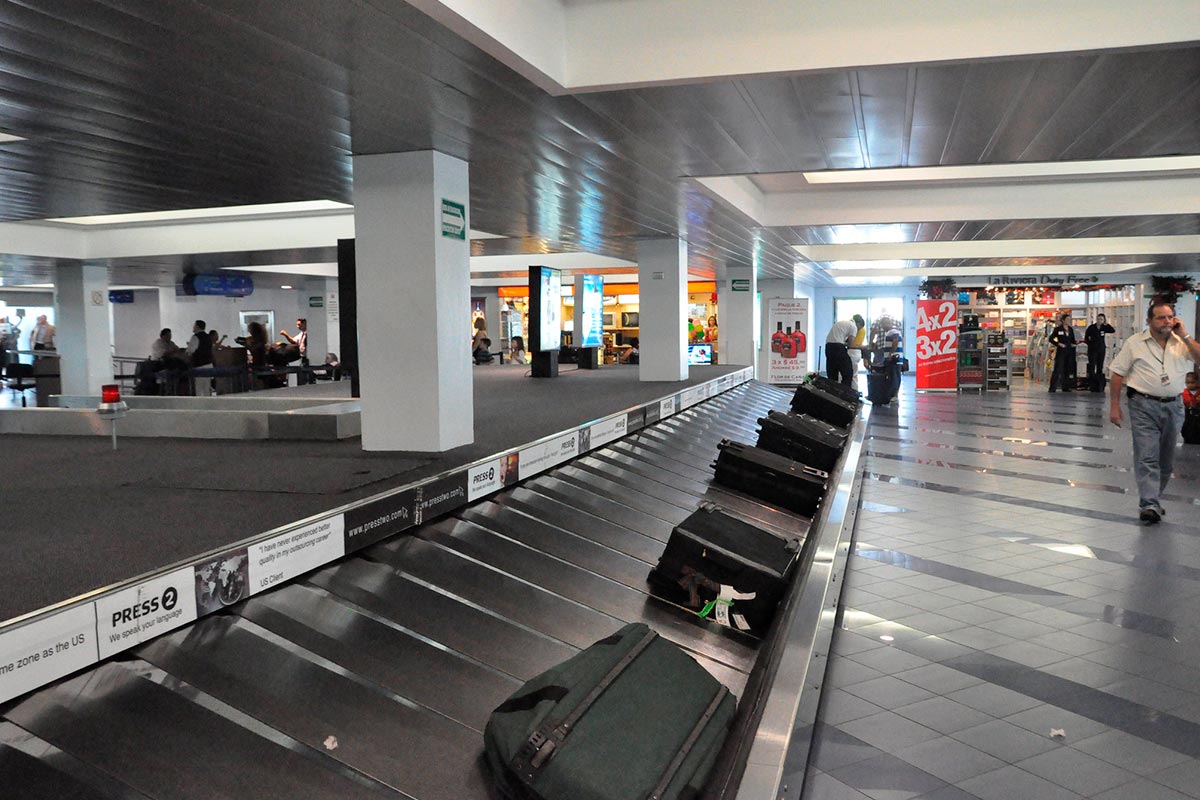
The decline in the number of visitors arriving by air comes after Nicaragua established itself between 2023 and 2024 as a transit point for thousands of migrants seeking to reach the United States. During that period, Managua received hundreds of charter flights from countries such as Cuba, Haiti, and other nations in Africa and Asia, whose passengers subsequently continued their journey by land toward the U.S. border.
Central Bank figures show that the decline in air arrivals began in 2024, when arrivals by air fell from 653,336 in 2023 to 462,917—a 29.1% decrease. In 2025, the trend continued, with 394,541 visitors—14.8% fewer than the previous year.
Beginning in 2025, the migration corridor began to lose momentum following the tightening of U.S. immigration policy and measures adopted by President Donald Trump’s Administration against the networks facilitating these crossings.
Although official figures do not allow for establishing a causal relationship between the two phenomena, the expert consulted believes that this migratory flow never represented a recovery in international tourism, but rather helped project an image of dynamism that did not correspond to the sector’s actual performance.
This interpretation contrasts with the official narrative. In 2024 and 2025, the Nicaraguan Institute of Tourism (INTUR) highlighted the growth in the sector’s economic contribution and the recovery of tourism indicators based on the Central Bank’s Satellite Account, emphasizing the increase in visitors and revenue recorded in 2023 and higher tourist spending in 2024.
“The claim that Nicaragua was used as a springboard for illegal and criminal migration to the United States has nothing to do with tourism. Rather, it served the dictatorship to whitewash its tourism statistics in the face of the dramatic decline,” commented the source, who has extensive experience in the tourism sector.
In the expert’s view, the measures subsequently adopted by the United States also had an indirect effect on the international perception of the country.
“What President Trump’s Administration did with the measures it adopted was to put a stop to that criminal operation orchestrated from Nicaragua. What did happen, however, was that those measures further damaged the country’s image due to the impact that news had on the collective imagination of potential tourists,” she said.
The specialist adds that, at the same time, the Nicaraguan government itself tightened entry requirements for citizens of countries that historically constituted key source markets for tourists—a decision that, in her opinion, also affected the destination’s competitiveness.
“Furthermore, there was a setback in tourism facilitation when Nicaragua imposed visa requirements on a large number of countries that previously did not require them and that are important tourism markets for Nicaragua,” she added.
Immigration restrictions and reduced connectivity also appear to be reflected in the origin of visitors. According to official statistics, Central America’s share of tourists arriving in Nicaragua rose from 31.6% in 2023 to 52.9% in 2025, cementing its position as the leading source market.
In contrast, the category labeled “Rest of the World” fell from 30.6% to 6.6%, while North America remained relatively stable, with a share of around 31%. Overall, the data show that tourism is increasingly concentrated in regional markets, in line with the growing importance of land transportation as the primary means of entry into the country.
The Paradox of Tourism in Nicaragua
According to the BCN’s report, Results of Nicaragua’s Tourism Satellite Account 2025, this activity generated approximately $2,300 million in 2025 through spending on hotels, restaurants, transportation, recreation, shopping, and other services. In addition, it generated nearly $2.2 billion in goods and services and contributed approximately $1.1 billion to the national economy, equivalent to 5.4% of the country’s total output.
Of total tourism spending, approximately $1.8 billion (77.4%) came from spending by Nicaraguans themselves, while $527 million (22.6%) was generated by foreign visitors. In other words, nearly eight out of every ten dollars spent on tourism activities within the country came from the domestic market rather than from international visitors.
This trend explains one of the main contradictions reflected in the official statistics. Although Nicaragua lost more than 120,000 international visitors between 2023 and 2025 and air arrivals fell by 40%, tourism activity continued to grow thanks to the increased dynamism of domestic tourism and the rise in spending by foreign visitors.
According to data from the Central Bank, Nicaraguans increased their tourism spending by 14.6% in 2025, while international tourists who did visit spent 4% more per day than the previous year.
That spending was concentrated mainly on lodging, food, transportation, recreation, and shopping—activities that continued to drive the economy despite the decline in inbound tourism. Official data show that tourism growth depends increasingly on spending by Nicaraguans themselves rather than on the arrival of new foreign visitors.
A Destination With More Restrictions and Less Connectivity
Beyond the trends in the figures, the expert believes that the recovery of international tourism depends on factors that go beyond destination promotion and that continue to limit Nicaragua’s competitiveness relative to the rest of Central America.
One of these is the international perception of the country. The United States maintains Nicaragua at Level 3 on its travel advisory, recommending that travelers reconsider travel due to the risk of crime, detention, and arbitrary enforcement of local laws. The State Department also warns that travelers may face denial of entry, confiscation of property, and other discretionary measures by Nicaraguan authorities.
Compounding this situation is the tightening of Nicaragua’s immigration policy. In addition to imposing new entry requirements on citizens of various countries, the regime has restricted the return of some Nicaraguans—a practice documented by human rights organizations that, according to experts, also undermines confidence in the country and its international image as a tourist destination.
In February 2026, the Sandinista government reinstated the requirement for a visa upon arrival for citizens of 128 countries, including Cuba, Venezuela, Haiti, China, Iran, and dozens of nations in Africa, Asia, and Eastern Europe. The measure reversed the relaxation of immigration policies that had characterized the corridor’s boom years as a route to the United States and coincided with pressure from Washington to curb the networks facilitating irregular migration through Nicaragua.
The visa-on-arrival requires prior authorization from the General Directorate of Migration and Foreigners (or DGME, its initials in Spanish) before a traveler can enter the country—a procedure that experts believe reduces the destination’s competitiveness compared to other countries in the region and creates new barriers for potential visitors.
Reduced air connectivity poses another challenge. While land transportation accounted for six out of every ten international arrivals in 2025, air travel—used primarily by tourists from long-haul markets—saw the sharpest decline in recent years.
The Recovery of Tourism Depends on the Regime
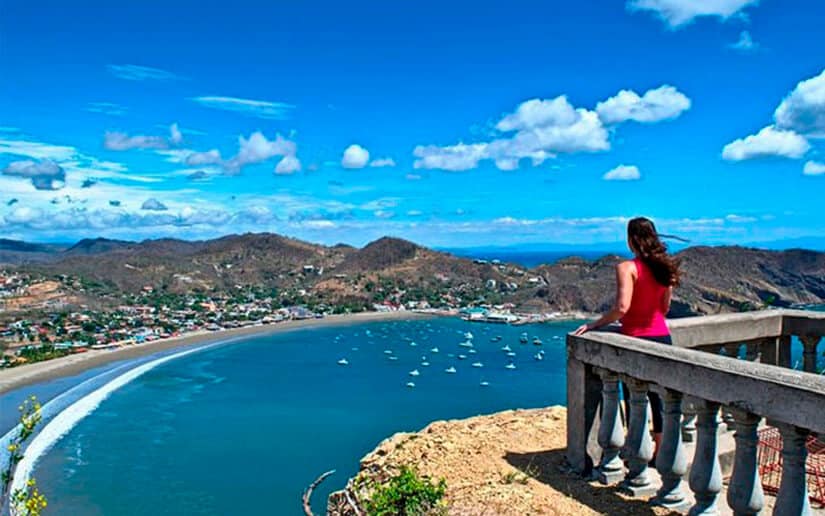
Despite this situation, the tourism expert believes that Nicaragua still has advantages that could make its tourism sector competitive compared to other destinations in the region.
“Nicaragua retains significant competitive advantages, such as its natural and cultural resources, colonial cities, volcanoes, beaches, and relatively low costs, but the pace of recovery will depend on a combination of economic factors, connectivity, and international confidence,” the source stated.
In the source’s view, a sustained recovery in international tourism will depend less on promotional campaigns and more on changes in the country’s political and institutional environment.
“I believe that if international perception, air connectivity, and the investment climate were to improve significantly, the country could accelerate its tourism recovery, but that is entirely in the hands of the regime, which to date has completely refused to steer the country back onto the path of stability and democracy—the only guarantee for achieving peace and progress,” she concluded.