
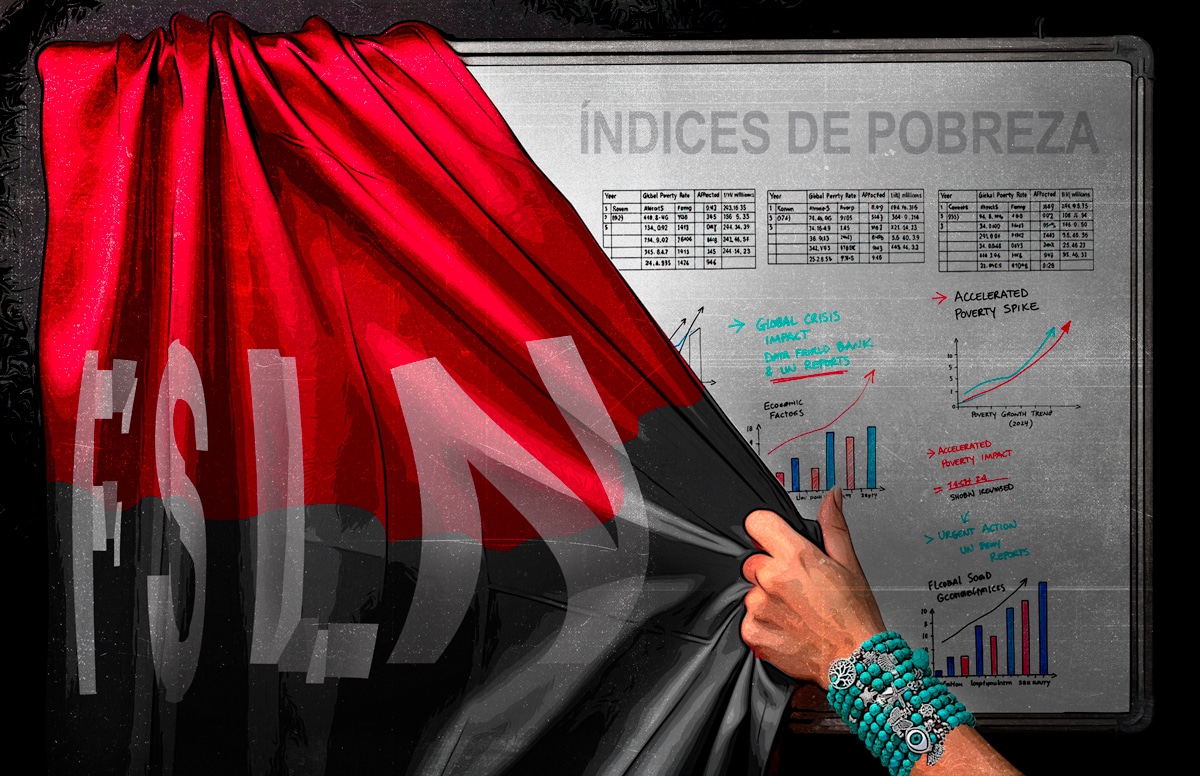
Nicaragua has not updated its official poverty figures in the last 10 years. The most recent data available comes from the 2016 Living Standards Survey, conducted by the National Institute for Development Information (or INIDE, by its acronym in Spanish), which estimated overall poverty at 24.9% and extreme poverty at 6.9%. Since then, no new official survey has been published to show how this key indicator—which reveals the true state of social well-being in the country—has evolved.
A review of INIDE’s institutional websites confirms that there is no recent data available. Nor are there any recent reports on state-run platforms or in government-aligned media outlets, where the government typically releases certain data. The National Statistical Plan itself notes that the most recent official poverty report dates back to 2016.
Researcher Alberto Mora Román, coordinator of Costa Rica’s State of the Nation Program, notes that the production and publication of statistics are fundamental to the functioning of a democracy, as they make it possible to assess the scale of problems, guide public policy, and subject government actions to public scrutiny. In Nicaragua, the lack of official data in key areas, such as poverty, occurs within a context of state control over information and restrictions on access to public data.
A symptom of a healthy democracy
“In a country with a healthy democracy, information is a key input for strategic public decision-making related to investment, service delivery, etc.; for the design, monitoring, and evaluation of public policies; for fostering analysis and debate on matters of public interest; and for ensuring timely citizen participation that promotes accountability,” Mora Román explained.
Mora Román argues that poverty figures are essential for identifying priorities and guiding social investment. “Understanding the effects of poverty and the sociodemographic characteristics of the impoverished population is crucial for prioritizing policies and social investment in the most affected communities and regions,” he explained.
Without recent data, he adds, it is impossible to pinpoint exactly where the greatest needs lie, which groups are most vulnerable, or how living conditions have changed in recent years. In this context, the lack of statistics not only limits public analysis, but also hinders scrutiny on government actions and weakens accountability mechanisms.
A national survey with results shrouded in mystery
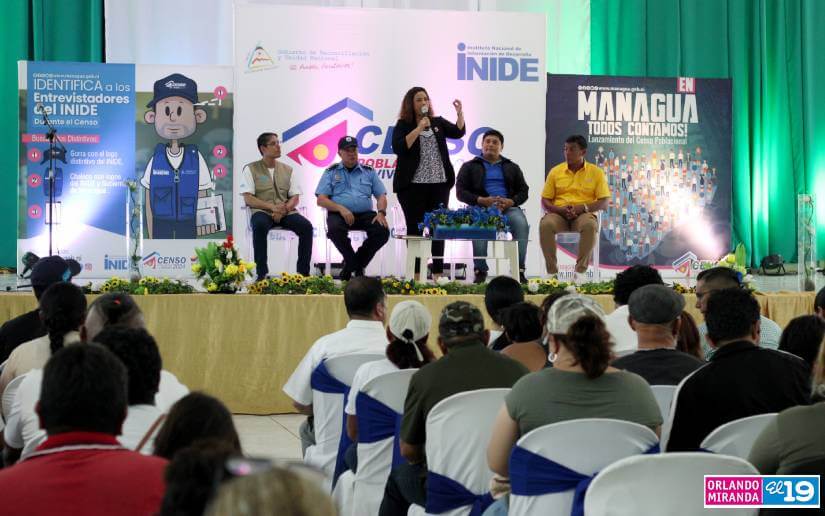
In April 2024, Daniel Ortega and Rosario Murillo’s Sandinista regime carried out the 9th National Population and Housing Survey, the first of its kind since 2005 and the main tool for updating the country’s demographic and socioeconomic data. This survey was intended to replace the information from the last survey in 2005, which continues to be the official reference for these metrics.
Two years after it began, the results of this survey have not been released as of the date of publication of this report. Without these figures, the country continues to operate based on information from 20 years ago, without an official update on its population or living conditions.
The most recent report on living conditions in Nicaragua comes from the Food and Agriculture Organization of the United Nations (FAO). In its 2024 report on food security, this organization documented a decline in the country’s nutritional indicators. According to this study, 19.6% of the Nicaraguan population—around 1.4 million people—does not consume enough food, representing an increase compared to previous years.
This study indicates that 27.3% of the population—equivalent to nearly 1.9 million people—cannot afford a healthy diet, and that the country is among the nations facing a prolonged food crisis.
The report also highlights other indicators associated with poverty. 14.9% of children under five years of age suffer from stunted growth due to malnutrition, while anemia affects 15.7% of women of reproductive age.
Following the publication of the study revealing these findings in February 2025, the Sandinista regime announced its withdrawal from the FAO and ordered the closure of its office in the country. In an official statement, authorities described the report as “false information” and claimed that it lacked “objectivity” and “methodological rigor.”
In the same statement, the now co-Foreign Minister Valdrack Jaentschke argued that the figures included in the report had not been authorized, reviewed, or validated by the government, and stated that its publication was politically motivated, aimed at “discrediting” official policies on poverty and food security, in a context where Nicaragua lacks recent official poverty figures.
External data in the absence of official figures
In the absence of up-to-date national data, international organizations rely on partial estimates to assess the poverty situation in Nicaragua. These measurements are based on comparable income among countries and allow for the identification of general trends, but they do not replace a national household survey.
The World Bank confirms that there are no recent official poverty figures for the country beyond 2016, as these metrics rely on national surveys that have not been updated by the government. At the regional level, the Economic Commission for Latin America and the Caribbean (ECLAC) estimates that poverty affected approximately 29% of the Latin American population in 2023, based on official data reported by these countries. Within this group, Nicaragua does not have recent comparable figures in this estimate.
The World Bank, for its part, continues to classify Nicaragua as a lower-middle-income economy—a category typically associated with high levels of economic vulnerability and a large proportion of the population at risk of falling into poverty due to changes in income or the cost of living.
International estimates help identify trends, but they do not accurately show where poverty is concentrated or which groups are most affected. Nor do they allow for an assessment of changes in living conditions following the 2018 sociopolitical crisis, mass migration, or the rising cost of living.
Surveys conducted from exile capture the reality of households in Nicaragua
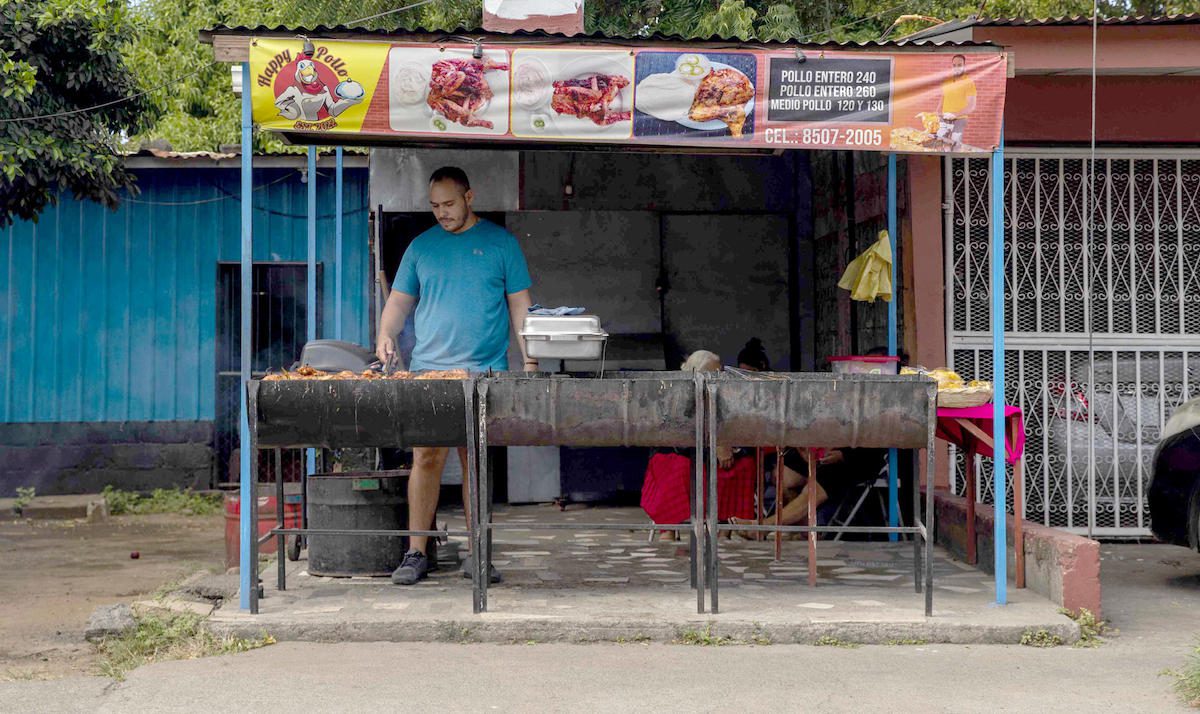
In the absence of recent official figures, independent surveys offer one of the few insights into the economic situation of Nicaraguan households. The most recent survey by the organization Hagamos Democracia, covering the last quarter of 2025, shows a steady decline in household income and consumption capacity.
The data reveals a wide gap between income and the cost of living. 72.1% of respondents are unable to cover their monthly expenses with their regular income, while more than 78% cannot afford the basic basket of goods, which costs over 21,000 córdobas per month.
The study shows that the problem is not limited to unemployment. Even among those with stable incomes, the ability to meet basic needs is limited. A significant portion of the population reports incomes below 7,000 córdobas, well below the actual cost of living.
The labor market shows signs of instability. 66.1% of those surveyed do not have formal employment—either because they are self-employed or unemployed—which limits their access to stable income and social protection.
In this context, remittances have become a pillar of subsistence. 49.3% of households report having received money from abroad in the last quarter of 2025, confirming the key role of remittances in the domestic economy. These remittances come mainly from the U.S., Costa Rica, and Spain, and, in many cases, they determine the household’s ability to afford food and basic services.
The rising cost of living is making the situation worse. More than 60% of respondents have noticed recent price increases for essential items such as meat, cheese, oil, and beans, which further reduces purchasing power.
Although these measurements do not replace an official survey, they show consistent trends. In the absence of up-to-date government data, the results agree that household incomes are insufficient to cover the cost of living.
The entire region measures poverty, except for Nicaragua
Nicaragua’s lag stands in contrast to the rest of Central America, where countries regularly publish official poverty figures based on household surveys or multidimensional indices.
In Costa Rica, the National Institute of Statistics and Censuses reported that 15.2% of households were living in poverty in 2025, according to its latest National Household Survey. In Panama, the National Institute of Statistics and Census reported that 20.8% of the population was living in poverty in 2023, based on its most recent official measurement.
In 2024, Guatemala reported—through the National Survey of Living Conditions—that 56% of its population lives in poverty, one of the highest rates in the region. In Honduras, the National Institute of Statistics reported that more than 60% of households live in poverty, according to its latest official measurements.
El Salvador also provides regular updates. The Central Reserve Bank reported that approximately 26% of households were living in poverty in 2023, based on the Multi-Purpose Household Survey.
These figures enable countries to update social assessments, identify priority areas, and evaluate the impact of their public policies. In addition, they feed into regional systems such as ECLAC’s, which build comparisons based on official information reported by these nations.
In this context, the lack of recent official figures in Nicaragua limits their inclusion in these analyses and reduces the availability of comparable data on poverty trends in the region. Costa Rican researcher Alberto Mora Román notes that the publication of this data—as is done by Central American nations, except for Nicaragua—should be periodic. “All this information should be produced and published annually. That is, in 2025, the data from 2024 should be published.”
“Failing to generate, publish, or promote access to information—or restricting access to it—is often part of the strategy employed by autocratic governments—or those seeking to become autocratic—to prevent public scrutiny of their administration, as well as to limit public awareness and debate on issues of public interest in a country,” he concluded, referring to the lack of data in Nicaragua.