
When orthopedic surgeon Erasmo Gutiérrez Talavera was found dead on a sidewalk in the Las Torres neighborhood, in Managua’s Fourth District, on the morning of May 5, 2026, those who were in the home where he spent his final hours did not first call the National Police or his family members.
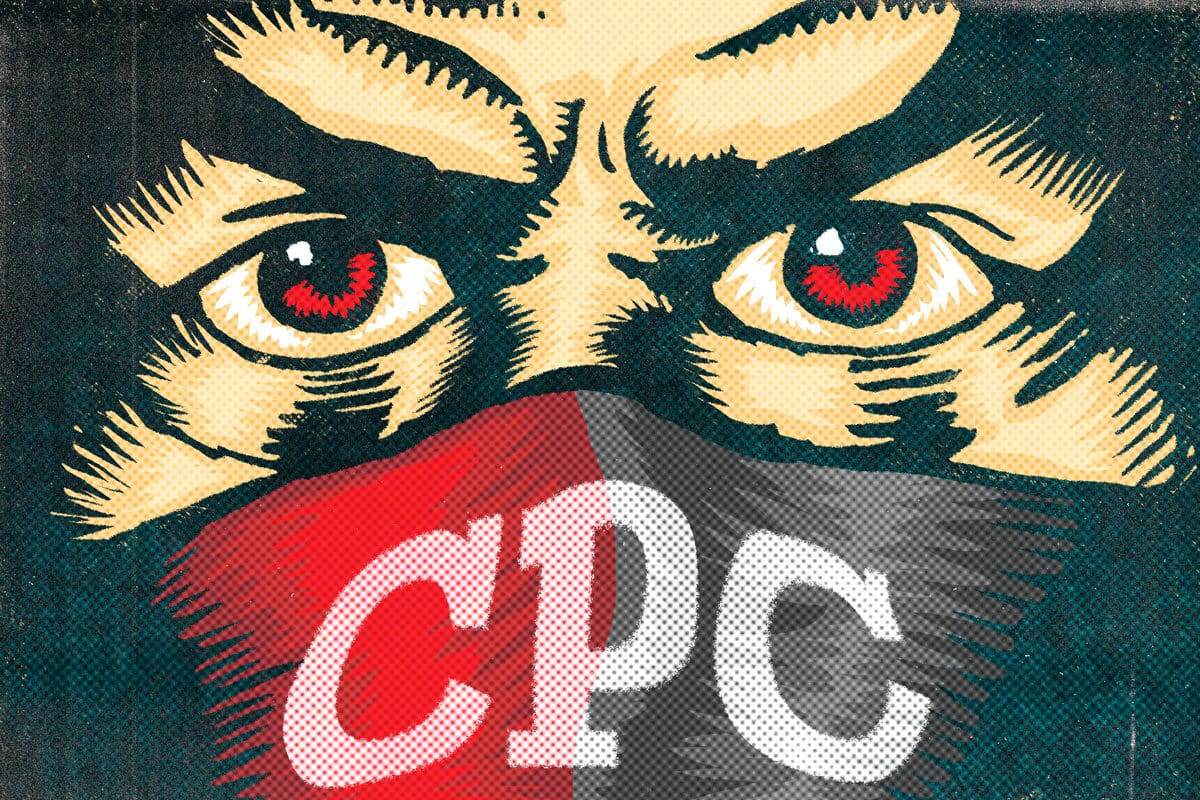
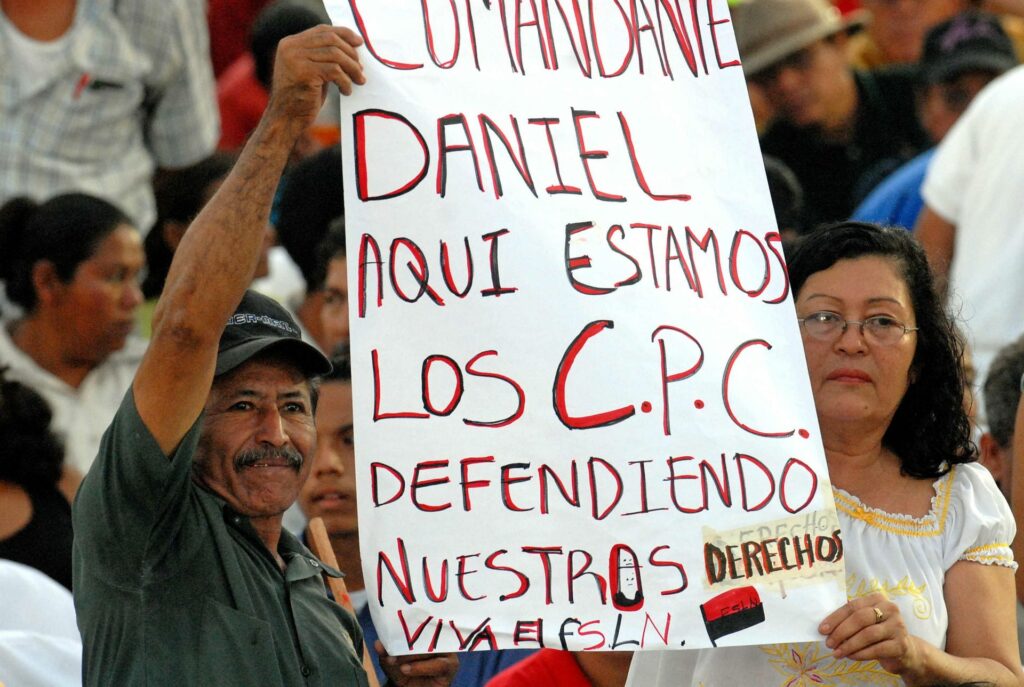
As they later told the television station Canal 10, when they discovered that the 62-year-old doctor had died, they notified “the neighborhood CPC and then the police.” Although the regime’s local structures have changed names in recent years, many Nicaraguans continue to use the initials CPC—Consejos del Poder Ciudadano—to refer to the political leaders and operatives of the Sandinista Front in their communities.
This incident is just one example of the influence that the Sandinista Front’s political secretaries wield within Nicaragua’s neighborhoods. The actions of this family from the capital reveal that these party leaders have acquired a level of authority that, for many citizens, makes them an immediate point of reference, even before the institutions responsible for public safety.
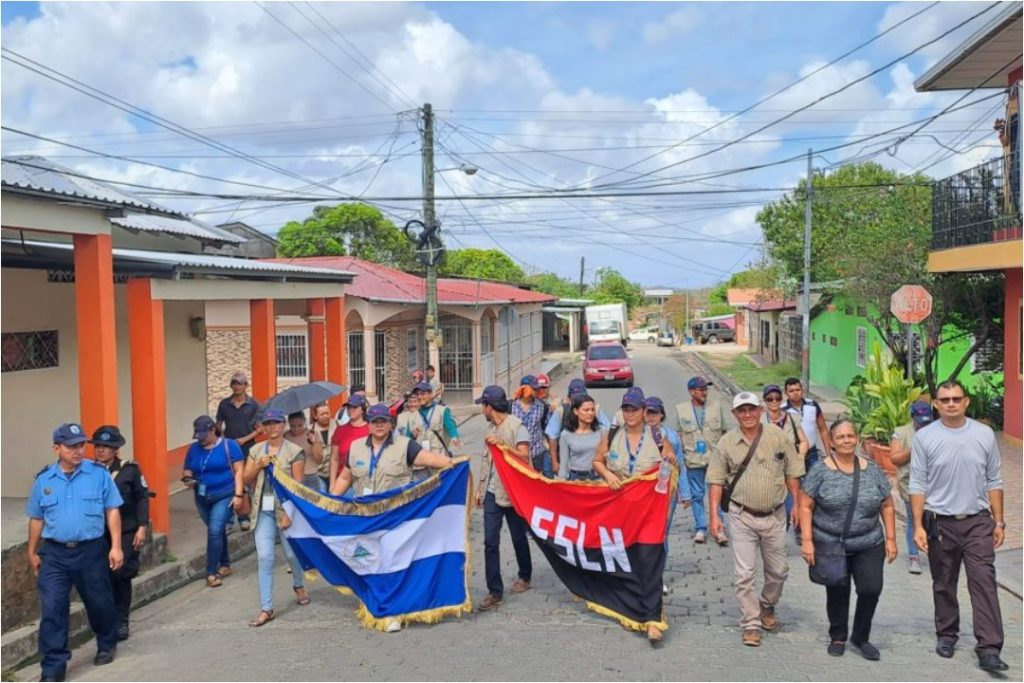
Political secretaries are territorial leaders of the Sandinista Front responsible for coordinating party structures in neighborhoods, communities, municipalities, and departments. Their role consists of conveying and implementing the regime’s directives, as well as maintaining a permanent presence in the territories. Although not all hold public office, their role and their proximity to state institutions and local authorities grant them an influence that, according to international organizations and testimonies gathered by DIVERGENTES, extends beyond strictly pro-government activities.
The testimonies gathered for this report describe neighborhood conflicts, family disputes, selective access to community assistance programs, and political surveillance practices. Although these are distinct situations, they all share one common element: citizens who believe that confronting a political secretary could lead to consequences they would rather avoid.
These stories align with the findings of the Group of Human Rights Experts on Nicaragua (GHREN), a mechanism established by the United Nations Human Rights Council, which in March 2026 documented the existence of a structure comprising state institutions, party operatives, and local networks tasked with surveillance, information gathering, and social control throughout the country.
The Neighbor No One Wants to Report
Milagros, a resident of Managua who asked to remain anonymous for fear of reprisals, says she has been trying for five years to build a perimeter wall along the boundary of her property. According to her, the land measurements were reviewed and correspond to the established boundaries, but the political secretary of her district opposes the construction because he believes it would affect his home, which still lacks a wall. The dispute marked the beginning of a neighborhood conflict that, she claims, remains unresolved.
For her, this situation is only part of the problem. She claims that during this time she has not found a way out of the conflict and attributes this to the influence the political secretary wields within the Managua mayor’s office. But the differences between the two go beyond the perimeter wall.
As she explains, the party leader frequently burns trash near her home, which causes annoyance to a large part of the neighborhood due to the smoke and the risk it poses to nearby properties.
On one occasion, while she and her family were away from home, one of these burnings sparked a small fire. When she returned, she found firefighters and police officers on the scene dealing with the situation. Despite this, she decided not to name the person responsible.
“I chose not to say anything because I knew that my neighbor, the political secretary, was the one who caused the fire with his trash burning, and I didn’t want any more trouble,” she says.
The woman says that months before the incident, she alerted municipal authorities to the situation, but she never received any response, and to this day, the political secretary continues to do so.
Over time, she chose to avoid filing further complaints. She states that her neighbor’s close ties to the Sandinista Front’s local structures convinced her that any complaint would ultimately cause her more difficulties than solutions.
“I want to avoid any reprisals against my family. I know that having problems with a political secretary can become a sentence. A neighbor who also had conflicts with him ended up leaving the neighborhood with her family after he labeled them ‘traitors to the homeland’ (a term the regime uses against its dissidents),” the resident recounted.
Threats and Fear of Reporting
Esther, a citizen interviewed by DIVERGENTES on condition of anonymity due to the repression in Nicaragua, describes a different situation. Her teenage daughters frequently get into conflicts with the sons of a political secretary in another neighborhood of Managua.
According to Esther, the disagreements began as typical teenage conflicts, but over time they directly involved the neighborhood’s political secretary. She claims that the official warned them he could report them to the police if the problems continued.
Since then, she says, her daughters have been living under constant pressure. “They feel that anything they do could be used against them, even though the verbal harassment and conflicts are instigated by the political secretary’s sons,” she maintains.
Although the differences persist, the family has chosen to avoid any confrontation and has ruled out filing complaints. The reason, she explains, is a lack of confidence that the authorities will act impartially when one of the parties is linked to the territorial structures of the ruling Sandinista party.
“Fighting against a political secretary is a losing battle,” Esther said resignedly. Furthermore, she states that this perception is shared by other neighbors, who prefer to remain silent or avoid conflicts with the political secretary’s family due to his influence and close ties to institutions such as the police and the municipality.
The Power to Decide Who Receives Aid
Carlos, a third resident interviewed by DIVERGENTES—who also prefers to be identified by a pseudonym for his safety—says that the power of political secretaries is also evident in access to community programs and benefits.
According to him, prior to 2018, he had personal differences with a neighbor. Over time, that person took on the role of political secretary and began to play a more visible part within the community over the past four years.
From that point on, he argues, he began to notice that access to certain benefits distributed by the regime in the neighborhood depended less on families’ needs and more on those who drew up the lists of beneficiaries.
“He decides who gets help and who doesn’t. I’ve been asking for years for assistance to repair the roof of my house, and they never include me. Meanwhile, there are neighbors with less urgent needs who have actually received benefits,” he states.
Although he acknowledges that he does not have any documents proving official exclusion, he believes that personal differences with the political secretary are the reason his applications are not being approved.
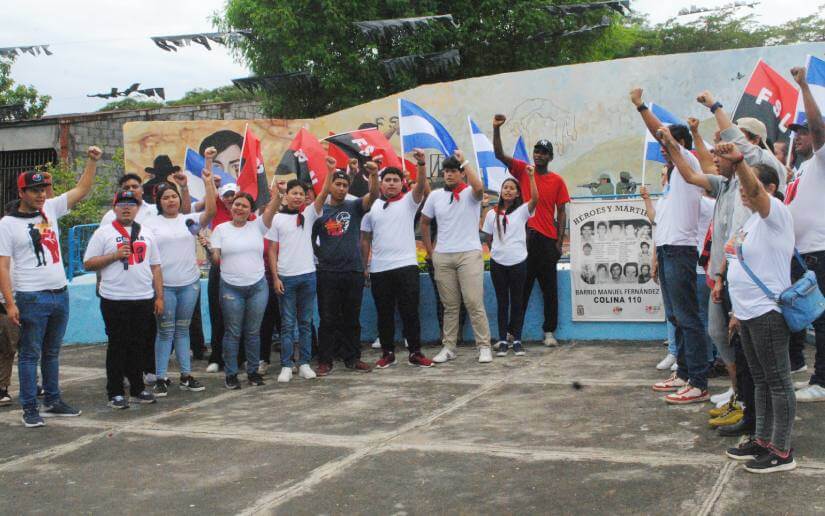
In its 2021 report Nicaragua: Concentration of Power and the Undermining of the Rule of Law, the Inter-American Commission on Human Rights (IACHR) documented the expansion of the Citizen Power Councils (or CPC, its initials in Spanish) in neighborhoods, communities, and municipalities as part of the process of power concentration promoted by the government of Daniel Ortega and Rosario Murillo. The IACHR also collected complaints from organizations that identified these structures as parallel mechanisms of political influence within communities.
The Neighbor Who Knows Everything
Beyond neighborhood disputes or access to community benefits, some residents describe political secretaries as figures who maintain detailed knowledge about the lives of those living in their communities.
Sergio, another Managua resident interviewed by DIVERGENTES on the same condition of anonymity as the previous ones, says that his neighborhood’s political secretary knows who lives in each home, who works, who is unemployed, where neighbors work, and even who moves into or out of the community.
According to him, the leader runs a small grocery store from his home that has become a gathering place for the neighborhood’s residents and even serves as a way for him to pry into the lives of those who come and go.
“He’s always asking about everyone. Who got a job, who lost one, where each person works, or who’s new to the neighborhood. Also, if you don’t buy from him, we know he gets upset, so we have to go every now and then,” he says.
The interviewee says that the neighbors know the political secretary uses this daily proximity through his business to stay informed about what’s happening in the neighborhood.
The perception of surveillance described by Sergio aligns with findings documented by international organizations. In its 2026 report, GHREN noted the existence of surveillance and intelligence networks involving state institutions, members of the Sandinista Front, and informants. According to experts, these structures have been instrumental in identifying, monitoring, and persecuting individuals considered critical of or potentially opposed to the regime.
A study by the organization Hagamos Democracia, released in September 2025, also revealed that 92.25% of Nicaraguans surveyed said they felt they were being watched in their neighborhood. The main entities cited were the Sandinista Leadership Committees (or CLS, its initials in Spanish), followed by the National Police and paramilitary groups. The report warned that these structures have contributed to creating a climate of mistrust and constant surveillance within communities.
An Authority Without Public Office
None of the political secretaries mentioned in the testimonies hold elected office. Nor were they appointed through administrative processes subject to accountability mechanisms.
Their authority stems from the Sandinista Front’s party structure and the relationships they maintain with local institutions. This characteristic creates a unique situation.
While mayors, council members, institutional delegates, or public officials have powers defined by laws and regulations, the scope of the political secretaries’ influence operates largely outside these formal mechanisms.
The citizens interviewed for this report agree that this situation makes it difficult to challenge their decisions or hold them accountable when they believe the secretaries have acted arbitrarily.
In this context, the power of political secretaries is not measured by the authority granted to them by law, but by the influence they exert over those who prefer to remain silent, avoid filing complaints, or give up on their claims. This reality has made them untouchable figures in many neighborhoods across Nicaragua.