
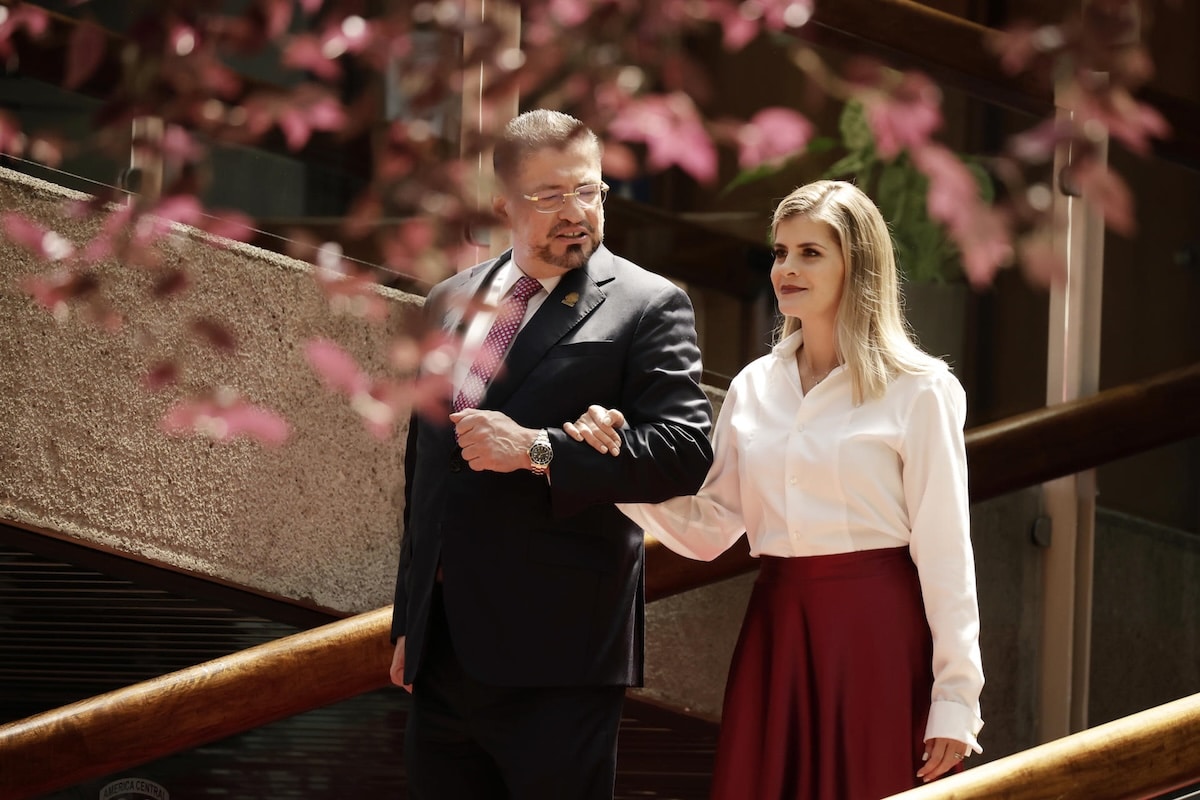
Costa Rica’s president-elect, Laura Fernández, chose a theater to announce her cabinet on May 5, three days before donning the presidential sash—hand-embroidered by two artisan sisters from Heredia. The event took place at the Melico Salazar, a theater in the European neoclassical and Baroque styles whose façade is currently being battered by the afternoon downpours that are lashing San José. One by one, the officials she appointed were announced on stage with videos that closely mirrored the aesthetic of Nayib Bukele’s propaganda in El Salvador. And perhaps it was no coincidence, since the political project the president-elect inherits has two central themes: total sympathy with the Salvadoran president’s authoritarianism and a promise of “continuity” that was reflected in the announced cabinet—one that, to tell the truth, is not quite “new.”
Of the 39 officials who will be part of the new team, 22 will remain in their posts. Or, in other words, they are the current leaders of the outgoing administration of President Rodrigo Chaves, Fernández’s political patron. Among the parade of officials at the Melico Salazar, the most notable was one that was no longer a surprise, but rather an announcement cooked up beforehand by the ruling party: the appointment of Chaves as Minister of the Presidency, a key position in the Costa Rican government.
Above all because the political capital of “continuity” seems to remain almost exclusively the domain of the outgoing president, now passed on to the president-elect with a view to fully consolidating a political project characterized by personalist leadership and broad popular support. A project that, as his critics warn, Chaves would seek to lead once again during the next presidential term.
But beyond speculation about whether he will return to the presidency—as the Constitution allows after a term of alternation—Chaves’s appointment as Minister of the Presidency marks an unprecedented milestone in Costa Rica’s republican history, that political and social framework admired for decades, without reservation, around the world for the strength of its democracy. Fernández not only gave his political patron an office just a few feet from her own, but also handed him the keys to the Ministry of Finance.
In other words, Fernández has turned Chaves into a sort of “superminister.” He will assume a rather unique role in this democracy, which, for the first time, is witnessing political and administrative developments more commonly seen in authoritarian regimes in the region, where the personalization of power and the existence of super-officials are the norm.
Chaves’s role will be twofold and central because he becomes the political and economic linchpin of the “continuity” government, responsible for relations with the branches of government, including a Legislative Assembly with which he maintained tense and constant disputes during his term.
Latin American political analyst Daniel Zovatto sums up what Costa Rica is experiencing in a single sentence: “The King does not abdicate: Chaves is changing offices, not power.” “This is not a transition. It is a metamorphosis of power. It is the chronicle of a submission foretold,” he states, referring to the real power that President Fernández could wield under the shadow of her political patron.
“This is an unprecedented concentration of power that positions him as the new government’s chief political and economic operator, consolidating his influence beyond his constitutional term,” Zovatto warns in an opinion piece published in the newspaper La Nación.
According to the political analyst, Costa Rica is beginning to witness a sort of political diarchy between Fernández and Chaves. He insists that the paradox is hard to ignore because she was Chaves’s minister of the presidency and will now be his president, while he returns to the very office he left just a year ago to run for office. The circle between the two seems to be closing. Fernández was Chaves’s advisor and minister; he propelled her to the presidency, and now she is returning him to the very heart of power. A circular political maneuver.
“It is a diarchy where the King does not abdicate, but is crowned again under another title, and the princess reigns with his blessing,” Zovatto explains. “But there is a dimension that goes beyond the concentration of political and economic power: that of impunity.” For the political analyst, what is at stake with this “continuity” goes beyond a simple change of government. It also represents a choice regarding the type of political regime that Costa Ricans have decided to preserve: one grounded in solid institutions, civil liberties, and the separation of powers, or another increasingly centered around a charismatic figure with authoritarian tendencies.
A “Superminister” Who Retains Impunity
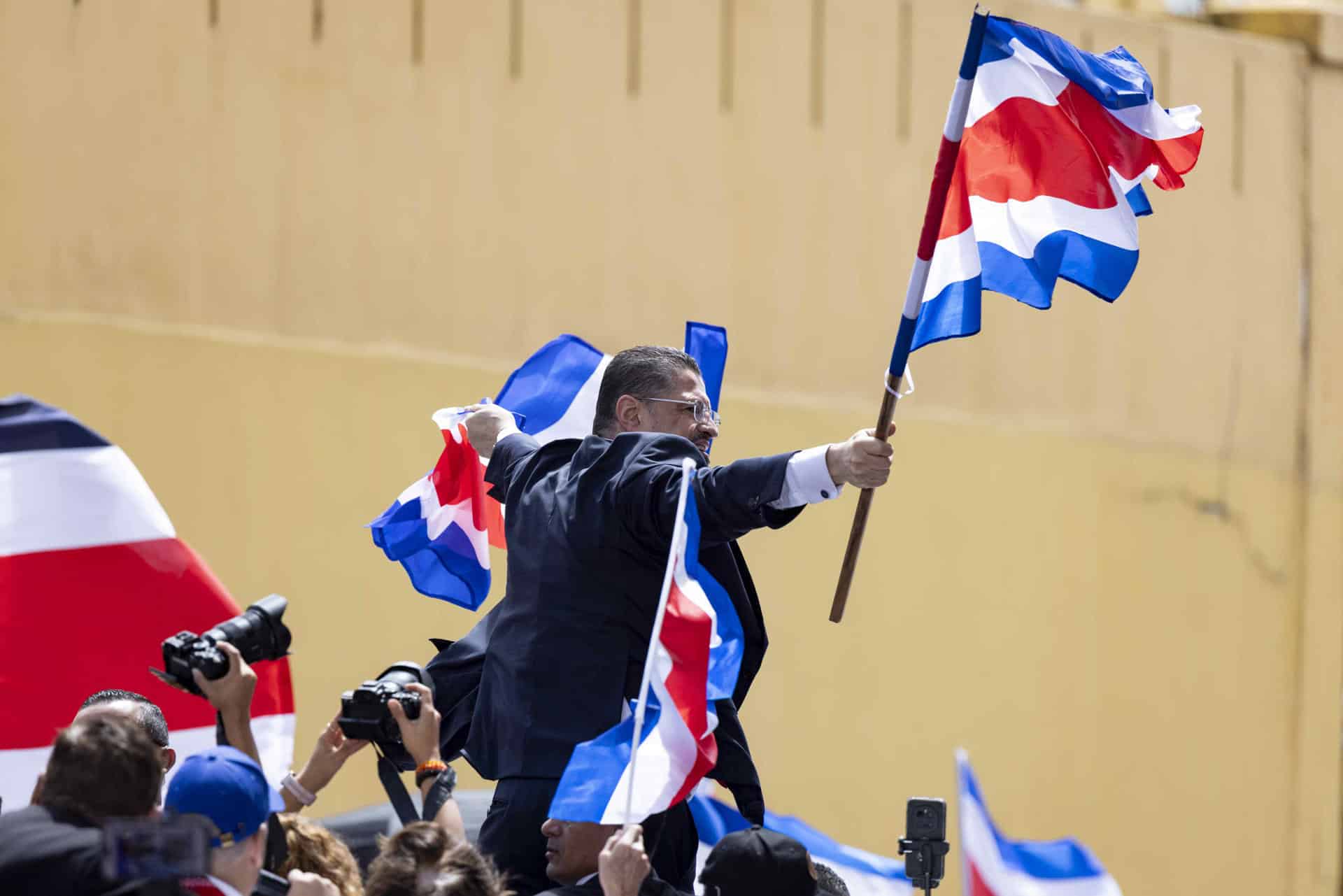
By remaining in office as minister, Chaves will retain his protection from criminal prosecution—or, in simpler terms, his immunity—for another four years. This is no minor detail, given the more than 60 cases pending against him in various judicial and electoral forums.
The ruling party’s new political structure not only guarantees him continued power but also institutional protection. This means that investigations against him will not follow the ordinary criminal process. Any case must be filed with the Attorney General’s Office and will also depend on the Legislative Assembly’s decision to lift his immunity. This scenario has already failed twice in 2025, when requests initiated by the Full Court and the Supreme Electoral Tribunal were not approved by Congress.
Now the outlook seems even more unlikely for those hoping for judicial progress. The ruling party will have a bloc of 31 deputies starting in May, while 38 legislative votes are required to strip Chaves of his immunity. In other words, his critics insist, the outgoing president is not only returning to the center of the country’s political and economic power, but he is doing so with institutional protection.
The “BCIE-Cariñitos” case, investigations into alleged political hostility, claims of irregular campaign financing, and allegations of influence peddling will, in practice, be put on hold for another four years.
An Enormous Inauguration
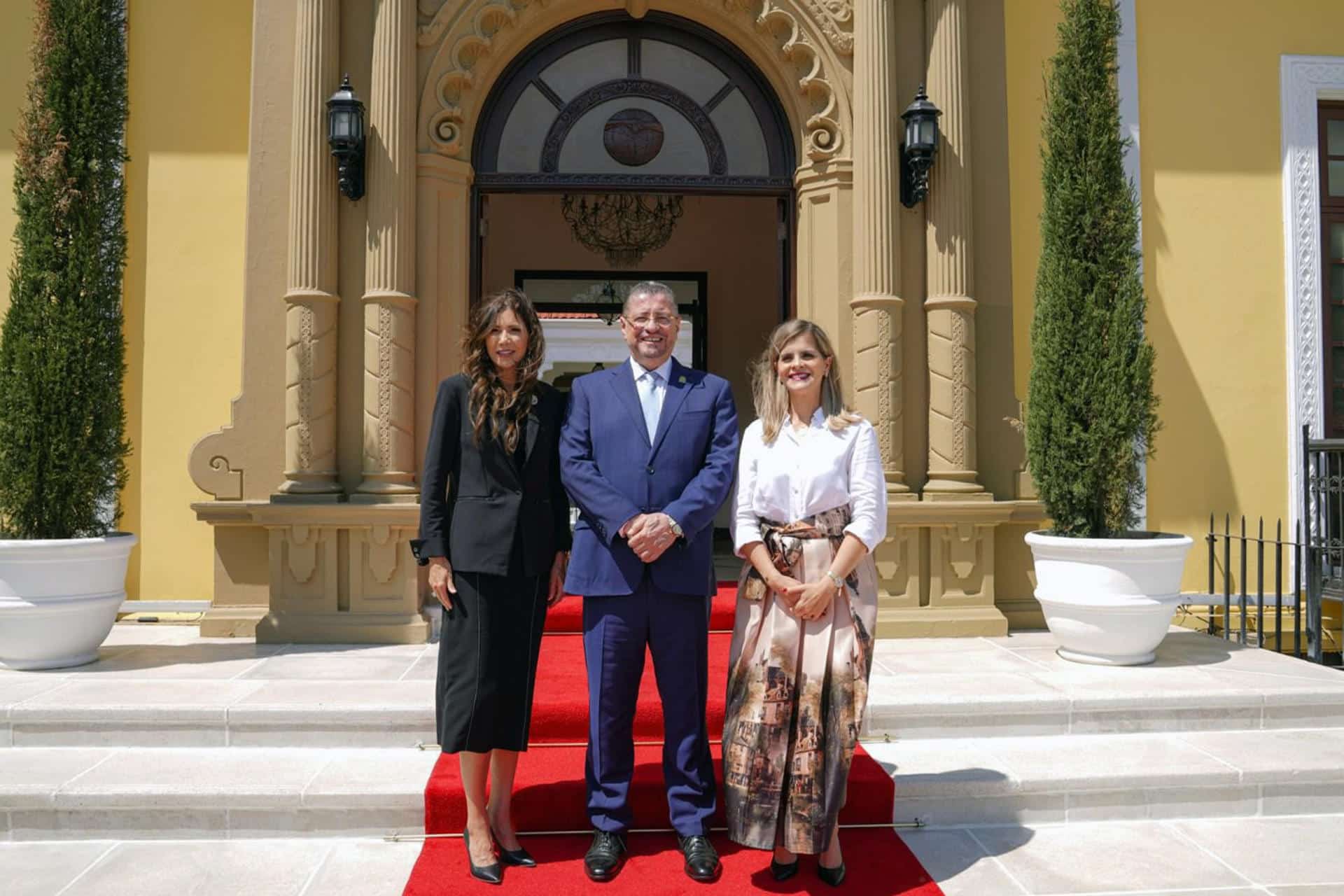
With Chaves confirmed at the core of the incoming administration, the inauguration of Fernández—who swept the presidential election with nearly 50% of the valid votes compared to 32% for his main opponent—is being organized with the atmosphere of a national holiday. The government declared a public holiday for the public sector to encourage massive attendance at the transfer of power—or rather, the perpetuation of “continuity”—which will take place at the National Stadium, a project donated by China, a country that will pose one of the main headaches for an administration that has closed ranks with Donald Trump and his increasingly bitter confrontation with Beijing.
The handover of power is also beginning to resemble a plebiscitary demonstration. The government made digital tickets available to fill the National Stadium, with a limit of three tickets per person, and announced that screens would be set up outside the venue due to high demand. At the same time, calls circulated on social media to transport supporters by bus and provide them with free meals throughout the day. A political spectacle reminiscent of the mobilizations organized by Daniel Ortega and Rosario Murillo’s regime in Nicaragua to display strength, loyalty, and street power around the ruling seat.
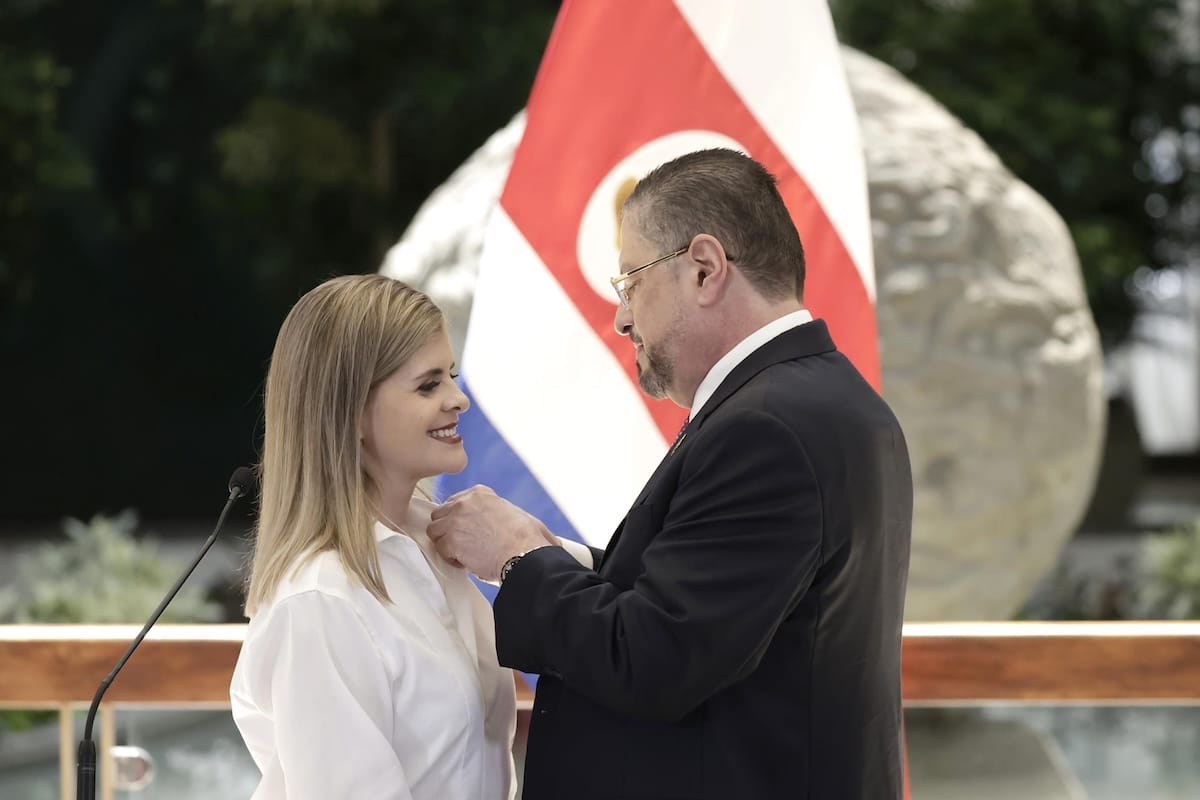
The ceremony will also be attended by dozens of foreign delegations, including King Felipe VI, Israeli President Isaac Herzog, and a U.S. mission led by Christopher Landau. The
Fernández administration also confirmed the participation of representatives from 71 countries and 18 international organizations. A high-level diplomatic showcase for an inauguration that the ruling party is attempting to turn not only into a national celebration, but also into a demonstration of international legitimacy centered on “continuity.”
So the handover of power that began on May 5 at the Melico Salazar Theater will move to an even larger stage on May 8 at the National Stadium, where Fernández, alongside her political patron and “mentor,” will be sworn in, accompanied by other key figures in Chavismo, especially the now-former deputy Pilar Cisneros, one of the ruling party’s leading ideologues, who tearfully announced her retirement, though we now know she will also remain “ad honorem” as a strategy and communications advisor. A transfer of power where little or nothing changes, with Chávez still wielding much of the symbolic power conferred by the sash hand-embroidered by two artisan sisters from Heredia.