
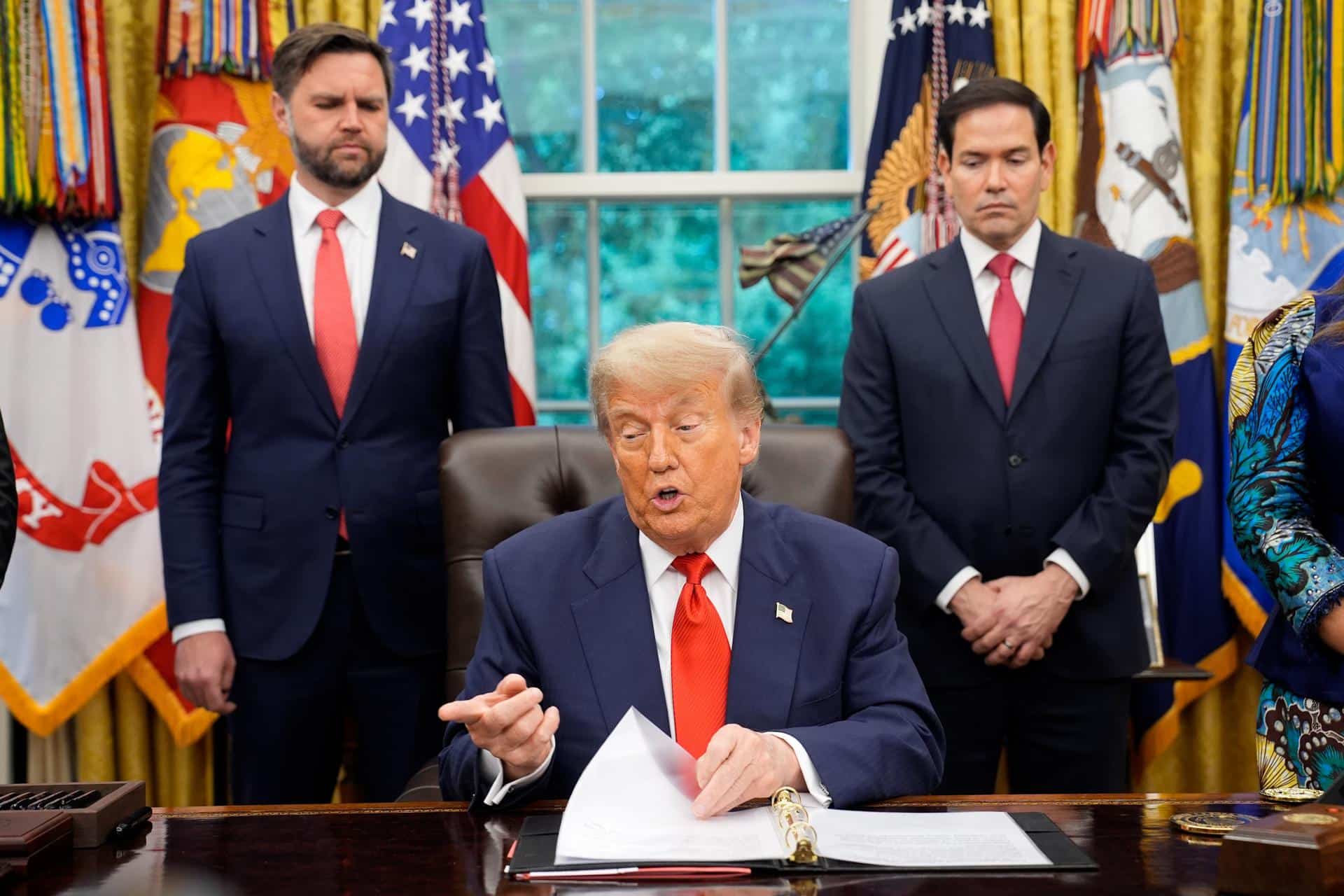
During Donald Trump’s first term, the White House grouped Nicaragua, Cuba, and Venezuela under a label that defined its policy toward Latin America: the “troika of tyranny.”
The concept, promoted by then-National Security Advisor John Bolton, served as the basis for a pressure strategy that resulted in sanctions against high-ranking officials of these countries’ authoritarian regimes. Now, on the eve of an election year in Nicaragua and in light of the recent increase in sanctions and declarations of illegitimacy, Daniel Ortega and Rosario Murillo’s administration appears to be once again in Washington’s crosshairs.
After Trump ordered the capture of dictator Nicolás Maduro and moved to isolate Miguel Díaz-Canel’s regime, the Nicaraguan opposition interprets this as a sign that the Ortega-Murillo regime’s turn may be approaching.
“There is no doubt that the United States has a plan for Nicaragua that it has been implementing since late last year,” says former political prisoner Irving Larios from his exile in Spain.
Pressure Does Not Translate Into a Push for Democracy
Juan Sebastián Chamorro and Félix Maradiaga, two of the opposition’s leading figures, also share this view. They believe that the dictatorship faces constant pressure from the current U.S. administration, although this does not necessarily imply an immediate push for elections as a path back to democracy.
Elections in Nicaragua were scheduled for November 2026, but a comprehensive constitutional reform postponed them until the following year. Just as Ortega’s 19th year in office came to a close in January, the United States issued a statement describing his regime as a “lifetime of an illegitimate dynasty.”
“Today, the brutal Murillo–Ortega dictatorship “celebrates” 19 years since what was meant to be a 5-year democratic term. Nicaraguans voted for a president in 2006, not a lifetime of an illegitimate dynasty. Rewriting the constitution and crushing dissent won’t erase Nicaraguans’ aspirations to live free from tyranny,” reads the message posted on its X account by the U.S. Department of State’s Bureau of Western Hemisphere Affairs.
https://platform.twitter.com/widgets.jsToday, the brutal Murillo–Ortega dictatorship “celebrates” 19 years since what was meant to be a 5-year democratic term. Nicaraguans voted for a president in 2006, not a lifetime of an illegitimate dynasty. Rewriting the constitution and crushing dissent won’t erase Nicaraguans’…
— Bureau of Western Hemisphere Affairs (@WHAAsstSecty) January 10, 2026
The Illegitimacy of the Ortega-Murillo Regime
The 2021 elections, in which Daniel Ortega secured his fourth consecutive term after imprisoning his main political rivals, were deemed by the Joe Biden Administration to be a “pantomime election,” lacking any real competition or democratic safeguards.
However, under the current administration, the rhetoric has evolved. Washington no longer merely questions the electoral processes but directly labels the Ortega–Murillo’s political model as “illegitimate,” in a context marked by increased sanctions and pressure on Cuba and Venezuela.
On the eve of April 18, the anniversary of the 2018 civic protests, the United States announced sanctions against the children of the Ortega–Murillo couple and against the mining network linked to the regime.
The question is whether this shift—from tougher language to targeted sanctions and warnings of illegitimacy—is merely rhetoric or the beginning of a more sustained strategy toward Nicaragua.
Hierarchy of Priorities
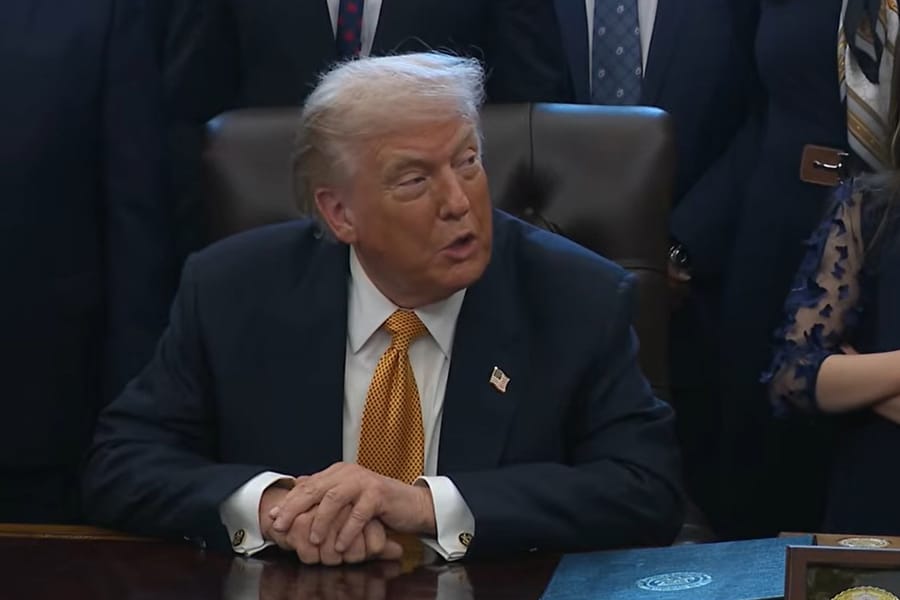
For Evan Ellis, a researcher on Latin American affairs, the answer is not so certain. “It is unclear how much pressure Washington will exert on Ortega to address what it considers a threat posed by Nicaragua,” he notes.
“I see that Nicaragua is on the administration’s radar, but I’m not clear on where Nicaragua stands in the hierarchy of priorities,” the expert adds.
Along the same lines, international relations expert Jordi Bacaria believes that Nicaragua falls within the same framework of pressure that the United States applies to Venezuela and Cuba, although he has the impression that the Central American country is on a sort of “waiting list” following the setbacks faced by two of the countries in the so-called troika. What he does acknowledge is that the pressure has increased compared to the Biden administration.
Of the three U.S. priorities identified by Bacaria—access to strategic resources in the hemisphere, national security linked to drug trafficking, and containing the presence of foreign powers—Nicaragua fits into at least two of them. However, the expert is not optimistic that substantial changes will occur in the short or medium term.
An “Enemy of Humanity” Regime
Indeed, Secretary of State Marco Rubio, who is well acquainted with the Western Hemisphere, has acknowledged that Nicaragua poses a threat to U.S. national security. He went so far as to describe the regime as an “enemy of humanity.”
In this regard, Nicaraguan opposition figures maintain that part of their work from exile is to make the U.S. administration aware of the magnitude of this threat.
Maradiaga, for his part, explains that U.S. sanctions have had domestic effects, even though the regime insists on presenting itself as victorious in the face of them.
He mentions, for example, the flight of foreign investment and the closure of access to financing from international organizations, which has led the regime to depend on “marginal partners” such as Russia and Iran.
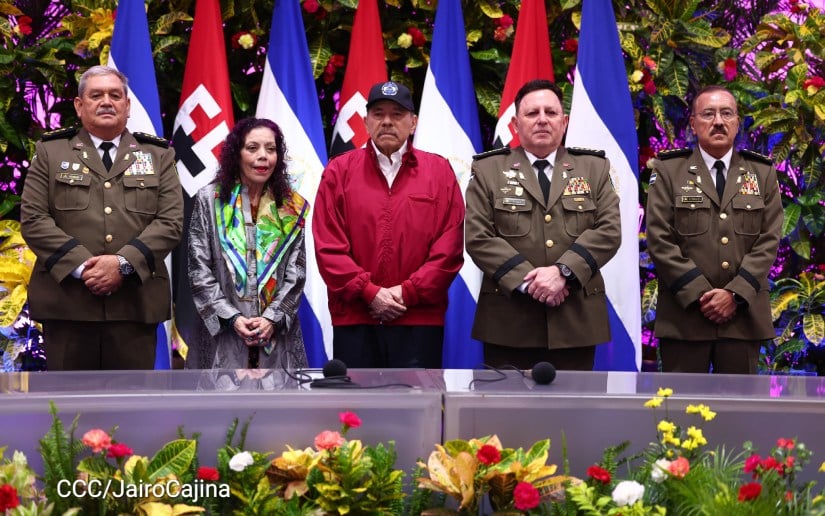
“Sanctions alone do not bring about a democratic transition; they do not have a magical effect, but they do impose costs on the officials who prop up the regime. We are not facing sterile isolation, but rather a gradual siege,” he states.
Although there is a date on the electoral calendar, the opposition, for now, remains in a state of uncertainty. Chamorro believes that talking about elections in the context of next year would be speculative.
“For us, the conditions are more important than the dates. Just because an election is coming up doesn’t mean we have to make decisions or prepare in a certain way. If the conditions aren’t right, they aren’t right,” he maintains.
Ortega Chose Direct Confrontation
In contrast to the negotiations that have begun in Cuba, it is unclear from Nicaragua whether there has been any rapprochement between El Carmen and the White House. Ortega has recently opted, instead, for a confrontational stance toward Donald Trump, whom he called “mentally deranged.”
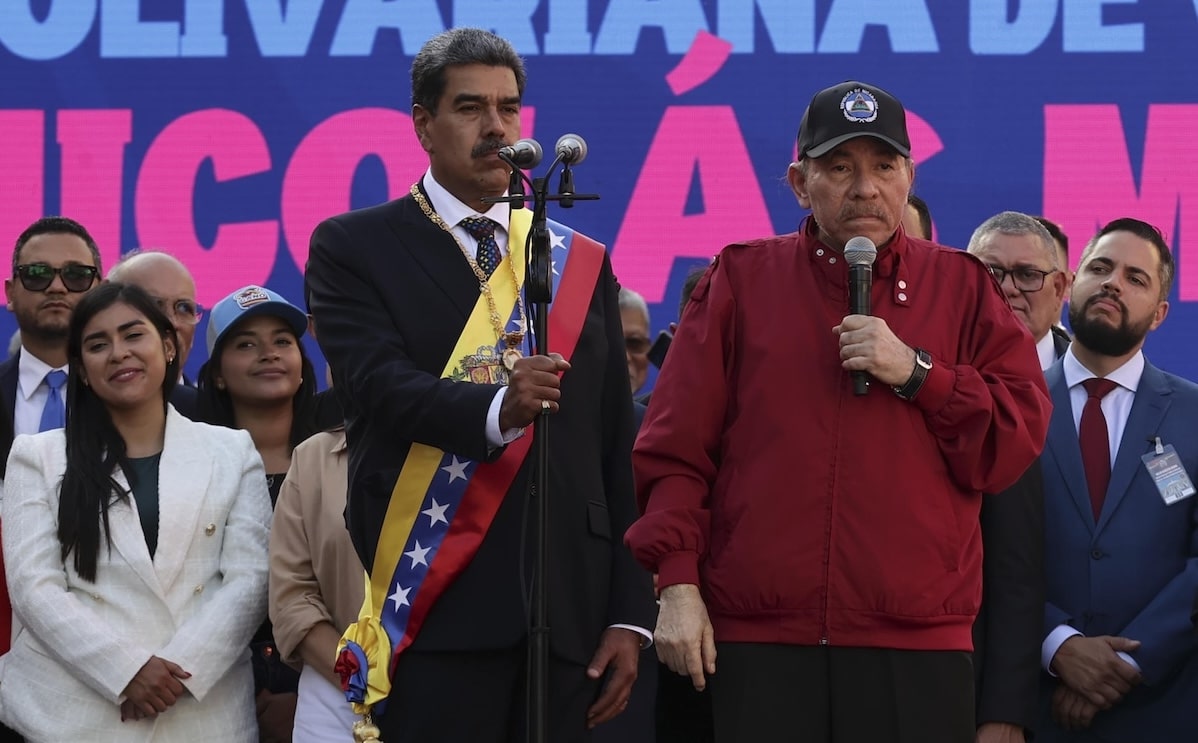
The Nicaraguan leader also demanded that Trump end the war in Iran, “the blockade against Cuba, the sanctions against Venezuela, and allow President Nicolás Maduro to return to his country,” Ortega’s ally in the region. In Nicaragua, various sectors are watching closely to see what might happen in Cuba and are betting on a domino effect that will also force Ortega to negotiate.
In late April, the Cuban ambassador to the United Nations, Ernesto Soberón Guzmán, addressed the ongoing negotiations and made it clear that the issue of political prisoners “is not on the table.” “We have our legal system, just as here in the United States they have theirs,” he said.
These statements come amid recent diplomatic contacts between Washington and Havana, in which the United States has insisted on the release of political prisoners as a gesture of good faith, although the Cuban government has refused to include that issue as a formal condition for dialogue.
In Venezuela, too, there has been no substantial political shift. While there have been some economic openings and increased investor interest, analysts warn that no profound political reforms have yet been implemented to set the country back on a democratic path. The Venezuelan government has ruled out holding elections this year.
Thorough Electoral Reform
In Nicaragua, any credible electoral process would require a thorough reform of the electoral system, including the restructuring of the Supreme Electoral Council (or CSE, its initials in Spanish), the cleansing of the voter registry, and the guarantee of independent international observation. Added to this is the need to review and repeal recent constitutional reforms that consolidated the concentration of power in the ruling couple.
Without these conditions, the opposition argues, any call for elections would risk becoming an exercise lacking real competition or democratic legitimacy.
Chamorro and Maradiaga avoid delving into specific electoral scenarios, even though their political organizations—such as Ciudadanos por la Libertad and Ruta del Cambio—have begun to reorganize in exile following the closure of the domestic political space in Nicaragua.
“Pressure can change that scenario,” says Maradiaga. He even acknowledges that the opposition no longer necessarily views the electoral path as the only way out, as was the case in 2021.
“Major transitions don’t begin at the ballot box; they start with a crack that external pressure eventually widens,” asserts Maradiaga, a view that aligns with Chamorro’s interpretation of unexpected events—such as those of 1990—that forced Ortega to call early elections.
Political Organizations Remain Cautious
What emerges from these positions is that the opposition still does not seem to have a fully defined strategy beyond—as they acknowledge—insisting to Washington that Nicaragua represents a hotbed of political risk in the hemisphere.
In any eventual negotiation process, there is even the possibility that they will be sidelined, as has already happened in Cuba and Venezuela.
In this regard, former political prisoner Irving Larios sums it up this way: “It is not in our hands, nor in the hands of anyone in the opposition. The United States has control and a particular interest in resolving the problems that cause geopolitical unrest in the Western Hemisphere. What the United States is seeking is the opening up of the regime.”
On April 28, Secretary of State Marco Rubio warned that he would not allow Cuba to roll out “the welcome mat to adversaries of the United States to operate within Cuban territory against our national interests with impunity.”
He then added: “We are not going to have a foreign military or intelligence or security apparatus operating with impunity 90 miles off the shores of the United States.”
Although the warning was directed at Cuba, the message could resonate in Nicaragua, a country that Washington has included in the so-called “troika of tyranny.”
For some international analysts and Nicaraguan opposition figures, Ortega poses a political challenge similar to the one the United States perceives in Havana, even though Managua is geographically farther from U.S. territory and lacks the same political and economic clout.
The Nicaraguan case, however, remains shrouded in uncertainty. While Cuba negotiates and Venezuela undertakes partial openings without fundamental political reforms, Managua has decided to opt for direct confrontation. “The message from the United States to Nicaragua is ‘we’re watching you,’” says expert Bacaria.
The question is no longer whether Nicaragua is on Washington’s agenda, but rather how long it will take before that political pressure translates into more concrete decisions.