
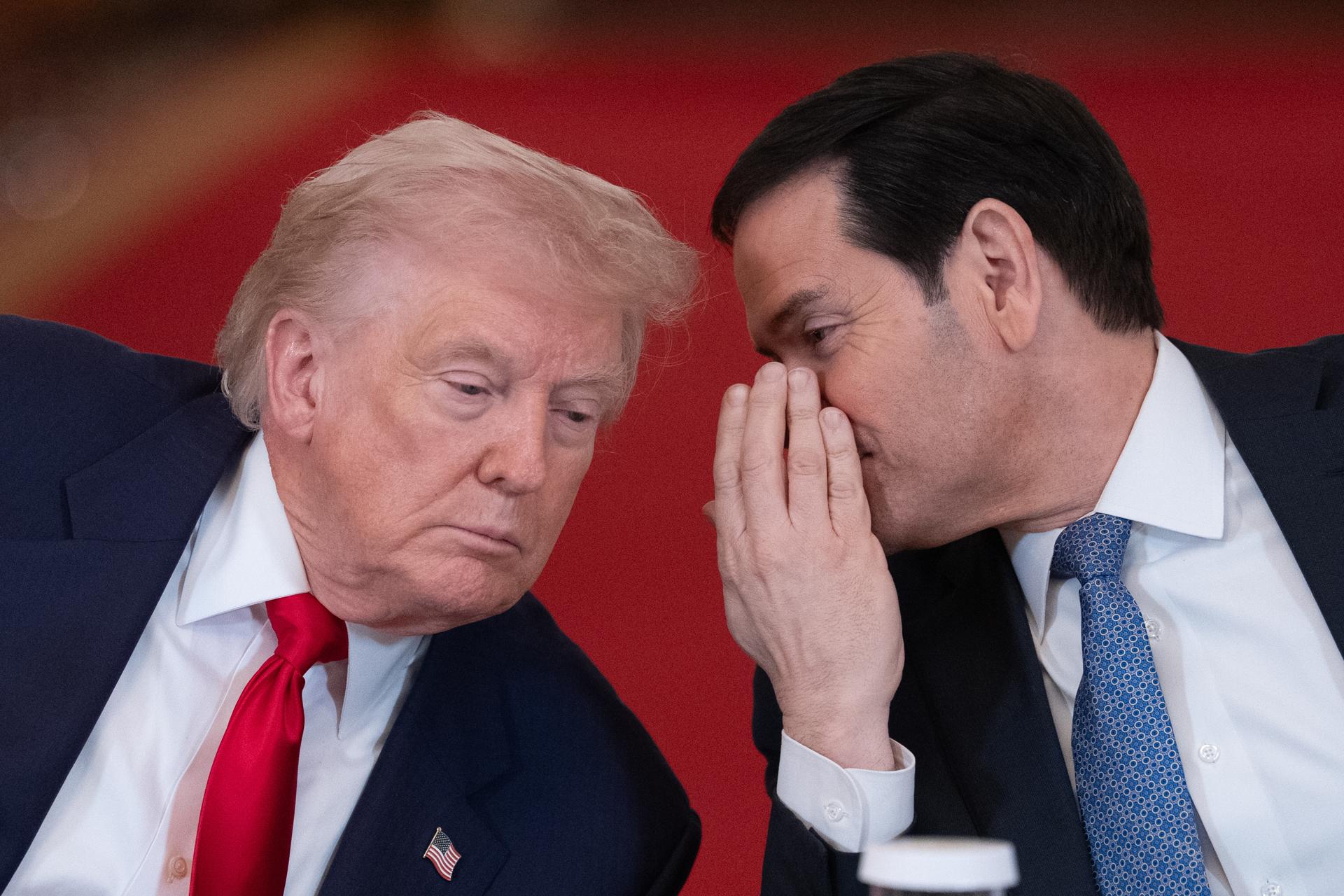
Seven out of ten Nicaraguans believe that pressure from the United States can bring about a democratic transition to end the dictatorship of Daniel Ortega and Rosario Murillo. This is revealed by the latest public opinion poll by the organization Hagamos Democracia, presented on Tuesday, April 21, in San José, Costa Rica. However, judging by Daniel Ortega’s statements on the evening of April 20, the possibility of any negotiations with Washington continues to walk a tightrope of uncertainty.
The Sandinista leader lashed out at Trump for the first time since Nicolás Maduro was captured in Caracas in the early hours of January 3. Ortega said the Republican “is suffering from mental derangement,” referring to his ongoing conflict with Iran, a theocratic regime that has historically been an ally of the Sandinistas.
With these statements, Ortega abandoned the “wait-and-see” rhetoric that the co-presidential regime had maintained amid “contacts without negotiation” with Washington. This shift clashes head-on with what the data from Hagamos Democracia reveals: 78.2% of Nicaraguans want the opposition to negotiate with the dictatorship, but with one non-negotiable condition—that “the United States accompany that process.”
“71.4% believe that U.S. pressure will indeed lead to a democratic transition in Nicaragua, while 28.6% believe it will not,” explains the president of Hagamos Democracia, Jesus Teffel to DIVERGENTES. “This result reflects considerable optimism regarding the ability of international pressure to influence the political evolution of the country. It also suggests a significant degree of externalization of democratic hope: a substantial portion of the population does not view the conditions for change as something exclusively dependent on internal dynamics.”
For his part, Eliseo Núñez, a former Nicaraguan congressman and opposition figure in exile, asserts that Ortega’s speech on the evening of April 20—marking the eighth anniversary of the April massacre—reveals a misguided political calculation. “Ortega is betting that Trump will get bogged down in Iran and won’t pay attention to Latin America—mainly to him—because he believes Cuba will absorb whatever little time Trump devotes to Latin America,” he said.
Núñez insisted that “Ortega’s outbursts stand in stark contrast to the tact with which the Cuban leadership has treated Trump.” “Ortega dares to go this far because he believes his insignificance will ensure that Trump won’t pay him any attention. And what all this really shows is that Ortega has no respect for Trump. He believes nothing will happen to him regardless of what he says and that, unlike for Cuba, there will be no consequences for him—although these are very personal attacks against Trump. In other words, Ortega called Trump crazy, a bully, and a murderer.”
The Future: An Unclear Horizon
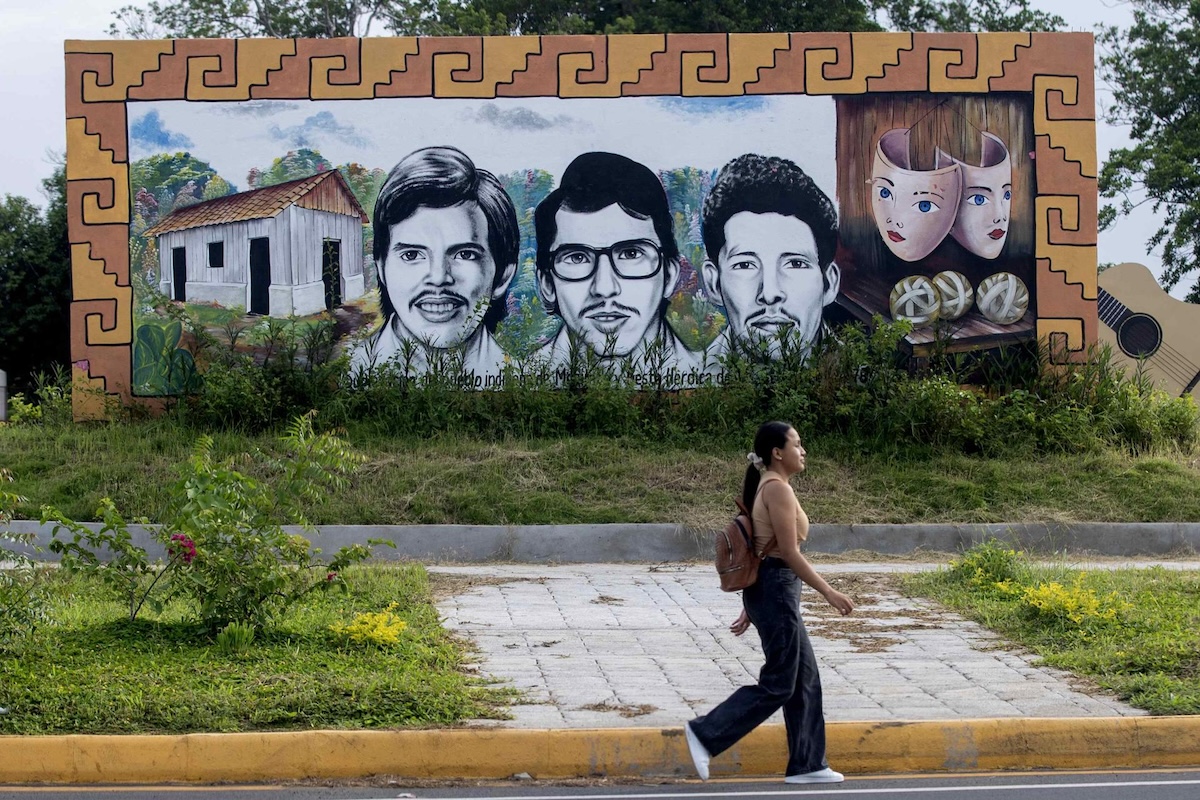
According to the survey by Hagamos Democracia, 95.8% of Nicaraguans have a negative outlook on the future. Behind that number are 400 people surveyed in 40 municipalities across the country, from Waspam to Rivas, from Bluefields to Chinandega, who answered a simple question: How do you view what’s coming? And almost everyone said the same thing: bad. This is not new information.
For quarters now, public sentiment has remained at extremely low levels. What has changed, however, is the reason behind it. For months, the political crisis was the dominant explanation for Nicaraguan pessimism. Issues such as repression, political prisoners, exile, and the constitutional reform that consolidated the co-presidency and left the state completely subordinate to the executive branch. All of that remains. But in March, the economic crisis gained ground as an explanatory factor: 44.1% attribute their pessimism to the economic situation, almost tied with the 44.9% who point to the sociopolitical crisis.
On the other hand, only 32.3% of those surveyed say they have a formal job, a drop of 1.55 percentage points compared to December. 52% are self-employed—that is, they sell what they can, when they can, without a contract, without social security, and without a safety net. And 15.7% have no income at all.
Added to this is the fact that the incomes of those who do work are shifting toward lower brackets. In short, the three lowest income brackets grew between December and March, while the top two fell.
Migration: A Strategy for Survival
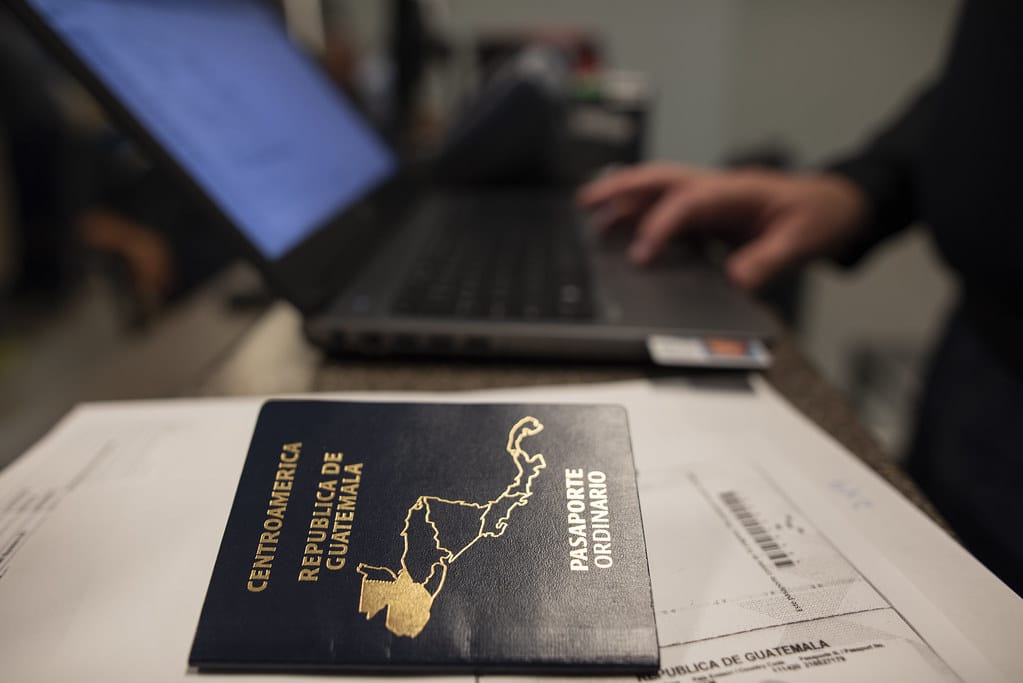
66.4% of Nicaraguans would leave the country if they could. In December, that figure was 62.9%. Over the course of three months, the intention to migrate rose by 3.5 percentage points, and the main reason is no longer political despair but rather the economic situation, cited by 58.1% of those who would migrate.
Political despair, which in December accounted for 44.4% of the intention to leave, fell to 33.7%. The preferred destination remains the United States, cited by 54.9% of those who wish to migrate—eight points higher than in December—despite Trump’s harsh anti-immigration policies. Spain has dropped, while Costa Rica remains stable as the second regional option.
Meanwhile, 20.4% of those surveyed report that at least one family member has migrated in the last three months. And those leaving are increasingly younger: 63.2% of recent migrants are between 20 and 35 years of age, compared to the 46.2% in that age group in December.
Alongside migration, although remittances remain the main economic lifeline of thousands of families, they are also declining. 43% of those surveyed report receiving remittances, six percentage points less than in December. Most remittances come from the United States (62.8%), followed by Costa Rica (17.8%), and Spain (17.2%).
According to official figures, remittances accounted for 20% of Nicaragua’s GDP in 2024. In other words, one out of five córdobas circulating in the country’s economy.
Cheese Has Become a Luxury
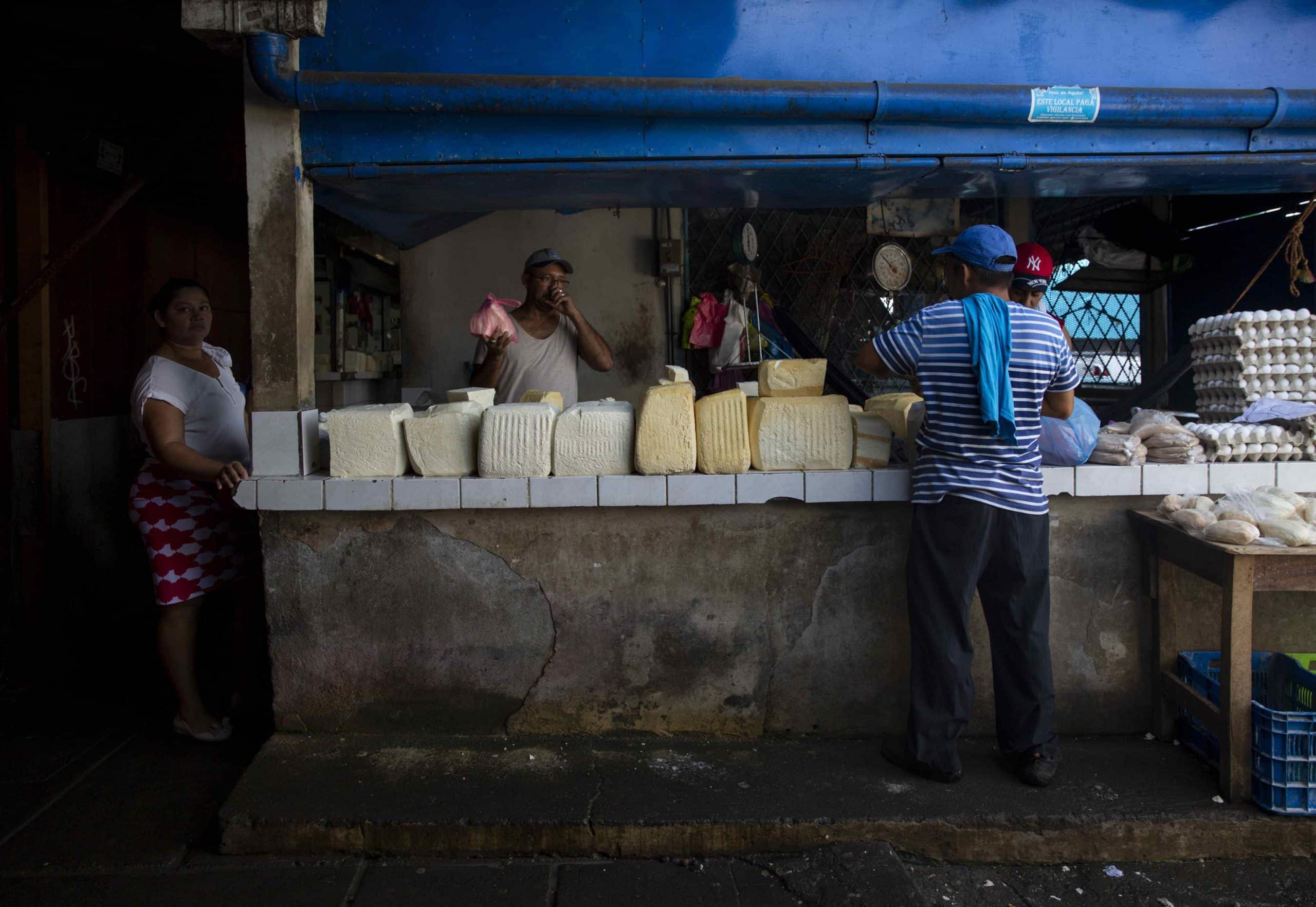
The survey also reveals that 83.5% of Nicaraguans say the cost of the basic basket of goods “has risen significantly in the last three months.” In December, that percentage was 63.7%. That is a difference of almost 20 percentage points in a single quarter—the most significant jump recorded by this series of surveys for that indicator.
The cost of the basic basket of goods is estimated at 19,358 córdobas. 79.6% of those surveyed cannot afford it. And the income distribution explains why: most respondents earn between 7,500 and 10,999 córdobas a month, less than half of what it costs to feed a family.
The products most frequently cited as having become more expensive are the usual ones—those that are essential to the national diet—namely cheese, cited by 90% of respondents; meat, by 79.1%; beans, by 65.7%; oil, by 57.7%, and tortillas, by 51.7%.
In addition to these items, respondents mentioned in open-ended responses the rising costs of rice, eggs, milk, coffee, transportation, water, and electricity.