
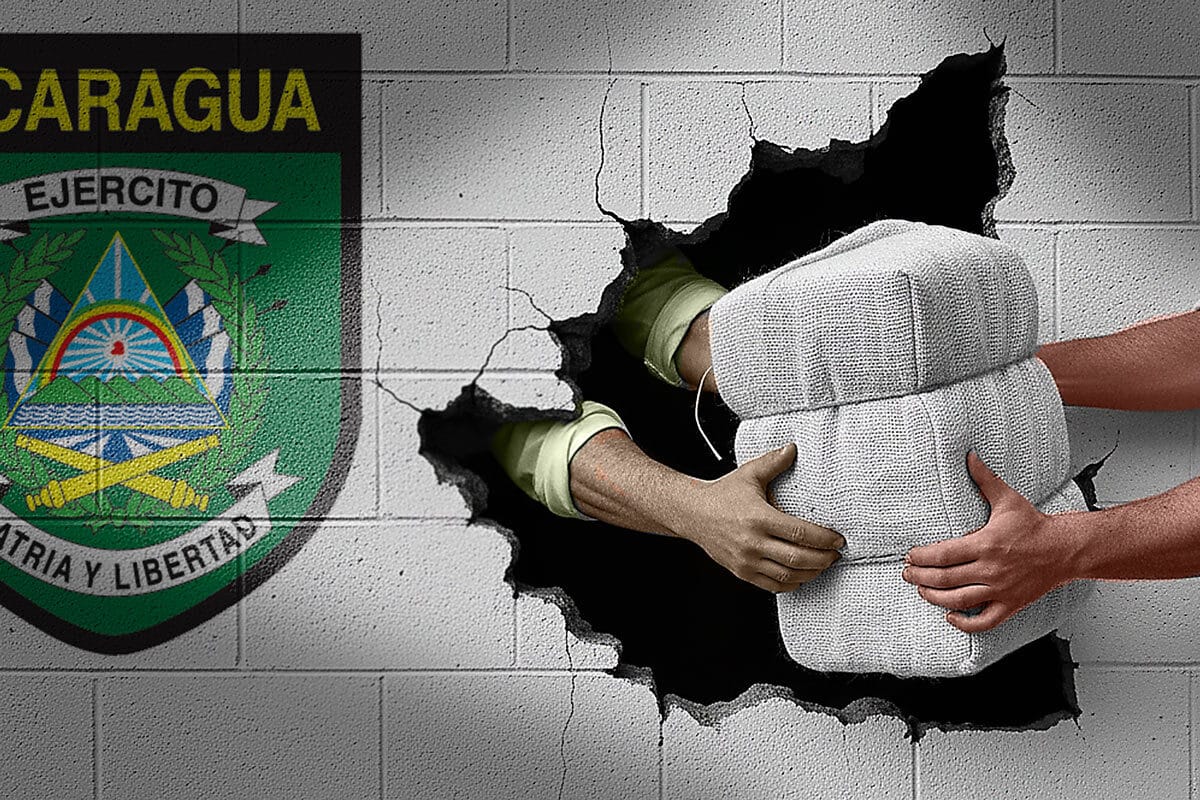
Daniel Ortega and Rosario Murillo’s Sandinista regime holds up the “Retaining Wall” strategy as a supposed banner of national security—an official narrative that claims Nicaragua is an impenetrable barrier against transnational organized crime. However, the mounting international evidence in recent months undermines this narrative.
Far from curbing drug transit, various operations carried out by foreign authorities suggest that Nicaragua has evolved from being a mere transit corridor to establishing itself as a logistics hub for the stockpiling and export of narcotics on a transcontinental scale.
All this while the Nicaraguan dictatorship categorically denies that its territory is the point of origin for massive shipments seized in Russia, the United Kingdom, Costa Rica, or El Salvador—claims that security experts regard with distrust and skepticism due to the lack of transparency with which Sandinista security agencies operate.
In response to these seizures, the official stance of the authorities in Managua is to systematically deny that such shipments have crossed their borders, ports, or territorial waters, instead attributing the alerts to smear campaigns by political opponents.
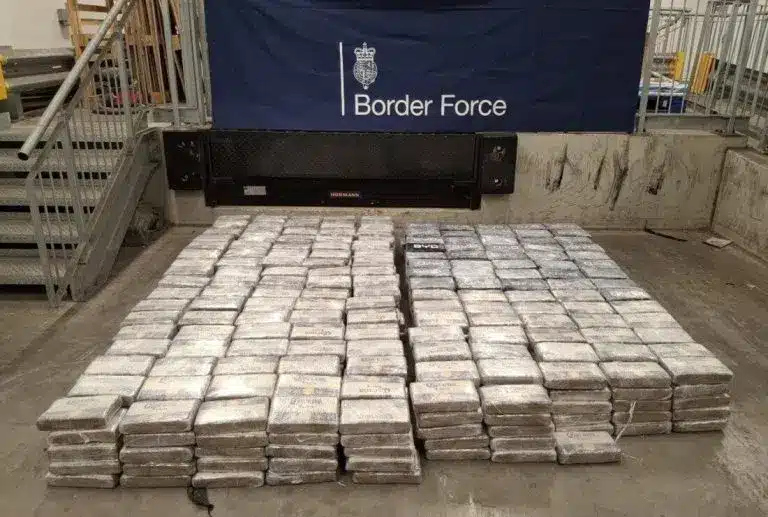
However, discrepancies between propaganda and reality were starkly exposed during the first quarter of 2026. Thousands of miles from Managua, in the British port of Southampton, customs authorities intercepted 943 kilograms (2,079 lbs) of cocaine. At the same time, the Salvadoran Navy dealt a historic blow by seizing 6.6 tons of drugs in the Pacific, an operation that directly involved Nicaraguan citizens.
Between June 2025 and January 2026, the Salvadoran Navy reported seizing over 1,750 kilograms (3,858 lbs) of cocaine that transited through the Nicaraguan route. El Salvador’s Minister of Security, Gustavo Villatoro, has explicitly identified Nicaragua as the source of boats intercepted in the Pacific, such as those on December 24, 2025 (a seizure of 450 kilograms (992 lbs) of cocaine) and on January 14, 2026 (375 kilograms (827 lbs) of various drugs).
Nicaraguan Army Accuses Salvadoran Minister
The Nicaraguan Army—the Sandinista regime’s arm for surveillance, espionage, and persecution—denied that the drugs seized in El Salvador originated in Nicaragua, accused a high-ranking Salvadoran official of falsifying information, and, as “proof” of its effectiveness, touted the retaining wall strategy.
“El Salvador’s Minister of Justice and Public Security, Gustavo Villatoro, has repeatedly stated on four occasions that these drug shipments originate from Nicaraguan territory, which we categorically reject, as it has been proven that the drugs come from the southern part of the region, traveling in waters far from our coastline,” the military statement reads.
“Through our effective national ‘retaining wall’ strategy, we are fighting drug trafficking and organized crime, ensuring that we contain, divert, and seize as much of the drugs moving from south to north across the continent as possible; as a result, these criminal drug trafficking organizations are forced to operate far from our coastlines,” he adds.
Little credibility in reports from Nicaragua and El Salvador
Luis Enrique Amaya, a Salvadoran researcher on public safety, points out the difficulty in accepting these reports as credible due to the lack of transparency in Nicaraguan and Salvadoran security agencies.
“There is a geopolitical game being played right now, and it seems to me that identifying Nicaragua as the source of these drug seizures by the Salvadoran government could be part of this geopolitical game. That said, there are certain countries—and Nicaragua and El Salvador are prime examples—where there is a greater degree of opacity regarding public information, particularly that related to public safety, public security, national defense, and so on, making it difficult to verify sources, which would be very important,” Amaya stated.
Security authorities under the Sandinista dictatorship employed a reverse strategy with Costa Rica. On March 30, 2026, the Nicaraguan Police announced the seizure of 1,312 kilograms (2,892 lbs) of cocaine hidden in rolls of kraft paper inside a heavy-duty truck.
The vehicle was driven by 47-year-old Guatemalan Juan José Ríos Trujillo, who entered Nicaragua from Costa Rica and was headed to Guatemala. His statements, however, caused a stir on the Costa Rican side.
“I went through security in Costa Rica, went through the scanner, and everything was fine. Then I crossed into the Peñas Blancas checkpoint on the Nicaraguan side, passed through the narcotics checkpoint, they stamped my passport to proceed to the scanner, and I followed customs protocol. I waited my turn to go through the scanner, went through the scanner, and came out flagged as suspicious,” a calm Ríos Trujillo told the Nicaraguan regime’s propaganda media.
Criticism of Costa Rican Security Agencies
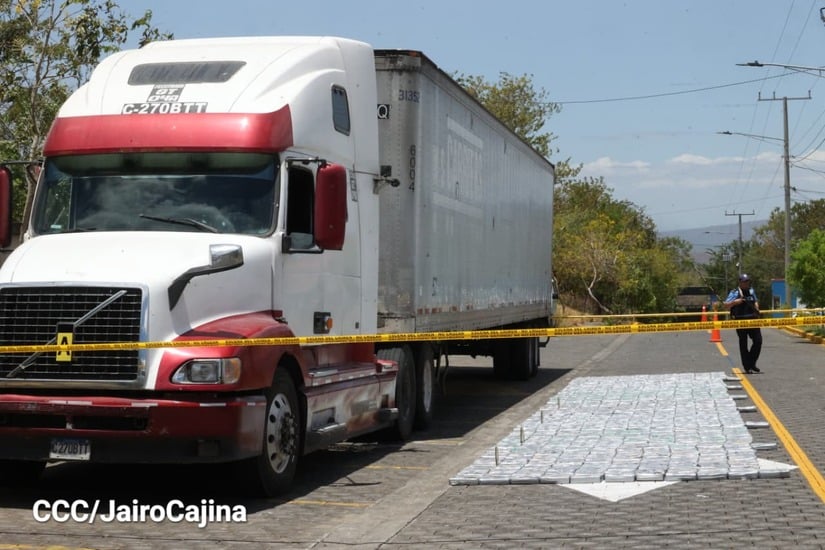
General Commissioner Victoriano Ruiz, co-chief of the National Police, emphasized that the shipment passed through Costa Rican checkpoints, but that, as part of the results of “the Sandinista government’s retaining wall strategy for organized crime and international drug trafficking,” it was detected by Nicaraguan security systems.
This statement led Costa Rica’s Minister of Security, Mario Zamora, to announce that the country’s Drug Control Police (or PCD, its initials in Spanish) will investigate how this truck managed to evade Costa Rican customs controls.
Nicaragua’s announcement of this blow to drug trafficking came one day after a spokesperson for the U.S. Department of State criticized the Sandinista dictatorship’s anti-narcotics policies.
“Nicaragua continues to fail to meet its international obligations regarding drug control and, throughout history, has ignored requests for cooperation from the U.S. government to combat drug trafficking in its country and throughout region, which contributed to the closure of the Drug Enforcement Administration (DEA) operations in Nicaragua in 2025,” said the spokesperson in statements to the newspaper La Prensa.
The spokesperson noted that the dictatorship—which he refers to as the “Murillo-Ortega regime”—and the Sandinista Front have maintained “long-standing ties to drug trafficking,” dating “back to the ’80s, including allegations of collusion with drug traffickers to obtain financial and political benefits.”
The removal of Nicolás Maduro changed everything
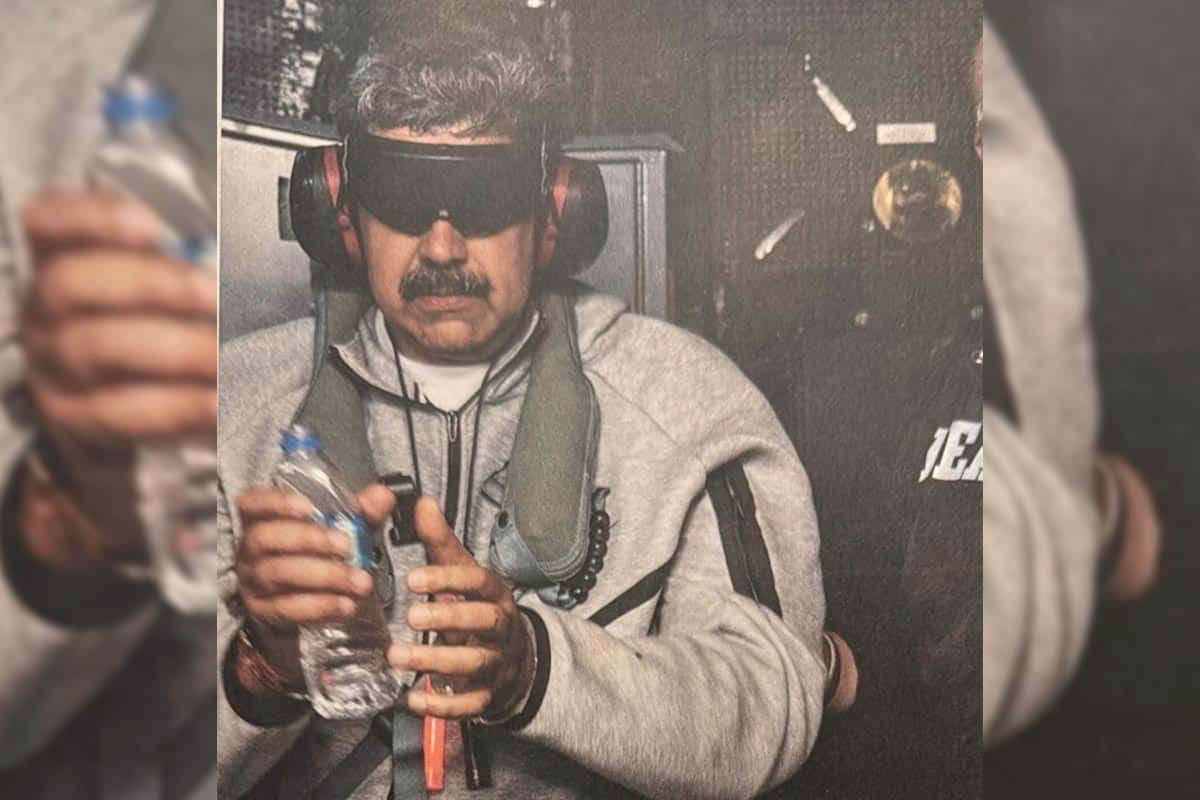
A Nicaraguan security expert, who requested anonymity for fear of reprisals by the regime, stated that the Ortega-Murillo regime’s greatest concern is being linked to any activity or evidence connecting them to drug trafficking operations, since a scenario like this culminated in the military operation to remove Venezuelan dictator Nicolás Maduro.
“The operation against (Nicolás) Maduro changed everything. Now what the dictatorship least wants is to be called an accomplice of drug trafficking. Don’t let us forget that before everything that happened with Maduro, the Ortega-Murillo regime did not care about what the U.S. Department of State or the DEA thought of them,” he commented.
Organized crime is present in the entire region
Tania Molina Rojas, a Costa Rican security consultant and researcher, described the alleged effectiveness of the Sandinista regime’s containment strategy as a “taboo.”
“It’s a rather complicated issue because, for obvious reasons—since it’s a regime, a dictatorship as such—it’s very difficult and complex, not only for the authorities but for all of us who analyze transnational crime and criminality in general. It’s an absolutely authoritarian form of government that severely restricts information,” she stated.
“For me, it has always been a taboo that the police and the military have a joint strategy to curb crime in some way. The information is always very murky, very opaque. So I believe this is indeed an indication that they are not a retaining wall; transnational organized crime is present throughout the world and in every country in Latin America. Costa Rica, Panama, Nicaragua, and the Northern Triangle serve, continue to serve, and will continue to serve as a platform for drug trafficking, exploitation, human trafficking, and all the issues related to criminal convergence,” she added.
The lack of transparency does not hide downward trends
The 2021 Annual Directory of the National Police is the latest available on its website and reports that during that year, more than six tons of cocaine and nearly seven tons of marijuana were seized in Nicaragua.
The highest historical peak in seizures was recorded in 2008, when Daniel Ortega returned to power, a year in which authorities reported the seizure of more than 15 tons of cocaine. Since then, official figures show a steady downward trend in drug seizures.
The 2025 International Narcotics Control Strategy Report (INCSR), published by the U.S. Department of State, documents the lack of transparency with which the Nicaraguan dictatorship’s security agencies operate. The document warns of a total lack of bilateral cooperation and highlights the drastic and unjustified drop in cash seizures in the country beginning in 2025.
During 2025, Nicaraguan authorities did not publish an official annual report on drug seizures. A tally conducted by La Prensa estimates that Nicaragua seized 5.4 tons of drugs nationwide that year, a figure considerably higher than that reported for the first nine months of 2024, when the U.S. government reported that the country managed to seize just 1.29 tons of cocaine, according to the 2025 INCSR.
The blow of the DEA’s retreat
The DEA’s retreat in 2025 exacerbates this situation, eliminating mechanisms for mutual oversight and leaving the management of the war on drugs in the hands of institutions accused of complicity and corruption.
A spokesperson for the U.S. Embassy confirmed to DIVERGENTES that the U.S. drug enforcement agency no longer operates in Nicaragua at all and that cooperation between the two countries has completely ceased.
While countries like El Salvador and Costa Rica are redoubling their efforts and signing regional agreements to combat maritime and land-based trafficking, Nicaragua operates as a black box. The lack of intelligence sharing, the rejection of international oversight, and the politicization of police and military forces ensure that transnational organizations find in Nicaragua the perfect logistical haven for storing and exporting drugs on a global scale.
By the end of March 2026, the circumstances suggest that Nicaragua will continue to be a critical—and often opaque—piece on the Central American drug trafficking chessboard.
Pressure from the administration of U.S. President Donald Trump and the operational successes of neighboring countries such as El Salvador and Costa Rica will continue to expose the vulnerabilities of the Nicaraguan system, forcing a constant reassessment of security strategies in Central America to mitigate the flow of narcotics to international markets.