
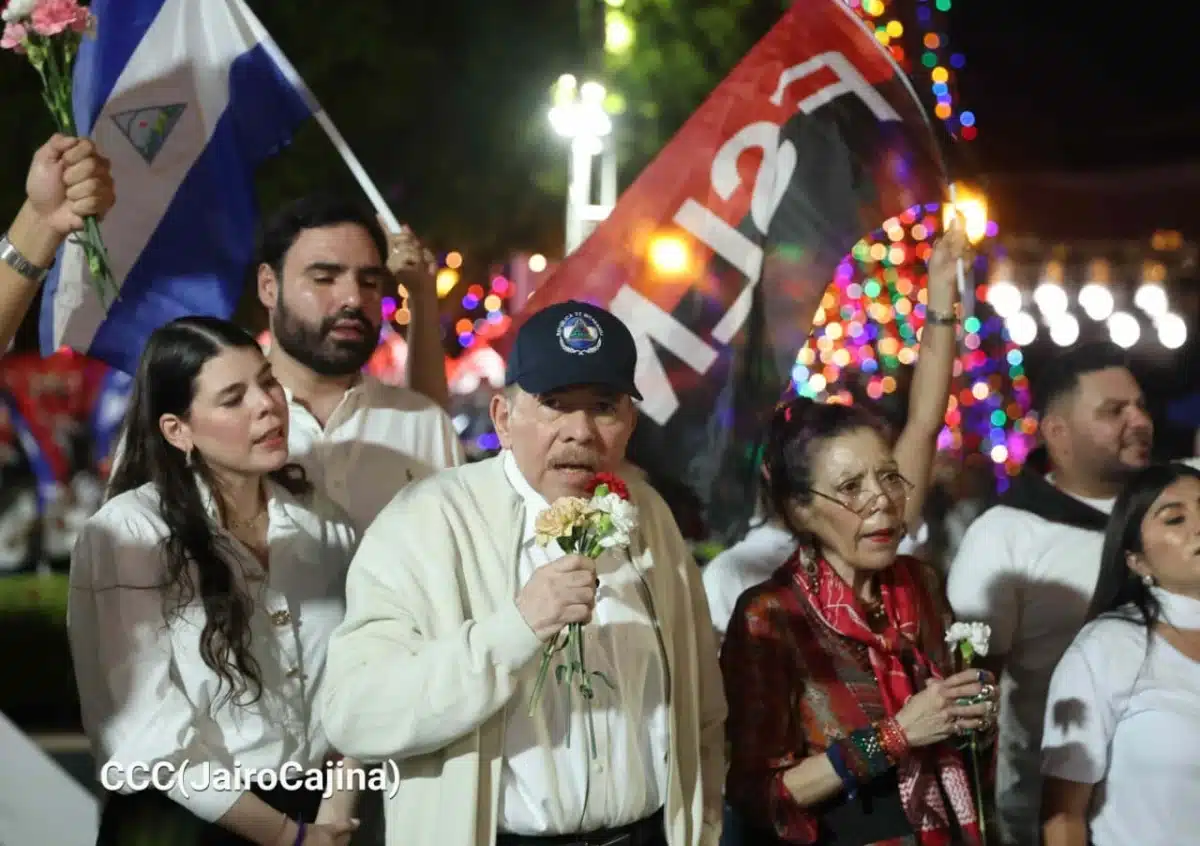
Dictator Daniel Ortega Saavedra reappeared on Monday, November 9, after 68 days out of the public eye following “serious” health complications, three sources with extensive knowledge of the situation confirmed to DIVERGENTES. He experienced minor health issues in mid-September but was treated at his mansion in the El Carmen neighborhood.
Later, Ortega’s condition “worsened” in October. However, he remained under strict medical supervision at his residence for most of the month. On October 30, he was transferred to the Carlos Roberto Huembes Hospital for an evaluation by specialists and was discharged that same night, though he remained under medical supervision.
During his evaluation by specialists from various fields, the Sandinista leader was treated in an exclusive room built specifically for him at the Sandinista police’s Carlos Roberto Huembes Hospital. Prior to his admission, hospital authorities ordered staff to leave the premises.
“That day, everyone had to leave early. Officers from the DOEP (Police Special Operations Directorate) had been there since the morning. When he arrived, no one was there. He had been there for a while—I think more than two months. It was a very strange atmosphere,” said a worker at the police hospital who requested anonymity for his safety.
One of the sources connected to the Sandinista dictator’s inner circle explained that Ortega, unlike on other occasions when he has faced health setbacks, struggled to recover. His convalescent condition prevented him from participating in the Independence Day celebrations, which his children attended in representation of him.
“He hasn’t fully recovered, but he’s on the right track. The severe relapse in October prolonged his recovery until now,” said another source linked to the Sandinista leader’s inner circle.
Ortega’s Reappearance as “Proof of Life”
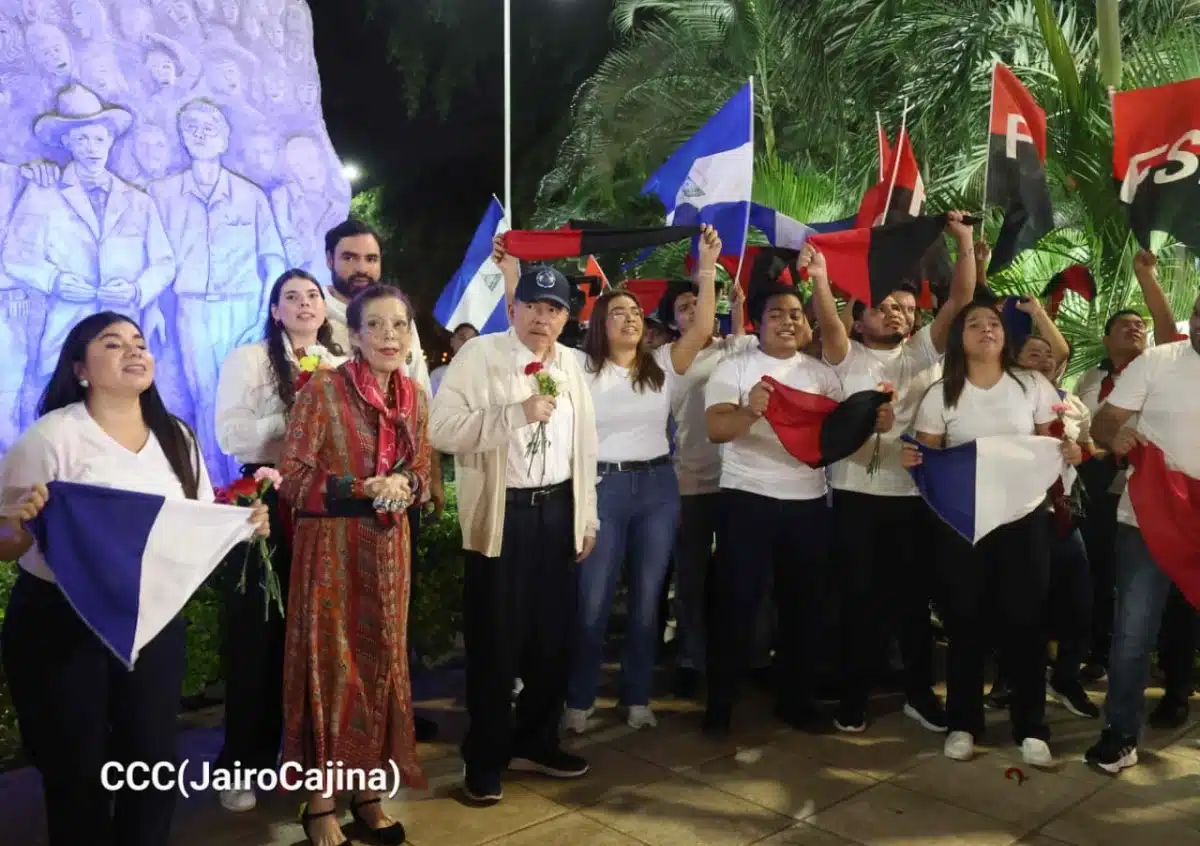
Ortega reappeared 68 days after his last public appearance, the longest absence recorded in his 19 years as Nicaragua’s dictator. Ortega arrived at 5:37 p.m. at the Mausoleum of the Heroes in Revolution Square in Managua to participate in the ceremony commemorating the 50th anniversary of the death of Carlos Fonseca Amador, founder of the Sandinista National Liberation Front (or FSLN, its acronym in Spanish).
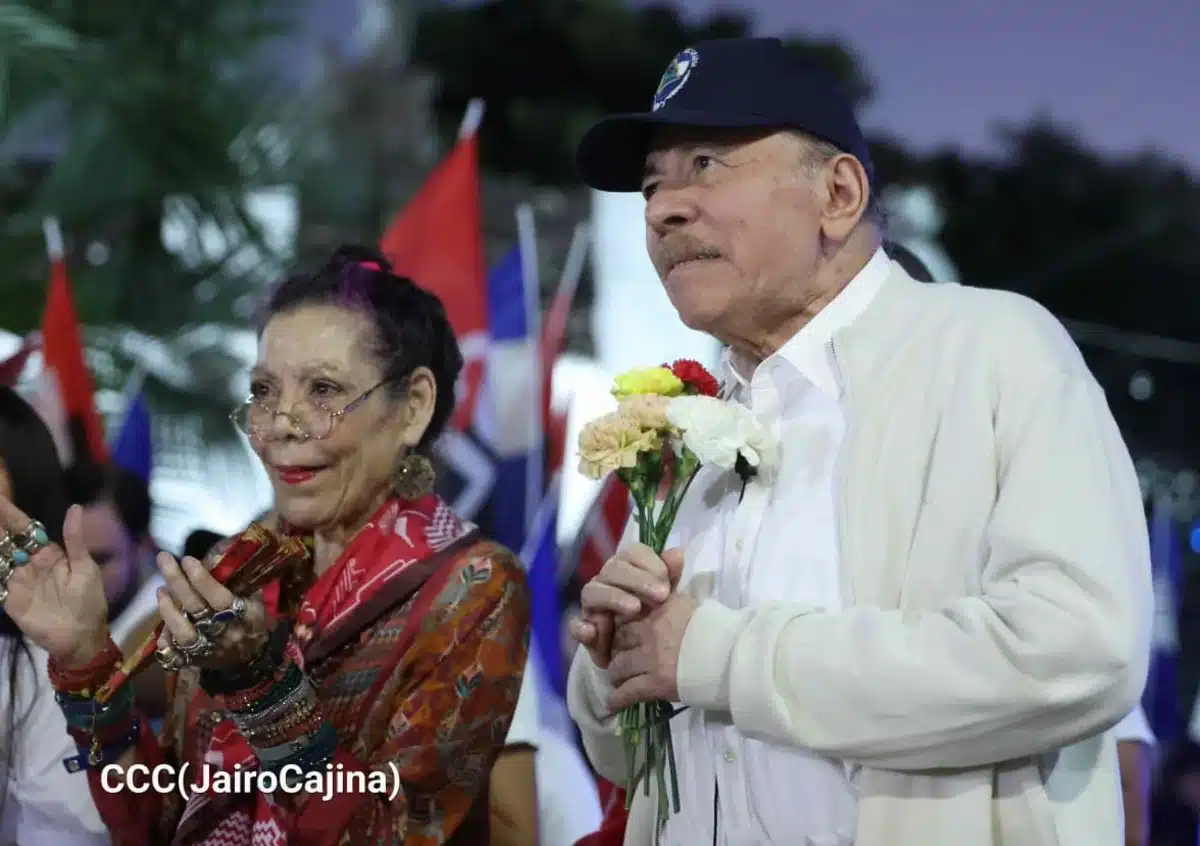
Accompanied by his wife and co-president, Rosario Murillo, some of his children, and members of the Sandinista Youth, Ortega appeared thin, walking slowly—wearing sneakers instead of his usual boots—and stooped during the less than 20 minutes that the ceremony lasted.
During his appearance, Ortega sang a few verses and delivered remarks in memory of Fonseca—whose son, Carlos Fonseca Terán, has been in detention since July 2024—and other national heroes. “Here, Carlos, you are present—in our hearts, in our slogans, in the struggle of the youth, who carry you in their souls,” said Ortega, his voice lacking its usual strength.
On the lapel of his white shirt, Ortega wore a microphone that allowed listeners to hear the few words he spoke during the event, which was punctuated by songs and the cheers of members of the Sandinista Youth. On the propaganda media feed, he could be heard asking Murillo if he could place the flowers on Fonseca’s grave, which he ultimately did. Later, while Murillo was whispering in his ear and the camera cut to different shots, the broadcast ended.
Ortega did not give any speech or statement beyond the cheers for the heroes. Nor did Murillo make his customary statements at the conclusion of the events. Neither of them has addressed a series of international events, such as the regime’s rejection of Natasha Franceschi, the ambassador nominated by Donald Trump, and the Consultative Meeting of Foreign Ministers at the Organization of American States (OAS) that took place more than a month ago.
The last time the Sandinista leader presided over a public event was on September 2, 2026, during the 47th anniversary of the Nicaraguan Army. Later, for the Central American Independece holidays, Murillo announced that she would receive the Central American torch, but ultimately, on September 12, the ceremony was held without either of the co-presidents. Nor was there a main ceremony led by the presidential couple to commemorate the Battle of San Jacinto and Independence Day, even though Murillo had also promised a state ceremony.
Daniel Ortega’s Other Relapses
Daniel Ortega’s health is shrouded in total secrecy. Since he returned to power, there has been no official information about his medical conditions or relapses. However, since 2025, DIVERGENTES has been tracking his health complications and has documented and published details about the dictator’s hospitalizations and his comings and goings at the Sandinista police’s Hospital.
One of the first relapses occurred in July 2025, just before the celebration of the Sandinista Revolution’s victory. On that occasion, a source linked to the project told DIVERGENTES that the cancellation of the inauguration of the Julio Buitrago overpass was because the dictator Daniel Ortega had been ill in the days leading up to the event.
The illness afflicting the leader of the Sandinista regime—which the interviewee did not specify—was not serious, but it did prevent him from being in top condition to walk and drive, as he had been when the Piedrecitas overpass was inaugurated in November 2018.
As a result of these medical issues, Ortega was ordered to be treated in an exclusive suite—built after the COVID-19 pandemic—at the Carlos Roberto Huembes Hospital of the Sandinista Police. Here, the dictator has been treated for his illnesses and receives top-tier preventive care.
The second relapse reported by this media outlet occurred between September and October of that same year, 2025. The dictator was hospitalized for at least five days, and during that time, nothing was heard from him. DIVERGENTES consulted three officials at the Carlos Roberto Huembes Hospital regarding the dictator’s hospitalization, and all confirmed—on condition of anonymity—that Ortega was treated there under strict security measures and that only pre-approved doctors and trusted staff of the Ortega-Murillo family were allowed to enter the area.
After five days in the hospital, the dictator was discharged with instructions to return regularly for follow-up care to monitor any aftereffects and gradually recover his health.