
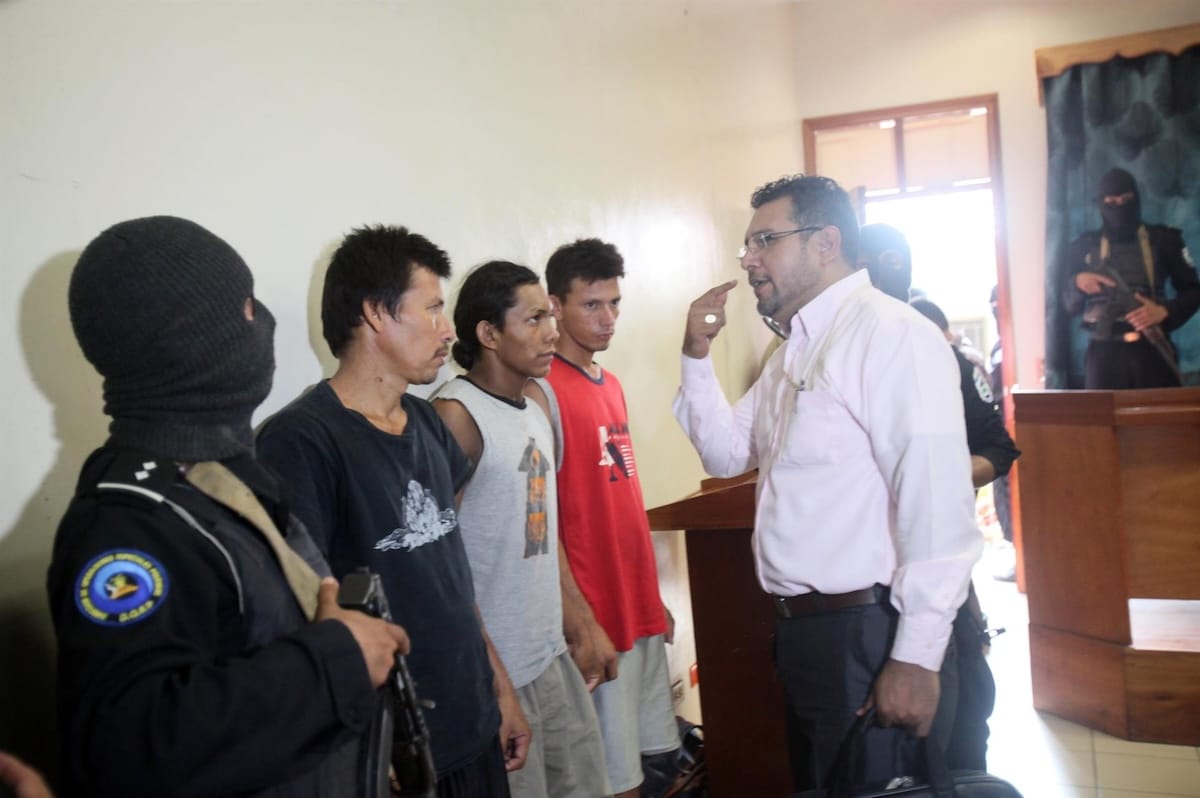
Lawyer María Azucena went to a court in Managua to file a document on behalf of a client, but at the counter—after the court clerk had checked the computer for a while—she was told it was impossible. “She told me there was no record of me as a lawyer and that my authorization to practice as a notary had been revoked,” recounts the lawyer, who, for security reasons, has asked DIVERGENTES to keep her identity anonymous. “The first thing I thought was that I’m going to starve to death, because I’ve worked as a litigator my whole life.” The woman retraced her steps with a suspicion that had turned into certainty—something she had been hearing from other colleagues in recent days: that Daniel Ortega and Rosario Murillo’s co-presidential regime had launched a massive purge of lawyers in Nicaragua.
Back home, she went straight to her computer. She logged onto the Supreme Court of Justice (or CSJ, its initials in Spanish) website—specifically the Nicarao electronic system—and confirmed that her credentials had also been revoked. The knot that had formed in her stomach at the courthouse tightened even further, especially since she had always avoided “getting involved in political matters.” In one fell swoop, she was left without a professional career, without a job. A “legal death” that adds to the Sandinista regime’s record of repression.
DIVERGENTES was able to confirm 18 cases of lawyers whose licenses have been revoked, some of whom are in exile and are outspoken opponents of the government, such as Juan Diego Barberena; however, the majority of those affected are lawyers who practice in Nicaragua. Rudy Siles Espinoza, a lawyer and notary in exile, stated in other media outlets that, following a “survey” conducted among lawyers, they estimate that 2,000 lawyers have had their licenses revoked—a figure that DIVERGENTES has not been able to independently verify.
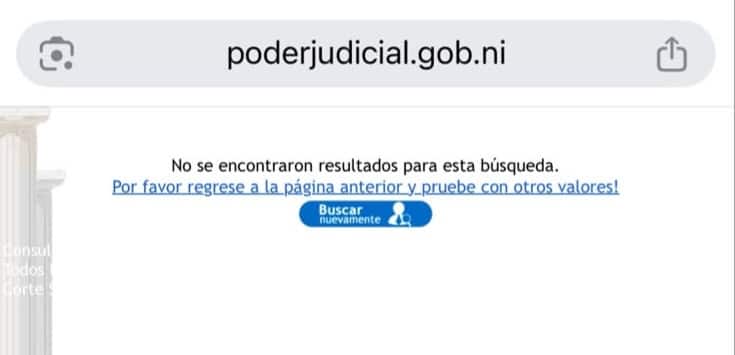
“I’ve spoken with several doctors [lawyers are referred to as doctors in Nicaragua] from other Departments, and their positions have been eliminated (canceled). Some have no political ties, and others are simply relatives of people in exile,” said one of the lawyers consulted for this article. “Of the group I know, only one is a member of the opposition. He was detained for two days a few months ago, but then continued working until now.”
The crackdown on lawyers has also targeted former Supreme Court of Justice advisors aligned with the Sandinistas, sources close to the judiciary confirmed to DIVERGENTES. “This is a silent purge,” the judicial source continues, because so far the authorities have not notified those affected by any means. “Nor have they published any decree in La Gaceta disqualifying them, as happened in 2023 with the lawyers who were banished or were in exile,” the source explains, referring to 25 lawyers stripped of their licenses—including writer Sergio Ramírez—through two resolutions signed by the then-secretary of the Supreme Court of Justice, Rubén Montenegro.
The revocation is not limited to the CSJ registry. The affected lawyers are also unable to file briefs with the Office for the Reception and Distribution of Cases and Briefs (or ORDICE, its acronym in Spanish), the branch of the Judiciary that receives and distributes case files submitted to the courts. Added to this is another obstacle: they can no longer purchase stamped paper from the General Revenue Directorate (or DGI, its initials in Spanish)—the mandatory tax document required to give legal validity to legal briefs and notarial acts.
Stripped of their credentials without due process
“They’ve already shut down the NGOs, the universities, the media, and the churches. Now it’s the legal profession’s turn. It’s the same method: eliminating, without any due process, anyone who might stand between those in power and the citizenry,” Reed Brody, a member of the Group of Human Rights Experts on Nicaragua (GHREN), tells DIVERGENTES.
Brody recalls that he helped draft the UN Basic Principles on the Role of Lawyers in 1990, as part of the International Commission of Jurists. The standard, he points out, is clear: no one can be barred from practicing law without a fair hearing before an independent body. “In Nicaragua, there was no hearing, no body, nothing,” he concludes.
Principle 28 of that instrument establishes that any disciplinary action against a lawyer must be heard by an impartial committee of the legal profession itself, an independent body, or a court, and must be subject to judicial review. None of that happened in Nicaragua, asserts the American lawyer, known as the “Dictator Hunter.”
Tripartite Commission to Purge Lawyers
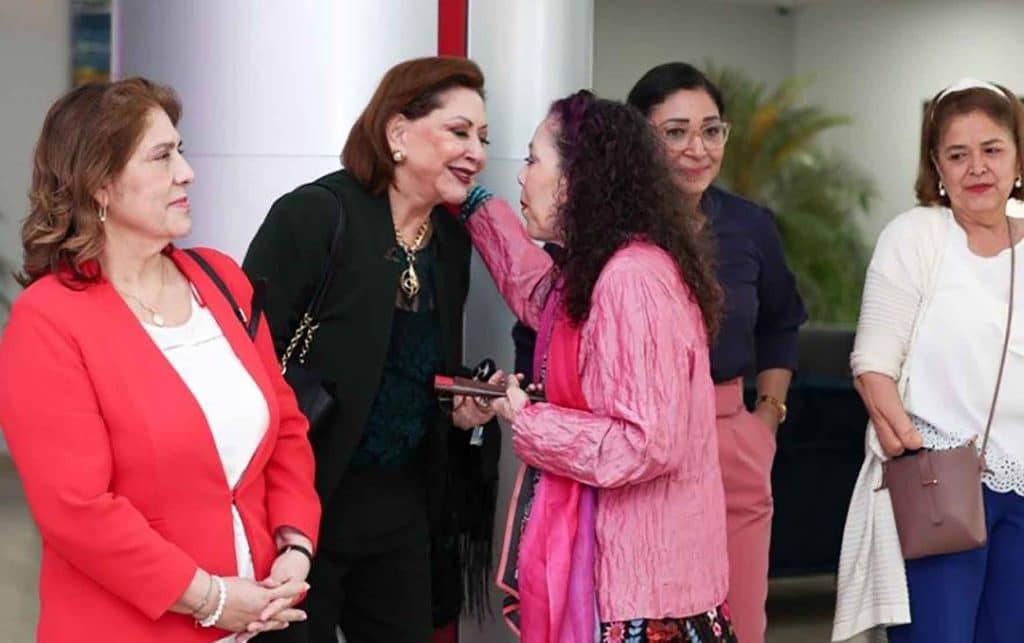
The source linked to the Judiciary assured DIVERGENTES that he had learned the purge of lawyers, “ordered by Rosario Murillo,” is being carried out jointly by the Prosecutor’s Office, the Attorney General’s Office (PGJ), and the Supreme Court itself.
“A team is working on this: Juana Méndez, Róger Martínez Domínguez, who is the Supreme Court’s administrative secretary-general; and Arlen Idalia Reyes López, who is one of Fidel Moreno’s people there. And, of course, people from the Attorney General’s Office, because Rosario Murillo has subordinated the Supreme Court to that institution,” the judicial source explained.
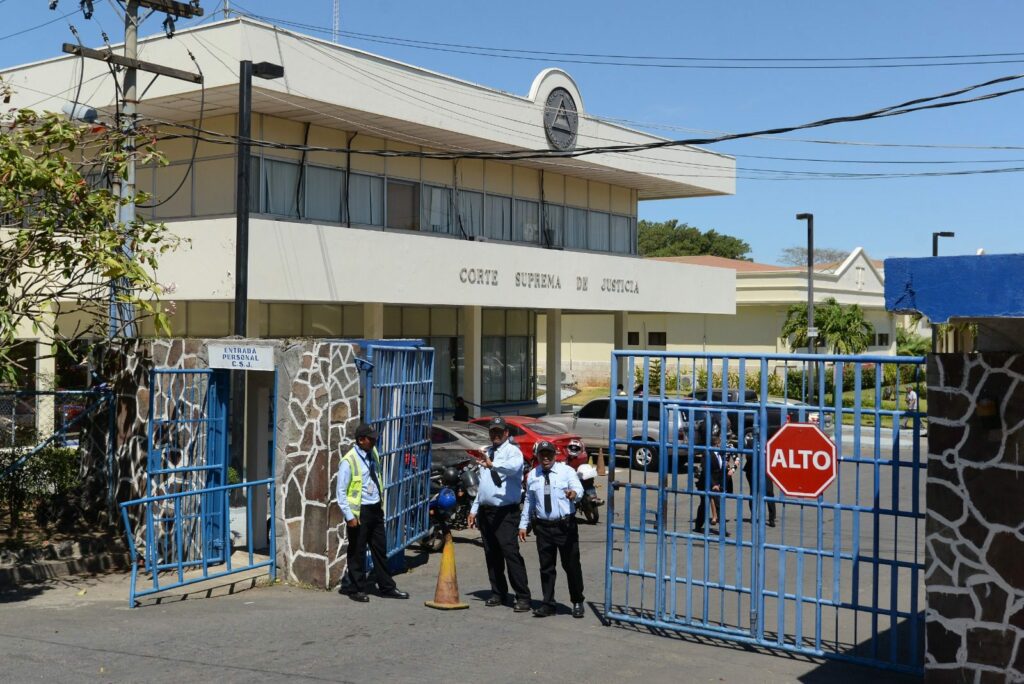
According to industry estimates, there are around 40,000 lawyers practicing in Nicaragua. “There are a lot—it’s a high number—because there are many fly-by-night universities, and that’s how they might justify the purge, saying they’re cleaning house,” the judicial source explained.
“For now, it’s very difficult to say for certain how many have had their licenses revoked, but it’s undoubtedly a political purge by Rosario Murillo. I think she believes the crisis she’s facing is over and she’s consolidating her iron fist. We’ve already seen what they’re doing to medical students. Remember, too, that she had already carried out a major purge of leadership positions at the Supreme Court. That’s why you see that, even amid the international isolation they’re facing, she continues to align herself with Russia, China, and Iran. “It’s a political calculation that makes no sense to us, but to her, it seems it does,” added the judicial source.
The source was referring to the criminal cooperation treaties that Nicaragua signed with Russia on June 5, 2026, in St. Petersburg—one on extradition and another on the transfer of convicted persons to serve their sentences in their country of nationality. The bill to approve the second treaty was submitted to the National Assembly on July 6, bearing the signatures of the co-presidents. Both texts, as they state, apply retroactively to events that occurred before their entry into force.