
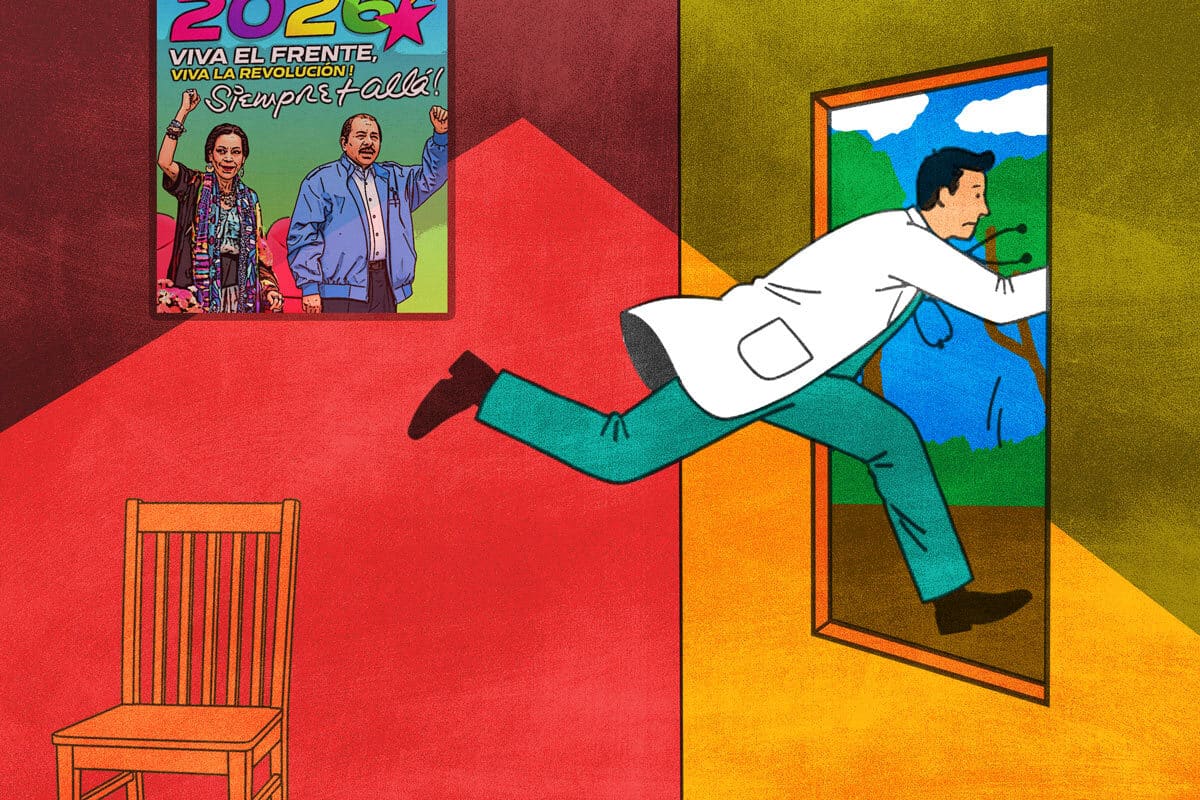
In mid-2024, Dr. Gabriela took advantage of a five-day leave to quit her job at a Provisional Medical Clinic (CMP) run by the Ministry of Health (Minsa) in northern Nicaragua. The doctor, with more than 10 years of experience, made the risky decision after the hospital authorities refused to accept her resignation letter on at least three previous occasions. “You can’t resign,” Gabriela recalled her supervisor telling her when she handed in her resignation letters.
It was then, in late 2023, that the doctor made all her plans. The first step was to apply for the Parole program, the U.S. temporary admission program launched by the administration of former U.S. President Joe Biden to facilitate the legal and orderly entry of citizens from Nicaragua, Haiti, Cuba, and Venezuela between late 2022 and early 2025.
Once the parole was approved, Dr. Gabriela scheduled a gynecological surgery she had been putting off. She knew she would be given approximately five days of sick leave for recovery. This was enough time to recover and catch a flight to the United States. “I had no choice but to leave the hospital,” said Gabriela, from Chicago, where she has been living for a year.
Since the 2018 political crisis, dozens of doctors have been fired or have resigned after participating in protests against Daniel Ortega and Rosario Murillo’s regime. Starting in 2020, others were dismissed for expressing opinions critical of the poor health management during the pandemic.
There is no exact figure for the number of doctors who have left the public health system. As of 2024, according to budget documents from the Ministry of Health (Minsa), 686 doctors were awaiting payment of their severance packages, leading to the assumption that they were dismissed in previous years. Meanwhile, independent organizations, such as the Nicaraguan Medical Unit (or UMN, its initials in Spanish), have recorded more than 400 doctors who have left the public health system over the past eight years.
Doctors Leaving Exacerbates Staffing Crisis
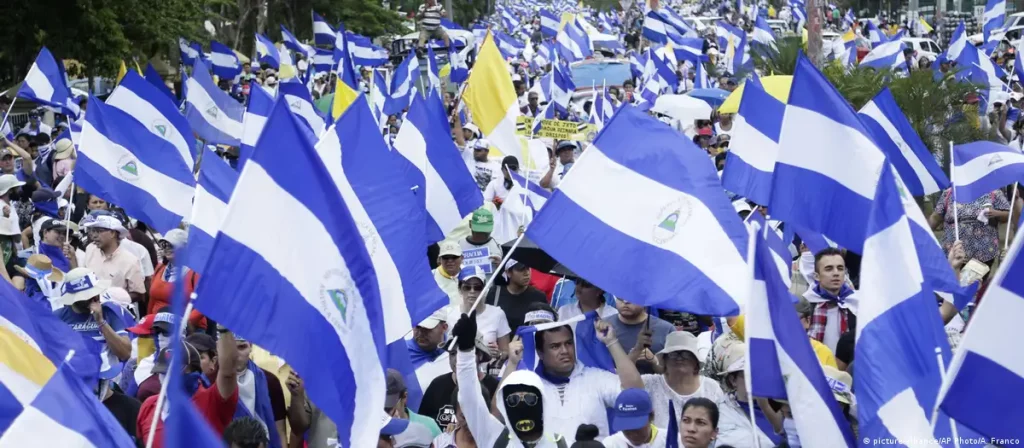
The World Health Organization’s (WHO) latest 2025 report ranked Nicaragua as the country with the lowest availability of medical personnel in Central America. The country has just over 6,000 doctors nationwide—that is, nine doctors per 10,000 inhabitants—while countries like Costa Rica have nearly 27 doctors per 10,000 inhabitants.
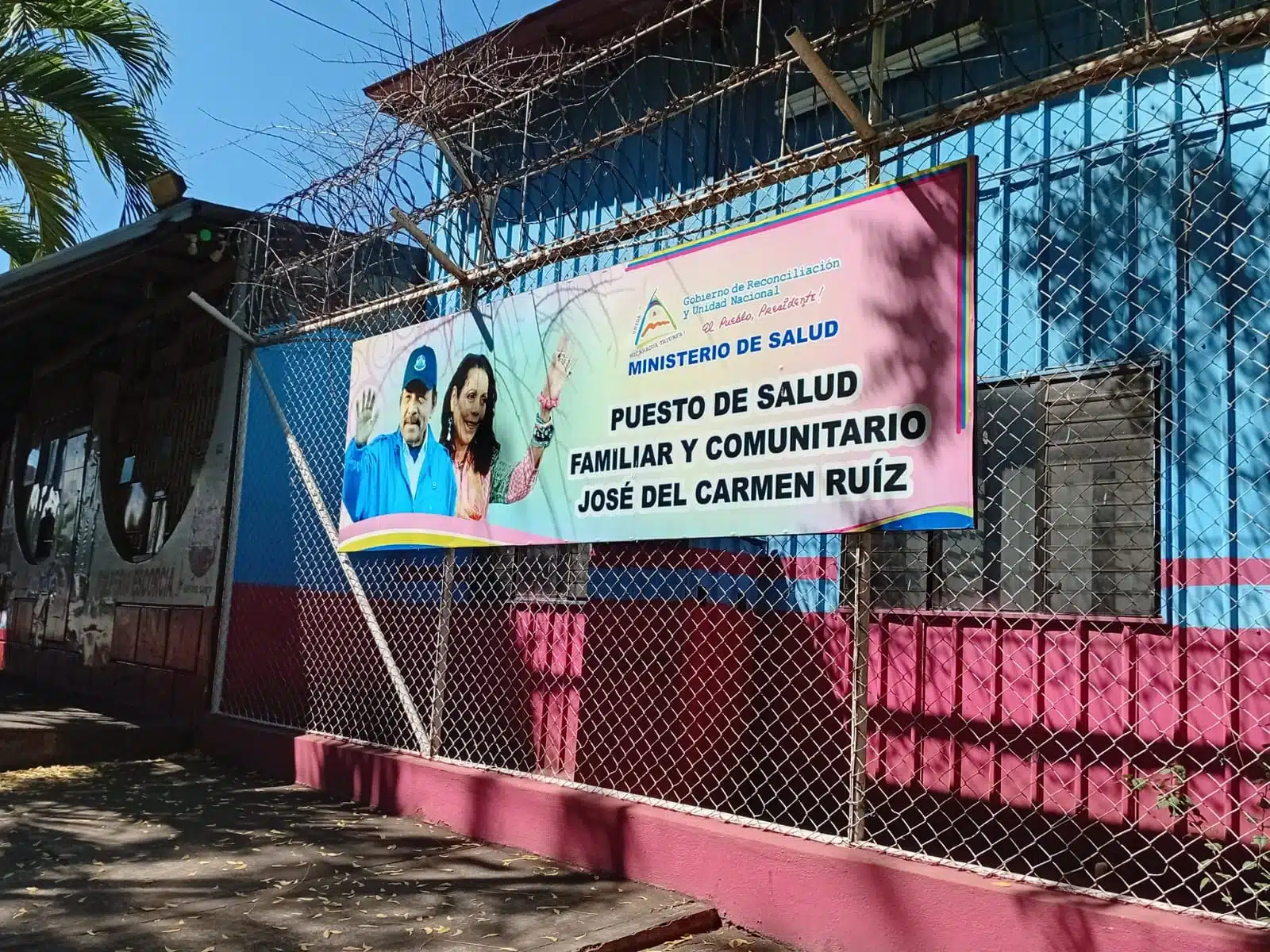
Official propaganda claims that Nicaragua has “the most robust and well-established healthcare network in Central America”; these are the words of Health Minister Meyling Brenes Calderón, speaking to Canal Parlamentario in January of this year.
The minister highlighted investments in infrastructure and equipment upgrades. For example, she noted that there were 33 hospitals in 2007, while by 2026 that number had risen to 79. However, she did not provide details regarding a significant increase in the number of healthcare professionals.
Nevertheless, the evident staff shortage has direct consequences for those who have remained in the hospitals. DIVERGENTES spoke with doctors who resigned or left their jobs at public hospitals in the last three years. They claim to suffer from work-related pressure (long hours and meeting quotas), surveillance, harassment, and a lack of support from the Health Workers’ Federation (or Fetsalud, its acronym in Spanish) union in the face of decisions made by Ministry of Health authorities.
Resigning to Stay in Nicaragua
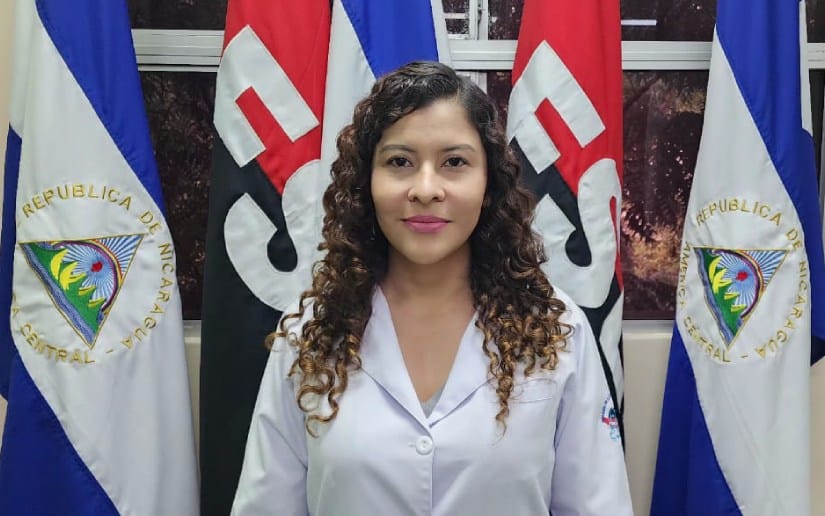
Dr. Fernando felt he could no longer endure the harassment when he took a family trip in late 2024. Although he had the Ministry of Health’s approval for an exit permit, he was detained at the airport by an immigration officer.
“They took me to a room at the airport to question me about the reasons for the trip and verified with the Ministry of Health that the permit was valid,” Fernando said.
In April 2024, the Ministry of Health issued a statement requiring public and private medical personnel to request authorization to leave the country to attend training sessions and conferences. Although Dr. Fernando’s trip was for family reasons, he still needed approval.
Dr. Fernando is an internist who graduated five years ago. He was able to travel, but he remained anxious about the uncertainty of his return. “I kept thinking about the possibility that they wouldn’t let me back into the country,” he said.
When he returned to his job at Manolo Morales Peralta Hospital, the work pressure was getting worse. “We were working shifts of more than 30 hours, and they demanded that we meet quotas,” he said.
36-hour shifts every two days
The doctors consulted confirmed that there is a hiring freeze, which is leading to excessive workloads. As there are fewer and fewer professionals to meet the demand, shifts are becoming more frequent and longer. For example, 24-hour shifts are now 32 or even 36 hours long. And whereas these shifts used to be worked every five days, they are now worked every two.
“I was physically exhausted, and mentally and psychologically affected,” said Fernando, who claims he was suffering from health problems due to poor diet, lack of exercise, and stress.
Finally, Fernando resigned in mid-2025. When asked how he managed to resign—since several doctors reported that specialists are pressured to stay in their positions—he said, “I knew how to play my cards.”
Of course, the doctor did not receive any severance pay, according to the “Law for the Calculation of Severance Pay Based on Seniority in the Event of Resignation by State Employees,” passed in November 2023, which establishes a mandatory scale for the payment of severance to public employees in Nicaragua who decide to resign voluntarily. Under this regulation, the doctor was entitled to one month’s salary, but he never received it despite submitting the request.
“What I was afraid of was being labeled a ‘traitor,’ but the hospital administration took my resignation in stride,” said Fernando, who has been working in private practice for months. This doctor quit his job, where he earned an average of about $1,200 a month, and now has to see patients in the early morning hours to make ends meet. “But all this economic uncertainty is better than wasting my life’s energy in a hospital,” he remarked.
Fetsalud’s Harassment
Dr. Álvaro was one of those who resigned after the Ministry of Health (Minsa), in March 2024, threatened to impose a condition that general practitioners wishing to pursue a specialty must remain working for the government for 10 years or pay 61,706 córdobas to leave the system.
Although the Ministry of Health backtracked and removed this clause weeks later, the doctor decided to resign from his position as a resident at the Nicaraguan German Hospital (or HAN, its initials in Spanish) to head to Amsterdam, in the Netherlands.
“That was the last straw, because I knew that even if they repealed that measure, things would only get worse,” he said.
The situation had escalated months earlier, when he signed the new agreement with the Federation of Health Workers (Fetsalud), the doctors’ union led by Sandinista congressman and National Assembly President Gustavo Porras.
According to sources consulted, Fetsalud implemented new requirements for its membership or renewal form. Among them were social media details for the affiliated doctor and their family members. “The form asked for phone numbers, addresses, and all my family members’ social media accounts,” he said.
The doctors consulted asserted that Fetsalud, rather than protecting the profession, is aligned with the policies of the Ministry of Health (Minsa). “Fetsalud does not challenge any directive from Minsa; I don’t understand why it exists if it doesn’t defend health workers and serves merely as another arm of the party (FSLN),” the doctor stated.
10-Minute Consultations
Another reason he resigned from his position at the hospital was the quotas imposed by the Local Comprehensive Health Care System (or Silais, its acronym in Spanish), the Ministry of Health agency that tracks statistics for public hospitals.
The targets are numerous and cover various areas, including the number of patients seen and the duration of each consultation. For example, depending on the hospital, each doctor is required to see between 30 and 35 patients daily, with a maximum of 10 minutes per patient.
The doctors consulted considered these targets to be standard in any healthcare system, but they are not suited to Nicaragua’s decimated medical landscape. For example, gynecologists are required to see a number of patients that they sometimes cannot meet because it would require twice as many specialists as currently exist in the facilities.
“There are specific targets for gynecological care, COVID-19, and other diseases such as HIV or malaria, in order to meet the requirements of the international organizations that fund these programs,” said an epidemiologist working in the private sector in Nicaragua.
The shortage of specialists extends throughout the country. DIVERGENTES verified that there are hospitals in northern Nicaragua and the Caribbean region that do not have all the necessary specialists. Under pressure from the Silais, some directors have quit their jobs and fled the country, according to sources consulted.
There are hospitals that lack pediatricians, gynecologists, or cardiologists. Consequently, when a patient requires specialized care, they are referred to hospitals in Managua, which leads to these facilities becoming overburdened.
For this reason, the Ministry of Health (Minsa) holds health fairs in remote areas to provide specialist consultations and distribute medications. This allows for the mobilization of staff to address the shortage of doctors in rural areas.
Dr. Álvaro participated in health fairs in the Departments and neighborhoods of Managua. He said that this wore him out even more, since these mobilizations often took place on weekends when he was supposed to be resting.
No Severance Pay or Social Benefits
“I quit, and they didn’t pay me my severance either,” said Álvaro. “I had a lot of accrued vacation days from the work we did during the pandemic, and none of that was paid out,” added the doctor, who now works cleaning hotel rooms in Amsterdam.
There, he communicates with his former colleagues at the hospital almost daily. In recent months, they’ve told him that now there are even obstacles when they have to go to a doctor’s appointment. “Everything is worse,” he said.
Every doctor who leaves the hospitals represents one fewer consultation or one missing specialty. All of this translates into a greater burden for those who remain.
Dr. Gabriela—who fled to the United States because her resignation letter was not accepted—was threatened by her supervisor months after she left her job. “She sent me messages on WhatsApp and Facebook telling me I couldn’t quit my job, that there could be consequences,” she said. The only thing she could think of was to delete her social media accounts and change her phone number. So far, she has not received any further threats.