
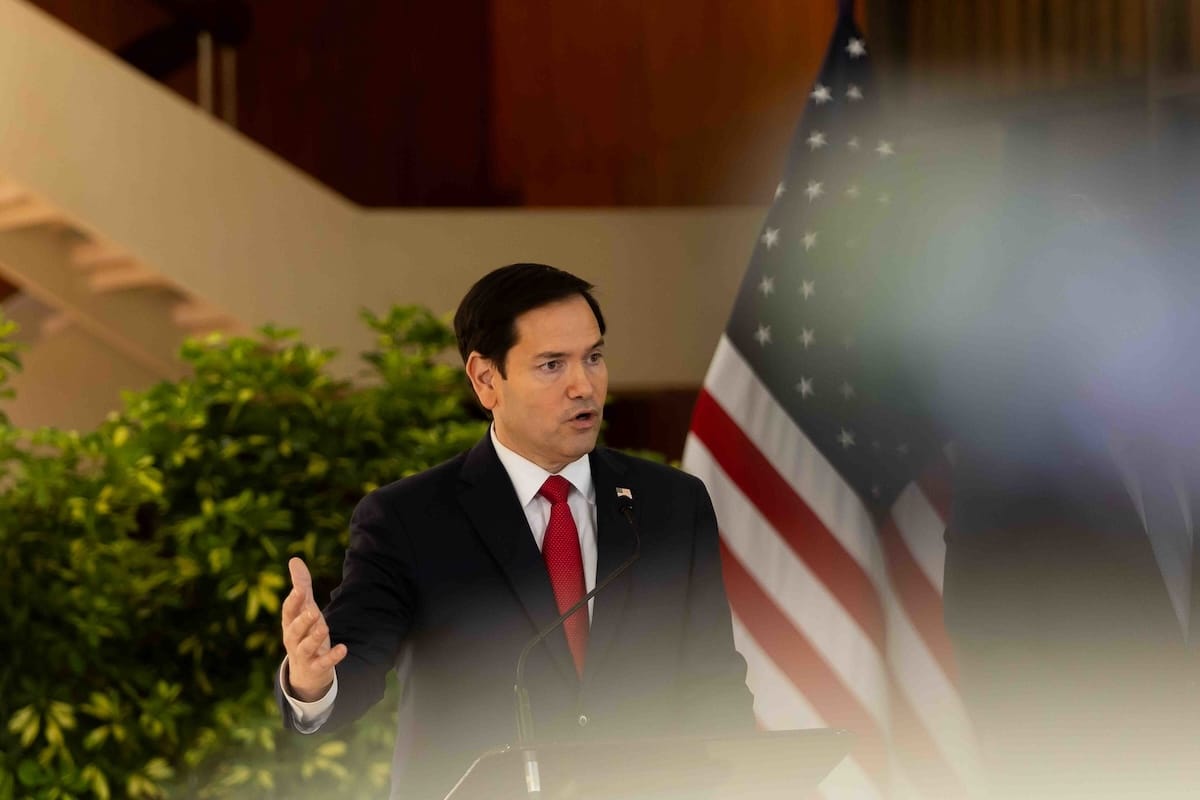
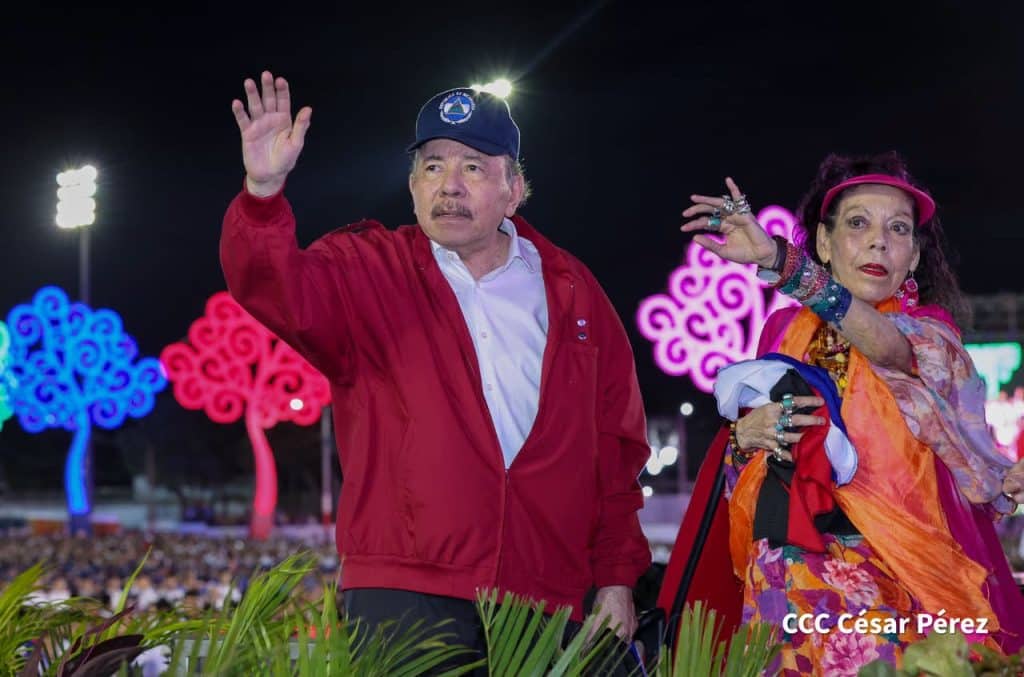
In addition to not yet having reached a consensus on what stance to take toward Daniel Ortega and Rosario Murillo’s regime, the member countries of the Organization of American States (OAS) have not set a date for the meeting of foreign ministers either. Behind this delay lies a tacit agreement among several governments: “Without the presence of Secretary of State Marco Rubio, the meeting would be stillborn,” agree sources close to the talks consulted by DIVERGENTES.
After 26 countries approved the convening of the foreign ministers—in what is supposed to be the highest-level political meeting within the OAS—the date remained up in the air. Initially, there was talk of holding it on September 1, but the lack of a roadmap pushed the discussion toward a possible September 17. However, following the approval of constitutional reforms extending the terms of Ortega and Murillo, the hemispheric organization once again became gridlocked due to differing views on the co-presidential dictatorship and, above all, due to bilateral tensions between several governments and the Donald Trump Administration.
But aside from the above, the United States’ leadership in the response to the Sandinista regime is not disputed within the OAS. For this reason, member countries consider Rubio’s presence at the meeting a priority, especially after the Secretary of State urged his international partners to break with business as usual regarding the Ortega-Murillo “brutal dictatorship.”
On Thursday, September 3, the OAS Permanent Council approved the preliminary arrangements for the foreign ministers’ meeting—including operational, logistical, and financial details—to hold the Thirty-First Meeting of Consultation of Ministers of Foreign Affairs. However, the date remains undecided.
“As for the date, Marco Rubio is interested in participating, so they are waiting for the State Department to set a date when he can attend,” one of the sources accredited to the OAS told DIVERGENTES.
Another possibility being considered by diplomats is to hold the meeting of foreign ministers after the United Nations General Assembly, which will feature several discussions on Nicaragua in September. The High-Level General Debate begins on September 22, so the OAS meeting could be postponed until after that week if a date compatible with Marco Rubio’s schedule cannot be secured beforehand.
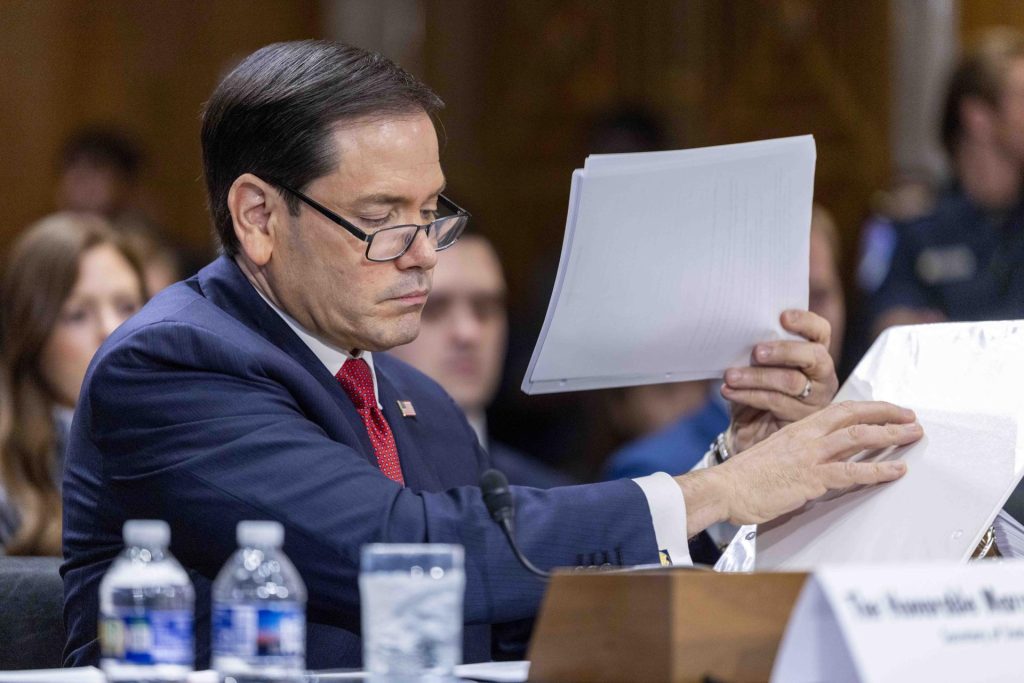
The Meeting of Consultation of Ministers of Foreign Affairs was convened after Ortega threatened on July 19 that there “will be no more elections” in Nicaragua and after the regime, weeks later, approved a constitutional amendment that extends the co-presidential term through 2028 and enshrines the opposition’s exclusion from the electoral process. The Permanent Council approved the convening on August 19, but since then, governments have been unable to agree on a common response to Managua, amid reservations from Canada, Mexico, and Brazil, tensions with Washington, and doubts about what concrete measures the OAS should pursue.
“It Would Not Be a Mere Formality”
Manuel Orozco, an analyst at the Inter-American Dialogue, stated in an interview with Confidencial that Marco Rubio’s presence would not be a mere formality, but rather a central part of the strategy Washington is attempting to build ahead of the meeting of foreign ministers.
Orozco argues that Rubio is using the multilateral forum as a springboard to negotiate more coercive measures bilaterally with various governments, which is why the date remains open until he completes talks and visits with several countries. Following that logic, it would make no sense to bring the foreign ministers together without first having something concrete on the table.
Orozco also distinguishes between what the OAS can do and the unilateral decisions of individual states. In his view, the organization can serve to coordinate and legitimize a response, but the measures with the greatest impact will depend on individual governments or groups of countries—ranging from recalling their ambassadors for consultations to adopting sanctions, implementing trade or financial measures, and increasing diplomatic isolation.
Orozco summarizes the challenge as moving from deliberative multilateralism to a form of coordination that allows for specific unilateral actions against Managua.
After 16 OAS resolutions condemning Nicaragua—none of which has succeeded in halting the Ortega-Murillo regime’s dictatorial course—diplomatic sources consulted by DIVERGENTES believe that Rubio’s presence could make the difference between a merely symbolic meeting and one with the real capacity to drive concrete measures. For this reason, they insist, several governments prefer to wait until the Secretary of State can participate before finalizing the date.