
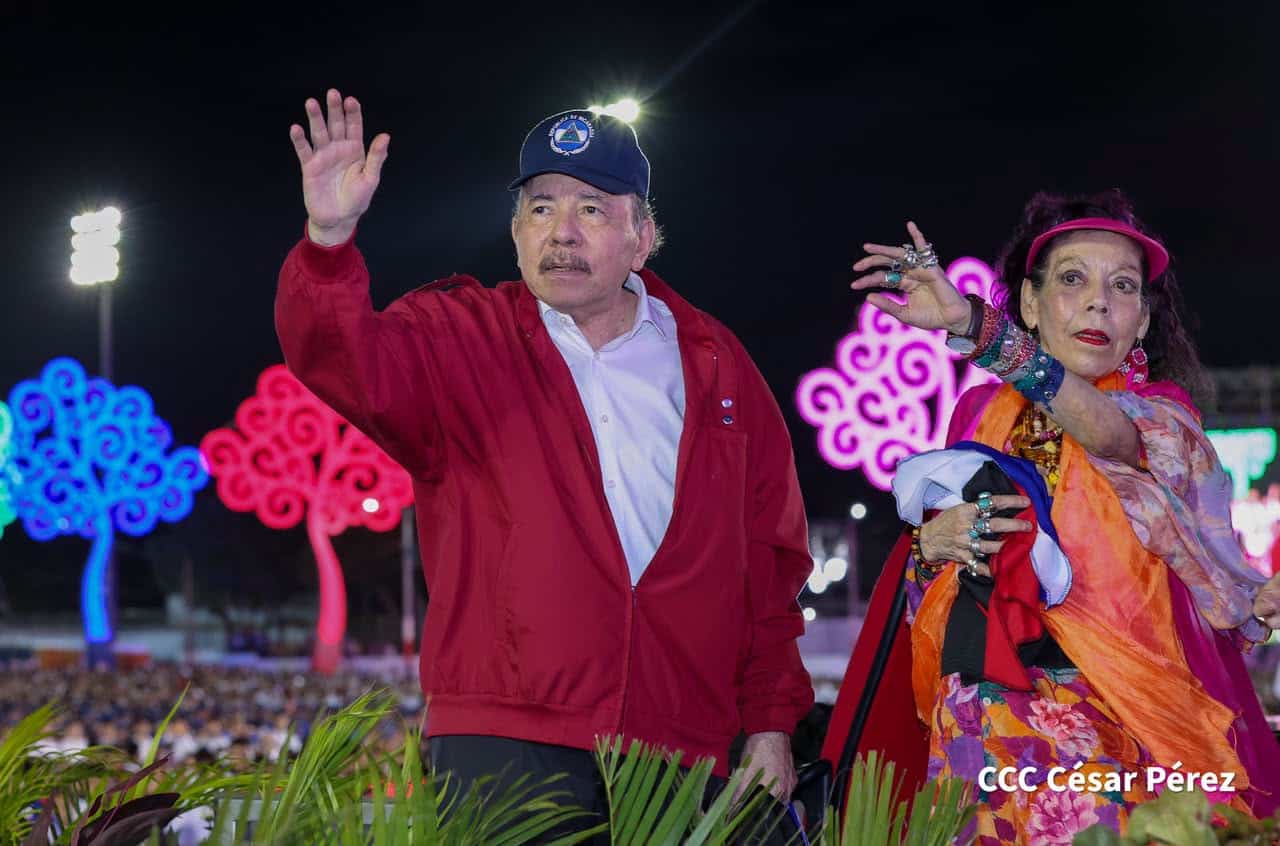
Dictator Daniel Ortega asserted that in Nicaragua “there will be no more elections” and that they will work with the Legislative Assembly and other institutions to “put up a wall” against political parties that consider this route to gaining power.
“Let them forget it! There will be no more elections here so that [the opposition political parties] can’t try to seize the government or seize power,” Ortega said on July 19 during the ceremony marking the 47th anniversary of the Sandinista uprising that overthrew dictator Anastasio Somoza Debayle in 1979.
Furthermore, Ortega confirmed that he will work with his deputies and his “mosquitoes” political allies in the National Assembly, as well as with the “relevant organizations,” to enact laws “that will erect a wall, a barrier” against political parties that are considering the electoral route to take power in Nicaragua.
“So let those parties win the elections… The days when parties put in place by the Yankees, put in place by the Somocistas, will return to power are over. Never, never, never,” Daniel Ortega insisted in his speech.
“No matter how much money the Yankees give [to the political parties], they won’t be able to, they won’t be able to,” declared the dictator, as the crowd in Plaza de la Fe in Managua applauded and cheered.
In early 2025, the Ortega-Murillo dictatorship approved a new Constitution extending the presidential term—now a co-presidential term—to six years, up from five. The last presidential election in Nicaragua took place in November 2021 for the 2022–2027 term; in other words, elections were supposed to be held this year. Under the law passed last year, elections were scheduled to take place in 2027; however, Ortega definitively closed the door on that option tonight.
The 2021 elections were not recognized by the international community. The U.S. administration of Joe Biden described them as “a farce that was neither free nor fair, and clearly not democratic either.” That year saw the arbitrary imprisonment of 40 opposition figures, including seven presidential candidates, and the blocking of all competing political parties.
“A Monstrosity” Done to Nicolás Maduro
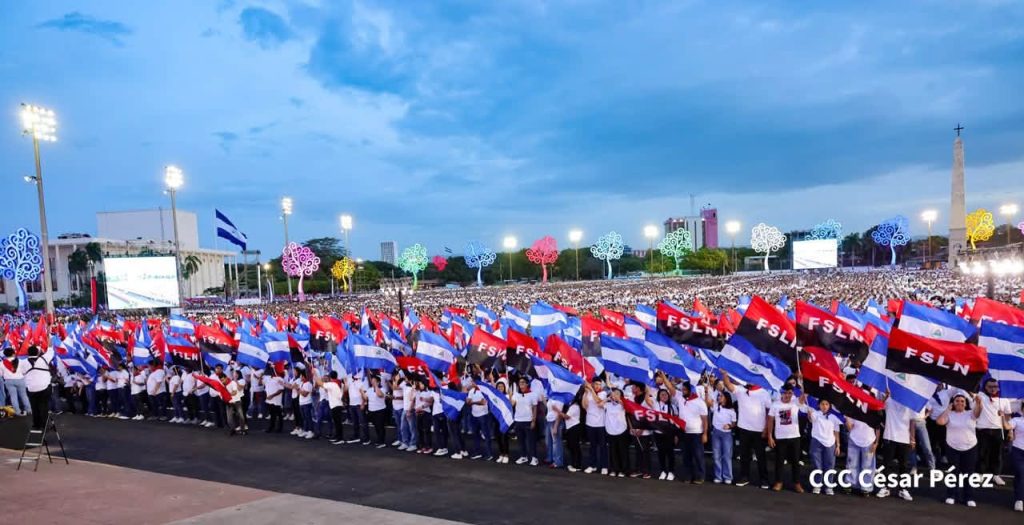
Ortega arrived at Plaza de la Fe this Sunday at 6:38 p.m., driving one of his Mercedes-Benz cars, accompanied by his wife and co-president, Rosario Murillo, who gave a long speech punctuated by revolutionary music.
Ortega then took the microphone to speak about “the pain and blood that it has cost the people” to reach this anniversary. As in almost all his speeches, he said that “the empires want to steal the people’s wealth.” He cited as an example the U.S. operation in Venezuela to oust Nicolás Maduro in January of this year, an act he considers “a monstrosity.”
Ortega said there are Cubans who are calling for Cuban dictator Raúl Castro to suffer the same fate. “They’re asking the world powers to do the same in Cuba to Raúl and Miguel Díaz-Canel,” he asserted. The Nicaraguan leader used the speech to greet both Maduro and Castro.
He thanked Pope Leo XIV and “Snitched On” Cardinal Leopoldo Brenes
During his speech, he called on his supporters to go to the police to report “those who are trying to provoke violence, destruction, and death” so that they can be arrested and prosecuted. Ortega said that this crackdown has been underway for several months.
“There they go, complaining from the United States that poor innocent people are being detained,” said the dictator, referring to the political prisoners for whom the U.S. government has requested their release or proof of life. “When they are scoundrels, criminals, and murderers,” he added.
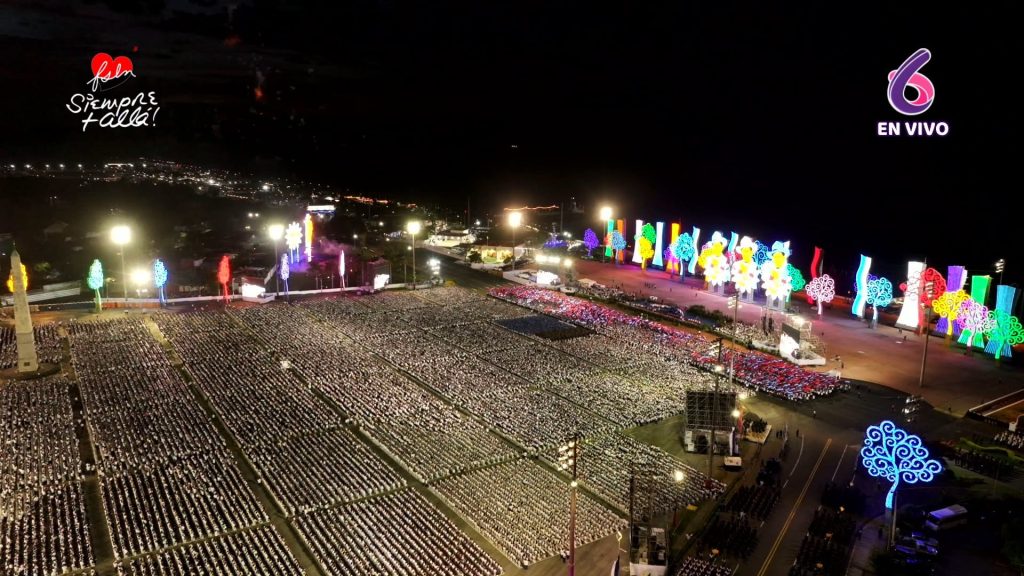
At the end of his appearance, Daniel Ortega implicated Cardinal Leopoldo Brenes by claiming that he had met with the new Pope Leo XIV “to denounce those who seek to oppress the people,” and later, Ortega thanked the Pope “for his blessings.”
After his visit to Rome, Brenes downplayed religious persecution in the country and said that “reports of empty churches” were “fake news.” Despite the cardinal’s accommodating stance, human rights organizations and activists have documented that, since the 2018 crisis, the Ortega-Murillo regime has waged a crackdown against the Catholic Church in Nicaragua, characterized by the imprisonment, prosecution, revocation of citizenship, and exile of priests, nuns, and laypeople for practicing their faith.
Ortega accuses religious leaders of joining the opposition to conspire against him. The latest incident was an interrogation of the critical Bishop Emeritus Abelardo Mata. Church sources told DIVERGENTES that they have been unable to confirm the cleric’s current condition.
Following his forceful speech, in which he made it clear that he will not relinquish power through democratic means, Ortega ordered a military parade by the police and the army through the plaza as a display of the power that sustains him.