
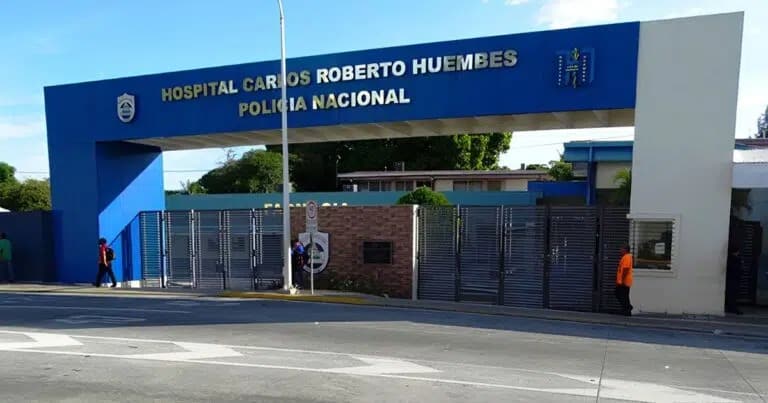
Tension and anxiety are running high among civilians and officers of the Sandinista Police who, until today, were part of the staff at the Carlos Roberto Huembes Hospital—which was taken over by order of Rosario Murillo, Nicaragua’s co-president, and transferred to the company Specialized Services Company (or SERMESA, its acronym in Spanish), owned by the Nicaraguan Social Security Institute (or INSS, its acronym in Spanish).
Uncertainty reigns at the hospital. “The directors were removed, and the department heads (who were police officers) were demoted to mere coordinators,” explained a source linked to the Ministry of the Interior, who confirmed that the takeover of the hospital left many unanswered questions that the new administration is only now beginning to resolve. Or so they say.
Three police sources with extensive knowledge of the case who spoke with DIVERGENTES on condition of anonymity agreed that it was Murillo who ordered the arrest of Commissioner General Julio César Paladino, the hospital’s director, and Senior Commissioner Jorge Rivas, the hospital’s financial manager, for alleged embezzlement.
“Paladino is under house arrest. He has been at home for some time due to an aortic aneurysm, but he is still on duty,” confirmed one of the sources consulted for this article. In a press release, the regime confirmed the takeover of the hospital and specified that, as of November 10, 2026, it will be administered by SERMESA.
Sandinista Propaganda Masks Intervention
The statement emphasizes that the changes will lead to better service and that it will continue to be “by the police, for the police and their families,” albeit with new management and administration.
“That statement is, let’s say, politically correct. The police will have no power. The department heads, who are police officers, will become coordinators, and their superiors will be the highest-ranking doctors at SERMESA. It’s a devastating blow to the police’s ego. It’s a show of force that makes the institution look bad. It undoubtedly exposes to civilians its lack of independence,” explained another source consulted for this article.
The new administration arrived at Carlos Roberto Huembes Hospital with one goal: to assert its control and make it clear that there would be no concessions or continuity from the previous leadership. They met with the department heads—who are police officers—and informed them that those who wished to stay could do so, but without a leadership position. They will report to a superior who will not be a police officer, and who will most likely be the highest-ranking official at SERMESA.
“Those who are police officers but not department heads were notified that, for the time being, they would continue under the previous payment system—that is, under police administration—but with a high probability of signing a new contract in the coming months,” one of the sources told DIVERGENTES.
Farewell to the Police University
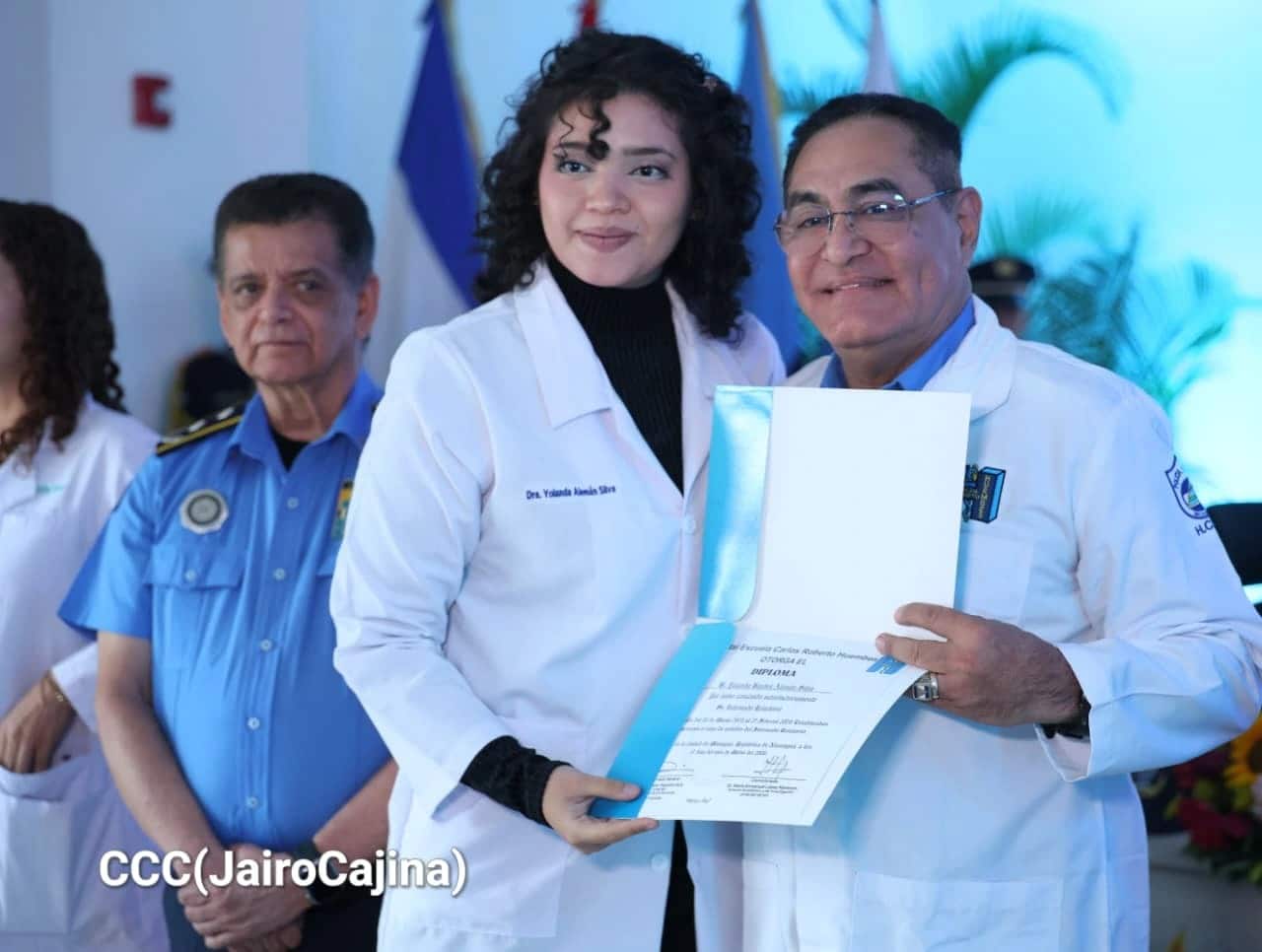
Another drastic change that came with the police’s withdrawal from the administration of the Carlos Roberto Huembes Hospital was the closure of the “Dr. Julio Briceño Dávila” University of Medical and Nursing Sciences, which operated on those premises and granted degrees to general practitioners and doctors in other specialties.
The directive issued following the intervention stipulates that students currently enrolled in the medical program or any other specialty must complete their coursework; however, it was specified that these would be the last cohorts of students to graduate.
The Police University offered programs in general medicine, nursing, and dentistry. It also offered specializations in general surgery, internal medicine, pediatrics, gynecology and obstetrics, orthopedics and traumatology, anesthesiology, dermatology, and radiology and imaging.
According to its website, the programs were aimed “at training police personnel, members of the Ministry of the Interior, their children, and selected civilian personnel.” In short, not just any high school graduate in the country could enroll.
“Clinical rotations will most likely take place at the hospital. However, classes will be held at another location. Faculty members are not yet clear about whether the administration will keep them on as before or if they will retain only the police personnel who were there previously and not the civilian staff, who also taught classes,” said another source consulted for this article.
“It’s a Mirage”
A hospital employee—a civilian who asked that her name be withheld—explained that, in their case, the INSS would take over the administration of their positions, but they would have to negotiate their contracts, salaries, and work hours, because the INSS would not allow for “four- or five-hour” positions.
“They’re putting pressure on us. They’re telling us that either we sign or we leave. They say they’re going to raise our salaries, but it’s a mirage because it means having an eight-hour contract, giving up our overtime, and so when you do the math—at least in my case—I’d lose income that helps me cover my expenses. I don’t know how many of us will stay, but the situation is worrisome,” said the hospital worker.
Another concern for hospital workers who are police officers relates to social security contributions. According to sources consulted for this article, the directive so far is to honor the weeks of contributions already made to the Institute of Social Security and Human Development (or Issdhu, its initials in Spanish), even if they sign a new contract.
However, there is mistrust regarding this situation due to the pressure being exerted to sign the new contract, which, according to those interviewed, must be finalized before the end of the year.
“The hospital will continue to treat police officers. And the distribution of medications will be the same as under the previous administration. What remains unclear is the issue of the extra services that were previously allowed at the hospital for its patients. In other words, SERMESA will be in charge of administration, and they operate in their own style and manner. And that is what they are now expected to replicate at the hospital. That is where the main conflict is emerging so far,” said the source linked to the Ministry of the Interior.