
In Nicaragua, the General Health Law not only assigns the Ministry of Health (or Minsa, its acronym in Spanish) the regulation of medical practice in both the public and private sectors, but also grants it the responsibility to prevent failures in care through mechanisms of control, supervision, and audit.
Under this law, technical provisions such as Regulation 090 on Medical Care Quality Audits establish that, in the event of a complication, liability must be determined through audits that analyze medical records, medical decisions, and procedural conditions.
“The commitment of the Government of Reconciliation and National Unity is to restore the right to quality healthcare (…) To this end, there must necessarily be oversight mechanisms in place to ensure that human resources, care processes, and diagnostic and therapeutic procedures meet established requirements,” states the regulation in effect since March 2012.
In contrast, the recent case of the death of a 24-year-old woman following cosmetic surgery in Managua highlighted failures in the health system’s own control mechanisms. The joint statement from the Ministry of Health (Minsa), the National Police, and the Public Prosecutor’s Office confirms that the surgery was performed on May 22, 2026, at a private clinic operating without the “required health authorizations.”
Minsa Did Not Conduct Prior Medical Audits
The same document details that Dr. Livang Clifford Argüello Molina participated in the procedure as an assistant, even though two days earlier, on May 20, he had been found guilty of the crime of reckless injury in another case that went directly to court, without having undergone a prior medical audit as required by law.
The statement released on June 29, one day after the patient’s death, states that the Ministry of Health had imposed administrative sanctions that included barring Argüello Molina “from performing any activities related to medical procedures of any kind and revoking his medical license,” without explaining how his participation in the procedure was possible, nor what mechanisms failed on the part of this institution to prevent it, since the same official report notes that the doctor was not accredited to practice the specialty of plastic, aesthetic, and reconstructive surgery.
“The National Police and the Public Prosecutor’s Office have launched the corresponding investigations to determine the circumstances under which the events occurred and to establish, in accordance with the law, any liabilities that may arise from the case. At this time, all those involved have been apprehended,” the press release states.
However, these actions by the regime contrast with health regulations, which stipulate that in such cases, the initial assessment is not the responsibility of the police or the prosecutor’s office, but rather of technical bodies within the health system itself, tasked with reviewing the medical records and analyzing the situation based on medical criteria. However, the statement makes no mention of any audit prior to the arrest of the doctors, which occurred less than 48 hours after the patient’s death.
On the contrary, health regulations define these processes as internal technical evaluations based on the review of medical records. However, the authorities disclosed the doctors’ full names and the details of the case before a technical assessment had been conducted.
Bioethics Tribunals Exist Only in Law, Not in Practice
According to Regulation 090, the analysis of these cases does not start from the presumption of “medical negligence” or guilt, nor does it include those terms to refer to a failure during the medical procedure. Nor does it consider the arrest of the healthcare professionals involved in the surgical procedure as a starting point, as occurred in this case.
In turn, this regulation works in tandem with Regulation 004 on the Management of Medical Records, since the medical record is the primary legal and documentary evidence analyzed by medical audit committees to determine whether a patient received proper treatment or if there was any failure.
The quality assurance system established by Law 423, the General Health Law, is not limited to medical audits. According to Regulation 090, this system includes not only the licensing and accreditation of facilities but also the regulation of professional practice, the auditing of the quality of care, and the establishment of bioethics committees.
Exiled physician José Antonio Delgado Alvarado explains that these tribunals are committees tasked with analyzing cases based on ethical and professional criteria, especially when there are doubts regarding medical procedures. They are composed of specialists in the same category or field as those involved, which allows for peer evaluation based on technical expertise.
However, he notes that these mechanisms ceased to function in practice following the Sandinista Front’s return to power in 2007.
Medical Committees Abolished by the Sandinista Front
“By regulation, bioethics tribunals had the authority to make decisions… if a bioethics committee, following a thorough medical audit, determined that the physician had complied with all established requirements, no sanctions were imposed. That system disappeared starting around 2007 or 2008 and beyond,” he notes.
He also notes that these committees sought to supplement audits to distinguish between a complication inherent to the medical procedure and a failure to follow due process. In that regard, the specialist affirms that medical audits play a central role in a preventive and corrective approach.
The regulations themselves establish that their objective is to prevent harm to health through the systematic evaluation of medical records, compliance with protocols, and review of medical procedures, as well as to identify failures in order to correct them and prevent their recurrence.
However, the specialist pointed out that in the recent case, there is no public information regarding the conduct of audits or the involvement of these bodies, while the process continued directly to criminal proceedings.
“Audits do not assign blame. They determine whether due process was followed. Complications do not have culprits. If that were the case, the patient would also have to be brought to trial if it were found that the complication arose because they did not follow medical recommendations,” he said.
A System That Does Not Prevent, But Only Reacts

He also pointed out that the lack of prior regulation allows irregularities to go undetected, while the institutional response comes only after the damage has been done. “The healthcare system does not act to prevent or analyze risks, but rather to intervene and politicize them once the events have already occurred,” he notes.
In this context, he warns that the problem is not limited to the lack of regulation, but also to the closure of independent spaces for technical analysis.
“Doctors can’t even express their opinions in Nicaragua today. My technical opinion, even if based on evidence, even if based on World Health Organization protocols, is persecuted if it doesn’t align with the dictatorship,” he states.
Delgado notes that, after he publicly questioned the official statement on the case, the regime responded with a personal attack against him in which it discredited his professional practice, without being able to refute the technical points he had raised regarding the lack of audits and health oversight.
In a subsequent press release, the regime lashed out at Delgado, referring to him as “the man who claims to be a doctor” and accusing him of “speaking out of ignorance,” in an attempt to discredit his professional career. The document even describes him as someone who “seeks to turn the accomplices of medical malpractice and murder into ‘innocent victims,’” in reference to the four healthcare professionals who were sent to prison without the audits required by health regulations having been conducted beforehand.
These disparaging remarks contrast with Delgado’s career, as he practiced medicine in Nicaragua for over 25 years without facing any professional complaints or sanctions related to his practice.
For the specialist, this reaction confirms that when the handling of these cases is questioned from a medical standpoint, the response is not technical but political, and the regime ends up attacking those who dare to challenge it.
“The targeting of doctors is a smokescreen to divert attention from other issues in Nicaragua. Dr. Livang is nothing more than a scapegoat for the regime to threaten the medical community and tell them that anyone who does not toe the line is in their crosshairs,” he adds.
Key Medical Evaluations to Determine Liability
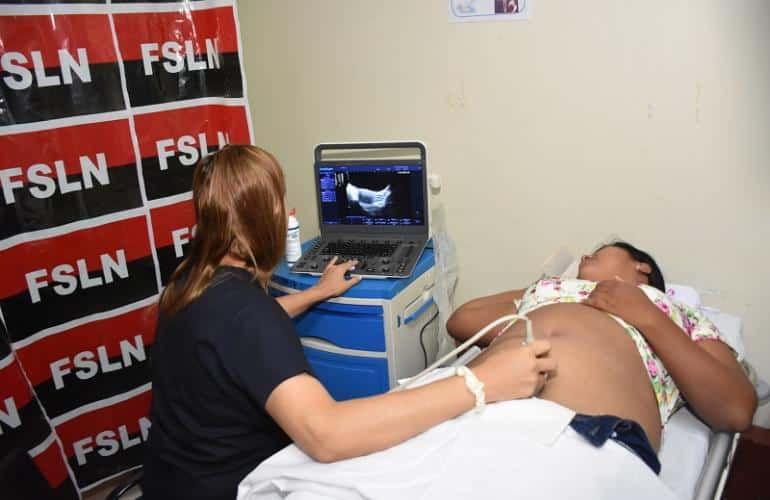
Delgado maintains that his concern for the medical profession goes beyond the case of the four detained professionals. In his view, as long as there is a lack of clear technical standards to regulate certain procedures—including cosmetic and fetal surgeries—and independent audits are not conducted to determine liability, other specialists could face similar proceedings.
“Today it is these four doctors, but tomorrow it could be others, and more names will keep coming up. If there is no regulation and the technical mechanisms established by law are not applied, liability ends up being determined by the regime’s political decisions rather than through medical evaluations,” he warns.
Nicaragua’s Penal Code, Law 641, addresses crimes such as reckless homicide and reckless injury when there is a breach of the duty of care. However, it does not establish a specific procedure for evaluating medical actions.
A Nicaraguan criminal defense attorney, who spoke on condition of anonymity for security reasons while in the country, agrees that determining liability in these cases depends on prior medical evaluations.
He notes that it is necessary to have a committee with extensive medical expertise and specialized expert testimony during a trial of this nature. He warns that, without these elements, the regime ends up treating these types of medical cases as common crimes, without having exhausted the technical mechanisms that allow for determining what occurred. In its statement on this case, the regime asserted that the detainees “have engaged in the formation of networks of clandestine and strictly commercial practices, to the detriment of patients,” a characterization that, according to the lawyer, assigns blame before any technical evaluation or independent expert assessment has taken place.
A Medical Association That Never Actually Existed
In addition to assigning the Ministry of Health (Minsa) the task of regulating the system, Nicaragua’s legal framework also provides for the existence of independent mechanisms. In 2009, the National Assembly passed Law 702, the Law Establishing the Professional Medical and Surgical Association of Nicaragua, which creates a body responsible for overseeing the practice of medicine, certifying specialties, and hearing complaints of malpractice.
According to the investigation conducted by DIVERGENTES for this report, the law remains in force but was never implemented. Following its approval, its implementation was halted by constitutional challenges filed by Fetsalud, the pro-government union aligned with the Sandinista National Liberation Front (or FSLN, its initials in Spanish).
In practice, regulation remained concentrated within the Ministry of Health (Minsa), without the participation of an independent professional body to certify competencies or evaluate professional practice. For Delgado Alvarado, this gap eliminates a key technical safeguard.
“Without an independent body to regulate professional practice, everything remains under the regime’s control. That limits technical evaluation and opens the door for other, political criteria to influence these processes,” he warns.
The doctor laments that, unlike in other Central American countries, where medical associations certify specialties, investigate complaints, and participate in disciplinary proceedings, no such entity exists in Nicaragua.
The Dismantling of the Medical Profession
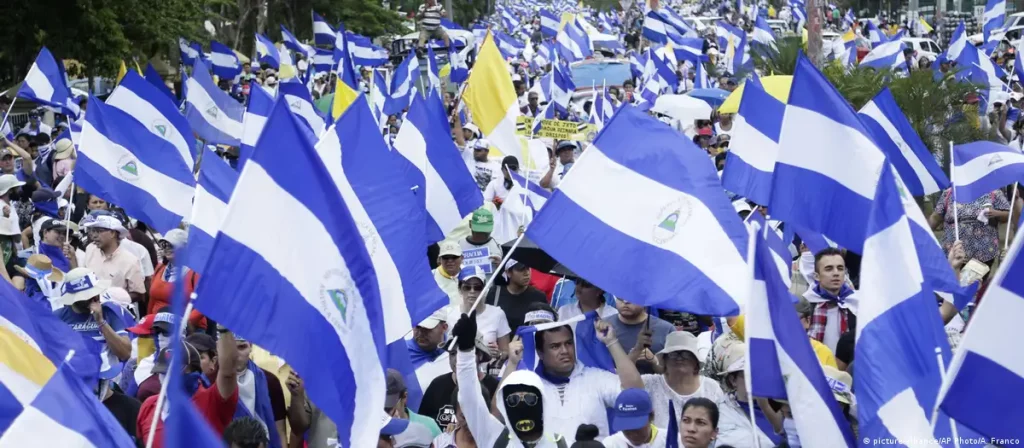
For the doctor, who has been in exile since 2024—following a smear campaign against him orchestrated by the regime through its propaganda outlets—prison has become a tool for persecuting doctors, as part of the broader effort to dismantle the medical profession in Nicaragua.
He points out that the absence of audits, the lack of prior oversight, and the regime’s punitive response reflect the gradual disappearance of the independent technical bodies that, prior to 2007, regulated the practice of medicine.
In his view, this weakening explains why medical cases are no longer analyzed based on scientific criteria, but rather on decisions made outside the health system itself.
Added to this is the disappearance of independent organizations. The Nicaraguan Medical Association, with a century of history, was dissolved by the Sandinista regime in 2021 along with other civil society entities.
This measure occurred within a broader context of persecution against critical sectors, including health professionals who publicly denounced the government’s mishandling of the COVID-19 pandemic, questioned the lack of protective measures and the underreporting of cases, and who even treated injured protesters during the 2018 crisis.
Many of these doctors were fired from the public health system, harassed, or forced into exile. With the dismantling of these structures, the medical profession lost its capacity for organization, and the system was left without independent bodies to participate in technical oversight.
“No doctor wakes up in the morning intending to kill a patient, unlike a criminal who acts with malice. Therefore, they should not be judged by prosecutors and judges who know nothing about medicine,” he states.
He further concludes that, in a country with a dwindling number of doctors, no independent professional organizations, and fewer spaces for technical debate, the consequences of that decision fall not only on healthcare professionals but also on patients who depend on an increasingly weakened system—such as the 24-year-old woman who lost her life following surgery at a clinic that was neither authorized nor regulated by the Ministry of Health.