
The return of some Catholic processions to the streets of Nicaragua—after several years of restrictions imposed by the Ortega-Murillo regime—was achieved following talks between U.S. officials, representatives of the Sandinista dictatorship, and Catholic Church authorities, according to unofficial sources in Washington with ties to the power structures in El Carmen, who spoke to DIVERGENTES.
A source close to the Sandinista regime’s security circles revealed the tripartite talks, which stemmed from recent warnings by Secretary of State Marco Rubio regarding the severity of religious persecution in Nicaragua. “Rubio’s remarks alerted them to U.S. interest in the issue of religious freedom in Nicaragua,” the source commented.
Another source based in Washington confirmed these talks, without providing further details on who the participants were. However, it is a fact that the issue is on the U.S. administration’s agenda. In fact, Donald Trump’s nominee for ambassador, Natasha Franceschi, made clear this administration’s concern regarding the crisis of religious freedom in Nicaragua.
“I will make clear the Administration will not tolerate threats and abuses, including confiscation of U.S.-owned properties and assets and repression of Christians, particularly the Catholic Church and its parishioners,” Franceschi said on Thursday, September 24, during her hearing before the U.S. Senate. Subsequently, the Sandinista regime rejected the diplomat’s nomination to head the U.S. Embassy in Managua.
The U.S. State Department, in response to an inquiry about these new approvals, did not comment on the alleged negotiations to allow the processions to take place, but it did note that violations of religious freedom persist in Nicaragua.
“We remain deeply concerned about the Murillo-Ortega dictatorship’s repression of freedom of religion and belief,” a State Department spokesperson told DIVERGENTES.
“The United States considers religious freedom to be a universal human right and a fundamental freedom. The U.S. State Department designated Nicaragua as a Country of Particular Concern (CPC) under the International Religious Freedom Act due to systematic, ongoing, and egregious violations of religious freedom. Nicaragua has a rich religious tradition, and we look forward to the day when the Nicaraguan people can celebrate their faith without restrictions,” the statement added.
Permitted Processions
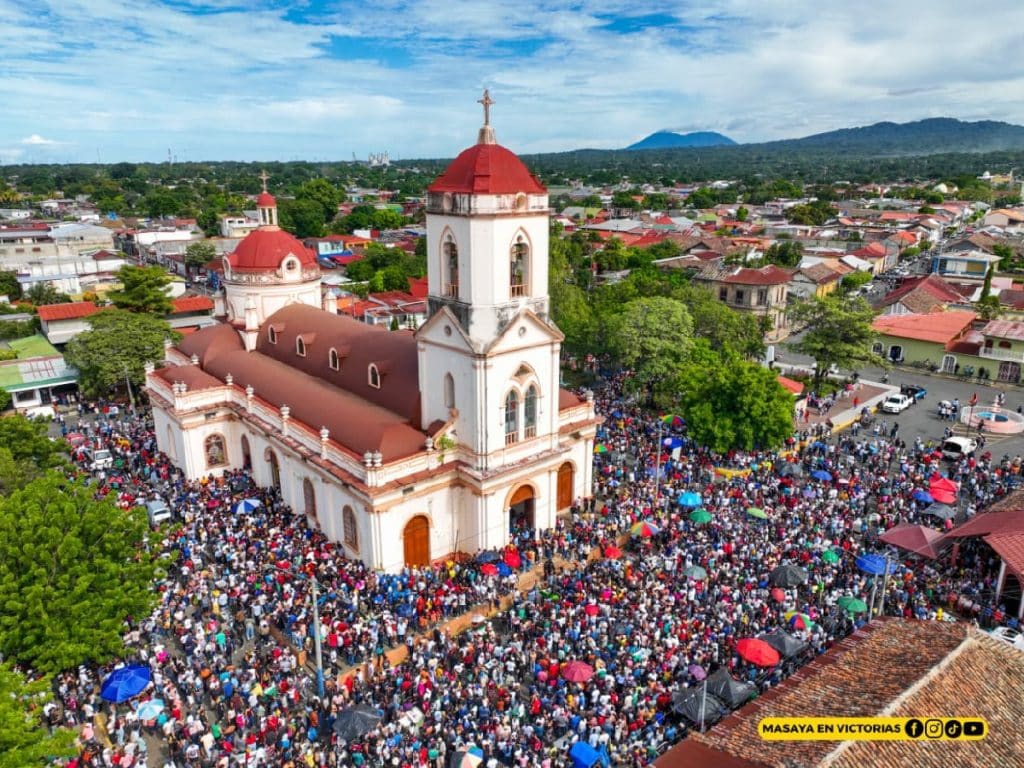
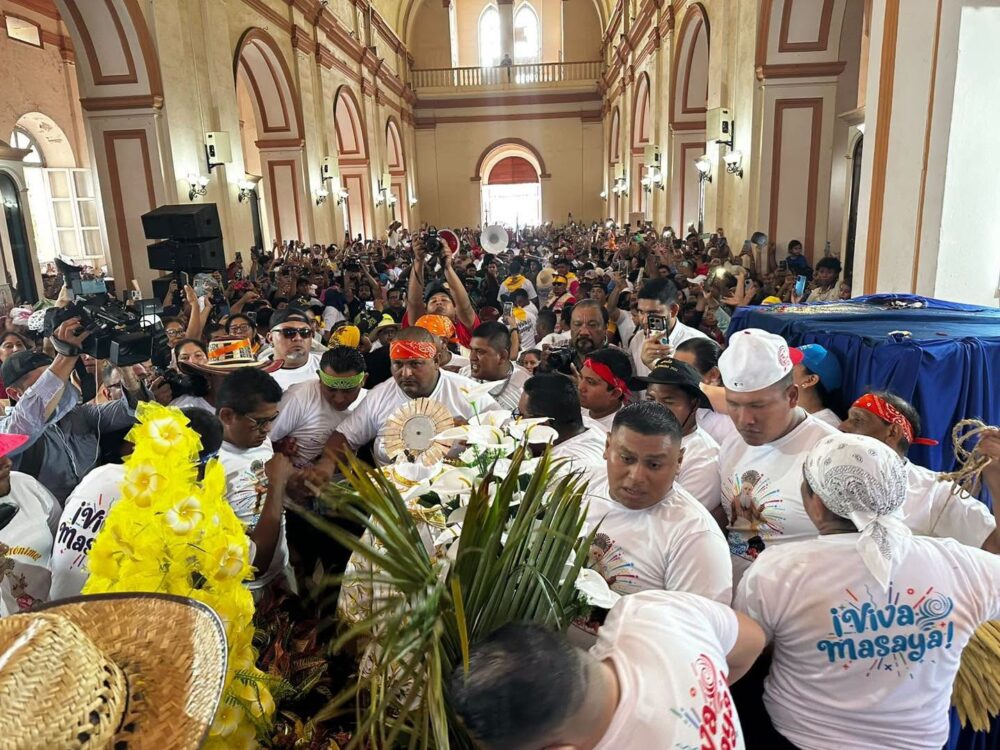
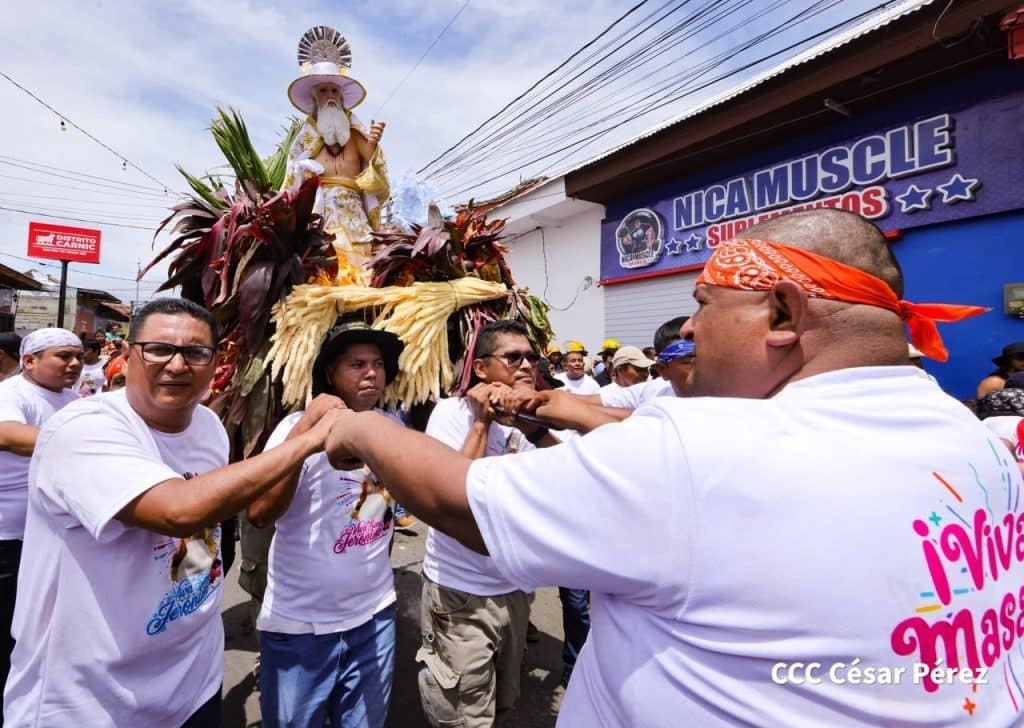
The U.S. position became known after the regime once again allowed certain religious celebrations to take place outside of churches, including the processions of Our Lady of Mercy on September 24 in Matagalpa; Saint Jerome on September 30 in Masaya; and Saint Francis of Assisi on October 4 in Managua.
Cardinal Leopoldo Brenes, Archbishop of Managua, was present at the celebration of Saint Jerome—one of the most well-attended Catholic festivals in Nicaragua—and presided over the Mass preceding the procession. Authorization to carry the statue through the streets was granted just a few hours before the event, even though the Church had requested permission in advance.
During the celebration, parish priest José Antonio Espinoza publicly thanked the municipal, political, and police authorities present at the church. The procession was limited to a seven-block route.
These authorizations stand in contrast to the restrictions that Catholic parishes have faced, particularly since 2023, when Sandinista repressive forces began to systematically prevent processions and other religious gatherings in public spaces.
In fact, Rosario Murillo, in her speech on September 29, enthusiastically praised the celebrations for Saint Jerome, in the context of the authorization for the procession to take place.
“We celebrate the fulfilled promises of Saint Jerome the Doctor, the most vibrant festivities there in Masaya, to the sound of our incomparable marimbas, our atabales, our drums, our philharmonic bands… Saint Jerome the Doctor in Masaya… Saint Jerome the Doctor, who today departs from the royal and distinguished Cathedral of the Assumption of the Blessed Virgin Mary—known as the Cathedral of León—bound for Sutiaba. These festivities, which we celebrate from the heart of our faithful and devout people, are rooted in the syncretism of our indigenous traditions,” said the co-president.
Researcher Denounces Surveillance and Political Control Over Religious Processions
Researcher Martha Patricia Molina denounces that the authorized celebrations were supervised by Sandinista political structures, and that permits have not been extended to all parishes.
Molina, a researcher and author of the report Nicaragua: A Persecuted Church?, states that the recent authorizations do not represent a change in the regime’s policy toward the Catholic Church, but rather discretionary decisions that keep religious activities under government control.
“The behavior of the Sandinista dictatorship has never been guided by state policies but rather by the volatile and capricious changes of co-dictator Rosario Murillo,” she stated.
The researcher explained that, although some religious processions have been allowed to return to the streets, other parishes continue to hold their activities within churches, without authorization to hold public processions.
“I have monitored the activities of several local parishes and have noticed that they are still holding processions within the church grounds, which shows that the only processions permitted to go out are those that attract the largest crowds of laypeople; the rest are not,” she noted.
According to Molina, the authorized celebrations were “supervised and co-organized” with the participation of municipal governments, Citizen Power Councils (CPC), and political secretaries of the Sandinista National Liberation Front (or FSLN, its initials in Spanish).
The Dictatorship’s Control Over Religious Activities Persists
The researcher argues that the involvement of these structures shows that the regime continues to exercise control over religious activities, even when it allows them to take place outside of churches.
She also reported that some priests received sudden instructions to organize the processions and express gratitude for the permits granted.
“All of a sudden, they forced the priests to hold processions and also to thank them for it. A procession isn’t planned overnight—it takes coordination—but on this occasion they had to go ahead because that was the order,” she said.
Molina warns that the involvement of pro-government entities in organizing the celebrations constitutes a violation of the Church’s autonomy and religious freedom.
“The fact that the processions are controlled by the dictatorship is, in itself, a danger and a violation of religious freedom,” she stated.
The researcher also claimed to have received information about alleged intentions to alter the religious nature of certain festivities. However, this allegation has not been independently corroborated.
International Pressure May Be Behind the Permits
The recent authorizations come amid international concerns over restrictions on religious freedom in Nicaragua.
On October 2, the Organization of American States (OAS) passed a resolution urging the Nicaraguan regime to restore the freedoms of expression, association, religion, and peaceful assembly, among other fundamental rights.
Molina believes that international pressure may have influenced the decision to allow certain processions, although he does not identify any specific action that brought about the change.
“It is clear that international pressure has something to do with this sudden decision, but it is important to understand that allowing a few processions does not mean that religious freedom is respected or that religious persecution does not exist,” she said.
The researcher believes that the regime is attempting to project an image of religious tolerance through selective authorizations, while maintaining other restrictions against the Catholic Church.
More Than 28,000 Processions Banned Since 2019
The processions that have returned to the streets represent only a small fraction of the religious celebrations that have been restricted in recent years.
According to Molina’s records, between 2019 and April 2026, the regime banned 28,904 processions and acts of popular piety organized by the Catholic Church. Of that total, 6,135 were related to Lent and Holy Week activities in 2026.
The restrictions intensified beginning in 2023, when numerous parishes began celebrating the Stations of the Cross, Holy Week processions, and other religious festivities inside churches or in their courtyards due to police bans.
Molina warns that the authorization of certain processions does not alter the conditions faced by priests, devotees, and parishioners in Nicaragua.
According to her records, the regime continues to hold 43 properties of the Catholic Church under confiscation, while 315 priests and religious sisters remain in exile, unable to return to the country.
She also denounces that the authorities have not restored the broadcast frequencies of Catholic media outlets or returned the funds seized from the bank accounts of religious institutions and the priests’ insurance fund.
The researcher further notes that restrictions on diaconal and priestly ordinations persist in the dioceses of Matagalpa, Jinotega, Siuna, and Estelí, as does constant surveillance of priests.
Among the cases she mentions are those of Father Frutos Valle and the Bishop Emeritus of Estelí, Monsignor Juan Abelardo Mata, who, according to her report, continue to face restrictions on their freedom.
Added to this are the confiscations of Catholic universities and schools, restrictions on prayer meetings in private homes, and the absence of an apostolic nuncio in the country.
For Molina, these conditions demonstrate that partial authorizations do not constitute a restoration of the Catholic Church’s rights.
Molina Rules Out Mediation by Cardinal Brenes
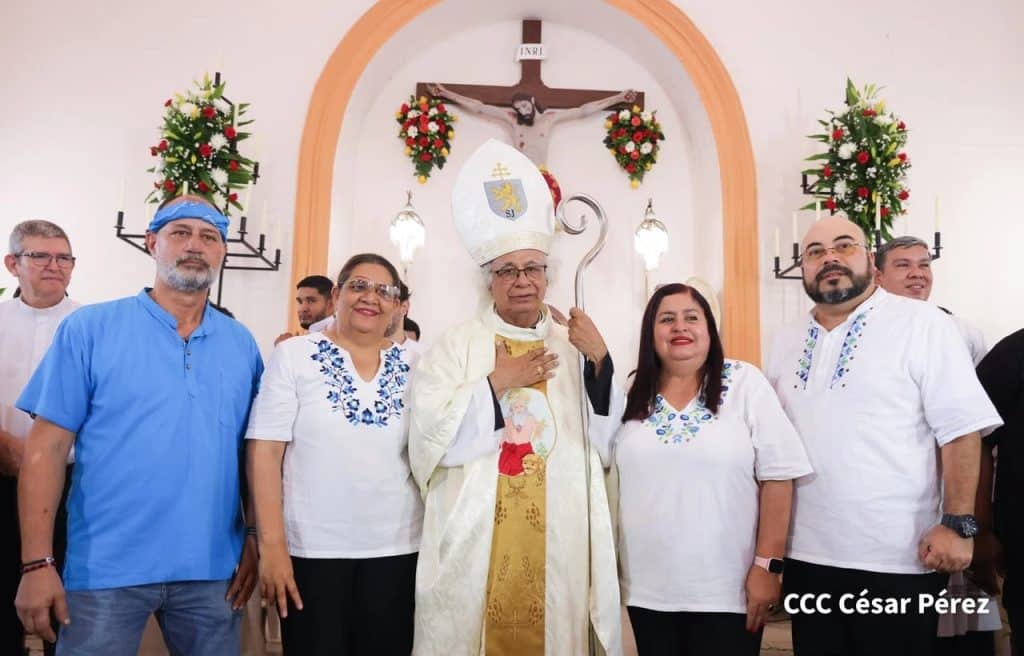
The resumption of some processions sparked speculation about possible intervention by the Catholic hierarchy to secure the permits. However, Molina rules out the possibility that the Archbishop of Managua, Cardinal Leopoldo Brenes, had any decision-making authority regarding the recent authorizations.
“Cardinal Leopoldo José has no say in the dictators’ decisions,” she asserted.
The researcher believes that relations between the Catholic hierarchy and the regime are shaped by fear of possible reprisals, including imprisonment or expulsion from the country.
Her statements constitute an assessment of the bishops’ role and do not allow us to determine whether the Church took any steps to secure the permits.
Meanwhile, authorizations continue to depend on decisions by the authorities, and there has been no official announcement lifting restrictions on Catholic processions across the board.
For Molina, the fact that some religious images may return to the streets does not mean that the faithful have fully regained their right to publicly express their faith.