
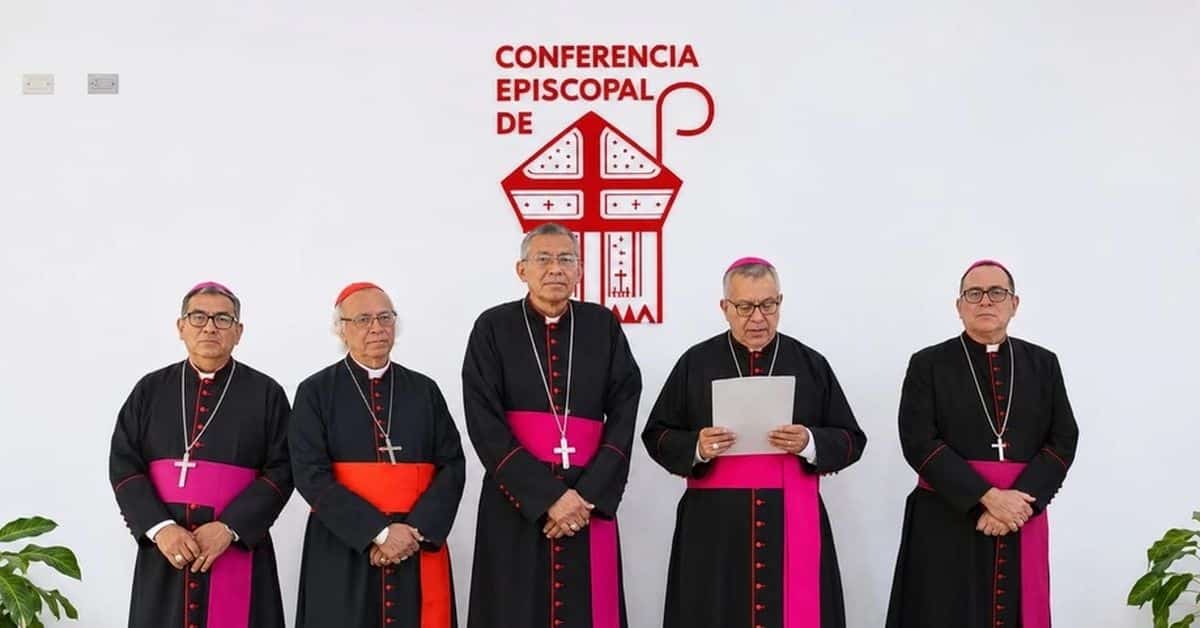
The election of a new leadership for the Nicaraguan Episcopal Conference (or CEN, its initials in Spanish) has caused an unusual stir within the country’s Catholic hierarchy. Not so much because of the appointment of Monsignor Jorge Solórzano as president, but because of the circumstances surrounding it: the five bishops who remain in Nicaragua made the decision without consulting their four counterparts in exile, according to various church sources consulted by DIVERGENTES for this article. Not even Monsignor Carlos Herrera—who, until just a few weeks earlier, had continued to serve as president and participate as such in ecclesiastical meetings at the Vatican—was notified.
“They caught them with their cassocks down, off guard,” said one source, paraphrasing the popular Nicaraguan saying. The decision has raised questions about the internal workings of the CEN and the relationship between the bishops who remain in Nicaragua and those in exile. However, rather than a schism within the Catholic Church, the episode seems to reveal the profound distortions that eight years of religious persecution have caused in an institution that is trying to maintain its pastoral activity under the surveillance, harassment, and reprisals of Daniel Ortega and Rosario Murillo’s regime.
“They did not take the exiled bishops into account; they did not vote, and they weren’t even notified—neither before nor after the election. The four bishops were taken by surprise. They were completely ignored,” a church source who requested anonymity told DIVERGENTES.
“What was the reason for this election? I don’t know, and I wouldn’t want to speculate. The Holy See hasn’t said anything either. In any case, it’s strange that this election took place a month after the Pope invited Monsignor Herrera, as president of the CEN, to a meeting of the presidents of the world’s episcopal conferences,” added the religious source.
Meanwhile, Monsignor Herrera himself confirmed that he had not been informed of his replacement as head of the Episcopal Conference. “I have not been consulted, nor have I been notified—neither by the bishop in Nicaragua nor by the Holy See. So I’m waiting to see what happens,” he told the news outlet Artículo 66 on November 17, during a meeting of the Episcopal Secretariat of Central America (or SEDAC, its acronym in Spanish) held in Costa Rica.
Herrera declined to specify whether the CEN’s reorganization was in response to any initiative by the Vatican, but he revealed that Pope Leo XIV is seeking ways to “open a dialogue” with the Ortega-Murillo regime—so far without success.
The CEN’s new board of directors was elected on November 10 during a General Assembly held in Managua to serve the 2025–2027 term. Monsignor Jorge Solórzano Pérez, bishop of Granada and until then the CEN’s secretary general, assumed the presidency, replacing Herrera, who was exiled to Guatemala in November 2024.
Cardinal Leopoldo Brenes, Archbishop of Managua, was confirmed as vice president; Monsignor Sócrates René Sándigo, Bishop of León, was appointed secretary general, while Monsignor Marcial Humberto Guzmán, Bishop of Juigalpa, will continue as treasurer. The election took place after the bishops agreed in 2024 to postpone the renewal of their leadership due to the extraordinary circumstances the Church was facing amid persecution.
Between Internal Operations and Exclusion
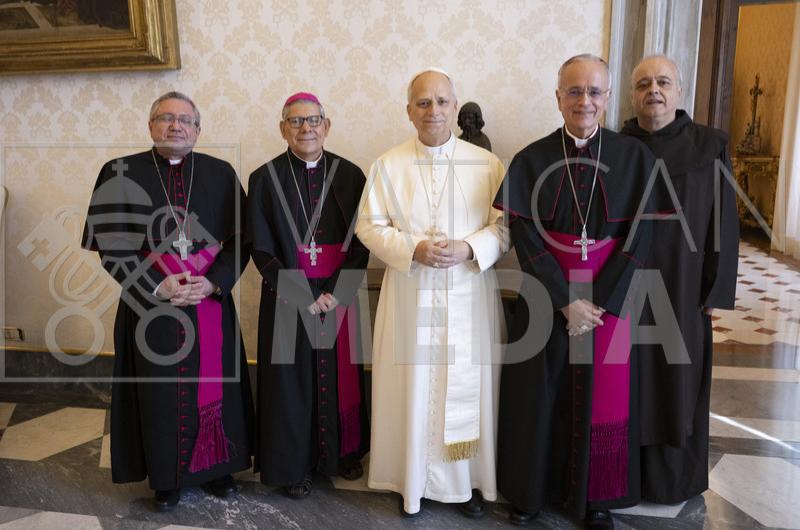
For Martha Patricia Molina, a lawyer and researcher on religious issues, the renewal of the leadership of the Episcopal Conference was a decision that, sooner or later, had to take place to ensure the functioning of the Church in Nicaragua. The physical presence of its leaders is necessary to carry out administrative procedures, sign documents, and exercise institutional representation.
According to Molina, the co-presidential regime refuses to deal with the exiled bishops, which creates additional obstacles for the Church’s operations. However, this administrative necessity presents another paradox: the four exiled bishops—Rolando Álvarez, Isidoro Mora, Carlos Herrera, and Silvio Báez—retain their appointments within the Nicaraguan Catholic hierarchy, even though they cannot physically carry out their duties. Their expulsion or forced exile abroad does not, in and of itself, entail the loss of their episcopal responsibilities. Nor, however, can they fully exercise them.
The researcher believes that these difficulties should not prevent the exiled bishops from participating in CEN decisions. The problem, she argues, is that fear of reprisals has even affected communication among the prelates themselves, to the point of hindering private meetings or communication via digital tools.
Molina believes that the election of the new board of directors may have had the Holy See’s approval, although she acknowledges that this is merely an assumption and not a confirmed authorization.
What Is the Vatican’s Role?
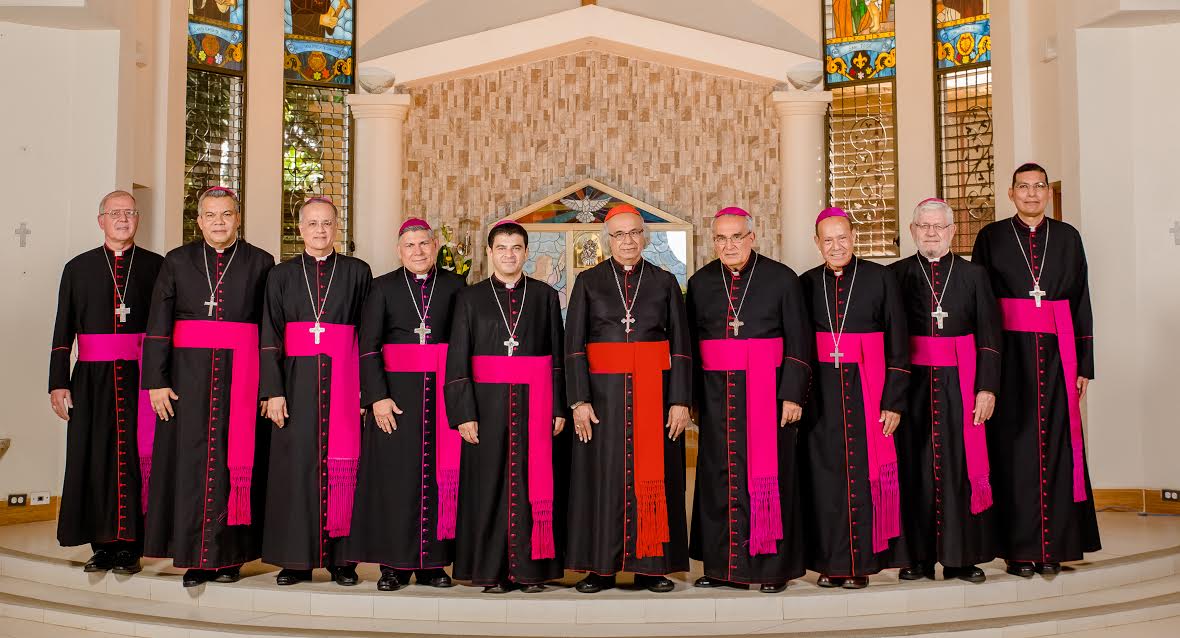
The Vatican’s role adds another unknown factor. In late October, Herrera explained to the Catholic media outlet EWTN News Español that the Vatican had postponed the ad limina visit—the periodic meeting in which bishops present the situation in their dioceses to the Pope—until 2027, due to the lack of appropriate conditions for the members of the CEN. The postponement highlighted the extraordinary difficulties facing the episcopate, just a few weeks before the bishops remaining in the country were set to reorganize their leadership.
But the consequences of the bishops’ exile go beyond institutional representation. Exiled Nicaraguan priest Nils Hernández warned, in statements to Confidencial, that the bishops’ forced absence also hinders essential pastoral tasks, such as the ordination of new priests and the guidance of seminarians.
Hernández refrained from condemning the prelates who assumed the new leadership, but he questioned whether the conditions imposed by the persecution would ultimately exclude those who were expelled from the country from participating in the institution’s decision-making.
In this scenario, Molina warns that the main challenge for Monsignor Solórzano will not only be leading the Episcopal Conference, but doing so under the restrictions imposed by the regime. Although he describes Solórzano as a capable bishop who is respected by the Catholic community, he believes that Solórzano’s scope of action will be limited by religious repression, especially when he must travel outside Nicaragua.
In his view, the ability to enter and leave the country without incident may depend on his maintaining a low profile and avoiding statements that the Sandinista authorities might interpret as critical.