
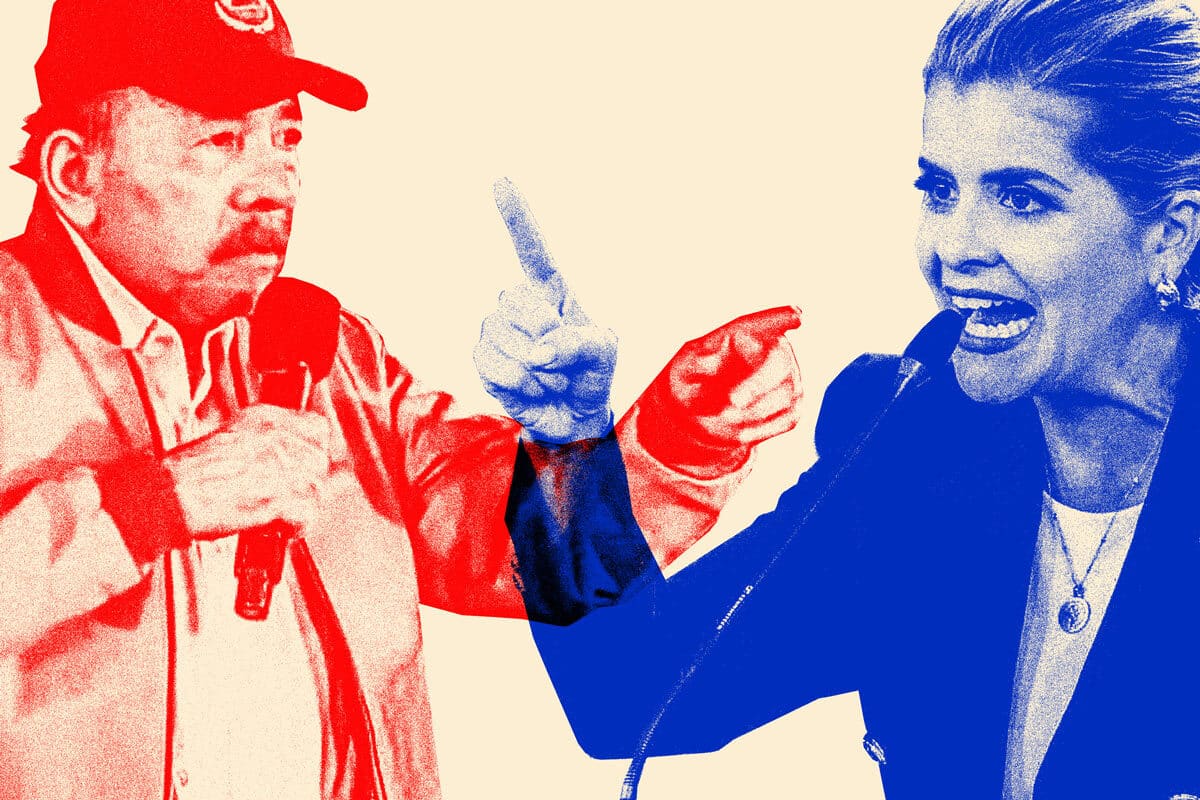
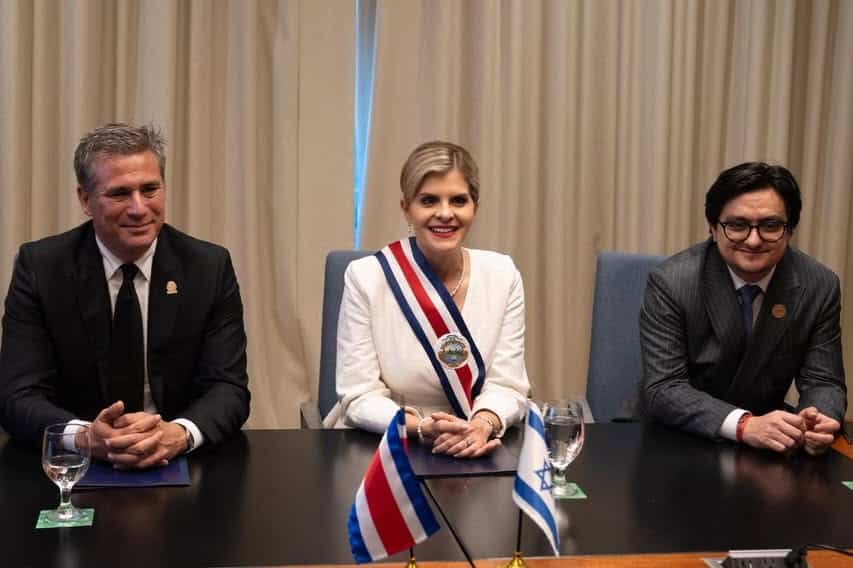
During the first weeks of Laura Fernández’s administration, Costa Rica and Nicaragua have clashed diplomatically. Relations between the two neighboring countries are at a low point and “could become strained,” according to international affairs analyst and University of Costa Rica (UCR) professor Carlos Murillo.
During his first international tour, Costa Rican Foreign Minister Manuel Tovar did not hesitate to take aim at Nicaragua. In Paris on June 4, Tovar expressed concern over “the significant presence of Russian military personnel” in Nicaragua.
“Recently, (in Nicaragua) they have renewed a military cooperation pact with Moscow, and it seems to me that those troops are far from where they should be. That is a cause for concern, particularly given that there is a war in the heart of Europe caused by Russia in Ukraine, and we do not feel comfortable with this,” added the Costa Rican official.
Tovar’s first tour (New York, Brussels, and Paris) was intended to bolster the candidacy of Costa Rican Rebeca Grynspan for the position of UN Secretary-General. The Costa Rican diplomat used the opportunity to take a stance on Nicaragua, a country under the dictatorship of Daniel Ortega and Rosario Murillo.
On June 2, in Brussels, the Costa Rican foreign minister said that democracy “cannot be considered consolidated” in many Latin American countries and expressed concern about Bolivia, Nicaragua, Cuba, Venezuela, and Haiti.
Tovar said he was particularly concerned about Nicaragua and recalled the democratic clause in the association agreement. “I believe Europe must demand that the signatory states, whoever they may be, uphold their internationally acquired obligations,” he stated.
Strained Relations Since 2018
Relations between Costa Rica and Nicaragua have been strained since the 2018 crisis and the bloody crackdown by Daniel Ortega and Rosario Murillo’s Sandinista regime. The ambassadors of both countries were recalled due to various political clashes, and diplomatic relations are now maintained through chargés d’affaires.
Although the outgoing Costa Rican president, Rodrigo Chaves, claimed that he spoke with Ortega and Murillo on occasion—though he never specified the topics—the relationship has faced new tensions under the new government of Laura Fernández.
Dictatorship Rejected Costa Rican Shortlist for SICA General Secretariat
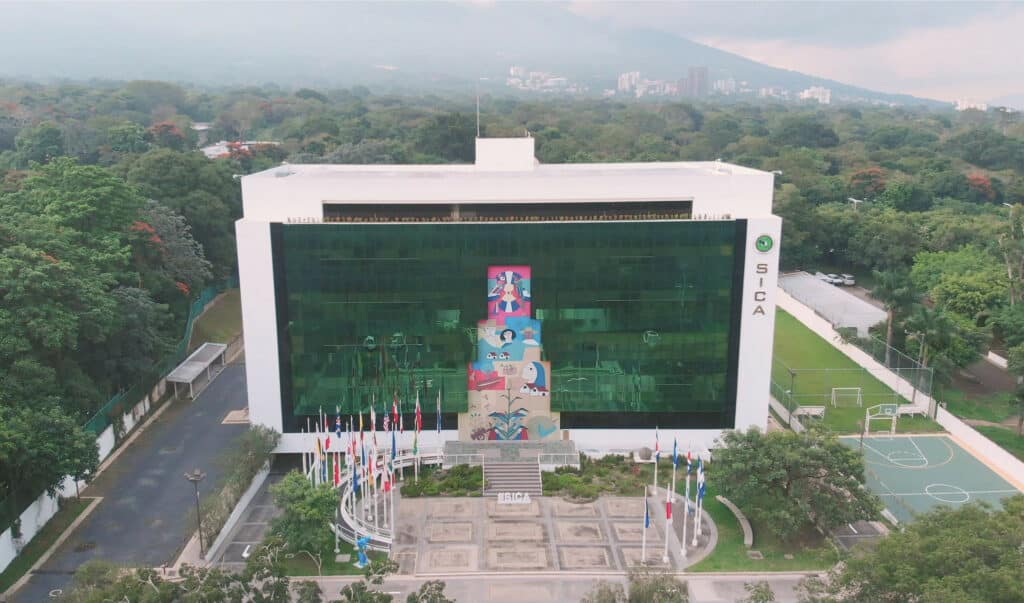
Indeed, the Costa Rican foreign minister’s statements on Nicaragua in international forums come just one week after the Ortega-Murillo dictatorship issued a statement rejecting the shortlist of three candidates proposed by Foreign Minister Tovar to fill the position of General Secretariat of the Central American Integration System (or SICA, its acronym in Spanish).
In the statement, the dictatorship described Costa Rica’s move as “abnormal and unusual” and reiterated that Nicaragua has the right to the SICA General Secretariat.
The term of the SICA Secretary General is four years, and Nicaragua was scheduled to hold the position for the 2021–2025 term. In 2022, Werner Isaac Vargas Torres, Nicaragua’s sole candidate who received approval from the other countries, assumed the post. Vargas, however, resigned in November 2023. Since then, the organization has not had a secretary general.
The Ego of Nicaragua’s Presidential Couple
Since then, Nicaragua has proposed three shortlists of candidates, all of which have been rejected by the other countries on the grounds that they lacked the qualifications to assume the position.
“We believe that any decision to relocate SICA and its Secretariat to another country would violate the regulations recognized by our system, and therefore we urge a meeting of foreign ministers to address this and other urgent issues,” Nicaragua stated in the communication.
After the Ortega-Murillo regime blocked the election of the secretary general, the countries amended the internal voting regulations to change the election from a unanimous vote to one by consensus. Thus, even if Nicaragua opposes it, if there is consensus among the other countries, a candidate can be elected.
For analyst Carlos Murillo, this impasse explains the recent exchanges between the two countries, which are leading to a rift.
“It’s a matter of the Ortega-Murillo regime’s ego—they want to control everything that happens in SICA and have decided they don’t want any Costa Ricans there; they want to block the candidates just as they did to their own candidates,” he added.
Murillo said that this situation “will continue to escalate” and that both countries will begin to complain about other issues.
Costa Rica Complains About Illegal Mining by Nicaraguans
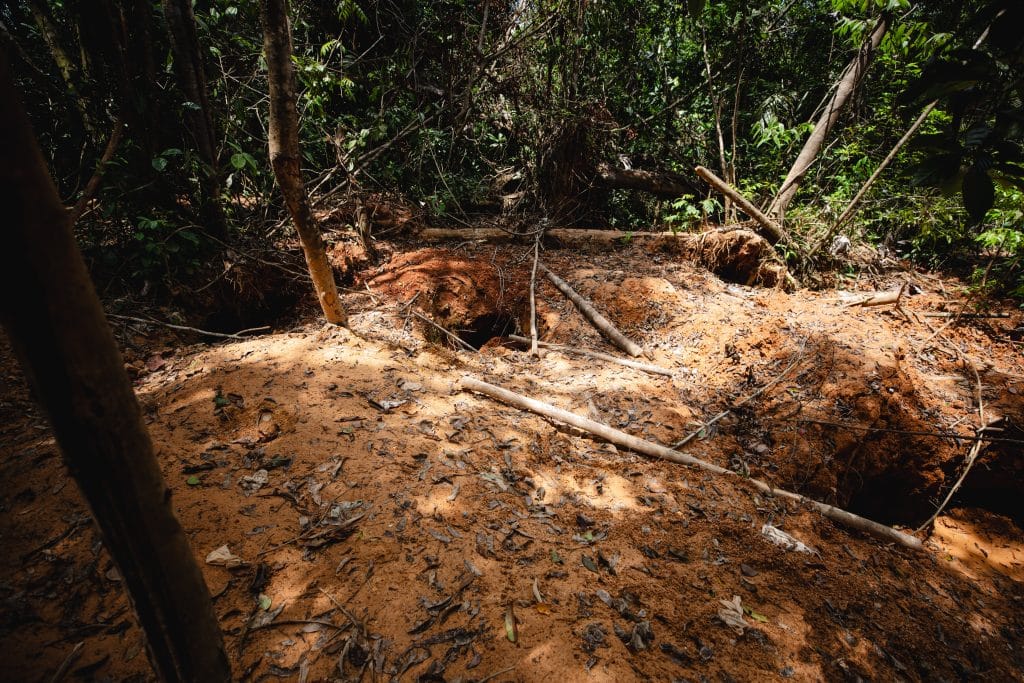
For example, in late February, former Security Minister Mario Zamora stated that illegal miners are extracting gold in Crucitas and Conchudita, in the north of the country, to process and sell it to Nicaragua. Zamora urged the neighboring country to increase surveillance along the San Juan River, where he said there is “a smuggling route.”
Costa Rica sent an official letter to address the issue, and both countries met on Saturday, February 28, at the Peñas Blancas border crossing, on Nicaraguan territory. They agreed to implement greater coordination between their security forces to combat illegal gold mining and the smuggling of that material taking place along the shared border.
In this regard, former President Rodrigo Chaves said he would raise this issue at a meeting with U.S. President Donald Trump, where the “Shield of the Americas” alliance of countries was ultimately announced.
A month later, on April 16, the U.S. Department of the Treasury dealt a direct blow to the opaque Chinese mining financial network of the Ortega-Murillo regime. The Office of Foreign Assets Control (OFAC) sanctioned seven companies and five individuals linked to the gold business, including two sons of the co-presidents, Maurice and Daniel Edmundo Ortega Murillo.
During the first meeting, Costa Rica and Nicaragua also agreed to hold a follow-up meeting on April 24, this time on Costa Rican soil, to evaluate the results, but this meeting did not take place. No reasons were given for the cancellation, nor was it reported whether it was rescheduled for another date.
For analyst Carlos Murillo, Costa Rica’s complaint regarding illegal mining can only be understood in the context of this deterioration in relations, since this issue “is Costa Rica’s responsibility to control, because the problem is occurring on its territory.”
Nicaragua Seizes Drugs Originating from Costa Rica
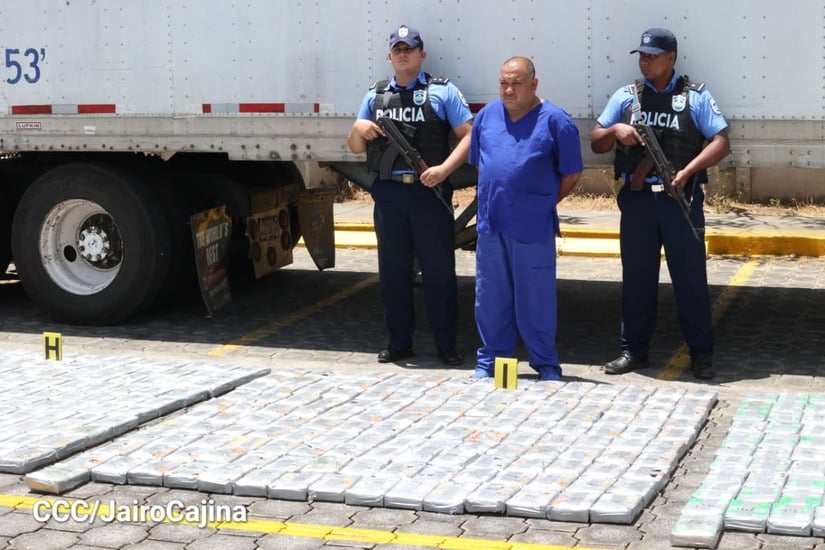
The Nicaraguan regime has not been sitting idly by. On March 30, it announced the seizure of drugs (1,312 kilograms of cocaine) originating from Costa Rica. According to the truck driver who was transporting them, the shipment passed through Costa Rican scanners undetected.
“I loaded the cargo in Calle Blancos, next to Route 32, in San José, Costa Rica. I was with a guy named Jorge; we were headed to Guatemala, to a place called Santa Lucía Milpas Altas, to deliver it to a man named Luis,” the detainee told a group of Sandinista propagandists.
The case raised alarms in Costa Rica and prompted a review of protocols after it was confirmed that the scanners recently installed in the country failed to detect the shipment.
A few days later, an investigation was announced, in conjunction with the DEA, to get to the bottom of the matter. Former Security Minister Mario Zamora, however, suggested that the seizure might have been staged.
“This case differs from typical drug cases, where everyone tends to withhold information,” Zamora told the ¡Opa! channel on April 9.
“What really strikes me is the way a truck is identified—in the midst of 250 trucks—without any technical equipment; they simply handpick a truck in which the drugs are supposedly hidden,” he added.
The Fernández Administration’s Inability to Handle Diplomatic Language
International analyst Carlos Murillo said that Laura Fernández’s administration has “a complete inability to handle diplomatic language.”
The analyst noted that the current foreign minister, Manuel Tovar, has extensive experience in foreign trade, but not in international relations. “Neither the president nor the foreign minister handles messages well or possesses diplomatic tact, and that will complicate the situation with Nicaragua,” Murillo said.
On the other hand, Nicaragua is not part of the group of U.S. allies, which does include Costa Rica. For analyst Murillo, this could “strain relations to a certain extent, although later, naturally, they will ease.”
Due to their proximity and a relationship spanning more than 200 years, Costa Rica and Nicaragua have only two options: to coordinate or to manage their relations. “Neither can get rid of the other, and they cannot continue down that path,” the expert concluded.