

Daniel Ortega has broken his own record for staying out of the public eye: not only did his absence reach 66 days on November 7—marking five years since Nicaragua’s last elections, which could have been but did not come to fruition—but in recent months his public appearances have dropped dramatically due to health complications related to his age and chronic illness, according to various Sandinista sources consulted by DIVERGENTES.
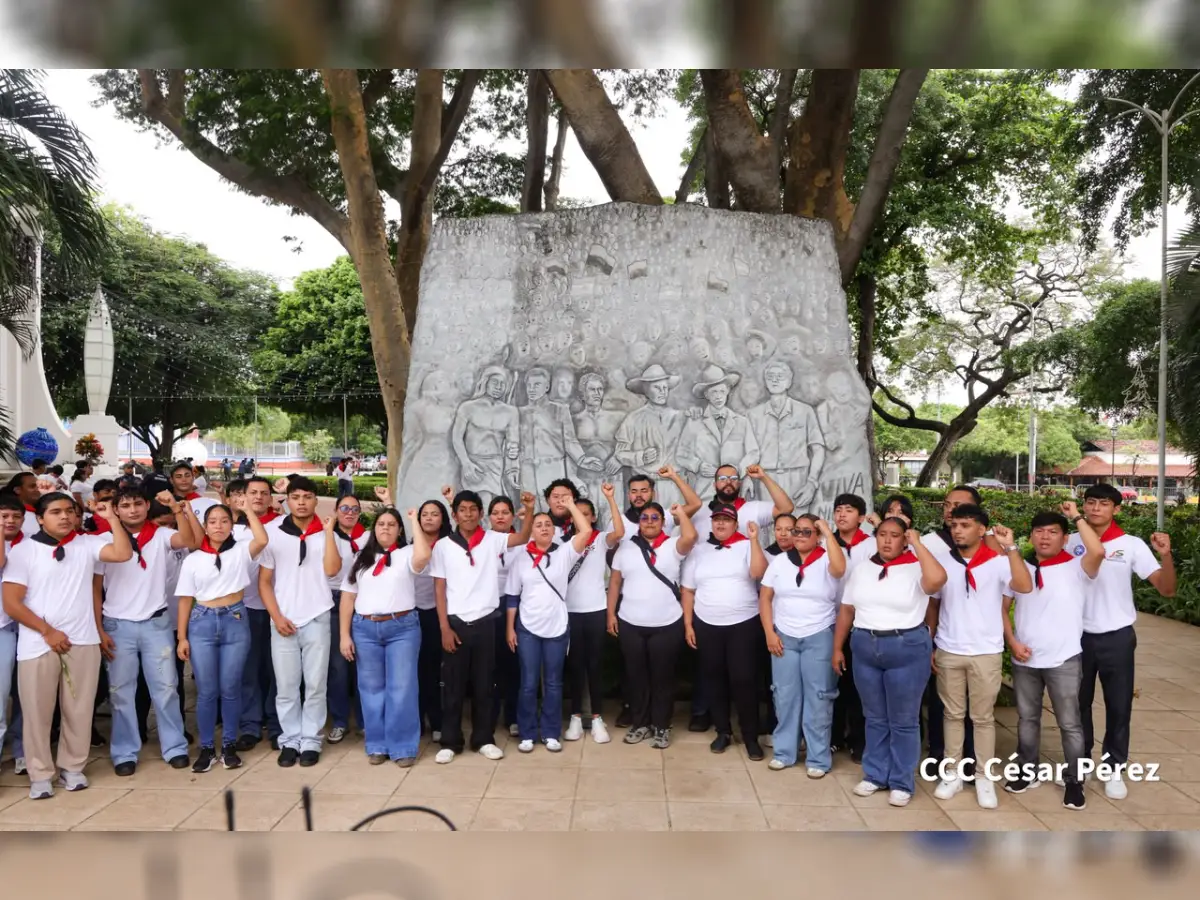
One of the party events he rarely missed is the commemoration of the anniversary of the death of Carlos Fonseca, a legendary Sandinista figure, which took place this Saturday without the old dictator’s presence in Managua’s Plaza de la Revolución. Instead, Co-President Murillo ordered postponed events in various departments this weekend to mark the occasion—a recurring tactic to downplay her husband’s absences.
The last time the Sandinista leader presided over a public event was on September 2, 2026, during the 47th anniversary of the Nicaraguan Army. Later, for the Central American Independence holidays, Murillo announced that the co-presidency—as it does almost every year—would receive the Central American torch, but ultimately, on September 12, the ceremony took place without either of the co-presidents. Instead, it was led by their children, Maurice and Camila Ortega Murillo. Nor was there a central ceremony led by the presidential couple to commemorate the Battle of San Jacinto and Independence Day, even though Murillo had also promised a state ceremony.
Ortega will turn 81 next Wednesday, November 11, and his public appearances have been dwindling drastically, which always sparks speculation about his health. However, the leader used to counter those rumors with new public appearances, something that has not happened this time.
According to a tally by the news outlet Confidencial, Ortega has appeared in public just 11 times so far in 2026—less than half the average of 26 appearances he made between January and October each year from 2018 to 2025. The news outlet documented 264 public appearances since 2018 and a trend toward increasingly longer periods of absence: from the 37 days he was absent prior to 2020, these periods have grown to 52, 55, and 61 days in recent years, reaching his current record of 66 days.
An Unusual Political Silence
Aside from Ortega’s over 66-day physical absence, the co-chairs have maintained an unusual political silence throughout this period in the face of a series of international events that, in the past, would have prompted their fiery speeches. Neither of them has explained the regime’s rejection of Natasha Franceschi, the ambassador nominated by Donald Trump—a decision that led Washington to recall its top diplomat in Managua, Elias Baumann, for consultations.
Nor have they responded to the provocations of Colombian President Abelardo de la Espriella, who reignited the historic maritime dispute over San Andrés and the Caribbean waters with new claims regarding the area—a dispute that has already been settled under international law.
Aside from his unusual political silence, another development that fueled speculation about his health was the rushed constitutional amendment ordered by the co-presidency, which eliminated the office of vice president and established that of the so-called “presidential appointees.” This move has been interpreted by various political analysts as a strategic maneuver by Co-President Murillo to distribute small fiefdoms of power that would, in some way, safeguard the dynastic succession she is promoting in the event of Ortega’s eventual passing.
The Sandinista leader is an ailing elderly man who has long suffered from lupus, according to accounts from sources close to him. His health is treated as a state secret, which fuels palace intrigues about his condition. For years, DIVERGENTES has been cautious on this matter due to the impossibility of reliably corroborating these accounts. However, in May 2026, an investigation by this publication revealed that Ortega has a VIP suite at the Carlos Roberto Huembes Hospital—the National Police’s medical center—built specifically to treat his ailments.
Hospital sources and those close to the inner circle of power confirmed that the dictator suffered a relapse in mid-2025, that he was hospitalized for at least five days between September and October of that year, and that, during the first three months of 2026, he visited the hospital once or twice a week to receive medical treatment and preventive care, under strict security measures.
“He’ll Die the Day Rosario Wants Him to”

Now, with his record of over 66 days out of the public eye, rumors are circulating among Sandinista sources that Ortega is in an “induced coma”—a claim that DIVERGENTES has been unable to verify independently.
“What happened to Ortega? We don’t know, but Ortega is going to die on the day Rosario decides it’s most convenient for her,” said former opposition congressman Eliseo Núñez, who believes that the Sandinista leader’s prolonged disappearances have served to lay the groundwork for his eventual death and allow Murillo to control the timing of the succession. “If he were to die today or were already dead, she’d put him in a drawer and eventually take him out and hold a wake on the day it suits her to announce it,” he asserts.
According to Núñez, the regime has been “laying the groundwork” with absences lasting 40 or 45 days in order to manage that moment politically. Although he acknowledges that he does not know Ortega’s true state of health, he notes a difference compared to his previous disappearances: “It’s striking that he hasn’t reacted to the rumors that he’s dead, because in the past he used to react quite quickly to such rumors,” he emphasized.
For his part, attorney Juan Diego Barberena links Ortega’s current prolonged absence to the recent constitutional reform that eliminated the vice presidency and established the role of presidential appointees. “It seems to me that something is happening—something we aren’t seeing,” he warns.
Barberena also suspects that behind the over 66-day absence there could be a deterioration in the Sandinista leader’s health. “He may be in a rather vulnerable state of health that prevents him from speaking out on a matter that is truly strategic for the country, for the government, and, above all, for the interests of the dictatorship itself,” he argues, referring to the Colombian president’s provocations regarding the Caribbean waters delimited by the International Court of Justice in The Hague.
For now, Murillo is the only one who has continued to serve as the dictatorship’s spokesperson through her daily televised tirades. Although she has considerably toned down her attacks against the United States, she has not done the same with the Nicaraguan opposition. On November 5, she once again lashed out at the “denationalized” opposition members, whom she called “stateless” and accused of not loving Nicaragua. “Those who have no homeland—those who have no homeland—because they do not love, because they do not know how to love,” snapped the co-president, amid the controversy over legal actions filed in Spain against her Co-Foreign Minister, Valdrack Jaentschke, who has been accused of state terrorism by three female opposition members of UNAMOS.
According to Manuel Orozco, a researcher at the Inter-American Dialogue, Murillo’s shift in rhetoric toward the United States reflects other priorities of the regime. “These are two separate issues. She isn’t provoking anyone or anything. She is focused on continuing her administrative work within the country through the end of the year,” he maintains. According to him, the co-president is focused on managing the new budget, resuming foreign trade relations, and addressing the challenges of a slowing economy, coupled with growing social precariousness.