
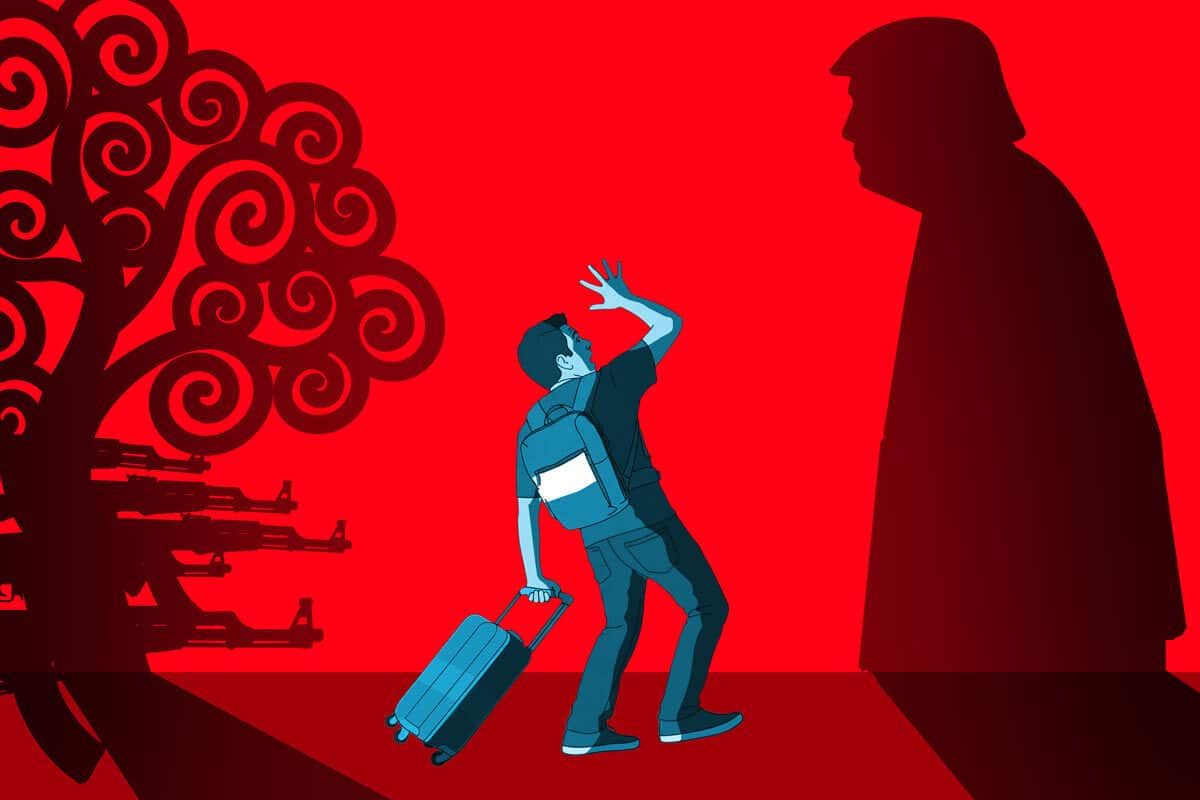
In early October, after watching with growing horror as political prisoners who had been released, opponents, and critics of the regime of Daniel Ortega and Rosario Murillo were detained by U.S. Immigration and Customs Enforcement (ICE), Jairo agreed with his wife that they should put an end “as soon as possible” to the life they had built in the United States with their three children. It was a decision as abrupt as the one imposed on him in February 2023, when the co-presidential dictatorship deported this father on a plane along with 221 other political prisoners.
“When we saw the cases of Chino Enoc, Edwin—the former police officer detained in Davenport—and especially that of Luis Galeano, a well-known journalist, we said: this is the last straw,” Jairo tells me as he’s on his way to pick up one of his children from a school friend’s house. He is a lawyer by profession and requests anonymity for security reasons.
When I interview him, he is in the midst of what he describes as “upending his life—but above all, that of his children” in Florida, in order to move to another continent, to a country they have never visited but of which they are already citizens: Spain.
Jairo lives with his family in Miami, one of the cities where ICE conducts raids almost year-round. Although the Joe Biden Administration granted him humanitarian parole to rebuild his life in the United States after his deportation, three months later he applied for political asylum in an effort to regularize his personal and family status. He thought that would be enough to establish a legal basis for his stay in the United States while his case was being reviewed by immigration authorities.
Thanks to his bilingualism and professional training, he landed a job in the Florida state court system, where he rose to a managerial position. Due to the psychological aftermath of his time in prison in Nicaragua and the pressure of the job itself, he left and started a business with his wife. They began buying and selling used furniture, and he started working as an Uber Black driver—that is, a VIP service. This began to bring in money, so he partnered with someone else; they bought more high-end vehicles and dove headfirst into the business. He founded a small transportation company, and his children received scholarships to a Catholic school; they had adapted so well that they were already playing on soccer teams.
During this period of “rebuilding their lives,” someone advised them that, although they had an asylum application pending, that in itself was not a complete guarantee. Just in case, they should take advantage of the generosity of Pedro Sánchez’s Spanish government, which had offered citizenship to exiled political prisoners and members of the opposition almost immediately. Jairo did so to have a backup plan he never thought he’d have to use, without suspecting that Spanish citizenship would end up becoming his and his family’s Achilles’ heel, at a time when President Donald Trump’s anti-immigration policies go beyond ICE raids and also extend to the administrative bodies where the fate of migrants is decided.
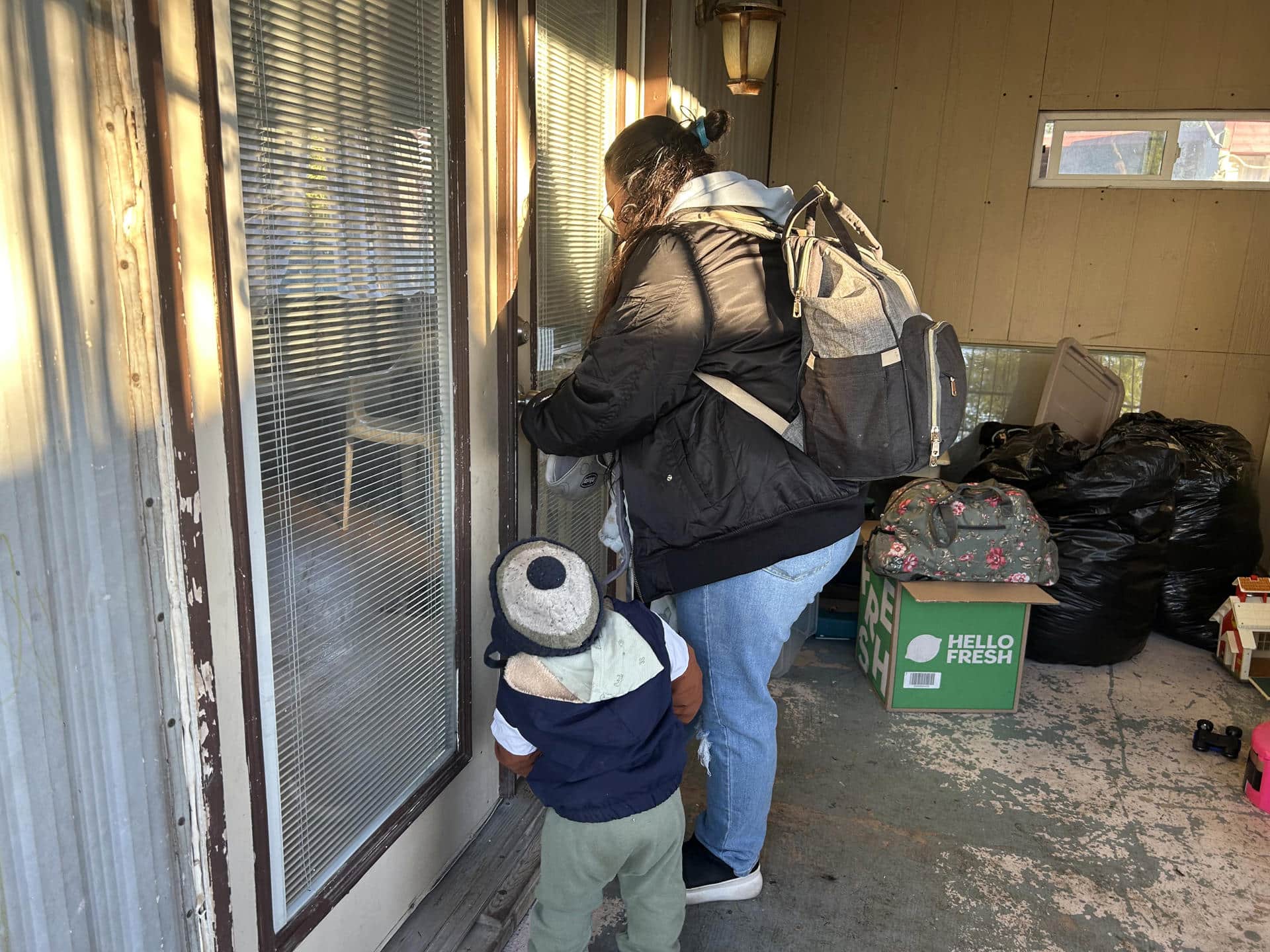
On October 9, a decision by the U.S. Board of Immigration Appeals further accelerated Jairo’s family’s plans to move to Spain. They must leave “as soon as possible” to avoid being detained by ICE and ultimately deported—either to a country in Africa or, in the worst-case scenario, to Nicaragua—as happened to Jeffrey Isaac Jarquín, “el Nene,” an exiled opposition figure who was not among the group of 222 exiled political prisoners. He was detained in February and sent to Managua on October 1. A patrol was waiting for him at Augusto C. Sandino Airport and took him directly to La Modelo prison, according to reports from his family members.
The Board of Immigration Appeals ruled that citizens of the European Union, including Spaniards, are presumably ineligible for asylum in the United States on a discretionary basis, on the grounds that they have the right to reside legally in other European countries. That was the final blow for Jairo. “I feel like I built a sandcastle on the beach and the sea came and washed it away,” he says.
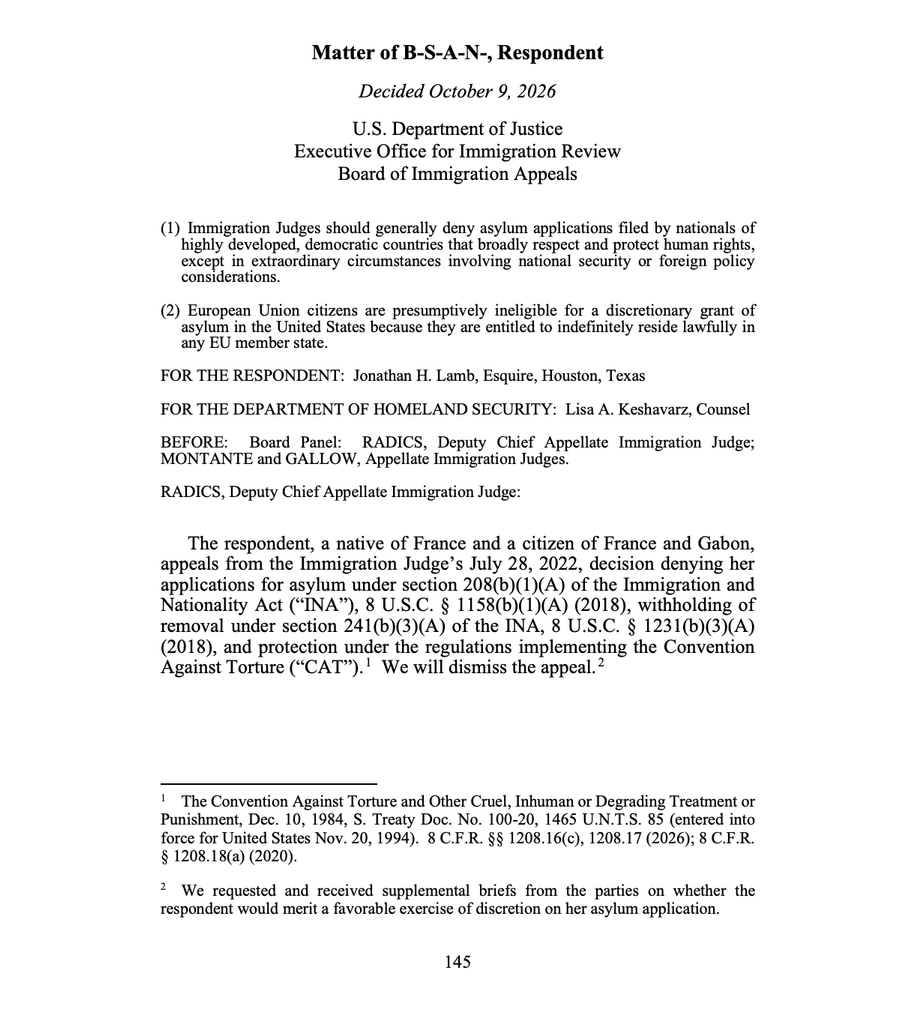
Although Jairo is grateful to the United States for taking them in and acknowledges that President Trump’s Administration is standing up to the dictatorship that exiled him, he strives not to clash with the contradictions of Republican foreign policy—or with those of its domestic policy.
But, to tell the truth, the contradiction goes beyond this lawyer’s case. It is a foreign policy prone to such fluctuations that defy common sense. For example, confronting China while Trump himself welcomes President Xi Jinping at the foot of his plane’s stairs with the highest honors in the United States. Or a State Department that lashes out against the dictatorships in Cuba and Nicaragua—even more so after the military operation that captured Nicolás Maduro in Venezuela—while immigration authorities detain and deport Nicaraguan political refugees, some of whom were flown to Washington from Managua on a charter flight organized by the U.S. government itself in 2023.
These are some of the paradoxes of our times—ones that weren’t so pronounced when Jairo applied for Spanish citizenship, six months after filing his political asylum case in the United States. In other words, he sought asylum as a Nicaraguan before becoming a Spanish citizen—a detail that may seem minor but could constitute a legal argument in his favor. Although, to tell the truth—he says—he is no longer interested in exploring that possibility because he is certain he does not want to subject his family, especially his underage children, to more “suffering, uncertainty, and anguish.”
That’s why, these days, he prefers to focus on selling everything they own in Miami to boost their savings, which will allow them to navigate life in a Spain that—despite being Spanish citizens—feels like another world to them. In particular, he has spent entire days trying to understand how that country’s educational system works, which is essential to the family’s life plan. In the meantime, he is waiting for the flight date, which has been postponed at the request of his eldest son, who asked to finish the school term so he could say goodbye to the new friends he has made in the United States after losing the ones he had in Nicaragua.
Criminal Records in the Face of a Harsh Anti-Immigration Policy
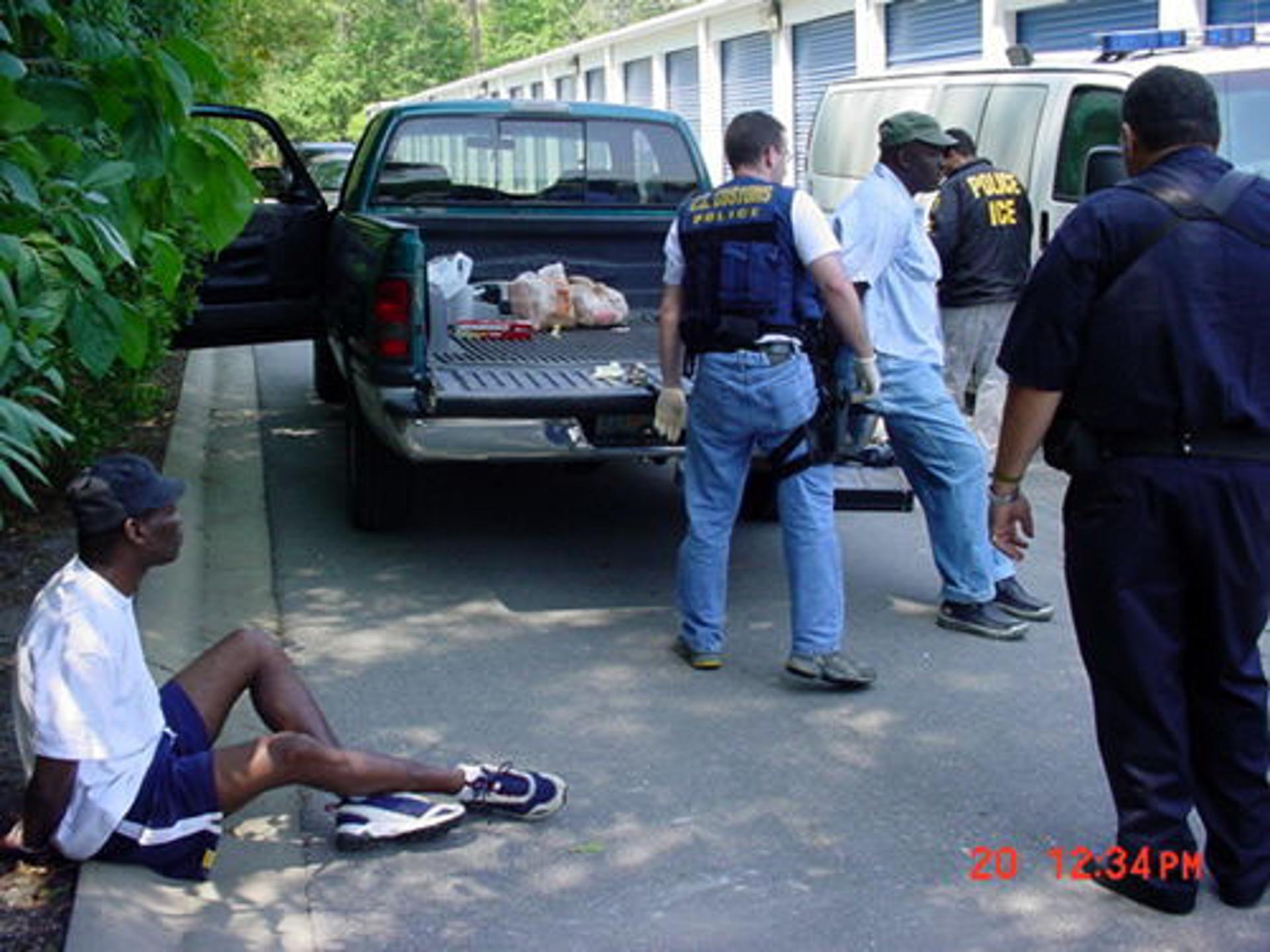
In early October—when Jairo and his wife decided to upend their lives in the United States—the international organization Human Rights Watch reported that at least eight Nicaraguan exiles whom the Ortega-Murillo regime had stripped of their citizenship, including some with pending asylum applications, were detained by U.S. immigration authorities.
Seven of them are part of the group of 222, and the eighth is journalist Luis Galeano, who was stripped of his citizenship as part of the group known as the 94, one week after the deportation of those released from prison by plane. The United Nations Group of Human Rights Experts on Nicaragua (GHREN) reports that at least 452 Nicaraguans have been arbitrarily stripped of their nationality by the Ortega-Murillo regime since February 2023. Spain—and other countries—have offered citizenship to all of them to prevent them from becoming stateless.
Among these offers of citizenship, Spanish citizenship has been the most sought-after due to the benefits it offers: it does not require residency on the Iberian Peninsula and is granted through a letter of naturalization, an exceptional mechanism that allows the Spanish government to grant citizenship by decree, without requiring the usual years of residency. However, not all of those stripped of their nationality have applied for it. In March 2023, the Spanish government reported that 81 denationalized Nicaraguans had applied to take advantage of its offer. Three years later, Spain has granted citizenship to more than a hundred victims of the denationalization imposed by the co-presidential regime.
In March 2025, DIVERGENTES revealed that at least 160 of the 222 exiled political prisoners had applied for asylum in the United States. However, not all of them also opted for Spanish citizenship. Damaris Rostrán, an activist in the Nicaraguan diaspora in New York and New Jersey who supported the resettlement process for the 222 former prisoners in that country, estimates that between 37 and 40 of them initially applied for Spanish citizenship, although she does not know if others later took advantage of that benefit.
As has been the case with the political punishment of revoking citizenship, case law regarding the consequences of acquiring a second citizenship during an asylum process is limited. Among those who decided not to become Spanish citizens—especially those exiled in the United States—the prevailing view was to stake everything on their application for political asylum, given that the Biden administration itself had recognized them as politically persecuted by granting them humanitarian parole. But in the end, in the face of President Trump’s anti-immigrant onslaught, neither option offered any guarantee.
This is something Jairo learned the hard way with the U.S. Board of Immigration Appeals’ decision regarding the alleged ineligibility of European citizens to receive political asylum. But he also thinks of those fellow exiles who never applied for Spanish citizenship and who now face the risk of deportation without even having another country to go to.

“Beyond myself, I think about that other group of guys from the 222 who were absolutely convinced they were already in a land of freedom and democracy—a land where they would be able to build a life for themselves until the time came to return to a free Nicaragua—and who never applied for Spanish citizenship,” Jairo reflects. “So all those families are now in limbo—if ICE catches them, where the hell are they supposed to go?”
The options they face, he says, are terrible: ending up deported to some distant country in Africa or, in the worst-case scenario, to Nicaragua, where there’s already the precedent of “El Nene,” who was imprisoned again after being deported from the United States.
Given the ruthlessness of Trump’s deportation policy, exploring legal avenues to maintain his asylum claim—despite holding another nationality—is not something that appeals to Jairo, especially after the Board of Immigration Appeals’ decision regarding European citizenships. However, that does not mean there are no similar legal precedents that other asylum seekers could rely on—though their chances of success are slim.
U.S. case law has not maintained a uniform interpretation regarding asylum seekers who hold more than one nationality. In June 2022, a federal appeals court with jurisdiction over New York, Connecticut, and Vermont ruled in favor of a Honduran-Nicaraguan family in the case known as Zepeda-Lopez v. Garland. The judges determined that a person with dual nationality may meet the legal requirements to be considered a refugee when they demonstrate persecution in just one of their countries of origin, although this does not guarantee that they will ultimately be granted asylum.
Other precedents point in the opposite direction. In 2013, the Board of Immigration Appeals rejected the application of a Venezuelan journalist who alleged political persecution in Venezuela, ruling that his Spanish citizenship allowed him to seek protection in another country. The case, known as Matter of B-R-, is one of the precedents used by immigration authorities to review applications from individuals with dual nationality.
In the case of the Nicaraguan exiles, however, there is a substantial difference: when they arrived in the United States on February 9, 2023, they were not yet Spanish citizens. They obtained Spanish citizenship after being stripped of their Nicaraguan citizenship. This circumstance raises a legal question that the cited precedents do not specifically address: what consequences should arise from citizenship acquired after exile and arrival in the country where protection was sought.
There is no formula that guarantees these individuals’ right to remain in the United States. The new immigration interpretation complicates their prospects, while case law shows that dual nationality has been treated differently depending on the court and the specific circumstances of each applicant.
Journalist Luis Galeano finds himself in this limbo; he was released by ICE after posting bail. Our colleague’s case is emblematic because it will put the U.S. immigration system to the test in the face of an asylum claim with clear elements of political persecution.
Meanwhile, a group of U.S. attorneys working pro bono has begun analyzing the cases of stateless Nicaraguans who sought asylum in the United States, with the aim of identifying legal arguments that would allow them to remain in the country, even if they have acquired a second nationality.
Jairo, however, makes it clear to me that, quite simply, he no longer wants to explore those possibilities. He prefers to try his luck in Spain, even if that means “upending” his children’s lives once again and starting from scratch in a country they don’t know. “At least this time I’m the one doing it—driven by circumstances, yes—but I’m doing it because I made a conscious decision,” says the former political prisoner. “It won’t be easy in Spain because we’re Spaniards who’ve never lived there; we don’t even have a pay stub, which is required to rent a house. But, well, these are the challenges we face in seeking a better and permanent life in a place where we should no longer be seen as foreigners, but rather—in principle—our new homeland.”